
- Release Year: 1983
- Platforms: Amstrad CPC, Antstream, Apple II, Arcade, Atari 2600, Atari 8-bit, Atari ST, BBC Micro, Commodore 64, Electron, Windows, Xbox 360, ZX Spectrum
- Publisher: Atari Corporation, Atari, Inc., Microsoft Corporation, TOPICS Entertainment, Inc., U.S. Gold Ltd.
- Developer: Atari, Inc.
- Genre: Action
- Perspective: Diagonal-down
- Game Mode: Hotseat, Single-player
- Gameplay: Arcade, Elevator Usage, Enemy Avoidance, Gem Collection, Maze navigation
- Setting: Castles
Description
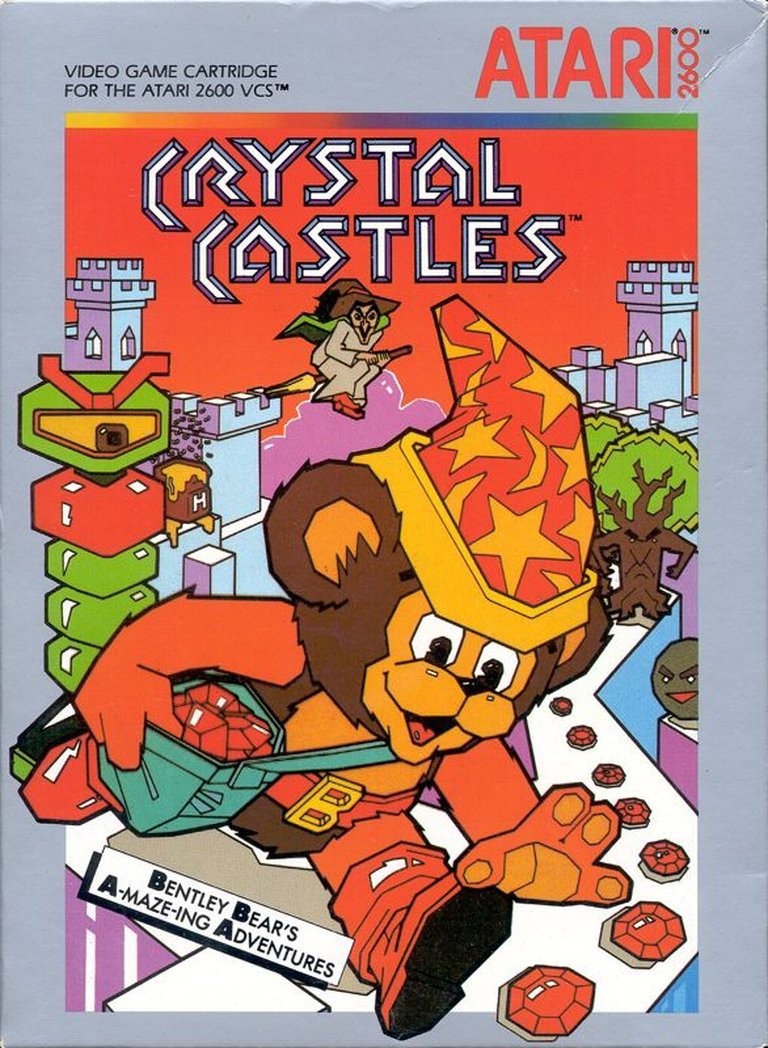
In Crystal Castles, Bentley Bear is trapped within multi-platformed, isometric-view castles filled with gems that he must collect to escape, progressing to increasingly difficult levels while avoiding deadly enemies like monster balls, trees, tornadoes, and other creatures conjured by Berthilda the Witch. Players can grab magic hats for temporary invincibility, honey pots for bonus points, and use elevators to navigate floors, but must secure the last gem before enemies do to earn maximum rewards.
Gameplay Videos
Crystal Castles Mods
Crystal Castles Guides & Walkthroughs
Crystal Castles Reviews & Reception
samearl13.wordpress.com : its aged a bit too much
Crystal Castles: Review
Introduction
Imagine a lovable bear named Bentley, tumbling through shimmering, multi-tiered crystal fortresses rendered in dazzling isometric splendor, dodging sentient trees and devious gem-munching foes—all in 1983, when arcade cabinets were still the lifeblood of gaming culture. Crystal Castles, Atari’s whimsical yet unforgiving maze-chase, wasn’t just another Pac-Man clone; it was a bold evolution, introducing trackball precision, hidden warps, and an actual ending to the genre. As a cornerstone of Atari’s late golden age, it captivated players with its fairy-tale charm and technical wizardry, influencing everything from platformers to modern compilations like Atari 50. This review argues that Crystal Castles endures not despite its era’s limitations, but because of them: a testament to innovative design that turned hardware constraints into transcendent gameplay poetry.
Development History & Context
Atari, Inc., riding high from hits like Asteroids and Centipede but facing the looming 1983 crash, tasked newcomer Franz Lanzinger with his debut project in 1982. Hired via a friend’s recommendation for his assembly language prowess, Lanzinger picked “Toporoids” from Atari’s approved ideas—a 3D Asteroids variant. Without a dev kit initially, he prototyped trimetric mazes on a mainframe, crafting five backgrounds daily. Experimentation birthed an E.T.-esque mover, shifting the vision toward a fairy-tale maze crawler.
Key Creators and Vision
Lanzinger programmed solo in 6502 assembly (with Fortran aids), drawing from Centipede and Millipede‘s trackball mastery for fluid control. Artists Barbara Singh (motion objects) and Susan McBride polished visuals; Dave Ralston added late mazes. The bear hero, initially “Braveheart Bear,” was renamed “Bentley” after Native American group protests, via internal contest—Lanzinger embedded friends’ initials (e.g., FXL for himself, BBM for Brian McGhie) in structures. Scott Fuller led hardware with the Leta chip for trackball input; Sam Ly handled tech.
Technological Constraints and Era
Arcade tech (6502 CPU @1.5MHz, dual POKEY sound) demanded efficiency: mazes built real-time via trimetric projection (pseudo-3D), enemies used pathfinding despite flicker. Trackball resisted joystick swaps, preserving nuance. Released July 8, 1983 (upright: 4,880 units; cocktail: 500), it hit amid Pac-Man saturation and crash shadows—yet ranked #5 in Japan (Game Machine). Home ports (Atari 2600 ’84 onward) suffered: 2600 simplified mazes/controls; ST/C64 varied fidelity. Lanzinger’s $2K arcade research fueled warps (to speed skilled play, boost quarters) and endings (per his memo: games need conclusions).
Gaming Landscape
Post-Pac-Man (1980), mazes ruled, but Crystal Castles innovated amid Qbert‘s isometrics and *Zaxxon‘s pseudo-3D. It predated Super Mario Bros. warps/endings, bridging arcade endless loops to structured narratives.
Narrative & Thematic Deep Dive
Crystal Castles whispers a fairy-tale epic through arcade brevity: Bentley Bear, napping in a stump, awakens trapped in Berthilda the Witch’s gem-hoarding domain (2600 manual). Arcade flyers poeticize his quest for “ruby gemstones” across “Diamond Plateaus in Space.” No dialogue beyond Bentley’s demise cries—”OUCH,” “OH NO,” “BYE,” “#?!”—yet speech balloons anthropomorphize peril, evoking cartoons.
Plot and Characters
Ten stages (37 mazes) escalate: simple domes to labyrinths like “Berthilda’s Dungeon.” Bentley, plucky ursine everyman, embodies avarice’s folly—gems tempt, but foes punish. Berthilda, cackling crone, deploys minions: Crystal Balls (slow orbs), Nasty Trees (pathfinders, jump-stunnable), Gem Eaters (vulnerable mid-meal), skeletons/ghosts (chasers), bee swarms (time-based), cauldrons (instant death). Her hat-power defeats her temporarily; honey lures bees.
Underlying Themes
Greed vs. survival: Enemies steal gems, denying bonuses—last-gem grabs reward strategy. Escapism critiques arcade grind: warps mock repetition, ending congratulates (“YOU MUST BE AMAZINGLY GOOD”). Fairy-tale whimsy (Wizard of Oz trees/witch) subverts violence; classical motifs (Nutcracker, 1812 Overture) elevate chiptune jingles. Embedded initials personalize: programmer Easter eggs amid isolation. Thematically, it’s Pac-Man with soul—narrative closure in an endless era.
Gameplay Mechanics & Systems
Core loop: Trackball-roll Bentley to scoop gems (1-99pts escalating), clear mazes, bonus for last gem/honey (1K)/hat (2K, invincibility). Jump evades/stuns; elevators/ramps/tunnels navigate multi-floors. Enemies AI varies—trees A*, balls navigate—ramping speed post-level.
Combat and Progression
No direct combat: Jump trees (shrink/stun), ram Gem Eaters mid-gem (500-1K), hat-squash Berthilda. Progression: 10 levels (4 mazes each, final solo), colors cycle (17 schemes), lives (3 start, +1@10K). Time drains bonus (200K start, -1K/4s, -1K/life lost). UI: Score/lives top, high-score “Hall of Fame” (250 initials, top “engraves” castle).
Innovations and Flaws
Innovations: Warps (e.g., Level 1 upper-right jump→3; hat+elevator→5; Level 5-3 corner→7; +4 lives). Real-time maze-build previews layouts. 8 variants (2600). Flaws: Trackball wear imprecise home ports; flicker from sprites; flat gems hard-collect (2600); joystick swaps botch diagonals (ST). Bees punish dawdlers; enemies gem-steal frustrates. Addictive yet punishing—mastery demands muscle memory.
| Mechanic | Innovation | Port Variations |
|---|---|---|
| Trackball | Fluid 360° | Joystick/mouse (ST faithful but dated) |
| Warps/End | Pre-SMB structure | Retained, but 2600 omits some |
| Enemy AI | Tracking + gem rivalry | Simplified (Spectrum green clash) |
World-Building, Art & Sound
Trimetric castles evoke crystalline Oz: blocky yet majestic, assembling vector-like (pink/maroon/peach walls, pea-green/black/white floors, red/blue/white/yellow gems). Atmosphere: Whimsical peril—Bentley waddles cutely, foes grotesque (brown tornadoes? Reviews note). Multi-floored rarity amazes; roads link stages, Berthildas pursue.
Visual Direction
Arcade pinnacle: Vibrant, flicker-minimal sprites (Singh/McBride). Ports diverge—C64 murky/fast (US faithful, EU variant); ST closest (roads intact); 2600/Apple blocky/tiny; Spectrum green-drab; BBC colorful-simplified. Compilations enhance shading/textures (Anthology).
Sound Design
Dual POKEY: Catchy classics (Mephisto Waltz, Nutcracker) + originals. Gem-chimes pitch-shift uphill/downhill (C64 praised); level jingles (win/lose); death yelps. Sparse yet immersive—pitch conveys motion, urgency builds tension. Contributes addictiveness: “Totally unputdownable” (ACE).
Elements synergize: Visual depth + sound cues = hypnotic flow, fairy-tale immersion amid chaos.
Reception & Legacy
Arcade: Commercial win (#5 Japan Dec ’83; 5K+ cabinets), critical acclaim—”top-notch graphics/sound, solid play” (Electronic Games); “fresh approach” (Electronic Fun). Arkie Certificate (’85). MobyScore 7.1/10 (69% critics).
Ports and Evolution
2600 (#95 rank, 75-90%): “Must-have” (Atari Times), but “flash over substance” (Woodgrain). C64 mixed (45-100%, Zzap! “glorified Pac-Man”); ST 70-100% (“addictive”); Spectrum 35-100% (budget reissues). Modern compilations (Atari 50, Vault) revive arcade purity.
Influence
Pioneered warps/endings (SMB debt); isometric mazes (Qbert* kin); trackball mazes. Bentley in Atari Karts, eduware (Magical Math). No sequel (Lanzinger’s canned), but spiritual Gubble (1996); 2024 Crystal Quest (7800+). Legacy: Arcade essential (1001 Games), Flux #95; “beautiful, addicting” (AllGame 4.5/5).
| Platform | Avg. Score | Notes |
|---|---|---|
| Arcade | 78-90% | Iconic |
| 2600 | 75% | Ranked #95 |
| C64 | 58% | Faithful but dated |
| ST | 75% | Best home visual |
Conclusion
Crystal Castles masterfully alchemizes Pac-Man‘s dot-chase into 3D poetry: Franz Lanzinger’s debut birthed warps, endings, and trackball finesse amid 1983’s crash. Whimsical Bentley vs. Berthilda’s horde delivers tense, rewarding loops; trimetric worlds and chiptune classics enchant. Ports falter, but arcade purity shines in compilations—flaws (flicker, controls) humanize genius.
Verdict: Essential arcade landmark, #13K MobyRank belies influence. A “beautiful game” (AllGame) securing Atari’s whimsical twilight in history. Play it: Jump into eternity. 9/10