
- Release Year: 1987
- Platforms: Amiga, Apple IIgs, Game Boy, iPhone, J2ME, Macintosh, Palm OS, Windows Mobile, Windows, Xbox 360
- Publisher: Casady & Greene, Inc., Data East USA, Inc., Game Mechanics LLC, Hands-On Mobile, Inc., Infinite Ventures, Inc., Stainless Software Ltd.
- Developer: Stainless Software Ltd.
- Genre: Action
- Perspective: Top-down
- Game Mode: Single-player
- Gameplay: Collecting, Physics-based movement, Shooting
- Setting: Futuristic, Sci-fi
- Average Score: 71/100
Description
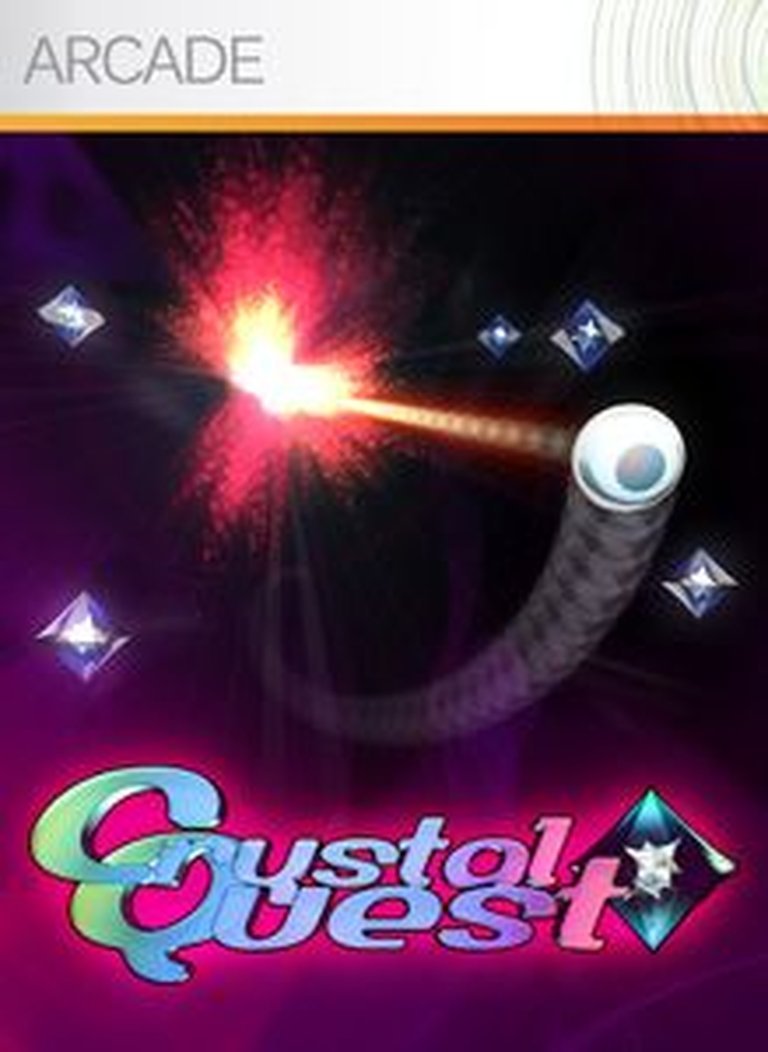
Crystal Quest is a top-down action game where players control a small, circular spaceship tasked with collecting crystals while fending off swarms of aliens emerging from portals. The game features unique physics, as the ship retains inertia and must be carefully maneuvered to avoid collisions, while bullets fire in the direction of the ship’s movement. Originally released in 1987 for the Macintosh, it was notable as the platform’s first color game and later ported to multiple systems, including the Game Boy, Amiga, and Xbox 360.
Gameplay Videos
Where to Buy Crystal Quest
PC
Crystal Quest Free Download
Crystal Quest Guides & Walkthroughs
Crystal Quest Reviews & Reception
metacritic.com (64/100): Crystal Quest’s issue is that it never manages to absorb all your attention and mental focus like “Smash TV,” “Robotron 2084” or “Geometry Wars.”
store.steampowered.com (87/100): Crystal Quest cost me some of the best hours of my life. Nice to see it back and nice conversion. It looks, feels, and sounds just the way I remember it.
mobygames.com (63/100): A mouse-driven game in which the player controls a small, circular spaceship which must travel around the screen collecting crystals.
Crystal Quest Cheats & Codes
PC
Press [Tab] just before entering the portal at the end of a level. After your ship disappears, leave and allow some time to pass. Return to the portal and press [Tab] to receive extra lives and time.
| Code | Effect |
|---|---|
| [Tab] | Extra lives and time |
Game Boy (Game Genie Codes)
Enter the following codes using a Game Genie device or emulator.
| Code | Effect |
|---|---|
| B62-D3E-3BE | Infinite Lives |
| B6C-00F-3BE | Infinite Smart Bombs |
| 0A5-4EF-F7A | Start With 10 Lives |
| 0A4-6FF-F7A | Start With 10 Smart Bombs |
| 145-4EF-F7A | Start With 20 Lives |
| 144-6FF-F7A | Start With 20 Smart Bombs |
| AFF-54F-3BE 77F-55F-E69 |
Only Need 1 Crystal To Finish Level |
| 3E8-0CE-2AA 098-0DE-E66 |
Skip To Wave 10 After Completing Current Wave |
| 3E8-0CE-2AA 138-0DE-E66 |
Skip To Wave 20 After Completing Current Wave |
| 3E8-0CE-2AA 278-0DE-E66 |
Skip To Wave 40 After Completing Current Wave |
| 3E8-0CE-2AA 4F8-0DE-E66 |
Skip To Wave 80 After Completing Current Wave |
Game Boy (Console Commands)
Enter the following at the title screen to access the secret option. To access more than one cheat, you must get GAME OVER and re-enter the code.
| Code | Effect |
|---|---|
| Down, Down, Down, Up, Up, Up, Left, Right | Change ship speed between slow, medium, and fast |
| Left, Right, Left, Right, Up, Down | Toggle shot mode between fixed and variable |
| Up, Up, Up, Down, Down, Down, Left, Right | Wave Select 1-40 |
| Down + Select + Start (when GAME OVER is displayed) | Free Continues |
Game Boy (Action Replay Codes)
Enter the following codes using an Action Replay or GameShark device.
| Code | Effect |
|---|---|
| 0103efc6 | Infinite Lives |
| 0104f0c6 | Infinite Smart Bombs |
Game Boy (Gameshark Codes)
Enter the following codes using a Gameshark device.
| Code | Effect |
|---|---|
| 0103EFC6 | Infinite Lives |
| 0104F0C6 | Infinite Smart Bombs |
| 010081C8 010084C8 |
Invincibility |
Macintosh
Press [Tab] before entering a portal at the end of the level. Exit through the portal and allow some time to pass before entering it again. Before you enter the portal, press [Tab] again.
| Code | Effect |
|---|---|
| [Tab] | Additional lives and extended time |
Crystal Quest: A Retrospective on a Pioneering Classic
Introduction
In the annals of video game history, few titles embody the spirit of innovation and simplicity as elegantly as Crystal Quest. Released in 1987 for the Macintosh, this action-packed gem emerged during a time when personal computers were just beginning to flex their graphical muscles. Crystal Quest wasn’t just another arcade-style game—it was a trailblazer, the first color game for the Macintosh, and a title that introduced mechanics and features that would influence generations of games to come. Its legacy is one of ingenuity, accessibility, and sheer addictive fun, making it a cornerstone of early Macintosh gaming and a beloved classic that has transcended its era.
This review will delve deep into Crystal Quest, exploring its development history, narrative and thematic elements, gameplay mechanics, artistic and auditory design, critical reception, and enduring legacy. By examining these facets, we aim to understand why Crystal Quest remains a significant and cherished title in the pantheon of video game history.
Development History & Context
The Birth of a Classic
Crystal Quest was developed by Patrick Buckland and published by Casady & Greene in 1987. The game was born from the ashes of Crystal Raider, a shareware title that had garnered attention and support, including from Michael Greene, the founder of Greene, Inc. This support eventually led to the merger of Greene, Inc. with CasadyWare, forming Casady & Greene, the publisher behind Crystal Quest.
The game’s development was a response to the technological limitations and opportunities of the Macintosh platform. At the time, the Macintosh was not yet a powerhouse for gaming, but Crystal Quest sought to change that perception. It was designed to take full advantage of the Macintosh II’s color capabilities, making it the first color game for the platform—a significant milestone that helped establish the Macintosh as a viable gaming machine.
Technological Constraints and Innovations
The Macintosh of the late 1980s was a machine with limited resources compared to modern standards. Memory was scarce, and processing power was modest. However, Crystal Quest leveraged these constraints to create a game that was both visually impressive and mechanically innovative.
One of the most notable features of Crystal Quest was its physics system. Unlike many games of the era, where the player’s avatar would move in direct correlation with the mouse cursor, Crystal Quest introduced inertia-based movement. The player’s spaceship retained momentum, requiring careful navigation to avoid collisions. This mechanic was groundbreaking at the time and added a layer of depth and skill to the gameplay.
Additionally, Crystal Quest introduced a two-player mode, improved sound effects, and a demo mode—features that were not present in its predecessor, Crystal Raider. These enhancements made the game more engaging and accessible, contributing to its popularity.
The Gaming Landscape of the Late 1980s
The late 1980s were a transformative period for video games. The arcade scene was thriving, and home computers were becoming increasingly capable of delivering arcade-like experiences. Games like Pac-Man, Space Invaders, and Asteroids had set the stage for the genre, and Crystal Quest drew inspiration from these classics while carving out its own identity.
The Macintosh, while not as dominant in the gaming market as platforms like the Commodore 64 or the IBM PC, was gaining traction. Crystal Quest played a crucial role in this shift, demonstrating that the Macintosh could deliver high-quality gaming experiences. Its success helped pave the way for other Macintosh games and contributed to the platform’s growing reputation as a viable gaming machine.
Narrative & Thematic Deep Dive
Plot and Setting
Crystal Quest is, at its core, a simple game with a straightforward premise. The player controls a small, circular spaceship tasked with collecting crystals scattered across a screen. The task is complicated by the presence of aliens, or “nasties,” that emerge from portals on either side of the screen. These enemies must be shot down or eliminated using smart bombs, which clear the screen of all current enemies.
The game’s setting is a sci-fi/futuristic environment, with the player’s spaceship navigating a field of crystals and mines. The narrative is minimal, focusing on the immediate task of collecting crystals and surviving the onslaught of enemies. However, this simplicity is part of the game’s charm, allowing players to focus on the core gameplay mechanics and the satisfaction of mastering them.
Characters and Dialogue
Crystal Quest does not feature complex characters or dialogue. The player’s avatar is a simple spaceship, and the enemies are a variety of alien creatures with unique behaviors and attributes. The game’s lack of narrative depth is not a detraction but rather a testament to its focus on pure gameplay.
The enemies, or “nasties,” are diverse and include creatures like the Tentawarble, Shipnapper, Rawpuscle, and Shrapwarden. Each enemy type has distinct behaviors and characteristics, adding variety and challenge to the gameplay. The game’s manual and promotional materials often refer to these enemies with playful and humorous names, contributing to the game’s lighthearted and fun atmosphere.
Underlying Themes
While Crystal Quest may not have a deep narrative, it does explore several underlying themes. One of the most prominent is the theme of persistence and skill mastery. The game’s difficulty curve is steep, requiring players to develop precise control and strategic thinking to progress. This theme of overcoming challenges through skill and perseverance is a common thread in many classic arcade games and is a key part of Crystal Quest’s appeal.
Another theme is the joy of exploration and discovery. The game’s levels are procedurally generated, offering a sense of unpredictability and excitement. Players are constantly discovering new enemy types and strategies, keeping the gameplay fresh and engaging.
Finally, Crystal Quest embodies the theme of simplicity and elegance in game design. The game’s mechanics are easy to understand but difficult to master, making it accessible to casual players while offering depth and challenge to more experienced gamers. This balance is a hallmark of great game design and is a significant factor in Crystal Quest’s enduring popularity.
Gameplay Mechanics & Systems
Core Gameplay Loop
At its heart, Crystal Quest is a game about collecting crystals while avoiding or eliminating enemies. The core gameplay loop is simple: navigate the spaceship to collect all the crystals on the screen, avoid or shoot down enemies, and escape through the exit gate that opens once all crystals are collected.
The game’s levels are procedurally generated, ensuring that each playthrough offers a unique experience. The enemies become more numerous and aggressive as the player progresses, increasing the challenge and requiring more strategic thinking and precise control.
Combat and Enemy Mechanics
Combat in Crystal Quest is straightforward but requires skill and strategy. The player’s spaceship is equipped with a gun that fires bullets in the direction of the ship’s movement. This mechanic is unusual for the time, as it requires the player to align the ship’s movement with the direction of fire, adding a layer of complexity to the combat.
The enemies, or “nasties,” come in a variety of types, each with unique behaviors and attributes. Some enemies move in predictable patterns, while others are more aggressive and unpredictable. The game’s manual and promotional materials often refer to these enemies with playful and humorous names, contributing to the game’s lighthearted and fun atmosphere.
The player also has access to smart bombs, which clear the screen of all current enemies. These bombs are a limited resource, requiring the player to use them strategically to survive particularly challenging waves of enemies.
Character Progression and Scoring
Crystal Quest does not feature a traditional character progression system. Instead, the game’s challenge comes from the increasing difficulty of the levels and the player’s improving skill and strategy. The game’s scoring system rewards players for collecting crystals, eliminating enemies, and surviving longer, providing a sense of progression and achievement.
The game also features a high score system, allowing players to compete for the top spot on the leaderboard. This competitive element adds replayability and encourages players to improve their skills and strategies.
UI and Controls
The user interface in Crystal Quest is simple and intuitive, reflecting the game’s focus on accessibility and ease of play. The player controls the spaceship using the mouse, with the ship’s movement influenced by inertia. This control scheme is unusual for the time and adds a layer of depth and skill to the gameplay.
The game’s status line, located at the top of the screen, provides essential information such as the player’s score, remaining lives, time played, and current wave. The status line is color-coded, taking full advantage of the Macintosh’s color capabilities and adding to the game’s visual appeal.
Innovative and Flawed Systems
Crystal Quest introduced several innovative mechanics that set it apart from other games of the era. The inertia-based movement system was particularly groundbreaking, requiring players to develop precise control and strategic thinking to navigate the spaceship effectively.
However, the game is not without its flaws. The difficulty curve can be steep, and the lack of a traditional character progression system may deter some players. Additionally, the game’s procedural generation can sometimes result in levels that are overly challenging or unfair, requiring the player to restart and try again.
Despite these flaws, Crystal Quest’s innovative mechanics and engaging gameplay have ensured its place as a classic and influential title in video game history.
World-Building, Art & Sound
Setting and Atmosphere
Crystal Quest is set in a sci-fi/futuristic environment, with the player’s spaceship navigating a field of crystals and mines. The game’s setting is simple but effective, providing a clear and engaging backdrop for the gameplay.
The game’s atmosphere is lighthearted and fun, with playful enemy names and humorous sound effects contributing to the overall tone. The game’s visual design is colorful and vibrant, taking full advantage of the Macintosh’s color capabilities and creating a visually appealing experience.
Visual Direction
The visual design of Crystal Quest is a standout feature, particularly given the technological constraints of the era. The game’s use of color is impressive, with vibrant and varied hues creating a visually engaging experience. The spaceship and enemies are designed with simple but effective graphics, making them easily distinguishable and adding to the game’s accessibility.
The game’s levels are procedurally generated, ensuring that each playthrough offers a unique visual experience. The crystals and mines are scattered across the screen in a way that is both challenging and visually appealing, adding to the game’s overall aesthetic.
Sound Design
The sound design in Crystal Quest is another highlight, with clever and humorous sound effects contributing to the game’s lighthearted tone. The game’s manual and promotional materials often refer to these sound effects with playful descriptions, adding to the overall fun and engaging atmosphere.
One notable sound effect is the digitized pseudo-female-orgasmic gasp that accompanies the player’s entrance into the gateway at the end of each wave. While this sound effect has been criticized for being offensive, it is also a testament to the game’s playful and humorous tone.
The game’s soundtrack is minimal but effective, with a simple and catchy tune that adds to the overall atmosphere. The sound design in Crystal Quest is a key part of the game’s appeal, contributing to its engaging and fun gameplay experience.
Reception & Legacy
Critical and Commercial Reception
Crystal Quest was well-received upon its release, with critics praising its innovative mechanics, engaging gameplay, and impressive visuals. The game was particularly noted for its use of color, which was a significant achievement for the Macintosh platform at the time.
The game’s reception was not universally positive, however. Some critics found the game’s difficulty curve to be too steep, and the lack of a traditional character progression system was seen as a drawback by some. Additionally, the game’s procedural generation could sometimes result in levels that were overly challenging or unfair, requiring the player to restart and try again.
Despite these criticisms, Crystal Quest was a commercial success, helping to establish the Macintosh as a viable gaming platform and paving the way for future Macintosh games.
Evolution of Reputation
Over the years, Crystal Quest’s reputation has evolved from that of a pioneering Macintosh game to a beloved classic that has transcended its era. The game’s innovative mechanics and engaging gameplay have ensured its place in video game history, and its influence can be seen in many subsequent games.
The game’s legacy is particularly evident in the twin-stick shooter genre, where Crystal Quest’s inertia-based movement and strategic combat mechanics have been emulated and expanded upon. Games like Geometry Wars and Robotron 2084 owe a debt to Crystal Quest, and the game’s influence can be seen in many modern titles.
Influence on Subsequent Games and the Industry
Crystal Quest’s influence on subsequent games and the industry as a whole is significant. The game’s innovative mechanics, particularly its inertia-based movement system, have been emulated and expanded upon in many subsequent titles. The game’s focus on simplicity and elegance in design has also been a significant influence, with many modern games drawing inspiration from Crystal Quest’s accessible yet challenging gameplay.
The game’s legacy is also evident in the Macintosh gaming scene, where Crystal Quest helped establish the platform as a viable gaming machine. The game’s success paved the way for other Macintosh games and contributed to the platform’s growing reputation as a viable gaming platform.
Conclusion
Crystal Quest is a pioneering classic that embodies the spirit of innovation and simplicity. Its groundbreaking mechanics, engaging gameplay, and impressive visuals have ensured its place in video game history. The game’s influence can be seen in many subsequent titles, and its legacy as a beloved classic has transcended its era.
While Crystal Quest may not have the narrative depth or character progression of modern games, its focus on pure gameplay and skill mastery makes it a timeless and engaging experience. The game’s innovative mechanics, particularly its inertia-based movement system, have set it apart from other games of the era and have ensured its place as a significant and cherished title in the pantheon of video game history.
In conclusion, Crystal Quest is a testament to the power of simplicity and elegance in game design. Its engaging gameplay, innovative mechanics, and impressive visuals have made it a beloved classic that continues to inspire and entertain players to this day. Whether you’re a fan of classic arcade games or a modern gamer looking to experience a piece of video game history, Crystal Quest is a title that deserves your attention and appreciation.