
- Release Year: 2015
- Platforms: Macintosh, Windows
- Publisher: Emberheart Games
- Developer: Emberheart Games
- Genre: Role-playing, RPG
- Perspective: Diagonal-down
- Game Mode: Single-player
- Gameplay: Turn-based combat
- Setting: Fantasy
- Average Score: 94/100
Description
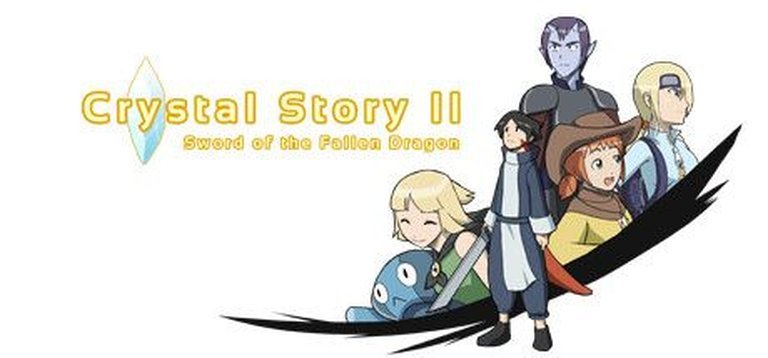
Crystal Story II: Sword of the Fallen Dragon is a turn-based RPG that follows the journey of a young dragon on a quest to defeat an evil witch and thwart an impending invasion. Set in a vast fantasy world with anime/manga-inspired art, the game features a rich narrative, randomized dungeons, and a flexible class system that allows players to customize their party. Alongside the main story, players can engage in various side quests, minigames like fishing and zombie defense, and upgrade equipment through alchemy. With a mix of strategic combat, exploration, and optional post-game content, the game offers a deep and immersive experience for RPG fans.
Gameplay Videos
Crystal Story II: Sword of the Fallen Dragon Guides & Walkthroughs
Crystal Story II: Sword of the Fallen Dragon Reviews & Reception
store.steampowered.com (94/100): Very Positive (94% of the 306 user reviews for this game are positive).
gamereviewpad.com : Crystal Story II, much like its predecessor, is a flash style game. With a vibrant color palette, it stands out amongst the crowd.
Crystal Story II: Sword of the Fallen Dragon Cheats & Codes
PC (Hacked Version)
Press the specified keys during gameplay.
| Code | Effect |
|---|---|
| G | Toggle invulnerability |
| H | Toggle mana |
| J | Add money |
PC (Flash Version)
Press the specified keys during gameplay.
| Code | Effect |
|---|---|
| G | Toggle endless health |
| H | Toggle endless mana |
| J | Add cash |
Crystal Story II: Sword of the Fallen Dragon – A Comprehensive Retrospective
Introduction: A Dragon’s Journey Through Indie RPG History
In the vast, often oversaturated landscape of indie RPGs, Crystal Story II: Sword of the Fallen Dragon (2015) stands as a testament to the power of passion, iteration, and the enduring appeal of classic turn-based mechanics. Developed almost entirely by Emmanuel Salva Cruz under the moniker Lanstrash, this game is a rare gem—a labor of love that evolved from a humble Flash-based predecessor into a fully realized, commercially successful title. It is a game that wears its influences proudly—Final Fantasy, Dragon Quest, and Chrono Trigger—while carving out its own identity through innovative systems, charming aesthetics, and an ambitious scope.
This review aims to dissect Crystal Story II in exhaustive detail, exploring its development history, narrative depth, gameplay mechanics, artistic vision, and lasting legacy. At its core, Crystal Story II is a game about growth—not just for its protagonist, the young dragon D, but for its creator, its community, and the very genre it inhabits. It is a game that asks: Can an indie developer, working with limited resources, craft an experience that rivals the titans of the JRPG golden age? The answer, as we shall see, is a resounding yes—with caveats.
Development History & Context: From Flash to Steam
The Birth of a Franchise: Crystal Story (2011)
Before Crystal Story II, there was Crystal Story (2011), a modest Flash RPG released on Newgrounds, Kongregate, and ArmorGames. Created by Emmanuel Salva Cruz—a Filipino-American developer with a background in animation—this first entry was a proof of concept, a love letter to 16-bit JRPGs. It featured:
– A linear, turn-based combat system.
– A short, self-contained story about a hero battling an evil witch.
– Pixel-art visuals reminiscent of Dragon Quest and Final Fantasy.
– A soundtrack composed by Morgan King, whose work would become synonymous with the series.
Despite its simplicity, Crystal Story resonated with players. It won Newgrounds’ Daily and Weekly awards, garnering a small but dedicated fanbase. Cruz’s ability to distill the essence of classic RPGs into a bite-sized, browser-friendly experience was no small feat. However, the game’s limitations were evident:
– Repetitive dungeon design.
– Minimal character development.
– A lack of mechanical depth.
These shortcomings would become the foundation for Crystal Story II’s evolution.
The Leap to Commercial Development
By 2013, Cruz had set his sights higher. Inspired by the success of other Newgrounds alumni (Castle Crashers, Super Meat Boy), he sought to expand Crystal Story into a full-fledged commercial product. The development of Crystal Story II was marked by several key decisions:
1. Transition from Flash to a Standalone Engine:
– While the game was still built using Adobe Flash Professional, Cruz optimized it for desktop and mobile platforms, ensuring smoother performance and higher-resolution assets.
– The Steam release (2015) featured 24-bit PNG sprites (up from 8-bit in the Flash version), improved audio quality, and additional content.
-
Crowdfunding and Community Engagement:
- Cruz leveraged platforms like Kongregate, ArmorGames, and Newgrounds to build hype, releasing a free demo that allowed players to experience the first chapter.
- The game was Greenlit on Steam in 2014, a crucial milestone that provided visibility and legitimacy.
-
The “Sword of the Fallen Dragon” Update:
- The Steam version included a sixth chapter, new side quests, minigames (Card Battle, Battle Arena), and post-game content.
- This “Deluxe Edition” was positioned as the definitive version, offering 10+ hours of additional gameplay over the original Flash release.
The Indie RPG Landscape in 2015
Crystal Story II arrived at a pivotal moment in indie gaming:
– The JRPG Revival: Titles like Child of Light (2014), Pier Solar (2014), and I Am Setsuna (2016) proved there was a market for modern takes on classic turn-based RPGs.
– The Rise of Crowdfunded RPGs: Pillars of Eternity (2015) and Undertale (2015) demonstrated that niche genres could thrive with the right vision.
– The Decline of Flash Gaming: As Adobe Flash faded, developers like Cruz had to adapt, migrating to Steam, mobile, and standalone engines.
In this context, Crystal Story II was both a throwback and a pioneer—a game that embraced retro mechanics while experimenting with modern design sensibilities.
Narrative & Thematic Deep Dive: A Tale of Dragons, Witches, and Identity
Plot Overview: The Quest for the Shattered Sky
Crystal Story II follows D, a young dragon from another dimension, as he embarks on a quest to:
1. Defeat the evil witch Rita, who seeks to summon the Dargons—ancient, world-ending creatures.
2. Collect the Crystal Gems, powerful artifacts scattered across the land, each guarded by a formidable boss.
3. Assemble a party of allies, including:
– Lina, a spirited thief with a heart of gold.
– Mari, a timid but determined mage.
– Kaz, a brooding demon with a mysterious past.
– Reuben, a stoic knight with a tragic backstory.
The story unfolds across six chapters, each introducing new regions, dungeons, and lore. The Sword of the Fallen Dragon update adds a sixth chapter, which explores the Northern Orc Village and introduces a new threat tied to the game’s overarching mythology.
Themes: Identity, Destiny, and the Burden of Power
While Crystal Story II’s plot is archetypal (a hero’s journey with clear good-vs-evil stakes), its themes elevate it beyond mere pastiche:
1. The Struggle for Self-Worth:
– D is not just a dragon—he is an outsider, displaced from his home dimension. His journey is as much about finding belonging as it is about saving the world.
– Characters like Kaz (the demon) and Mari (the cowardly mage) grapple with self-doubt, their arcs revolving around overcoming personal demons.
-
The Cost of Power:
- The Crystal Gems are not just MacGuffins; they represent temptation. Rita’s desire to wield them mirrors classic tragic villains (Final Fantasy’s Kefka, Dragon Quest’s Psaro).
- The game’s post-game content introduces optional bosses that test the player’s mastery of the combat system, reinforcing the idea that true strength comes from growth, not just raw power.
-
The Power of Friendship (Without Cliche):
- Unlike many JRPGs where party bonds feel forced, Crystal Story II’s relationships develop organically. Lina’s playful banter with D, Kaz’s reluctant camaraderie, and Mari’s gradual confidence all feel earned.
Characterization: Archetypes with Heart
The game’s characters are deliberately archetypal, but Cruz infuses them with charm and personality:
– D (The Stoic Hero): A classic “silent protagonist” with a dry wit, D’s dragon heritage is more than just a gimmick—it informs his combat abilities (breath attacks, flight) and his outsider status.
– Lina (The Rogue with a Heart of Gold): A thief with a moral code, Lina provides comic relief without becoming a caricature. Her backstory (orphaned, raised by thieves) adds depth.
– Kaz (The Brooding Demon): A tsundere with a tragic past, Kaz’s arc revolves around redemption. His demon heritage makes him a target of prejudice, a narrative thread that could have been explored further.
– Mari (The Reluctant Mage): The anxiety-ridden spellcaster, Mari’s growth from timid support to battle-ready hero is one of the game’s highlights.
Missed Opportunities:
– Rita (The Witch): While she serves as a competent villain, her motivations are underdeveloped. A deeper exploration of her connection to the Dargons or her personal vendetta could have elevated the narrative.
– Side Characters: Many NPCs feel interchangeable, serving as quest-givers rather than living, breathing inhabitants of the world.
Dialogue & Writing: Charm Over Complexity
The writing in Crystal Story II is functional rather than poetic, but it suits the game’s tone:
– Humor: Lina’s sarcastic quips and D’s deadpan responses provide levity.
– World-Building: While the lore is not as dense as Final Fantasy or The Elder Scrolls, the game’s bestary, item descriptions, and side quests flesh out the world.
– Localization: The English script is clean and error-free, a rarity in indie RPGs.
Verdict on Narrative:
Crystal Story II’s story is not revolutionary, but it is competent, charming, and occasionally poignant. It succeeds by embracing its simplicity rather than aspiring to Final Fantasy-level complexity.
Gameplay Mechanics & Systems: A Masterclass in Turn-Based Design
Combat: Strategic, Fast-Paced, and Rewarding
At its core, Crystal Story II is a turn-based RPG with a twist: the Active Time Battle (ATB)-like “Turn Indicator” system.
– How It Works:
– A timeline at the top of the screen shows the order of turns for both allies and enemies.
– Players can see upcoming actions and plan accordingly, adding a layer of strategy absent in traditional turn-based games.
– Speed (SPD) stat determines turn order, allowing for tactical party composition.
- Depth & Customization:
- Elemental Weaknesses: Fire, Ice, Lightning, and Dark magic play a crucial role in boss fights.
- Status Effects: Poison, Stun, and Buffs/Debuffs are viable strategies, not just afterthoughts.
- Burst Attacks: A risk-reward system where characters can charge up for a powerful strike at the cost of skipping a turn.
Boss Fights: The Game’s High Point
– Bosses are meticulously designed, requiring specific strategies rather than brute force.
– Examples:
– The Ice Golem: Weak to fire, but reflects physical attacks.
– Rita (Final Boss): A multi-phase battle that tests party synergy and adaptability.
Progression: The Flexible Class System
One of Crystal Story II’s most innovative features is its class system, which allows for deep customization:
– How It Works:
– Characters level up via SP (Skill Points), earned in battle.
– Upon reaching certain milestones, players can switch classes, retaining some stats from previous classes.
– Hybrid Classes: Players can mix and match abilities (e.g., a Mage/Knight hybrid).
-
Strengths:
- Encourages experimentation.
- No “wrong” builds—players can respec via class changes.
- Post-game content rewards optimized builds.
-
Weaknesses:
- Early-game classes feel underwhelming compared to late-game hybrids.
- Lack of visual distinction between classes (a missed opportunity for sprite variations).
Equipment & Crafting: Alchemy and Upgrades
- Upgradable Gear:
- Weapons and armor can be enhanced using materials found in dungeons.
- No “junk” items—everything has a use in crafting or alchemy.
- Alchemy System:
- Players can combine items to create potions, bombs, and rare equipment.
- Recipes are discovered organically, encouraging exploration.
Exploration: Randomized Dungeons & Side Quests
- Procedural Dungeons:
- Dungeons are randomly generated, ensuring replayability.
- Criticism: While this adds variety, it lacks the handcrafted charm of classic JRPG dungeons (Chrono Trigger’s Magus Castle, Final Fantasy VI’s Opera House).
- Side Quests:
- Fetch quests, bounty hunts, and minigame challenges pad out the experience.
- Standout Quest: “The Curious Thief” (Sword of the Fallen Dragon update) adds narrative depth to the world.
Minigames: Hit or Miss?
Crystal Story II includes seven minigames, ranging from brilliant to tedious:
1. Fishing: A relaxing but repetitive activity that rewards stat-boosting fish.
2. Zombie Defense: A Bejeweled-like match-3 game—fun in short bursts.
3. Mercenary Defense: A tower defense variant with strategic depth.
4. Snowboard Extreme: A downhill racing game—frustrating controls but rewarding prizes.
5. Hackpick: A puzzle minigame for rare chests—clever but repetitive.
6. Card Battle: A Pokémon TCG-like system—the standout minigame, with deep strategy and collectible cards.
7. Battle Arena: A wave-based combat challenge—great for grinding and rewards.
Verdict on Minigames:
– Card Battle and Mercenary Defense are worth the time.
– Fishing and Snowboarding feel like padding.
UI & Quality of Life
- Strengths:
- Clean, intuitive menus.
- Turn indicators make combat easy to follow.
- Auto-save feature prevents progress loss.
- Weaknesses:
- No controller support at launch (added in later patches).
- Inventory management can be clunky.
World-Building, Art & Sound: Crafting a Memorable Fantasy Realm
Setting: A Vibrant, If Familiar, Fantasy World
Crystal Story II’s world is a classic high-fantasy realm, complete with:
– Lush forests, icy tundras, volcanic caves, and ancient ruins.
– A mix of human kingdoms, orc villages, and magical enclaves.
Strengths:
– Diverse biomes keep exploration visually engaging.
– NPCs and side quests add lore depth (e.g., the Northern Orc Village’s political strife in Chapter 6).
Weaknesses:
– Lack of a “living world”—towns feel static, with no day/night cycle or dynamic events.
– Underutilized lore—the Dargons’ backstory is intriguing but underdeveloped.
Art Direction: Anime-Inspired Pixel Art
- Character Sprites:
- Fluid animations for the main party, with expressive battle poses.
- Enemies are static portraits, a cost-cutting measure that slightly detracts from immersion.
- Environmental Design:
- Colorful and detailed, but randomized dungeons lead to repetitive layouts.
- Standout Areas:
- The Ice Caverns (Chapter 3) – A stunning, frosty dungeon with blue-and-white hues.
- The Volcanic Fortress (Chapter 5) – Fiery visuals that evoke Final Fantasy IV’s Lunar Core.
Soundtrack: A Masterpiece of Indie Composition
Composed by Morgan King, the soundtrack is one of the game’s strongest assets:
– Memorable Tracks:
– “Erimos” – A haunting, melancholic dungeon theme.
– “Luminous Decay” – A pulsing, energetic battle track.
– “The Witch’s Lair” – A dark, orchestral finale piece.
– Strengths:
– Dynamic combat music that intensifies during boss fights.
– Leitmotifs for key characters (e.g., Rita’s eerie theme).
– Weaknesses:
– Limited tracks—some dungeons reuse music.
Verdict on Presentation:
Crystal Story II’s art and sound design punch far above its weight class, proving that indie games can rival AAA productions in aesthetic appeal.
Reception & Legacy: A Cult Classic in the Making
Critical & Commercial Reception
- Steam Reviews: 94% Positive (306 reviews) – Players praised its charming story, strategic combat, and value for money.
- IndieDB & Kongregate: Widely acclaimed in Flash gaming circles, with thousands of plays on the free version.
- Sales: While exact numbers are unavailable, the game’s $2.99 price point and Steam success suggest strong indie performance.
Influence & Legacy
- Proved that Flash RPGs could transition to commercial success.
- Inspired other indie devs to experiment with class systems and minigames.
- Paved the way for Crystal Story: Dawn of Dusk (2024), a 3D remake/sequel currently in development.
Comparisons to Peers
| Game | Strengths | Weaknesses |
|---|---|---|
| Crystal Story II | Deep combat, charming characters, great soundtrack | Repetitive dungeons, underdeveloped lore |
| Child of Light | Gorgeous art, poetic writing | Shallow combat, short length |
| I Am Setsuna | Emotional story, ATB combat | Grindy, repetitive dungeons |
| Pier Solar | Retro charm, deep mechanics | Slow pacing, outdated UI |
Verdict on Legacy:
Crystal Story II is not a flawless masterpiece, but it is a landmark indie RPG—a game that proves passion can outweigh budget.
Conclusion: A Dragon’s Triumph
Crystal Story II: Sword of the Fallen Dragon is more than the sum of its parts. It is:
✅ A love letter to classic JRPGs, executed with modern sensibilities.
✅ A showcase of indie ingenuity, proving that one developer can craft a world worth exploring.
✅ A game that rewards strategy, experimentation, and patience.
Final Verdict:
8.5/10 – “Excellent”
– For Fans Of: Final Fantasy V, Dragon Quest VIII, Child of Light
– Best Feature: Combat & Class System
– Biggest Flaw: Repetitive Dungeon Design
Should You Play It?
– Yes, if you love turn-based RPGs with depth and charm.
– Yes, if you appreciate indie passion projects.
– No, if you demand AAA-level polish or open-world freedom.
In the pantheon of indie RPGs, Crystal Story II stands tall—not as a revolutionary title, but as a refined, heartfelt, and endlessly enjoyable adventure. It is a testament to what one person, armed with vision and determination, can achieve.
And in a world where triple-A RPGs often forget their roots, Crystal Story II is a welcome reminder of why we fell in love with the genre in the first place.
Final Thought:
“In a sea of soulless open-world RPGs, Crystal Story II is a rare gem—a game that remembers the magic of turn-based battles, pixel-art charm, and a story that, while simple, is told with heart.”
Would I recommend it? Absolutely. Would I play it again? Without hesitation.
Now, if you’ll excuse me, I have a dragon to summon and a witch to defeat. 🐉⚔️