
- Release Year: 2022
- Platforms: Nintendo Switch, Windows
- Publisher: Marginal act, Woo Foo Games
- Developer: Woo Foo Games
- Genre: Simulation
- Perspective: Diagonal-down
- Game Mode: Single-player
- Gameplay: City building, construction simulation
- Setting: Fantasy
- Average Score: 63/100
Description
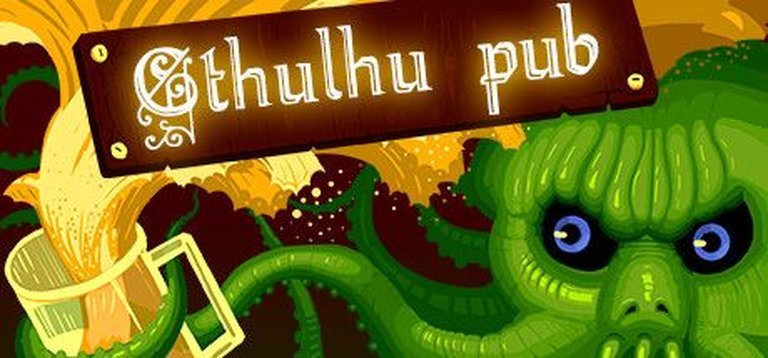
Cthulhu Pub is a quirky management simulation game where players build and run a pub catering to monsters, humans, and even Lovecraftian elder gods. Set in a whimsical yet eerie fantasy world, the game blends city-building mechanics with light strategy as you expand your establishment, manage eccentric patrons, and defend against occasional attacks. With a mix of cute and creepy aesthetics, the game offers a unique twist on the simulation genre, though its execution is hampered by clunky controls and a lackluster tutorial.
Where to Buy Cthulhu Pub
PC
Cthulhu Pub Cracks & Fixes
Cthulhu Pub Patches & Updates
Cthulhu Pub Guides & Walkthroughs
Cthulhu Pub Reviews & Reception
store.steampowered.com (75/100): Mostly Positive
steambase.io (74/100): Cthulhu pub has earned a Player Score of 74 / 100.
mobygames.com (42/100): Critics Average score: 42%
eshopperreviews.com : Cthulhu Pub is a Management Simulation that has you building and managing a pub for monsters while fending off attacking humans and Lovecraftian elder gods. It’s a great premise, but it’s brought down by a poor presentation that’s not conducive to the gameplay, lacking controls, and a poor tutorial.
Cthulhu Pub: A Lovecraftian Management Simulator That Stumbles on Its Own Tentacles
Introduction: A Pub for the Elder Gods
Cthulhu Pub is a game that should, by all rights, be a delightful oddity—a management simulator where players build and run a tavern for monsters, fend off human invaders, and appease Lovecraftian horrors. The premise is undeniably charming: a cozy pub where Cthulhu himself might pull up a stool, if only to demand another round of eldritch ale. Yet, despite its intriguing concept, Cthulhu Pub falters in execution, leaving players with a game that feels more like a half-baked experiment than a polished experience.
Released in 2022 by Ukrainian indie developer Marginalact, Cthulhu Pub entered Early Access in February before its full launch in July. The game’s development was marked by personal and political turmoil—its creator, caught in the midst of Russia’s invasion of Ukraine, released it prematurely out of uncertainty for the future. This context adds a layer of poignant urgency to the game’s existence, but it also hints at why Cthulhu Pub feels unfinished.
This review will dissect Cthulhu Pub in exhaustive detail, examining its development history, narrative and thematic ambitions, gameplay mechanics, artistic direction, and legacy. By the end, we’ll determine whether this Lovecraftian pub simulator is worth a visit—or if it’s better left to the depths of R’lyeh.
Development History & Context: A Game Born in Chaos
The Studio Behind the Madness: Marginalact
Cthulhu Pub is the brainchild of Marginalact, a small indie studio based in Ukraine. Little is known about the team beyond their Steam and Itch.io presence, but their work on Cthulhu Pub reflects both ambition and constraint. The game was developed using Unity, a common choice for indie projects due to its accessibility, though this also means Cthulhu Pub lacks the technical polish of more specialized engines.
The game’s development was anything but smooth. In a Steam Community post from February 24, 2022, the developer wrote:
“Hi! This is Marginal act a game developer from Ukraine. I decided to release Cthulhu pub today because I don’t know what will be with me, my game, and my country tomorrow due to Russian aggression. Right now my city is under massive bombing attack. Ukrainian troops are fighting bravely and I hope we will survive this war.”
This statement is haunting. Cthulhu Pub wasn’t just a game—it was a lifeline, a creative outlet in the face of existential dread. The developer’s urgency is palpable in the game’s rushed Early Access launch, and while later updates (such as the July 2022 full release) attempted to refine the experience, the scars of its hasty birth remain.
The Gaming Landscape in 2022: A Crowded Pub
Cthulhu Pub entered a market already saturated with management simulators and Lovecraftian indie games. Titles like Two Point Hospital, Game Dev Tycoon, and Parkitect had set high standards for the genre, while games like The Sinking City and Call of Cthulhu (2018) had explored Lovecraft’s mythos in more narrative-driven ways.
What Cthulhu Pub offered was a novelty fusion—a tycoon game where the customer base included Elder Gods. This should have been a selling point, but the game’s technical limitations and design flaws prevented it from standing out. The Nintendo Switch port, released later in 2022, fared even worse, with critics like eShopper Reviews lambasting its clunky controls and unintuitive UI.
Technological Constraints: Unity and the Indie Struggle
Unity, while versatile, has its limitations—especially for a single developer working under duress. Cthulhu Pub suffers from:
- Fixed isometric camera angles that obstruct visibility.
- Pixel art that lacks clarity, making it difficult to distinguish between objects.
- Performance issues, particularly when managing larger pubs.
- A lack of rotational control, forcing players to work around awkward perspectives.
These constraints are understandable given the circumstances of its creation, but they nonetheless hinder the gameplay experience.
Narrative & Thematic Deep Dive: A Pub at the End of the World
Plot: Serving Drinks to the Apocalypse
Cthulhu Pub doesn’t have a traditional narrative in the way a story-driven RPG might. Instead, it presents a loose, emergent storyline through its gameplay systems:
- You are the proprietor of a pub in a world where monsters, humans, and Elder Gods coexist.
- Humans periodically attack, forcing you to hire warriors for defense.
- Lovecraftian deities occasionally descend upon your establishment, demanding tribute (via altars) or destroying everything if unsatisfied.
- Your goal? Expand your pub, unlock new recipes, and earn billions—presumably to fund your eventual escape from this madness.
The game’s Steam description frames it as a “pub simulator with Lovecraft universe lore,” but the execution is more whimsical than horrific. The tone is cartoonish, with “cute” monsters and a playful take on cosmic horror. This clashes with the oppressive dread typically associated with Lovecraft, making Cthulhu Pub feel more like SpongeBob’s Krabby Patty Stand than The Shadow Over Innsmouth.
Characters & Dialogue: Silent Patrons and Faceless Staff
One of Cthulhu Pub’s biggest narrative weaknesses is its lack of character depth. Your patrons—whether human, monstrous, or divine—are silent, faceless entities that exist purely as gameplay mechanics. There are no:
- Unique NPCs with personalities.
- Dialogue trees or interactions.
- Quests or story events beyond random attacks.
This absence of narrative personality makes the world feel sterile, despite its fantastical premise. Even the Elder Gods are reduced to stat blocks—they attack, you placate them with altars, and that’s the extent of their role.
Themes: Capitalism Meets Cosmic Horror
At its core, Cthulhu Pub is a satirical take on capitalism dressed in Lovecraftian drag. The game’s themes include:
- The Absurdity of Labor: You’re running a business in a world where gods can wipe you out at any moment, yet the grind continues.
- Exploitation of the Workforce: Your staff (cooks, cleaners, warriors) are disposable cogs in your money-making machine.
- Futility in the Face of Chaos: No matter how successful your pub becomes, the Elder Gods will always be a threat, mirroring Lovecraft’s theme of human insignificance.
However, these themes are never explored meaningfully. The game doesn’t lean into the horror of its premise—it treats the apocalypse as just another management challenge.
Gameplay Mechanics & Systems: A Clunky Tycoon Experience
Core Gameplay Loop: Build, Serve, Defend, Repeat
Cthulhu Pub follows a standard tycoon formula:
- Construct your pub (walls, floors, tables, decorations).
- Hire staff (cooks, waiters, cleaners, warriors).
- Expand your menu by unlocking new recipes.
- Defend against human raids and appease Elder Gods with altars.
- Earn money to repeat the cycle.
On paper, this should be engaging. In practice, it’s tedious and frustrating.
Construction & Management: A Fight Against the Camera
The biggest flaw in Cthulhu Pub is its isometric, non-rotating camera. Because the game uses a fixed diagonal-down perspective, players frequently struggle with:
- Building behind objects (e.g., placing a table behind a wall only to realize the floor isn’t there).
- Selecting small items due to imprecise controls.
- Navigating larger pubs, where the camera’s lack of rotation makes expansion a logistical nightmare.
The Nintendo Switch version exacerbates these issues with awkward touch controls, as noted by eShopper Reviews:
“The isometric view doesn’t rotate, and often leads to places you’ll want to build on that are blocked by other objects.”
Combat & Defense: A Half-Baked System
When humans attack, you must hire warriors to fend them off. However:
- Combat is automated—you have no direct control.
- Warriors are generic with no upgrades or specializations.
- Raids feel random rather than strategic.
The Elder God encounters are similarly underwhelming. You place altars (red for meat, green for vegetables, gold for money) to delay their wrath, but there’s no tension—just a timer until the next inevitable attack.
Progression & Economy: Grind Without Reward
Unlocking new recipes, decorations, and staff is tied to earning money, but the economy is unbalanced:
- Early-game profits are slow, making expansion a slog.
- Late-game income explodes, rendering challenges meaningless.
- No meaningful endgame—just bigger numbers for the sake of it.
UI & Controls: A Lesson in Frustration
The user interface is cluttered and unintuitive:
- Menus are poorly organized, making it hard to find specific items.
- The tutorial is inadequate, failing to explain key mechanics.
- Mouse controls feel imprecise, especially on laptop trackpads or Switch joy-cons.
World-Building, Art & Sound: A Lovecraftian Aesthetic That Misses the Mark
Visual Design: Pixel Art That Lacks Clarity
Cthulhu Pub uses 2D pixel art, which should evoke a retro charm. Instead, the visuals are:
- Muddy and indistinct, making it hard to tell objects apart.
- Lacking in detail, with repetitive sprites for staff and patrons.
- Dull in color palette, leaning too heavily on browns and grays.
The isometric perspective (a la RollerCoaster Tycoon) could have worked if the art were crisp and readable, but here it obscures more than it reveals.
Sound Design: A Droning Chant of Monotony
The soundtrack consists of a low, droning chant—thematically appropriate for Lovecraft, but terrible for gameplay. There are:
- No dynamic music shifts during raids or Elder God attacks.
- No ambient pub sounds (clinking glasses, chatter).
- Repetitive, grating audio that grows tiresome within minutes.
Atmosphere: A Pub Without Soul
The biggest missed opportunity is the lack of atmosphere. A Lovecraftian pub should feel:
- Unsettling (whispers from the void, flickering lights).
- Alive (patrons with personalities, eerie events).
- Immersive (a world that reacts to your choices).
Instead, Cthulhu Pub feels sterile, like a spreadsheet with monsters.
Reception & Legacy: A Game That Slipped Through the Cracks
Critical Reception: Mostly Negative to Mixed
- Steam: 75% Positive (from 33 reviews), but many cite janky controls and lack of depth.
- Nintendo Switch (eShopper Reviews): 42/100, calling it “brought down by poor presentation.”
- Metacritic: No official score, but user reception is lukewarm.
Commercial Performance: A Niche Curiosity
- Steam sales have been modest, with frequent 90% discounts (selling for as low as $0.89).
- The Nintendo Switch version has fewer than 100 ratings, suggesting low visibility.
Legacy: A Footnote in Lovecraftian Gaming
Cthulhu Pub will likely be remembered as:
- A noble experiment that didn’t fully realize its potential.
- A product of its circumstances—a game shaped by war and urgency.
- A cautionary tale about rushing indie projects without proper polish.
It hasn’t influenced the genre in any meaningful way, nor has it spawned imitators. Instead, it remains a quirky oddity—a game that could have been great but ultimately fails to deliver.
Conclusion: A Pub Worth Visiting? Only for the Most Devoted Lovecraft Fans
Cthulhu Pub is a flawed but fascinating experiment—a game that dares to blend cosmic horror with tycoon mechanics, only to stumble over its own technical limitations and design missteps.
The Good:
✅ Unique premise (a Lovecraftian pub simulator is a fresh idea).
✅ Charming in concept (the idea of serving drinks to Cthulhu is delightfully absurd).
✅ Developed under extraordinary circumstances (a testament to indie resilience).
The Bad:
❌ Clunky, frustrating controls (especially on Switch).
❌ Poor visual clarity (pixel art that obscures gameplay).
❌ Shallow mechanics (combat and progression lack depth).
❌ No atmosphere (a Lovecraft game that isn’t scary or immersive).
Final Verdict: 5/10 – “Mediocre, But Memorable for the Wrong Reasons”
Cthulhu Pub is not a bad game, but it’s far from a good one. It’s a missed opportunity—a game that could have been a cult classic if given more time, polish, and narrative ambition.
Who should play it?
– Die-hard Lovecraft fans who want to see the mythos in a weird new context.
– Indie game historians interested in games shaped by real-world events.
– Patients masochists who enjoy janky, unfinished experiences.
Who should avoid it?
– Casual gamers looking for a polished tycoon game.
– Nintendo Switch owners (the controls are especially bad here).
– Anyone expecting depth in storytelling or gameplay.
In the end, Cthulhu Pub is like a bad batch of eldritch ale—it has interesting ingredients, but the final product leaves a bitter aftertaste. Proceed with caution.
Final Score: ★★☆☆☆ (2.5/5) – “A Lovecraftian Mess, But a Fascinating One.”