
- Release Year: 2019
- Platforms: Browser, Linux, Windows
- Publisher: NanningsGames
- Developer: NanningsGames
- Genre: Action
- Perspective: Diagonal-down
- Game Mode: Single-player
- Gameplay: Platform, Puzzle elements
- Average Score: 59/100
Description
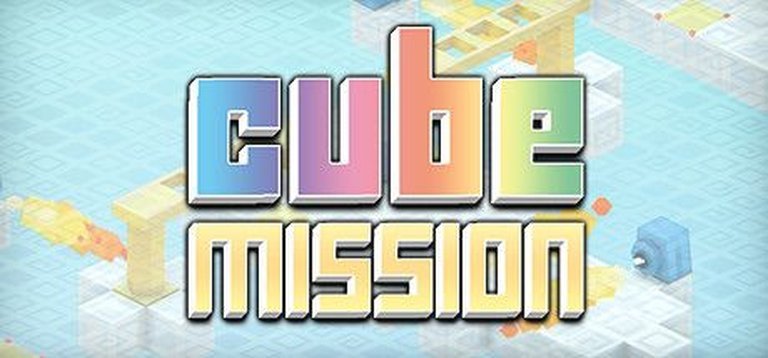
Cube Mission is a fun isometric action platforming puzzler where players control a rolling cube through a mysterious floating world filled with diverse obstacles, precarious platforms, and challenging puzzles across 36 levels, delivering an amusing, rewarding adventure suitable for all gamers.
Where to Buy Cube Mission
PC
Cube Mission Guides & Walkthroughs
Cube Mission Reviews & Reception
metacritic.com (40/100): Cube Mission’s rigid structure does not do it any favors. When paired with its poor optimization, this title quickly becomes a hard sell for even the most diehard of puzzle platformer fans.
opencritic.com (40/100): Cube Mission’s rigid structure does not do it any favors. When paired with its poor optimization, this title quickly becomes a hard sell for even the most diehard of puzzle platformer fans.
steambase.io (79/100): Mostly Positive
store.steampowered.com (78/100): Mostly Positive
Cube Mission: Review
Introduction
Imagine rolling a humble cube through a surreal, floating cosmos, where every tilt defies gravity’s cruel logic and precarious platforms drift like forgotten dreams. Cube Mission, released in 2019 by the indie studio NanningsGames, captures this essence in its isometric puzzle-platformer core—a deceptively simple premise that balloons into a symphony of traps, companions, and clever mechanics. Though overshadowed by the indie deluge of its era, this unassuming title has carved a niche among Steam’s bargain-bin treasures, boasting 36 bite-sized levels that unlock corresponding achievements. As a game historian, I’ve traced its lineage to early cube-rolling experiments like those in mainframe titles from the 1970s and ’80s, yet Cube Mission modernizes them with accessible controls and varied hazards. My thesis: While its minimalist charm and rewarding puzzles shine as a testament to solo-dev ingenuity, technical rough edges and sparse depth prevent it from ascending to indie classic status, making it a solid pick for casual puzzlers at its impulse-buy price.
Development History & Context
NanningsGames, a modest indie outfit helmed by what appears to be a solo developer or tiny team (given the unified credits and website nannings.nz), birthed Cube Mission amid the 2019 Steam gold rush. This was the heyday of ultra-low-budget releases: games assembled in Unity or Godot, priced under $2, and propped up by achievement hunting and bundle saturation. Launched on January 17, 2019, for Windows (with Linux support simultaneous and a browser port in 2021), it targeted players weary of AAA bloat, echoing the platformer revival sparked by titles like Celeste (2018) and Dead Cells (2018)—though Cube Mission opts for isometric puzzles over precision 2D jumps.
Technological constraints were minimal; system requirements are laughably light (1GHz CPU, 256MB graphics for Windows), tested even on aging laptops with Intel HD 530. Yet, this era’s pitfalls loom large: community gripes highlight absent VSync (causing 1000+ FPS and fan whine), menu-skipping bugs, and wonky key rebinding where directional inputs confuse post-rotation. NanningsGames’ vision seems rooted in joyful experimentation—part of a broader “Nannings” franchise including IsoCubes and Marble Trap—prioritizing “simple to pick up, easy to play” mechanics over polish. In a landscape flooded by 10,000+ Steam indies annually, Cube Mission embodies the democratized dev dream: one dev, direct Steam release, no middlemen. But without marketing muscle, it languished, collected by just one MobyGames user and earning sparse Steam reviews (19 core, 78% positive).
Narrative & Thematic Deep Dive
Cube Mission eschews traditional storytelling for pure abstraction, a deliberate choice in line with minimalist puzzlers like World of Goo or Baba Is You. There’s no overt plot, no named protagonist beyond “the cube,” and zero dialogue—your journey unfolds in a voiceless floating world of geometric peril. This narrative vacuum invites thematic interpretation: the cube’s odyssey symbolizes existential navigation, rolling through void-like expanses dotted with hostile spikes, flamethrowers, and enemy cubes. Companion cubes, which trail you when touched and must be herded to triggers, evoke themes of leadership and sacrifice; direct them wrongly, and they plummet into oblivion.
Deeper still, the game’s progression—36 levels escalating from basic rolls to crane-elevator symphonies—mirrors a hero’s journey stripped bare. No lore dumps via notes (unlike The Last of Us‘ collectibles); instead, “history” emerges organically through environmental storytelling. Lasers demand crate shields, floating platforms flee if mistimed, crafting a metaphor for impermanence. Characters? Absent, save abstract foes: enemy cubes as chaotic rivals, traps as indifferent fate. Wikidata tags it “casual adventure,” but thematically, it’s metaphysical minimalism—puzzle-solving as Zen koan, where mastery lies in acceptance of failure’s loop. Flawed? Yes, the silence risks monotony, but for lore purists debating “history vs. metaphysics” (à la Reddit tangents), this is pure, unadorned history of motion, no lofty abstracts needed.
Gameplay Mechanics & Systems
At its heart, Cube Mission deconstructs the core loop of isometric cube-rolling: direct control (WASD/arrows, gamepad/mouse viable) on a grid-based world, blending platforming with puzzles. Movement is grid-snapped, diagonal-down view emphasizing precarious drops—roll right, and physics simulate inertia, demanding foresight on vanishing platforms.
Core Loops: Each of 36 levels (unlocked sequentially, one achievement per) tasks you with reaching an exit. Early stages teach basics: dodge spikes, sidestep flamethrowers. Mid-game introduces companions—touch neutral cubes to recruit them as followers, maneuvering herds to pressure-plate triggers. Innovation peaks here: crates block lasers (push ’em precisely), cranes hoist you across chasms, elevators cycle vertically. Action flares in enemy encounters—red cubes patrol, forcing rhythmic dodges—while puzzles demand sequencing (e.g., lure companion past laser with crate barrier).
Combat & Progression: No traditional combat; “fights” are evasion puzzles. Progression is linear, no branching paths or upgrades—your cube stays static, skill the sole escalator. UI is spartan: clean HUD shows nothing extraneous, but gripes abound. Key rebinding fails post-rotation (cube moves “wrong” despite remaps), menus skip to levels on relaunch. Achievements incentivize 100% completion (e.g., “Level 36: THE END!”), fostering replay.
Innovations & Flaws: Varied mechanics—grid movement feels tactile, companion AI reliable yet exploitable—keep engagement high. Smooth controls shine on controller, but PC optimization falters: uncapped FPS strains hardware, rigid structure (no backtrack in levels) frustrates per Gamers Heroes’ 4/10 critique. Overall, loops are addictive for 2-4 hours, blending Chip’s Challenge logic with Monument Valley vertigo.
World-Building, Art & Sound
The “floating world” is a masterstroke of economical world-building: isometric 2D-scrolling vistas of pastel voids, blocky platforms suspended in azure infinity. Visuals are minimalist 3D-lite—clean polygons, vibrant hazards (crimson spikes, orange flames)—evoking relaxing tags like “Beautiful” and “Atmospheric.” No expansive biomes; levels chain procedurally similar arenas, but hazards layer depth: precarious ledges induce vertigo, drifting platforms build tension.
Atmosphere thrives on isolation—your cube’s lonely roll against cosmic indifference, punctuated by satisfying clunk impacts. Sound design amplifies: tags praise “Great Soundtrack,” likely chiptune loops syncing rolls and deaths. Effects are punchy—laser zaps, flame whooshes, companion thuds—but sparse voicework keeps focus gameplay-ward. Collectively, they forge immersion: visuals soothe, audio punctuates peril, turning abstract grids into a cohesive, precarious dreamscape. Minor nit: low-res textures show on modern displays, but at 125MB install, it’s period-appropriate charm.
Reception & Legacy
Launch reception was muted: Steam’s 78% positive (19 reviews, 33 total) lauds “fun isometric puzzler” with “36 achievements,” screenshots flaunting traps and completions. Users like BU4U Gaming hailed its simplicity; videos (e.g., Xeinok’s 100% run) boosted visibility. Critics? Scarce—one from Gamers Heroes (40/100, Feb 2019) damned “rigid structure” and optimization woes. MobyGames lacks scores/reviews; OpenCritic/Metacritic echo the void. Commercial? Bundles (Isometric, Puzzle Masters) sustain $1.19 sales, but low ownership (0 playing now per Trugamer) signals obscurity.
Legacy endures niche: influences micro-puzzlers in Nannings’ oeuvre (Toggle Cube, Hookshot), nodding cube pioneers (1973 mainframe Cube). No industry ripple—unlike Portal‘s companion cubes—but embodies 2019 indie’s ethos: achievement-driven, accessible joy. Reputation evolved positively via word-of-mouth (Steam forums seek VSync patches), cementing it as a “hidden gem” for grid-puzzle fans. Wikidata/IGDB logs affirm preservation, but without ports beyond browser, it’s Steam-bound ephemera.
Conclusion
Cube Mission distills indie puzzle-platforming to its platonic ideal: 36 levels of cube-wrangling euphoria, marred by control quirks and absent depth. NanningsGames’ vision triumphs in mechanics and mood, delivering rewarding highs amid floating perils, yet technical oversights cap its ceiling. In video game history, it slots as a footnote to the cube genre—charming successor to mainframe curios, precursor to bundle-fodder indies—but demands little, rewards modestly. Verdict: Recommended for puzzle aficionados (8/10 for value), a quick Steam win at sub-$2, but skip if polish is paramount. Play it, roll on, and appreciate the dev’s pluck in an oversaturated sea.