
- Release Year: 2020
- Platforms: Nintendo Switch, PlayStation 4, Windows, Xbox One
- Publisher: Teyon S.A.
- Developer: TomiGames
- Genre: Action
- Perspective: Diagonal-down
- Game Mode: Single-player
- Gameplay: n
- Setting: Fantasy
- Average Score: 58/100
Description
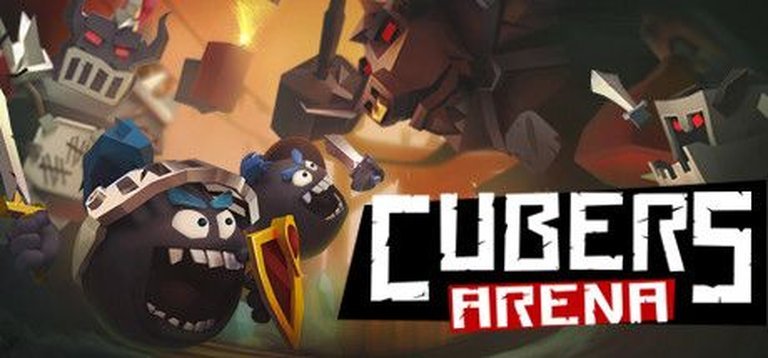
Cubers: Arena is an electrifying arena brawler and twin-stick slasher set in a fantasy world where players take on the role of Baller, a slave fighting for freedom in a gladiatorial arena. The game features fast-paced combat, a variety of weapons and skills, and supports both solo play and local co-op. With its colorful, cartoony visuals and hack-and-slash gameplay, players battle through waves of enemies in a top-down perspective, aiming to become the ultimate champion.
Gameplay Videos
Where to Buy Cubers: Arena
PC
Cubers: Arena Patches & Updates
Cubers: Arena Guides & Walkthroughs
Cubers: Arena Reviews & Reception
metacritic.com (75/100): Cubers: Arena is not a Minecraft rip-off or lame cube game – it’s a solid RPG arena with a refined indie style and lots of couch play possibility.
opencritic.com (30/100): I can say the story of Cubers Arena didn’t really do too much for me. From level to level, the grind of the game left a sour taste in my mouth to where I couldn’t help but wonder what’s the point?
waytoomany.games (65/100): Cubers: Arena is fun and functional, with some interesting ideas and an acceptable level of replayability, but at the end of the day, it’s an uneventful game.
monstercritic.com (65/100): Cubers: Arena is fun and functional, with some interesting ideas and an acceptable level of replayability, but at the end of the day, it’s an uneventful game.
Cubers: Arena: A Forgotten Gladiator in the Arena of Indie Games
Introduction: The Unremarkable Gladiator
In the vast coliseum of indie games, where innovation and polish often dictate survival, Cubers: Arena (2020) enters as an underdog—a gladiator armed with ambition but burdened by familiarity. Developed by Tomasz Dziobek under the moniker TomiGames and published by Teyon, this twin-stick slasher/arena brawler promises a visceral, couch-friendly experience where players assume the role of Baller, a slave fighting for freedom in a series of brutal, voxel-styled arenas. Yet, despite its earnest attempts to carve a niche in the hack-and-slash genre, Cubers: Arena struggles to escape the shadow of its influences, delivering a functional but ultimately forgettable experience.
This review dissects Cubers: Arena in exhaustive detail, examining its development, narrative, gameplay mechanics, artistic direction, reception, and legacy. Through this analysis, we aim to answer a critical question: Does Cubers: Arena deserve a place in the pantheon of indie gems, or is it merely another footnote in the annals of gaming history?
Development History & Context: A Labor of Love in the Shadows
The One-Man Army Behind the Game
Cubers: Arena is the brainchild of Tomasz Dziobek, a veteran developer with a decade of experience at Teyon, where he contributed to 3D art, level design, and gameplay mechanics. Inspired by his love for action games and couch co-op experiences, Dziobek embarked on Cubers: Arena as a passion project—initially intended as a simple game for himself and his wife. However, as development progressed, the scope expanded, transforming into a full-fledged commercial title.
The game’s journey from conception to release was arduous. Dziobek worked primarily alone, juggling development with familial responsibilities (including the birth of two children during the process). In a 2020 ModDB post, he revealed:
“If Teyon would not help me with the aid of a full-time programmer and experience of porting a game on consoles, I would never be able to finish this game.”
This collaboration with Teyon proved pivotal, enabling the game’s release across Windows, PlayStation 4, Xbox One, and Nintendo Switch on July 28, 2020.
Technological Foundations: Unreal Engine 4 and the Indie Struggle
Cubers: Arena was built using Unreal Engine 4, a powerful but demanding tool for indie developers. While UE4 allowed for striking visuals and fluid combat, it also presented challenges in optimization, particularly for the Nintendo Switch. Dziobek’s Reddit posts from 2019 highlight the struggles:
“After many optimizations, the game is now running pretty smooth on Switch and it’s still looking great!”
This statement underscores the technical hurdles faced by small teams attempting to harness AAA-grade engines.
The Gaming Landscape of 2020: A Crowded Arena
2020 was a banner year for indie games, with titles like Hades, Spiritfarer, and Fall Guys dominating the conversation. Cubers: Arena entered this competitive arena with a $14.99 price tag, positioning itself as a budget-friendly co-op experience. However, its release coincided with a surge in twin-stick shooters and hack-and-slash games, making it difficult to stand out.
The game’s voxel-based aesthetic, reminiscent of Minecraft and Crossy Road, further diluted its identity. While this art style was once fresh, by 2020, it had become ubiquitous, leaving Cubers: Arena struggling to differentiate itself visually.
Narrative & Thematic Deep Dive: A Tale as Thin as a Gladiator’s Tunic
Plot Overview: Freedom Through Violence
Cubers: Arena’s narrative is minimalist, serving as little more than a framing device for its combat. Players assume the role of Baller, a slave forced into gladiatorial combat by an unnamed king. The story unfolds across four themed arenas (Colosseum, Cave, Village, Abyss), each culminating in a boss fight. The overarching goal? Defeat the king and reclaim freedom.
The game’s cutscenes are sparse, offering only brief introductions and conclusions to each arena. There are no dialogue trees, no character development, and no moral dilemmas—just a straightforward quest for vengeance. This lack of depth is not inherently flawed; many arena brawlers (Hotline Miami, Ruiner) thrive on minimalism. However, Cubers: Arena fails to compensate with atmosphere or emotional weight, leaving its narrative feeling hollow.
Themes: Slavery, Freedom, and the Illusion of Choice
At its core, Cubers: Arena explores themes of oppression and liberation, albeit superficially. Baller’s journey mirrors that of Spartacus or Maximus from Gladiator—a wronged individual fighting against an unjust system. Yet, the game’s lack of narrative nuance prevents these themes from resonating.
The friendly fire system, where enemies can harm each other, subtly reinforces the idea of exploiting chaos to survive—a thematic parallel to Baller’s own struggle. However, this mechanic is underutilized in the storytelling, remaining a gameplay gimmick rather than a narrative device.
Characters and Dialogue: Gibberish and Silence
Cubers: Arena’s characters are voiceless avatars, communicating through Banjo-Kazooie-esque gibberish. While this choice aligns with the game’s cartoony tone, it also strips away any potential for emotional engagement. The bosses are similarly underdeveloped, serving as little more than damage sponges with unique attack patterns.
The absence of meaningful dialogue or character interactions makes Cubers: Arena feel mechanically driven rather than story-driven—a double-edged sword that may appeal to players seeking pure gameplay but alienates those craving narrative depth.
Gameplay Mechanics & Systems: A Functional but Flawed Combat Sandbox
Core Gameplay Loop: Hack, Slash, Repeat
Cubers: Arena is, at its heart, a twin-stick slasher with hack-and-slash mechanics. Players control Baller in a top-down, diagonal-down perspective, battling waves of enemies in enclosed arenas. The combat is fluid and responsive, with attacks mapping to the right stick and movement to the left—a control scheme that feels intuitive but lacks depth.
The game’s primary loop involves:
1. Entering an arena (Campaign or Mini-Game mode).
2. Fighting waves of enemies (25+ enemy types).
3. Collecting loot (gold, gems, experience).
4. Upgrading gear between battles.
5. Rinse and repeat.
This structure is repetitive by design, relying on progression and unlocks to maintain engagement. However, the slow movement speed and lack of tactical depth hinder long-term appeal.
Combat and Enemy Variety: A Mixed Bag
Cubers: Arena boasts over 25 enemy types, each with unique behaviors:
– Melee brutes who charge recklessly.
– Ranged attackers who pepper you with projectiles.
– Summoners who spawn additional foes.
– Bosses with multi-phase attacks.
While this variety is commendable, the AI is predictable, and enemy spam often overwhelms the player, particularly in later stages. The friendly fire system—where enemies can harm each other—adds a layer of strategy, but it’s underutilized in most encounters.
Progression and Customization: A Shallow RPG Lite System
The game features a light RPG progression system, allowing players to:
– Purchase over 100 weapons (swords, shields, two-handed weapons).
– Upgrade gear using gold and gems.
– Equip skills (e.g., dash attacks, area-of-effect strikes).
However, the impact of these upgrades is minimal. Many weapons feel cosmetically different rather than mechanically distinct, and the gem socketing system (which provides stat boosts) is largely superficial.
Multiplayer and Mini-Games: The Saving Grace
Cubers: Arena’s local co-op and versus modes are its strongest selling points. The game supports:
– Campaign co-op (drop-in/drop-out).
– Versus mode (competitive scoring).
– Mini-games (Time Attack, Defender, Dodgeball, etc.).
These modes extend the game’s lifespan and make it a viable party game. However, the lack of online multiplayer limits its appeal in an era where local co-op is increasingly rare.
UI and Accessibility: Functional but Unpolished
The user interface is clean but unremarkable, with menus that feel dated compared to contemporaries. The lack of a tutorial forces players to learn through trial and error, which may frustrate newcomers.
World-Building, Art & Sound: A Voxel Colosseum with Mixed Results
Visual Design: Cute but Unoriginal
Cubers: Arena’s voxel-based art style is its most defining feature—and its most derivative. The game’s four arenas (Colosseum, Cave, Village, Abyss) are visually distinct, with dynamic lighting and particle effects. However, the low-resolution textures and simplistic character models make it feel technically outdated for a 2020 release.
The destructible environments add a layer of interactivity, but the repetitive asset reuse makes arenas feel samey after prolonged play.
Sound Design: A Forgettable Soundtrack
The audio design is functional but unmemorable:
– Combat sounds (clangs, grunts) are satisfying.
– Ambient tracks in the Oasis hub are relaxing.
– Battle themes are generic and loop ad nauseam.
The gibberish voice acting, inspired by Banjo-Kazooie, quickly becomes annoying, lacking the charm of its influences.
Atmosphere: A Missed Opportunity
Cubers: Arena’s gladiatorial setting is ripe for atmospheric storytelling, yet the game fails to capitalize on its premise. The lack of crowd reactions, dynamic commentary, or environmental storytelling makes the arenas feel sterile rather than alive.
Reception & Legacy: A Game Quickly Forgotten
Critical Reception: Lukewarm at Best
Cubers: Arena received mixed reviews, with critics praising its co-op potential but criticizing its repetitiveness and lack of innovation.
-
WayTooManyGames (6.5/10):
“Cubers: Arena is fun and functional, with some interesting ideas and an acceptable level of replayability, but at the end of the day, it’s an uneventful game.”
-
TechStomper (Positive):
“Without doubt, CUBERS: Arena is a game that offers delights for the eyes and ears, while offering a degree of fun along the way.”
-
Pure Nintendo (3/10):
“Playing felt more like a chore than a game.”
The Metacritic score remains “tbd” due to insufficient reviews, while OpenCritic ranks it in the -1th percentile—a damning indictment of its impact.
Commercial Performance: A Niche Audience
Sales data is scarce, but GameRebellion estimates ~330 units sold, suggesting minimal commercial success. The game’s Steam reviews (90% positive, 10 total) indicate a small but satisfied fanbase, likely comprised of co-op enthusiasts and indie completists.
Legacy: A Footnote in Indie History
Cubers: Arena has had no discernible influence on the gaming industry. It remains a cult curiosity—a game that a few players enjoyed but that most forgot within weeks.
Conclusion: A Gladiator Who Never Became a Champion
Cubers: Arena is a competent but unremarkable arena brawler. Its fluid combat, co-op focus, and customization options provide fleeting fun, but its repetitive gameplay, derivative art style, and lack of narrative depth prevent it from ascending to greatness.
Final Verdict: 6/10 – “A Functional but Forgotten Contender”
Pros:
✅ Satisfying twin-stick combat.
✅ Great local co-op and versus modes.
✅ Decent enemy variety and progression systems.
Cons:
❌ Repetitive and shallow gameplay loop.
❌ Derivative voxel art style.
❌ Weak narrative and sound design.
❌ Lack of online multiplayer.
Cubers: Arena is not a bad game, but it’s not a memorable one. It’s the kind of title you play for a weekend, enjoy with a friend, and then never think about again. In the grand arena of gaming history, it’s a gladiator who fought valiantly but never earned the crown.
For those seeking a casual co-op slasher, it’s worth a look—especially on sale. But for everyone else? There are better battles to fight.
Final Score: 6/10 – “A Noble Effort, But No Champion.”