
- Release Year: 2018
- Platforms: Macintosh, Windows
- Publisher: KakkoiiKrew
- Developer: KakkoiiKrew
- Genre: Adventure
- Perspective: 1st-person
- Game Mode: Single-player
- Gameplay: Visual novel
- Setting: Fantasy
- Average Score: 70/100
Description
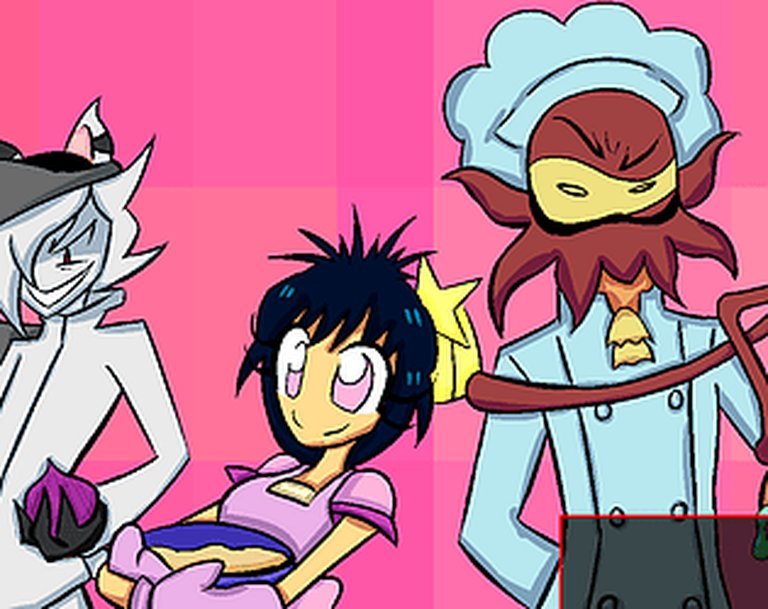
In the comedic fantasy visual novel ‘Culinary Kakkoii,’ players assume the role of a judge in a quirky cooking competition, evaluating eccentric dishes prepared by colorful characters. Set in a whimsical world with first-person flip-screen visuals, the game blends humor with surprising twists, revealing dark secrets and character backstories as players navigate multiple endings. Developed by KakkoiiKrew and released in 2017, it offers a menu-driven adventure where choices determine the outcome of this culinary showdown.
Culinary Kakkoii: A Culinary Carnival of Chaos and Comedy
Introduction
In the sprawling landscape of indie visual novels, few titles stand out as vividly or as unapologetically bizarre as Culinary Kakkoii. Developed by the trio of Tenshi Hanka, Gissy Eva, and ThatOtherCoco under the banner of KakkoiiKrew, this game is a culinary circus where the absurd meets the macabre, wrapped in a package of fourth-wall-breaking humor and surreal storytelling. Released in November 2018, Culinary Kakkoii is a short but densely packed experience that defies easy categorization, blending comedy, horror, and culinary competition into a singularly unique narrative. This review will dissect the game’s development, narrative depth, gameplay mechanics, and its enduring legacy in the indie gaming scene.
Development History & Context
The Studio and Its Vision
Culinary Kakkoii was developed by KakkoiiKrew, a small indie team with a penchant for the unconventional. The game’s development was a collaborative effort, with each member contributing to the writing, art, and programming. The team’s vision was to create a visual novel that subverted traditional storytelling tropes while embracing the absurdity of its premise—a cooking competition where the dishes are as bizarre as the chefs who prepare them.
Technological Constraints and the Indie Landscape
Released in 2018, Culinary Kakkoii was developed using Ren’Py, a popular engine for visual novels. This choice allowed the team to focus on narrative and character development rather than complex gameplay mechanics. The game’s art style is deliberately simple, with static sprites and minimal animation, which serves to emphasize the dialogue and writing. The indie landscape at the time was ripe for experimental narratives, and Culinary Kakkoii capitalized on this by offering a game that was as much about the journey as it was about the destination.
Influences and Inspirations
The game draws heavily from Japanese visual novel tropes, particularly in its use of exaggerated character designs and comedic dialogue. However, it also subverts these tropes by incorporating elements of horror and dark humor. The game’s title itself is a play on the Japanese word kakkoii (かっこいい), meaning “cool,” which sets the tone for its self-aware, meta-commentary on the visual novel genre.
Narrative & Thematic Deep Dive
Plot Overview
Culinary Kakkoii casts the player as a judge in a surreal cooking competition featuring nine eccentric characters. Each character has a distinct personality and culinary style, ranging from the overly enthusiastic Bento to the morally ambiguous Zed. The player’s role is to evaluate their dishes and make decisions that influence the story’s outcome.
Characters and Their Quirks
- Zed: A zebra-headed chef with a lack of empathy and a penchant for dark humor. His verbal tic of laughing “kekekekekeke” adds to his unsettling charm.
- Sashimi: A chef with a tragic backstory involving parental neglect and a quest for validation through cooking. Her past is revealed in a route that leads to her automatic elimination.
- Marly: A chef with a dark secret involving squid meat and self-mutilation, revealed in one of the game’s secret endings.
- Chiyomi: A sweet-toothed baker with a crush on Dry Ice, who is oblivious to his feelings for her.
- Bruce: The “Ridiculously Average Guy” of the cast, whose food is neither exceptional nor lethal.
- Gustav: A hand-for-a-head chef who is the nicest member of Team A, despite his unusual appearance.
Themes and Tone
The game’s narrative is a rollercoaster of tones, shifting from lighthearted comedy to dark horror within moments. Themes of identity, validation, and the absurdity of competition are explored through the characters’ backstories and interactions. The game’s unreliable narrator and frequent breaking of the fourth wall add layers of meta-commentary, making the player question the nature of the story they’re experiencing.
Gameplay Mechanics & Systems
Core Gameplay Loop
The gameplay revolves around evaluating the dishes presented by the competing chefs. The player’s choices determine which dishes advance to the next round, ultimately influencing the story’s outcome. The game features multiple endings, including secret routes that reveal darker aspects of the characters and their world.
Combat and Progression
While the primary focus is on narrative choices, the game does feature brief combat sequences, such as the knife fight between Zed and Sashimi. These moments are few and far between, serving more as narrative beats than core gameplay mechanics.
User Interface and Accessibility
The UI is straightforward, with minimal distractions from the dialogue and character art. The game’s short length and simple controls make it accessible to a wide audience, though its dark humor and occasional horror elements may not be suitable for all players.
World-Building, Art & Sound
Setting and Atmosphere
The game’s setting is a fantastical cooking arena where the rules of reality are bent to accommodate the chefs’ eccentricities. The art style is simple but effective, with vibrant colors and exaggerated character designs that enhance the game’s comedic and horrifying moments.
Sound Design and Music
The soundtrack complements the game’s tone, shifting from upbeat jingles during comedic moments to eerie melodies during darker scenes. The sound design is minimal but impactful, with sound effects that enhance the game’s surreal atmosphere.
Reception & Legacy
Critical and Commercial Reception
Culinary Kakkoii received mixed reviews upon release, with critics praising its humor and creativity but criticizing its short length and lack of depth in some areas. However, its cult following has grown over time, with players appreciating its unique blend of comedy and horror.
Influence on Subsequent Games
The game’s success inspired a sequel, Saute Sugoi, which expanded on its predecessor’s themes and mechanics. Its influence can also be seen in other indie visual novels that blend comedy and horror, such as Cooking Companions and Food Fantasy.
Conclusion
Culinary Kakkoii is a game that defies easy categorization. It is a culinary competition, a dark comedy, a horror story, and a meta-commentary on the visual novel genre, all rolled into one. Its strengths lie in its unique characters, dark humor, and willingness to subvert expectations. While its short length and occasional tonal whiplash may not appeal to all players, those who appreciate its absurdity and creativity will find it a memorable experience.
In the annals of indie gaming, Culinary Kakkoii stands as a testament to the power of unconventional storytelling. It is a game that dares to be different, and in doing so, carves out a niche that is uniquely its own. Whether you’re a fan of visual novels, dark comedy, or simply enjoy a good culinary catastrophe, Culinary Kakkoii is a dish worth sampling.