
- Release Year: 2003
- Platforms: Windows
- Publisher: Funatics Software GmbH, Kalypso Media Digital Ltd.
- Developer: Funatics Software GmbH
- Genre: Compilation
- Perspective: Third-person
- Game Mode: LAN, Online Co-op, Single-player
- Average Score: 73/100
Description
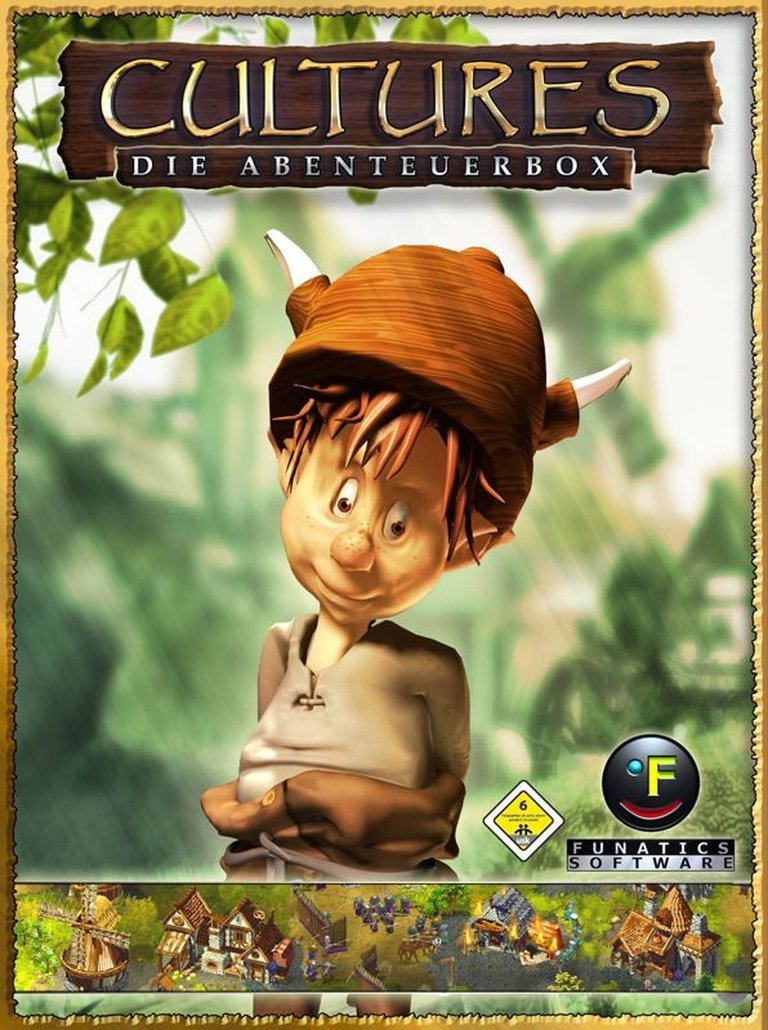
Cultures: Northland + 8th Wonder of the World is a compilation of two strategy games set in historical and mythical settings. Northland follows Viking settlers as they explore and build communities in uncharted lands, while 8th Wonder of the World tasks players with constructing one of history’s greatest architectural marvels. Both games blend city-building, resource management, and adventure, offering a mix of single-player campaigns and multiplayer modes.
Where to Buy Cultures: Northland + 8th Wonder of the World
Cultures: Northland + 8th Wonder of the World Cracks & Fixes
Cultures: Northland + 8th Wonder of the World Guides & Walkthroughs
Cultures: Northland + 8th Wonder of the World Reviews & Reception
en.wikipedia.org (62/100): The gameplay may be plentiful, but Viking reputations will suffer.
mobygames.com (70/100): Gameplay remains largely the same: The player constructs buildings which form production cycles to create products from gathered resources.
gog.com (88/100): Cultures 3 offers the best combination of strategy and adventure!
Cultures: Northland + 8th Wonder of the World Cheats & Codes
PC
Press [F2], then type one of the following codes to activate the corresponding cheat function. An icon will appear to confirm correct code entry.
| Code | Effect |
|---|---|
| funexploration | Full map. |
| funfrieda | All item words bigger. |
| funfillup | All warehouses and supply tents have 5 items of everything. |
| funmorepower | Get one level 3 solider, spearman, and archer. |
| funspeedup | Turbo mode. |
| funpicture12 | Small .PCX screenshot of current map. |
| funpicture25 | Medium .PCX screenshot of current map. |
| funpicture100 | Large .PCX screenshot of current map. |
| odin | Skip to Mission 2 in the campaign menu. |
| funmaverick | AI soldiers become more aggressive. |
| funheadsup | Makes characters have elongated necks. |
| funheadsdown | Makes characters shrink to gnome size. |
| funheadson | Restores characters’ heads to normal. |
Cultures: Northland + 8th Wonder of the World: A Comprehensive Retrospective
Introduction: The Legacy of a Forgotten Gem
Few games capture the essence of Viking settlement and exploration as vividly as Cultures: Northland + 8th Wonder of the World, a compilation that bundles two standout entries in the Cultures series. Released in 2003 by Funatics Software, this collection offers a unique blend of city-building, real-time strategy, and adventure, set against the backdrop of Norse mythology and historical exploration. While overshadowed by contemporaries like The Settlers and Anno, Cultures carved its niche with a charming isometric aesthetic, deep simulation mechanics, and a focus on individual villager management—a rarity in the genre.
This review aims to dissect the game’s design, mechanics, and legacy, drawing from historical context, player experiences, and the broader evolution of the city-building genre. We’ll explore how Northland and 8th Wonder of the World expanded upon the foundation laid by Cultures: Discovery of Vinland, and why this compilation remains a cult classic among strategy enthusiasts.
Development History & Context: The Rise of Funatics Software
The Studio Behind the Saga
Funatics Software, a German developer founded in the late 1990s, emerged as a key player in the European strategy game scene. Their breakthrough came with Catan: Die Erste Insel (1999), a digital adaptation of The Settlers of Catan, which became a sleeper hit. This success paved the way for Cultures: Discovery of Vinland (2000), their first original IP, which blended city-building with Viking lore. The game’s modest commercial success—selling 150,000 copies globally by 2002—encouraged Funatics to expand the franchise.
Cultures: Northland (2002) and 8th Wonder of the World (2003) followed, refining the formula with new mechanics, settings, and narrative depth. The 2003 compilation bundled these sequels, offering players a complete experience. Published by Kalypso Media (a rising star in European gaming), the compilation targeted fans of The Settlers IV and Anno 1503, leveraging the growing appetite for historical strategy games in Europe.
Technological Constraints and Design Philosophy
Developed during the early 2000s, Cultures faced the limitations of its era:
– Isometric Engine: The game’s 2D isometric perspective, while visually distinct, constrained camera control and pathfinding. Units often struggled with terrain navigation, a recurring frustration in player guides (e.g., catapults getting stuck on uneven ground).
– Unit AI: Villagers exhibited rudimentary decision-making, requiring micromanagement for tasks like resource extraction or combat. The “Actions” menu (accessed via Spacebar) became a necessity, allowing players to override AI quirks.
– Multiplayer Limitations: Despite supporting LAN and internet play, the game’s netcode was rudimentary, limiting its competitive scene.
Yet, these constraints bred innovation. The developers emphasized individual villager progression, a rarity in city-builders. Each unit could marry, gain experience, and switch professions, creating a dynamic workforce. This depth, coupled with the game’s humorous tone (e.g., villagers complaining about hunger), set Cultures apart from its peers.
The Gaming Landscape of 2003
The early 2000s were a golden age for real-time strategy and city-building games:
– The Settlers IV (2001) and Anno 1503 (2002) dominated the European market, emphasizing logistics and trade.
– Age of Mythology (2002) popularized mythological themes, influencing Cultures’ Norse and Egyptian settings.
– SimCity 4 (2003) redefined urban simulation, though Cultures focused on smaller-scale settlement management.
Cultures occupied a niche: a hybrid of The Settlers’ logistics and SimCity’s individualism. Its Viking theme resonated in Europe, where Norse mythology was experiencing a revival in media. However, the game struggled to gain traction in North America, where city-builders were less mainstream.
Narrative & Thematic Deep Dive: Myth, Exploration, and Survival
Northland: A Viking Odyssey
Northland continues the saga of the Vikings, shifting focus from Vinland to the frozen landscapes of Scandinavia and beyond. The campaign follows a tribe’s quest to establish settlements, uncover ancient relics, and confront mythical threats like werewolves and serpents. The narrative is lightweight but effective, using environmental storytelling (e.g., abandoned ruins, hidden chests) to immerse players in a world where history and legend intertwine.
Key Themes:
1. Survival and Adaptation: Unlike Discovery of Vinland, Northland emphasizes harsh environments. Players must manage food scarcity, brutal winters, and hostile wildlife, mirroring the Vikings’ real-world struggles.
2. Exploration and Discovery: The game rewards curiosity. Scouts uncover hidden resources, chests with powerful artifacts (e.g., amulets, weapons), and even new settlements. The “explore” command, while finicky, encourages players to venture beyond their comfort zone.
3. Mythology as Gameplay: Mythical creatures aren’t just window dressing—they’re mechanical challenges. Werewolves and serpents require specific strategies (e.g., tunic armor for archers, plate armor for melee), blending lore with tactical depth.
Dialogue and Characters:
The game’s humor shines in villager interactions. Units complain about hunger, argue over tasks, and even refuse orders if their needs aren’t met. While the writing is simplistic, it humanizes the settlers, making their struggles feel personal. Heroes like Bjarni (a recurring figure in the series) add personality, though their roles are often limited to scouting or combat.
8th Wonder of the World: From Vikings to Pharaohs
8th Wonder shifts gears dramatically, transporting players to ancient Egypt. The campaign tasks players with constructing a monumental wonder (hence the title) while navigating political intrigue and supernatural threats. The tonal shift from Northland’s icy wilderness to Egypt’s arid landscapes is jarring but refreshing.
Key Themes:
1. Grandeur and Ambition: The game’s central premise—building a wonder—reflects the Egyptians’ architectural prowess. Players must balance resource management with monumental construction, a rare focus in city-builders.
2. Divine Intervention: Gods play an active role, offering blessings or curses based on player actions. Temples become crucial, not just for faith but for gameplay buffs (e.g., HP regeneration).
3. Trade and Diplomacy: Egypt’s setting allows for expanded trade mechanics, with foreign warehouses offering exotic goods. This contrasts with Northland’s isolationist survivalism.
Narrative Critique:
While 8th Wonder’s Egyptian theme is ambitious, its execution feels less cohesive than Northland’s. The shift from Viking lore to Egyptian mythology lacks the former’s cultural specificity, and the campaign’s pacing suffers from repetitive objectives. However, the game’s standalone missions (e.g., defending against raids, solving puzzles) showcase Funatics’ creativity.
Gameplay Mechanics & Systems: Depth and Frustration in Equal Measure
Core Gameplay Loop: Settlement Management
At its heart, Cultures is a settlement simulator. Players must:
1. Gather Resources: Wood, clay, stone, iron, and gold are essential for construction and crafting. Extraction is manual—players assign villagers to specific nodes, a system that rewards micromanagement.
2. Build Infrastructure: Roads, houses, workshops, and defenses form the backbone of a settlement. Buildings upgrade in tiers, unlocking new production chains (e.g., Dwelling 1 → Dwelling 5).
3. Manage Villagers: Each unit has needs (hunger, sleep, socialization) and can switch professions. Marriage and childbirth expand the workforce, but overpopulation strains resources.
Innovative Systems:
– Individual Progression: Villagers gain experience in professions (e.g., woodcutting, blacksmithing), improving efficiency. This system, rare in city-builders, adds depth to workforce management.
– School Mechanic: Schools allow rapid skill acquisition, bypassing the grind of manual training. Exploiting this (e.g., training a villager as an extractor to unlock multiple professions) becomes a meta-strategy.
– Merchant Logistics: Handcarts and oxcarts enable complex trade networks, both internally and with foreign warehouses. Mastering this system is key to late-game efficiency.
Flawed Systems:
– Pathfinding: Units frequently get stuck on terrain or fail to navigate obstacles. Catapults, in particular, are notorious for their clunky movement.
– Combat AI: Soldiers exhibit poor tactical awareness, requiring constant micromanagement. Archers, for instance, will stand idle if enemies are slightly out of range.
– Resource Regrowth: While trees and mushrooms regenerate, the mechanics are inconsistent. Players must manually relocate extractors to avoid depletion, a tedious process.
Combat: A Test of Patience
Combat in Cultures is functional but frustrating. Players raise armies from villagers, equipping them with weapons (shortswords, longswords, bows) and armor (leather, chainmail, plate). Battles play out in real-time, with units engaging automatically based on proximity.
Strengths:
– Equipment Variety: Weapons and armor offer meaningful trade-offs. Longswords excel against buildings but struggle with mobility; tunics provide arrow resistance but weak melee defense.
– Experience Matters: Veteran units hit harder and more accurately, rewarding investment in training.
Weaknesses:
– Micromanagement Hell: Soldiers ignore threats, fail to retreat, and often require manual targeting. The “stance” system (defensive, aggressive, ignorant) helps but doesn’t solve core AI issues.
– Catapults: These siege engines are powerful but unwieldy. Their slow movement, friendly fire risk, and pathfinding issues make them a liability in most scenarios.
UI and Controls: A Product of Its Time
The UI is functional but dated:
– Action Menu: The Spacebar menu is essential for issuing complex orders (e.g., equipping items, forcing sleep). However, its nested structure feels clunky by modern standards.
– Control Groups: Players can assign units to numbered groups (1–10), a feature crucial for managing large settlements. However, the system lacks modern RTS conveniences (e.g., double-tapping to center on a group).
– Minimap: The minimap is serviceable but lacks filters for resources or units, forcing players to rely on manual scouting.
World-Building, Art & Sound: Crafting a Living World
Visual Design: Charm Over Fidelity
Cultures employs a colorful isometric aesthetic, prioritizing readability over realism. The art style is reminiscent of The Settlers, with exaggerated animations (e.g., villagers dramatically collapsing from hunger) that inject humor into the gameplay.
Strengths:
– Distinct Environments: Northland’s snowy forests and 8th Wonder’s deserts are visually distinct, reinforcing their thematic differences.
– Unit Design: Villagers and creatures are expressive, with animations that convey their status (e.g., tired workers yawn, hungry units clutch their stomachs).
Weaknesses:
– Limited Zoom: The fixed isometric view restricts visibility, making large settlements hard to navigate.
– Repetitive Assets: Buildings and units reuse animations, leading to visual fatigue during long sessions.
Sound Design: Ambience Over Spectacle
The audio design is subtle but effective:
– Ambient Sounds: Wind howls in Northland, while 8th Wonder features desert breezes. These cues enhance immersion.
– Voice Acting: Villagers’ grunts and complaints are minimal but memorable (e.g., “I’m hungry!”).
– Music: The soundtrack is unobtrusive, blending Norse and Egyptian motifs. However, tracks loop frequently, becoming repetitive.
Reception & Legacy: A Cult Classic’s Journey
Critical Reception: Mixed but Respectful
Cultures: Northland + 8th Wonder of the World received moderate acclaim:
– PC Games (Germany): 85/100, praising its depth and charm but criticizing its technical rough edges.
– Player Reviews: A 4.2/5 average on MobyGames reflects a dedicated fanbase that appreciated its uniqueness.
Common Praise:
– Innovative Mechanics: The individual villager system and school mechanic were highlights.
– Atmosphere: The game’s humor and setting resonated with players.
Common Criticism:
– Technical Issues: Pathfinding and combat AI were frequent complaints.
– Steep Learning Curve: New players struggled with the game’s micromanagement demands.
Commercial Performance: A Niche Success
The Cultures series sold over 700,000 units by 2018, a respectable figure for a European-focused franchise. However, Northland and 8th Wonder never achieved mainstream success outside Germany and Scandinavia. The compilation’s 2003 release on GOG.com (and later Steam) ensured its longevity, attracting retro strategy fans.
Influence and Legacy
Cultures’ impact is subtle but enduring:
– Inspiration for Later Games: Titles like Banished (2014) and Frostpunk (2018) borrowed its survival and individualism mechanics.
– Cult Following: The series maintains a dedicated fanbase, with guides (e.g., Skrymaster’s Steam guide) and mods extending its lifespan.
– Spiritual Successors: Humankind (2021) and Cultures Online (2010) attempted to modernize the formula, with mixed results.
Conclusion: A Flawed Masterpiece Worth Rediscovering
Cultures: Northland + 8th Wonder of the World is a flawed but fascinating entry in the city-building genre. Its blend of Viking and Egyptian themes, deep simulation mechanics, and humorous tone create a unique experience that rewards patience and creativity. While its technical limitations and steep learning curve may deter modern players, those willing to engage with its systems will find a rich, rewarding challenge.
Final Verdict: 8/10 – A cult classic that deserves its place in strategy gaming history.
For fans of The Settlers or Anno, Cultures offers a refreshing alternative. For newcomers, it’s a testament to the creativity of early 2000s strategy design—a rough gem waiting to be polished by modern sensibilities. Whether you’re drawn to the frozen wastes of Northland or the monumental ambitions of 8th Wonder, this compilation remains a hidden treasure in the annals of gaming.