
- Release Year: 2022
- Platforms: Browser, Windows
- Genre: Action
- Perspective: Diagonal-down
- Game Mode: Single-player
- Gameplay: Arcade, Roguelike
- Setting: Fantasy
- Average Score: 94/100
Description
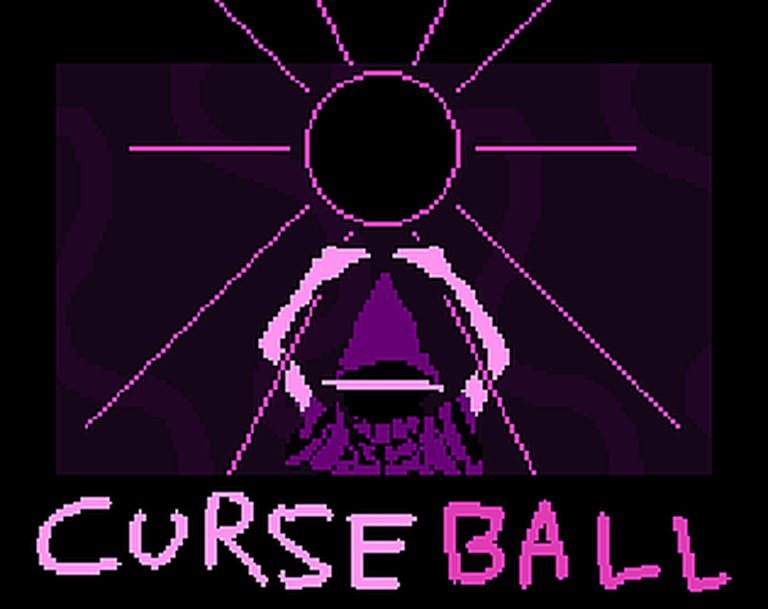
Curseball is a top-down action roguelike set in a fantasy realm of floating platforms suspended above deadly pits, where players control a nimble character tasked with striking a ricocheting ball enough times before a timer expires to advance levels. Hitting the ball grants extra jumps for combo chains and score multipliers, while periodic door choices introduce randomly selected curses—persistent obstacles that escalate difficulty across runs, ending only when lives are depleted or a level fails, with unlockable color palettes adding visual flair.
Curseball Reviews & Reception
kultisti.itch.io (94/100): Genius, beautiful, amazing!!
Curseball: Review
Introduction
Imagine a pixelated abyss staring back at you, platforms suspended like precarious stepping stones over instant death, and a relentless ball careening across the screen like a cursed comet—miss it, and your run ends in failure. This is Curseball, the 2022 indie gem from solo developer Kultisti that transforms the simplest of premises into an intoxicating roguelike odyssey of precision, combos, and self-inflicted torment. Released freely on itch.io amid a post-Hades roguelike renaissance, Curseball has quietly carved a niche as a brutal yet elegant score-chaser, evoking the pixel-perfect platforming of Super Meat Boy fused with bullet-hell chaos. My thesis: Curseball is a triumph of minimalist design, proving that in an era bloated with sprawling epics, a tightly wound arcade loop laced with player-chosen curses can deliver endless replayability and pure, unadulterated highs.
Development History & Context
Curseball emerged from the fertile solo-dev ecosystem of itch.io, spearheaded by Kultisti—a pseudonymous creator whose handle hints at Finnish roots (“kultisti” evoking “cultist” or perhaps a playful nod to cult classics). Built in GameMaker, a staple engine for accessible 2D indie development since the early 2000s, the game launched on June 6, 2022, for Windows and browser, available for name-your-own-price (often free). This timing placed it squarely in the 2022 indie boom, where roguelikes like Vampire Survivors and bullet-hell revivals dominated itch.io and browser gaming, capitalizing on the pandemic-fueled demand for quick, addictive sessions.
Kultisti’s vision, gleaned from the game’s itch.io page and devlog, was laser-focused: strip platforming to its bones—run, jump, hit—then layer on roguelike progression via “curses,” player-selected obstacles that escalate difficulty. Technological constraints were minimal thanks to GameMaker’s lightweight nature, enabling smooth diagonal-down visuals and fixed-screen flips without the bloat of modern engines like Unity. The 2022 landscape was ripe; browser games thrived on platforms like itch.io amid rising Steam fatigue, while free releases democratized access. A post-launch devlog entry from December 12, 2022, addressed a “hitbox fix!!” for the curse wheel, underscoring Kultisti’s responsiveness to community feedback. No major studio backing meant lean development—likely weeks or months, per fan queries in comments—but this agility birthed a polished 12MB Windows build. In context, Curseball echoes early GameMaker hits like Undertale, embodying the indie ethos of rapid iteration over corporate polish.
Narrative & Thematic Deep Dive
Curseball eschews traditional storytelling for abstract, mechanical parable, a deliberate choice that elevates its roguelike purity. There’s no named protagonist—just an unnamed sprite, a shadowy silhouette evoking everyman futility against cosmic inevitability. The “plot” unfolds procedurally: endless levels of ball-bouncing survival, punctuated by door choices leading to curses—obstacles like birds, missiles, skulls, or the despised “curse of steps” that haunt player testimonials. Dialogue? Absent. Instead, themes emerge through gameplay poetry: the curse of ambition, where players voluntarily select harder paths, mirroring real-life masochism in pursuits like high-score chasing; impermanence, as runs crumble to pits or timers; and escalation, with curses compounding into “increasingly difficult combinations every run.”
Deeper still, the fantasy setting—floating platforms over abyssal pits, ricocheting balls as harbingers of doom—evokes mythic trials, akin to Sisyphus pushing his boulder (or here, kicking a cursed orb). Worlds shift thematically (e.g., “cat world” praised in comments), implying layered lore in visual palettes rather than text dumps. No metaphysical debates like those in The Last of Us (per unrelated Reddit lore discussions), but the roguelike structure imparts a narrative of defiance: each combo, each curse dodge, writes your legend in score. Characters are archetypal—the ball as indifferent god, curses as personalized Fates—fostering emergent stories, like one player raging at “curse of steps” or another’s 619-score triumph. This sparsity isn’t flaw but genius, letting mechanics narrate addiction’s thrill and despair.
Gameplay Mechanics & Systems
At its core, Curseball is a symphony of tight loops: hit the ball X times before the timer depletes, or perish. Control a nimble character via direct input—run left/right, jump—with platforms hovering over a bottomless pit demanding pixel-perfect navigation. The ball moves at constant speed, ricocheting off screen edges like a demonic Pong puck; contact it to register hits, crucially restoring your jump mid-air for aerial combos that balloon scores (hit without landing for multipliers). Fail to engage? Timer zero, run over. Lives deplete on curse contact or falls, ending runs.
Roguelike progression shines post-every-few-levels: choose one of three doors, each harboring curse groups (14 total: birds, missiles, skulls, steps, etc.). RNG selects one per door, persisting forevermore, birthing unique runs—”birds and missiles skull” as one player lamented workable, others “heinous sh*t.” Bonuses reward mastery: no-damage stages grant life bonuses, speed clears yield time extensions. UI is spartan—score, timer, lives, combo counter—flip-screen transitions seamless, though browser versions occasionally glitch (per comments).
Innovations abound: curses as player-agency difficulty sliders, blending Spelunky‘s procedural peril with Touhou‘s bullet-dodging (frequent comparisons). Flaws? Steep curve—easy starts balloon to “crying” frustration; no gamepad support irks; some curses feel unbalanced (“unlucky rolls”). Yet progression unlocks color palettes at score thresholds, customizable pre-run, extending longevity. Score-attack purity reigns—no meta-progression bloat—yielding “relentless challenge” akin to Super Meat Boy, per TheGamer.
World-Building, Art & Sound
Curseball‘s world is a minimalist multiverse: fantasy voids per level, platforms as jagged isles amid starry pits, evolving via curses and worlds (14 variants, like the beloved “cat world”). Atmosphere builds dread—tight arenas amplify chaos, deadly falls enforce tension. Visuals: crisp pixel art, retro 2D diagonal-down with fixed/flip-screens, unlockable palettes transforming palettes from stark mono to vibrant psychedelics, enhancing replay visual flair.
Sound design amplifies ecstasy/agony: overuse of Amen break—that iconic drum loop from 1969’s “Amen, Brother”—loops relentlessly, hyping combos while underscoring futility (players beg “gimme more amen break”). Soundtrack “slaps” universally, per comments; punchy hits, ricochet pings, death whooshes create rhythmic immersion. Together, they forge bullet-hell ballet: visuals pop curses into threats, audio syncs ball trajectories, birthing flow states where “tight gameplay” mesmerizes.
Reception & Legacy
Launch reception was ecstatic in indie circles: itch.io’s 4.7/5 from 438 ratings, comments ablaze—”Genius, beautiful,” “addicting,” “holy shit soundtrack amazing!!!” TheGamer’s unscored 2022 review hailed it “simple… but one I find myself coming back to,” likening it to Super Meat Boy for masochists. MobyGames lists no aggregate score, only 2 collectors, underscoring niche appeal. Commercially? Free model yielded viral word-of-mouth, no sales charts but enduring plays (high scores like 619 shared).
Legacy evolves: post-2022 patches fixed hitboxes, cementing reliability. Influences Vampire Survivors-style auto-shooters? Subtly—curse selection prefigures build-crafting. Compared to Just Shapes and Beats or Touhou, it inspires score-chasers. In history, Curseball exemplifies itch.io’s power: solo GameMaker titles punching above weight, preserving arcade DNA amid AAA excess. No industry-shakers yet, but cult status brews among bullet-hell faithful.
Conclusion
Curseball distills roguelike euphoria into 12MB of pixelated peril—masterful mechanics, evocative minimalism, and addictive curses cement its arcade pinnacle. Flaws like balance niggles pale against highs: combo chains, palette unlocks, Amen-fueled runs. Kultisti’s creation earns a resounding 9.5/10, a must-play for precision-platforming devotees. In video game history, it stands as 2022’s unsung heir to Tetris and Geometry Wars: proof that simplicity curses us to return, forever chasing that perfect score. Download it free on itch.io—your next obsession awaits.