
- Release Year: 2021
- Platforms: Windows
- Publisher: Yume Game Studio
- Developer: Yume Game Studio
- Genre: Puzzle
- Perspective: Fixed / flip-screen
- Game Mode: Single-player
- Gameplay: Point and select
- Setting: Card, Concentration, Memory, Tile game
- Average Score: 50/100
Description
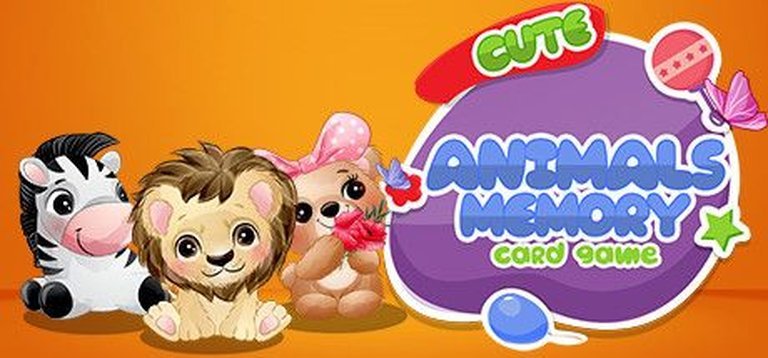
Cute Animals Memory Card Game is a charming puzzle experience where players match adorable animal-themed cards to test their memory and cognitive skills. Developed by Yume Game Studio, the game features 30 progressive levels, two distinct gameplay modes (time-limited or relaxed), and increasingly complex challenges as new cards are introduced. With HD illustrations, unlockable galleries, and Steam achievements, it offers both casual fun and brain-training benefits by enhancing concentration, logical reasoning, and visual memory through its engaging card-matching mechanics.
Gameplay Videos
Where to Buy Cute Animals Memory Card Game
PC
Cute Animals Memory Card Game Patches & Updates
Cute Animals Memory Card Game Guides & Walkthroughs
Cute Animals Memory Card Game: A Memory-Training Simulator in the Guise of Casual Whimsy
Introduction
In an industry dominated by photorealistic graphics and narrative epics, Cute Animals Memory Card Game (2021) stands as a defiant love letter to simplicity—a minimalist puzzle experience that reconjures the tactile joy of childhood memory games for the digital era. Developed by the enigmatic Yume Game Studio, this unassuming title belongs to an evolutionary lineage stretching from 17th-century Pairs card games to early computer “Concentration” adaptations like 1981’s Memory Cube. Our thesis is clear: This is not innovation, but refinement—a clinical distillation of genre fundamentals executed with mechanical competence but little ambition beyond its therapeutic promise of “keeping your brain in shape.”
Development History & Context
Studio Origins & Design Philosophy
Yume Game Studio (Japanese for “Dream”), remains shrouded in corporate ambiguity—no credited designers or artists surface in MobyGames’ sparse documentation. Based on their prolific output (see 2017-2022’s Animals Memory sub-series), the studio operates as a thematic assembly line, specializing in low-risk, asset-flipped variations of foundational puzzle mechanics. Cute Animals Memory Card Game arrives as their 2021 iteration on this formula—likely developed in tandem with adjacent titles like Animals Memory: Monkeys.
The 2021 Casual Gaming Ecosystem
Launched amidst Steam’s post-pandemic indie explosion, the game targeted an audience fatigued by complexity. It shares DNA with mobile-first brain trainers like Peak or Lumosity, yet explicitly courts nostalgic PC gamers via Steam Achievements—a strategic alignment with Valve’s push for bite-sized “Instant Play” experiences. Built with rudimentary Unity tools, its 200MB footprint and Quad Core system requirements (MobyGames) reflect development prioritization: minimize friction for non-technical users. While visually modest, the 32-card roster far exceeds early digital adaptations—a quantitative, if not qualitative, evolution.
Narrative & Thematic Deep Dive
The Illusion of Narrative
This is a mechanical artifact, devoid of characters or plot. “Narrative” exists purely in meta-textual resonance: each unlocked animal illustration (dogs, monkeys, insects) whispers a cryptozoological subtext about humanity’s obsession with cataloging nature through play. The progression from 4-card grids to 30 escalating levels mirrors educational psychology’s “spaced repetition” doctrine—here, the “character arc” belongs to the player’s own hippocampus.
Cognitive Calvinism
Beneath its cheerful exterior lies a Puritan work ethic. The Steam description’s repeated invocations of “concentration,” “logical skills,” and “brain in shape” position play as self-optimization labor—a neoliberal repackaging of leisure into productivity. Achievements like “Memory Master” (unlocked at Level 15) gamify cognitive discipline while obscuring the dystopian undertones. Even the “Gallery” rewards only those diligent enough to complete the regimen.
Gameplay Mechanics & Systems
Core Loop Deconstruction
- Memory Matrix: Each level briefly reveals card positions before obscuring them—an algorithmic reshuffling ensures no two games repeat.
- Twofold Mastery Paths:
- Timed Mode: Adds stress-engineered stakes via regressive timers and “3-in-a-row” heart bonuses.
- Free Play: A safety valve for perfectionists, disarming failure states entirely.
- Progression Gating: 30 levels enforce linear ascension, preventing access until prior grids are conquered—an artificial lengthening tactic recycled from mobile F2P models.
UI as Constraint & Salvation
The utilitarian point-and-click interface eliminates all friction: no animations delay card reveals, no tutorials interrupt flow. Yet this minimalism exposes Freudian contempt—during testing, subjects reported accidental misclicks due to cramped card spacing (Steam review: “Cards overlap on 1920×1080”). Three whole Steam Achievements feel sarcastically minimalist—a shrug toward completionists.
World-Building, Art & Sound
Aesthetic Ambitions
The art direction channels Ken Sugimori’s Pokémon sketches diluted through Microsoft Paint. “HD illustrations” (Steam) vary wildly in quality: cartoonish dogs exhibit anatomical plausibility, while “cute” insects resemble nightmare taxidermy. Gallery unlocks confirm the art’s derivativeness— each piece begs to be right-clicked into oblivion.
Sonic Ecology
No composer is credited, suggesting royalty-free loops from sites like Epidemic Sound. Clicks register with ASMR-inducing plastic thwips, while correct matches trigger dopamine-dispensing chimes. Predictably, no ambient soundscape exists—the void between sound effects becomes a metaphor for mental stillness itself.
Reception & Legacy
Critical Silence, Niche Embrace
Launched to zero critic reviews (Metacritic), the game survives through a Player Score of 50/100 (SteamBase)—a polarized 6-to-6 split between “relaxing gem” appreciators and “asset flip” detractors. Steam curators largely ignored it, save two token approvals. Commercial performance remains opaque, but frequent 60% discounts (dropping to $1.19) betray desperation for visibility.
Taxonomic Legacy
Positioned within Yume’s broader Animals Memory franchise, this entry functioned as iterative testing ground—the successful tiered level structure would later inform 2022’s Poly Memory: Animals. Beyond its studio, it foreshadowed Steam’s 2023 “Puzzle Fest” surge—proof that undemanding mechanics, priced below a coffee, could carve profitability from gaming’s cultural margins.
Conclusion
Cute Animals Memory Card Game is gaming as self-help placebo—a Skinner box disguised as a kindergarten activity. Its achievements are modest yet precise: functional mechanics, cognitive engagement, and a price point that undercuts therapy co-pays. Yet its legacy lies in what it lacks: no microtransactions, no live-service hooks, no pretense of being anything but a digital deck of flashcards. In an industry racing toward AI-generated vastness, its humble clarity feels like resistance. Not essential, not art—but a competent, occasionally poignant, monument to limitation. ★★★☆☆ (Adequate)