
- Release Year: 2011
- Platforms: Android, iPad, iPhone, Linux, Macintosh, Windows, Xbox 360
- Publisher: ApathyWorks
- Developer: ApathyWorks
- Genre: Action, Puzzle
- Perspective: Side view
- Game Mode: Single-player
- Gameplay: Dark humor, Point and select, Puzzle
- Setting: Fantasy
- Average Score: 55/100
Description
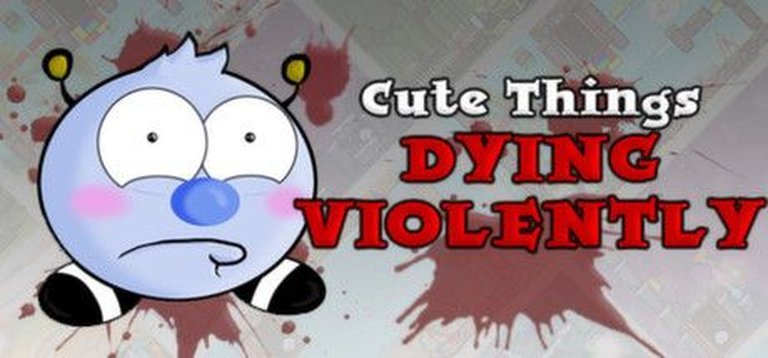
Cute Things Dying Violently is a darkly humorous puzzle-action game set in a whimsical fantasy world where players launch adorable critters through treacherous levels filled with lethal obstacles like spikes, buzzsaws, and fire. Despite the goal of saving the critters, the game embraces chaotic failure, allowing players to experiment with wacky items while navigating 48 single-player levels, creating custom levels via the built-in editor, and sharing designs through Steam Workshop integration.
Gameplay Videos
Where to Buy Cute Things Dying Violently
PC
Cute Things Dying Violently Mods
Cute Things Dying Violently Guides & Walkthroughs
Cute Things Dying Violently Reviews & Reception
cgmagonline.com (40/100): Mediocre, Frustrating Puzzler
wegotthiscovered.com : Cute Things Dying Violently is an amusing ‘pick up and play’ distraction for gamers, which possesses a neat Level Editor that adds some much-needed longevity to its formula.
Cute Things Dying Violently: Review
Introduction
In the pantheon of video game titles, few are as disarmingly honest and thematically provocative as Cute Things Dying Violently. Released in 2011 by ApathyWorks, this physics-based puzzle game distills its premise into a single, brutal sentence: players launch adorable creatures through deadly traps to save at least one per level. What begins as a whimsical premise quickly curdles into a darkly hilarious exercise in futility, where the “cute” is weaponized against the “violence” to create an experience that is simultaneously charming and grotesque. Its legacy lies in its unapologetic embrace of this contradiction—a game that traffics in cartoon gore while demanding precision, and in so doing, offers a satirical commentary on the disposable nature of life in digital worlds. This review will dissect Cute Things Dying Violently as both a product of its indie-developer roots and a unique artifact of gaming’s burgeoning fascination with dark humor and physics-based puzzles.
Development History & Context
Cute Things Dying Violently emerged from the singular vision of Alexander Jordan, the sole developer at ApathyWorks, with art contributions from Melanie Bourgeois and music by Zackary Parrish. Conceived as “Project Squish,” the game was initially developed for Xbox Live Arcade (XBLA) in 2011, leveraging the platform’s accessibility to distribute a game for a mere 80 Microsoft Points. Its genesis reflects the constraints and opportunities of the era: as a small-scale indie title, it prioritized simple mechanics over graphical fidelity, using the “cute vs. violent” dichotomy as its unique selling proposition in a market saturated with physics puzzlers like Angry Birds and World of Goo.
The technological limitations of XBLA—particularly its focus on bite-sized, repeatable gameplay—shaped CTDV’s design. Levels were confined to single screens, and the physics engine had to deliver satisfying, exaggerated gore without overwhelming the hardware. Jordan’s approach was pragmatic: the game’s core “launch-and-drag” mechanics were honed for accessibility, allowing players to intuitively flick critters while the AI handled complex trajectories. This simplicity enabled cross-platform proliferation; by 2015, CTDV had been ported to Windows, Android, iOS, Linux, and macOS, with Steam Workshop integration for user-generated levels.
The 2011 release landscape was pivotal. Mobile gaming was exploding, and indie titles like Minecraft and Limbo proved that unconventional ideas could achieve cult status. CTDV rode this wave, positioning itself as an anti-Angry Birds: where that celebrated success and strategy, CTDV weaponized failure. Its development history is thus a microcosm of indie resilience—a passion project that defied genre conventions to carve out a niche as the “murderous puzzler” for players with a twisted sense of humor.
Narrative & Thematic Deep Dive
CTDV rejects traditional narrative in favor of thematic resonance, using its minimalist setup to explore nihilism and dark comedy. The “plot” is a Sisyphean loop: critters—small, blue, vaguely blob-like creatures—must be launched through deadly gauntures to reach a rescue elevator. Success is measured not by saving all, but by sparing one, framing survival as a statistical fluke. The narrative unfolds through environmental storytelling and the critters’ vocalizations, which shift from endearing declarations (“I love you very much!”) to vulgar curses (“s–thead,” “douchebag”) upon imminent death. This duality underscores the game’s central theme: affection and violence are intertwined, making cruelty both the obstacle and the reward.
The characters are archetypal yet effective. The critters, designed by Jordan, embody naive optimism (“It’s a beautiful day!”) that curdles into existential dread (“I’ve been molested!”). Their expressions—wincing as players drag them, agonized screams mid-flight—humanize them even as they are torn apart by buzzsaws. The primary antagonist, the “Hate Bot,” is a bucket-headed robot boss who repeats robotic taunts, representing the game’s institutionalized malice. Its design, a stark contrast to the critters’ softness, symbolizes the cold, inanimate traps players navigate.
Dialogue and menus amplify the satire. Hovering over “Play” reveals the snarky tooltip: “Play with yourself (In a socially acceptable manner).” Failure messages mock the player’s incompetence (“Critter kebab. Again?”), while the Steam store description’s faux-cheerfulness (“nothing bad happens”) is a deadpan wink to the carnage. This self-aware humor elevates CTDV beyond shock value, probing whether “cute” is merely a veneer for the violence inherent in gaming mechanics. The result is a parable about the futility of control: players are gods who can save or destroy, but every save is built on a mountain of corpses.
Gameplay Mechanics & Systems
At its core, CTDV is a physics puzzle where precision and experimentation collide with trial-and-error frustration. Players control a god-like cursor, dragging critters horizontally and launching them via a slingshot mechanism. The controls are deceptively simple—left-click (or trigger) to drag, right-click (or thumbstick) to launch—but their implementation reveals the game’s depth. The aiming arc adjusts power and trajectory, with visual cues (color-changing arrows) indicating launch strength. Yet, as critics noted, this sensitivity can be a double-edged sword; a miscalculation sends critters into spikes, fire, or buzzsaws, rewarding meticulous planning over brute force.
Level design escalates from tutorials to diabolical gauntlets. Early stages introduce basic hazards like spike pits, while later levels incorporate complex systems: timed buttons, springboards, fans, and destructible crates. The “one-save” mechanic alleviates frustration—players need only rescue one critter per level—though optional “gold star” ratings (saving all critters) incentivize perfectionism. Boss battles against the Hate Bot break the pattern, requiring players to exploit weak points in a larger, more dynamic arena.
Innovative systems include the level editor and Workshop integration, allowing players to design custom arenas and share them. This extends CTDV’s lifespan beyond its 48 single-player levels, though the community content often leans into exaggerated difficulty. The game also supports “New Levels of the Week,” post-launch additions that kept the experience fresh. Critically, however, the gameplay suffers from repetition. By the second world (e.g., a fiery volcano), obstacles feel reskinned rather than reimagined, and late-game levels rely on frustrating pixel-perfect throws rather than clever design.
World-Building, Art & Sound
CTDV’s world is a minimalist fantasy, constructed as a series of hazard-filled platforms set against painterly backdrops. Each thematic world—meadows, deserts, factories—uses tile art by Bourgeois to establish tone without overwhelming the action. The environments are static, almost dioramic, focusing attention on the critters and traps. This fixed-screen approach mirrors classic puzzle games like Lemmings, but with modern gore: blood splatters dynamically against walls, and critters dismember with cartoonish physics, their limbs spinning like ragdolls.
Art direction balances cuteness with carnage. Critters are rendered as simple, googly-eyed blobs with oversized feet, making their deaths jarringly graphic. A buzzsaw cleaving a critter in half sends a shower of crimson pixels across the screen, yet the exaggerated style prevents the violence from feeling exploitative. Instead, it amplifies the dark humor—death is absurd, not traumatic. The Hate Bot, by contrast, is a stark, metallic monstrosity with glowing red eyes, its design contrasting the critters’ vulnerability.
Sound design is equally integral. Parrish’s soundtrack blends chiptune melodies with frantic percussion, creating a playful urgency that belies the on-screen brutality. Critter voice acting (by Jordan) is a tour de force of tonal whiplash: their chirpy pre-launch lines (“Adventure time!”) curdle into pained yelps and expletives mid-flight. Death effects are visceral—squelches for impalement, crunches for saws—while the Hate Bot’s robotic drone grates intentionally, evoking annoyance. This sonic palette makes CTDV a sensory experience where cuteness and cacophony coexist, reinforcing the game’s thematic dissonance.
Reception & Legacy
Cute Things Dying Violently’s reception has been polarized, mirroring its own duality. At launch on XBLA, it garnered attention for its low price and high-concept premise, but critical analysis was sparse. The 2015 Steam release, however, spurred more debate. On Metacritic, it holds a “tbd” Metascore with limited reviews, but Steam boasts an 84% positive rating from 49 users, praising its humor and replayability. Positive reviews, like those from We Got This Covered, lauded its “neat Level Editor” and pick-up-and-play appeal, while Brash Games commended its “fun casual puzzle” design. Conversely, CGMagazine scathingly awarded it a 2/10, citing “boring, frustrating” gameplay and “wonky” controls.
Commercial success metrics are elusive, but its multi-platform spread (Xbox 360, PC, iOS, Android, Linux, Mac) and $2.99 Steam price suggest steady, if niche, sales. The game’s legacy lies in its cultural footprint: it popularized the “cute-gore” subgenre, inspiring titles like Teardown and Happy’s Humble Burger Farm. Its level editor also anticipated the user-generated content boom in indie games, allowing players to become architects of their own sadism.
ApathyWorks’ follow-ups—Desert Things, Winter Things, and City Things—expanded the formula, but none captured CTDV’s singular charm. It endures as a cult classic, referenced in discussions of dark comedy in games and the ethics of digital violence. For every player frustrated by its repetition, another revels in the catharsis of watching a critter bounce into a spike pit—a testament to its ability to provoke, even when it doesn’t satisfy.
Conclusion
Cute Things Dying Violently is a flawed masterpiece, a game whose brilliance and frustrations are two sides of the same bloody coin. Its strength lies in its unwavering commitment to a singular vision: to make players laugh at the absurdity of saving lives by ending them. The physics puzzles are ingenious but uneven, the art and sound are pitch-perfect in their dissonance, and the dark humor is so relentless it becomes a form of absurdist poetry. Yet, it stumbles in execution—repetitive late-game levels and finicky controls temper the experience, preventing it from reaching the heights of its peers.
Historically, CTDV occupies a vital niche. It represents the indie boom’s embrace of transgressive themes, proving that games could be both commercially viable and thematically audacious. Its legacy is not in perfection but in provocation: it asks players to confront the line between cute and cruel, control and chaos. For those willing to embrace its masochistic charm, CTDV offers a uniquely satisfying blend of strategy and schadenfreude. Ultimately, it is more than a game—it’s a dark joke, and we are all punchlines. Verdict: A must-play for connoisseurs of indie dark humor, but approach with patience and a strong stomach.