
- Release Year: 2022
- Platforms: Linux, Macintosh, Nintendo Switch, PlayStation 4, PlayStation 5, Windows, Xbox One, Xbox Series
- Publisher: Revulo Games, LLC
- Developer: Revulo Games, LLC
- Genre: Simulation, Sports
- Perspective: Top-down
- Game Mode: Hotseat, Single-player
- Gameplay: Pool, Snooker
- Setting: Futuristic, Sci-fi
- Average Score: 52/100
Description
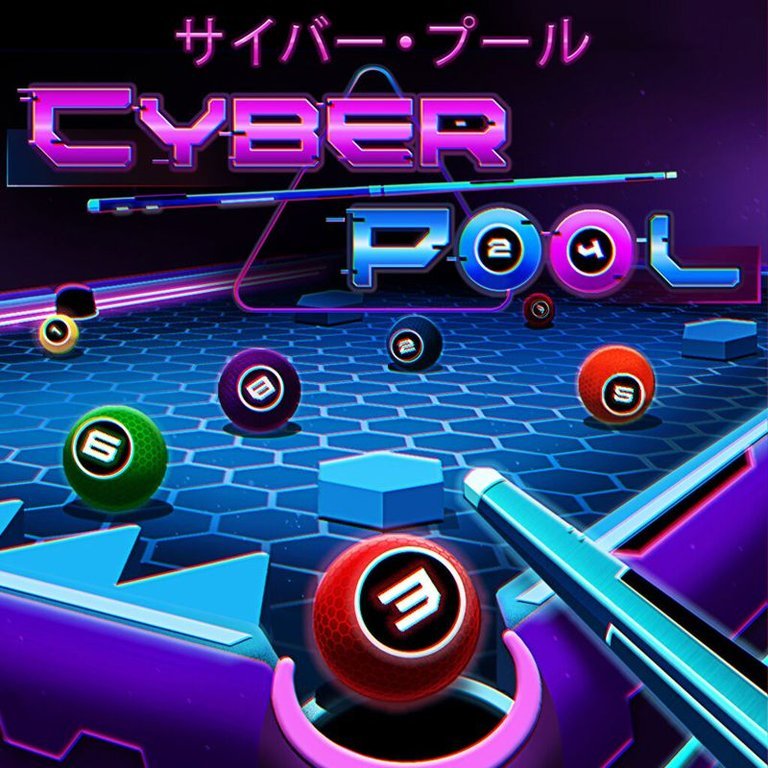
Cyber Pool (2022) is a futuristic twist on classic billiards, set in a neon-drenched sci-fi arcade environment. Players shoot their way through 40 increasingly complex tables, featuring six game modes ranging from high-pressure Classic mode (with limited strokes) to relaxed Arcade play. Developed by Revulo Games, this top-down pool simulation blends straightforward controls with escalating challenges, though critics note its physics may frustrate precision-focused players.
Gameplay Videos
Where to Buy Cyber Pool
PC
Cyber Pool Guides & Walkthroughs
Cyber Pool Reviews & Reception
opencritic.com (40/100): Cyber Pool bends the rules of pool a little too much to make it worthwhile.
metacritic.com (40/100): Cyber Pool bends the rules of pool a little too much to make it worthwhile.
familyfriendlygaming.com (76/100): I love the idea of the different tables within Cyber Pool.
Cyber Pool: Neon Poolscapes and Mechanical Scratches in Revulo’s Sci-Fi Cue Sports Simulator
Introduction
In March 2022, Cyber Pool emerged as a kaleidoscopic love letter to arcade-era pool simulations, promising a neon-lit reinvention of billiards. Developer Revulo Games’ pitch—40 cyber-futuristic tables across six modes—seemed poised to inject novelty into a genre often mired in realism. Yet beneath its glowing veneer lay a game whose rigid physics, divisive controls, and haphazard execution underwhelmed critics and alienated casual players. This review posits that while Cyber Pool succeeds as a stylistic experiment, its failure to balance arcade whimsy with foundational gameplay polish renders it a cautionary footnote in sports-simulation history.
Development History & Context
Studio Vision & Technological Constraints
Cyber Pool was developed and published by Revulo Games, LLC, a studio with scant public portfolio beyond this title. Built on the Unity engine, the game’s cross-platform release (Nintendo Switch, PlayStation, Xbox, Linux, Mac, and PC) reflected ambition, leveraging Unity’s flexibility to democratize access. However, the team’s inexperience may have compounded technical challenges: despite a crisp neon aesthetic, critics cited inconsistent physics and “dodgy hit detection” (TheXboxHub) as core flaws—issues that simmer beneath polished visuals.
The 2022 Gaming Landscape
By 2022, digital storefronts were saturated with indie sports hybrids (Pixel Cup Soccer, Super Blood Hockey), elevating player expectations for innovation and polish. Cyber Pool’s retro-futurism tapped into synthwave nostalgia, but its March release window pitted it against genre titans like MLB The Show 22 and WWE 2K22. For a $4.99 budget title, Revulo banked on differentiation: 40 escalating tables from “vanilla” to “crazy” layouts, and modes merging arcade immediacy with simulation rigor. This dual identity—part Tron-esque spectacle, part technical cue sport—proved its conceptual undoing.
Narrative & Thematic Deep Dive
As a sports simulation, Cyber Pool eschews explicit narrative in favor of tonal worldbuilding. Its sole thematic thrust is a neon-drenched homage to 1980s arcade culture, replete with pulsating grids, cyberpunk palettes, and a synth-heavy soundtrack. The “cyber” prefix suggests narrative implications—glitched interfaces, holographic tables—yet no lore contextualizes these aesthetics. Characters and dialogue are absent; players exist as disembodied cues navigating abstract geometric arenas. Thematically, this creates dissonance: while billiards traditionally emphasizes precision and calm, Cyber Pool’s frenetic visual language overwhelms the sport’s tactical cadence. It is atmosphere without anchorage, style without substance.
Gameplay Mechanics & Systems
Core Loop: A Cue Ball’s Burden
Cyber Pool’s six modes span chill practice (Arcade) to high-stakes challenges (Classic’s three-stroke limit, Challenge’s sequential potting). Tables escalate in complexity: early designs resemble traditional billiards, while later stages warp physics, introduce obstacles, or shrink pockets. The core loop—pot balls, unlock tables—sounds compelling, but multiple systems undermine it:
– Physics & Controls: The game’s “incredible attention to detail” (official blurb) clashed with reality. Critics noted erratic ball collisions and unreliable trajectory previews: the aiming line’s short range forced players to “guess” long shots (Family Friendly Gaming). Pocketing the cue ball triggers instant failure—a punitive design choice ill-suited to casual play.
– Multiplayer Modes: Local co-op and competitive Race/Battle modes add replayability but inherit the single-player’s mechanical flaws. Split-screen functionality (supported on Switch/Xbox) highlights the game’s visual clarity but magnifies its physics inconsistencies.
– Progression & UI: Unlocking tables requires mastering prior stages—a friction point for players struggling with busted mechanics. The UI, though minimalist, lacks shot counters in Classic mode, obscuring progress.
Innovation vs. Execution
Revulo’s boldest innovation—dynamic table gimmicks like moving obstacles—could have elevated Cyber Pool beyond its peers. Instead, these features exacerbate control frustrations. Family Friendly Gaming noted that “different tables” were a highlight, but without “assists” for casual players, their potential was squandered.
World-Building, Art & Sound
Visual Identity: Neon Overload
Cyber Pool’s strongest asset is its art direction. Tables glow with retro-futuristic fervor: grids pulse under balls, holographic barriers flicker, and colors saturate the screen like a laser-tag arena. This commitment to style earned rare praise, with Family Friendly Gaming lauding the “neon visual theme” and “nice little effect[s].” Yet style cannot salvage function: visual busyness occasionally obscures pockets, and thematic repetition dulls the novelty post-10 tables.
Sound Design: Techno Tranquility
The synthwave soundtrack oscillates between ambient and energetic, evoking Hotline Miami without the bite. While “never annoying” (Family Friendly Gaming), it lacks memorable motifs. Sound effects—digital pings for collisions, futuristic hums—complement the visuals but fail to immerse.
Reception & Legacy
Launch Reception: A Pool of Disappointment
Cyber Pool debuted to tepid reviews:
– Critics: Averaged 40% (GamersHeroes: “things are a little off”; TheXboxHub: “annoy much more than… pleasure”).
– Players: Scored 2.5/5 on MobyGames, citing frustration with physics and progression.
– Contradictions: Family Friendly Gaming (76%) praised aesthetics but lamented “difficulty and controls.”
Legacy: A Footnote in Indie Sports History
The game’s influence remains negligible. Unlike Pool Nation (metacritic 79%) or Hustle Kings (75%), which balanced realism with accessibility, Cyber Pool serves as a case study in squandered potential. Its sole legacy is validating that sci-fi pool remains an untapped niche—one subsequent developers might approach with caution.
Conclusion
Cyber Pool is a paradoxical artifact: a visually arresting ode to arcade billiards undone by mechanical incompetence. Revulo Games’ ambition—40 tables, neon flair, multi-mode depth—collides with flawed physics, punitive design, and underbaked controls. While hardcore pool masochists may find fleeting challenge in its later stages, casual players will recoil at its unreliability. In a genre where precision is paramount, Cyber Pool scratches its own que with a warped cue. Its 2022 release stands not as a revolution, but as a neon-drenched cautionary tale: in billiards, as in game design, mastery demands fundamentals before flourish.