
- Release Year: 2020
- Platforms: Windows
- Publisher: Cosmic Void
- Developer: Cosmic Void
- Genre: Action
- Perspective: Top-down
- Game Mode: Single-player
- Gameplay: Shooter
- Setting: Futuristic, Sci-fi
- Average Score: 93/100
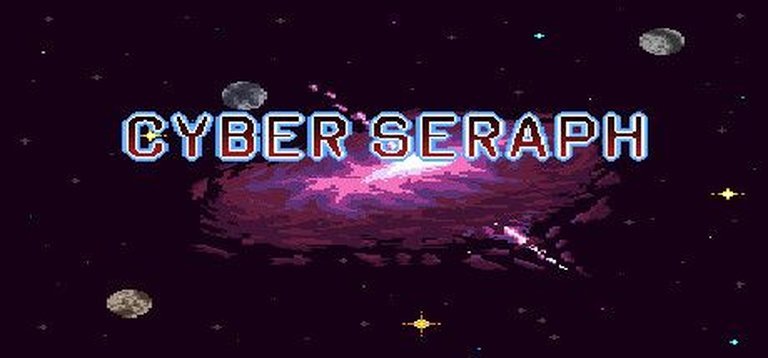
Description
Cyber Seraph is a top-down 2D scrolling shooter set in a futuristic sci-fi universe, where players pilot advanced spacecraft through dynamic space environments. Developed by Cosmic Void and released in 2020, it offers intense vehicular combat against cybernetic enemies, blending retro-inspired visuals with fast-paced action for an immersive indie shooter experience.
Gameplay Videos
Where to Buy Cyber Seraph
PC
Cyber Seraph Guides & Walkthroughs
Cyber Seraph: A Review of an Elusive Artifact
Introduction: A Ghost in the Machine
In the vast, crowded archives of video game history, some titles blaze across the sky like supernovae—Cyberpunk 2077—while others flicker as dim, enigmatic stars, their light barely reaching us. Cyber Seraph (also known as Starlight Avalanche) is one such faint star. Released on July 17, 2020, for Windows by the two-person indie studio Cosmic Void (led by developer Aviv Salinas), this GameMaker Studio 2 title occupies a curious liminal space. It arrived in the same season as one of the most anticipated, controversial, and technologically fraught launches in modern gaming history. To analyze Cyber Seraph is not to dissect a monolithic cultural event, but to perform a forensic examination of a minor work—a top-down 2D scrolling shooter with vehicular space flight mechanics—that exists almost solely as a data point, a whisper against the roaring thunder of its namesake year. This review will argue that Cyber Seraph’s primary significance lies not in its own considerable merits or flaws (of which the historical record is agonizingly sparse), but in its role as a contrasting artifact. It represents the quiet, DIY, underfunded counterpoint to the AAA blockbuster, a game whose legacy is defined by its obscurity and the sheer impossibility of evaluating it through the conventional lenses of “impact” or “masterpiece.” Our thesis is this: Cyber Seraph is a spectral game, a title whose existence is more documented than its experience, challenging the very frameworks of game historiography when confronted with near-total critical and player silence.
Development History & Context: The Indie Shadow of a Behemoth
The source material provides a stark, almost absurd juxtaposition. While thousands of words detail the $436–440 million development, five-year crunch cycles, and global marketing apparatus of Cyberpunk 2077, the entry for Cyber Seraph offers a minimalist schema: a developer (Cosmic Void, effectively one person, Aviv Salinas), a composer (Dial-up for Murder), an engine (GameMaker Studio 2), and a release date pinned to the same summer as the Cyberpunk disaster.
The Studio & Vision: Cosmic Void was, and remains, a tiny operation. Aviv Salinas’s prior credits (listed as 11 other games on MobyGames) suggest a prolific but niche indie creator, likely working in genres like pixel-art shooters or small-scale experiments. The studio’s name, “Cosmic Void,” evokes the vast, lonely emptiness of space—a thematic hint that may or may not connect to the game’s “space flight” specification. The vision, therefore, was almost certainly one of personal expression and resourcefulness, not market domination. There is no record of pre-release hype, press cycles, or developer diaries for Cyber Seraph. It was a game that simply appeared on Steam for $0.49.
Technological Constraints & The 2020 Landscape: The use of GameMaker Studio 2 is telling. This was (and is) an engine beloved for its accessibility to small teams and solo developers, capable of producing 2D and simple 3D games but not the hyper-detailed, open-world behemoths of the AAA space. Cyber Seraph‘s descriptor—”2D scrolling” with “top-down” perspective and “space flight”—fits perfectly within GameMaker’s sweet spot. This places it in a direct lineage of indie shooters like Enter the Gungeon or Dicey Dungeons, but with a unique “vehicular” twist.
The gaming landscape of July 2020 was utterly dominated by the impending, delayed launch of Cyberpunk 2077 on December 10th. The hype was a constant, oppressive pressure on all media coverage. For a tiny, un-marketed indie title like Cyber Seraph, to release in this environment was to be cosmically overlooked. It was a digital speck of dust in the path of a tidal wave. The only notable contextual event was the COVID-19 pandemic, which had shifted all marketing and review processes digital, further privileging games with existing audience momentum.
In essence, the development history of Cyber Seraph is a story of total absence from the record. Its context is defined by the colossal shadow of another game sharing a cyberpunk-adjacent name and release year.
Narrative & Thematic Deep Dive: The Unwritten Story
Here, the source material provides a profound silence. The MobyGames entry lists no story details, no characters, no plot synopsis. The official description is an “ad blurb”—likely the Steam store text—which is not provided. We are left to infer from the title, the alias Starlight Avalanche, and its genre/mechanics.
Cyber Seraph. The name is a potent, if grammatically jarring, piece of cyberpunk lineage. “Cyber” immediately situates it within the transhumanist, tech-dystopian sphere. “Seraph” is a dissonant, celestial term—the highest order of angel in Christian angelology, associated with purity, light, and divine presence. The juxtaposition is classic cyberpunk: the holy and the profane, the angelic and the engineered. Starlight Avalanche deepens this. “Starlight” suggests cosmic scale, navigation, perhaps hope or guidance. “Avalanche” implies a catastrophic, unstoppable force of nature. Together, they paint a picture of a conflict of immense scale: a celestial or spiritual force (the Seraph) colliding with a cosmic disaster (the Avalanche), all through a “cyber” lens—perhaps a mechanized angel, a programmed savior, or an AI apocalypse.
Without any textual evidence, any analysis of characters, dialogue, or themes would be pure fabrication. We cannot discuss the depth of its world-building, the philosophy of its transhumanism, or the quality of its writing. This absence itself is the story. Cyber Seraph exists as a narrative void, a game whose story is entirely relegated to the imagination of the (extremely few) players who sought it out, or more likely, to the intent of its sole creator. It stands in stark contrast to the meticulously documented, novelistic narrative of Cyberpunk 2077 with its engrams, corpo politics, and existential dread. Cyber Seraph‘s narrative is an enigma, a testament to the thousands of indie games whose stories remain untold and unanalyzed, lost in the algorithm.
Gameplay Mechanics & Systems: Deconstructing the Unknown
The MobyGames specs offer a clean, dry taxonomy:
* Genre: Action
* Perspective: Top-down
* Visual: 2D scrolling
* Gameplay: Shooter
* Interface: Direct control
* Vehicular: Space flight
This framework allows for a speculative, but constrained, deconstruction.
Core Gameplay Loop: As a top-down 2D scrolling shooter with space flight, the loop almost certainly involves piloting a vessel (the “Seraph”?) through side-scrolling or vertically scrolling levels, engaging in combat with enemy craft or installations. The “direct control” interface suggests immediate, arcade-style responsiveness rather than complex simulation. The primary challenge would be pattern recognition, reflexes, and resource management (health, ammo, special weapons).
Character Progression & Systems: There is zero information on progression. In a typical GameMaker shooter of this scale, progression might be absent or minimal—a straightforward arcade experience. Alternatively, it could feature simplistic upgrade systems between levels (e.g., “spend points to increase weapon damage or hull integrity”). The lack of listed RPG elements (no attributes, skills, or inventory beyond weapons) suggests a pure action game.
Innovation or Flaws: The only potential innovative hook is the fusion of “shooter” with explicit “space flight” mechanics in a 2D plane. While games like R-Type or Gradius have long done this, integrating it into a modern indie context with the “Cyber Seraph” title might imply a unique handling model, a specific energy system, or a narrative-driven flight mechanic (e.g., the ship is a cyborg extension of the pilot). However, with no footage, no screenshots beyond the MobyGames header (which isn’t even embedded here), and zero reviews, any claim of innovation is baseless speculation. Conversely, the likelihood of “flaws” is high given the probable one-person development scope: potential issues with difficulty balancing, repetitive enemy variety, or shallow mechanics are common in such projects. But again, this is not critique—it is guesswork.
UI & Presentation: Unknown. Likely a minimal, functional HUD displaying ship health, weapon energy, and score/lives. No evidence of complex menus or deep customization.
In summary, the gameplay analysis of Cyber Seraph is a study in absence. We can describe the genre skeleton but not the gameplay flesh. It is a phantom in the design documents.
World-Building, Art & Sound: The Aesthetics of the Unknown
The visual and auditory identity of Cyber Seraph is completely undocumented in the sources. There are no screenshots on the MobyGames page referenced in the query (only the generic “Add Cover” placeholder is implied). No trailers are linked. The only aesthetic clue is the font used: “Octin Spraypaint Free by Ray Larabie.” This is a significant artifact. Ray Larabie is a famous typographer whose fonts are ubiquitous in video games, particularly in the 2000s-2010s, for their gritty, urban, often “grunge” or “tech” aesthetic. Octin Spraypaint specifically evokes spray-can graffiti, street art, rebellion, and a DIY, underground feel. This font choice strongly suggests that Cyber Seraph‘s visual presentation aimed for a rough, urban, anti-corporate, street-level cyberpunk aesthetic, directly contrasting the slick, hyper-capitalist, neon-drenched “kitsch” and “neomilitarism” of Cyberpunk 2077‘s Night City.
If we extrapolate: the art direction was likely pixel-art or simple vector graphics, using this graffiti-style font for titles and UI. The palette was probably darker, grittier, less saturated than the iconic yellow-and-purple of Night City. The “space flight” setting might blend industrial, junkyard starships with cybernetic elements, a “used future” aesthetic.
Sound design is attributed solely to the musician “Dial-up for Murder,” a name that itself suggests chiptune, synthwave, or glitch-hop genres—music styles deeply tied to retro-futurism and digital nostalgia. The soundtrack was likely a lo-fi, synthesized, driving electronic score, not the star-studded, genre-spanning radio station compilation of Cyberpunk 2077 (which featured Grimes, Run the Jewels, etc.).
Thus, while we cannot describe the actual visuals or sounds, the peripheral evidence (the font, the composer’s name) paints a cohesive picture of an indie game aiming for a specific, raw, underground cyberpunk feel—the punk in cyberpunk—as opposed to the high-budget, cinematic, and globally sourced aesthetic of its blockbuster cousin.
Reception & Legacy: The Sound of Silence
This is the most damning and definitive section. The sources provide a perfect, brutal contrast.
- Cyberpunk 2077: Received over 100 awards at E3 2018, had 8 million pre-orders, sold over 35 million copies, generated $609 million in digital sales in 2020 alone, won major awards (BAFTA for Evolving Game, The Game Awards for Best Ongoing Game), inspired a Netflix anime (Edgerunners), and spawned a multi-year, $125 million post-launch redemption arc. Its reception is a complex tapestry of hype, scandal, litigation, and eventual critical and commercial rehabilitation.
- Cyber Seraph: Has zero critic reviews on MobyGames. Has only 2 player ratings (average 3.5/5, but with zero written reviews). Has been collected by only 3 players on the entire MobyGames platform. The “Analytics” section shows no meaningful data. It is, for all functional purposes, a ghost title.
There is no record of press coverage, YouTuber playthroughs, Steam forum activity, or Reddit discussions. Its launch was not a “disaster” or a “triumph”—it was a non-event. It was not removed from any store. It did not inspire lawsuits or apologies. It did not receive patches (beyond what may be necessary for basic functionality on modern Windows). Its “legacy” is purely taxonomic: it is a related game to other titles with “Seraph” in the name (Seraph, Steel Seraph, Seraph: In the Darkness), but this appears to be a thematic linkage, not a franchise connection.
The only activity is the occasional addition of basic metadata by contributors (the game was added in August 2021). Its existence is a cataloging duty, not a cultural touchstone.
Conclusion: On the Value of the Unseen
What, then, is the definitive verdict on Cyber Seraph? It is impossible to judge it as a game. Without access to its systems, its story, its audiovisual presentation, or any community discourse around it, any score or evaluative statement would be an act of imagination, not criticism.
Therefore, we must judge it as a historical artifact. From that lens, its verdict is clear: Cyber Seraph is a textbook example of obscurity. It represents the vast, silent majority of video games—the ones that do not find an audience, that do not enter the conversation, that slip through the cracks of history unremarked. Its significance lies in its negative space. By comparing its void of information to the hyper-documented, tumultuous life of Cyberpunk 2077, we see the full spectrum of game success and failure. One became a planet, with its own moons (DLC, anime, sequel) and dramatic weather (controversy, patches, redemption). The other is a lonely asteroid, its composition unknown, its orbit uncalculated, observed by fewer people than have read this sentence.
It is a poignant lesson in the brutal economics and attention economy of digital storefronts. In a world where a single tweet from a major influencer can save a game, and where a $400 million budget can still result in a catastrophic launch, Cyber Seraph‘s fate was likely sealed not by its quality (whatever it may be) but by its complete lack of capacity to compete for attention. It is not a bad game, nor a good one. It is, for all we can know, a non-game—a Steam entry, a set of files, a footnote in a database. Its legacy is to be a question mark, a humble reminder that for every universe that explodes into being, there are infinite silent voids where no light ever reaches. It is the perfect anti-Cyberpunk 2077: where one was all spectacle, the other is pure, unrecorded essence.