
- Release Year: 2022
- Platforms: Windows
- Publisher: RainForest Games
- Developer: RainForest Games
- Genre: Action
- Perspective: Diagonal-down
- Game Mode: Single-player
- Gameplay: Roguelike, Shooter
- Setting: Fantasy, Futuristic, Sci-fi
- Average Score: 56/100
Description
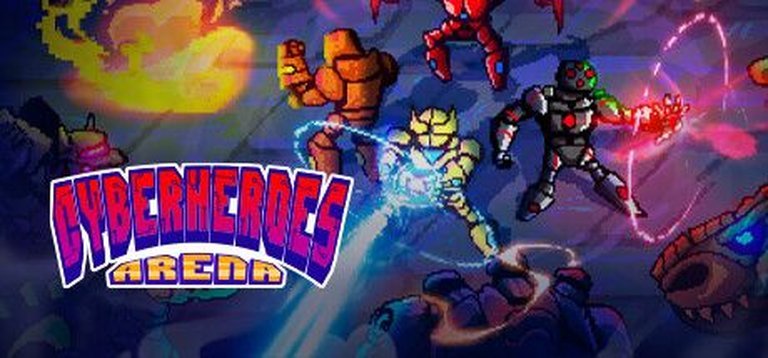
CyberHeroes Arena is an autobattle roguelite set in a futuristic cyber-fantasy world where players select unique cyber heroes and strategically build decks to combat waves of cybernetic monsters. With procedurally generated levels and permadeath mechanics, each run offers new challenges and opportunities to tailor powerful synergies. The game blends fast-paced 2D scrolling shooter action with strategic deck-building, challenging players to survive as long as possible in a relentless, ever-changing arena.
Where to Buy CyberHeroes Arena
PC
CyberHeroes Arena Guides & Walkthroughs
CyberHeroes Arena Reviews & Reception
steambase.io (90/100): A triumphant return to form for the series.
thexboxhub.com (30/100): You’d be best off avoiding CyberHeroes Arena DX and spending your time with Vampire Survivors instead.
opencritic.com (48/100): A budget contender looking to get a piece of the Vampire Survivors pie with some similar elements but none of the charm.
CyberHeroes Arena: Review
Introduction
In the overflowing wake of Vampire Survivors’ genre-defining success, CyberHeroes Arena arrives as a meager contender—a functional but fundamentally hollow auto-battling roguelite that prioritizes brevity over depth. Developed by RainForest Games and released in September 2022, the game positions itself within the crowded arena of minimalist action-survival titles, yet fails to carve out a meaningful identity. This review argues that while CyberHeroes Arena delivers a technically competent framework, its lack of innovation, repetitive design, and absence of soul relegate it to the shadows of its inspirations.
Development History & Context
Studio Vision and Technological Constraints
RainForest Games, a relatively obscure developer, positioned CyberHeroes Arena as a distilled auto-battler experience targeting fans of accessible roguelites. The game emerged during a peak in the genre’s popularity, capitalizing on the success of titles like Vampire Survivors and 20 Minutes Till Dawn. However, unlike its contemporaries, which often expanded on procedural depth or meta-progression, RainForest opted for simplicity: short runs (under 30 minutes), fixed-screen arenas, and a rigid upgrade system. The decision to avoid Early Access—a common strategy for iterative indie development—left the game feeling mechanically sparse at launch, with post-release updates limited to minor UI tweaks and card additions.
The 2022 Roguelite Landscape
By 2022, the auto-battler genre had solidified around twin pillars: Vampire Survivors’ dopamine-driven power fantasies and Hades’ narrative-rich runs. CyberHeroes Arena entered this ecosystem with neither narrative ambition nor systemic complexity, relying instead on straightforward action and quick sessions. Its release on Windows via Steam placed it directly against polished rivals, exposing its lack of content depth and visual distinction.
Narrative & Thematic Deep Dive
A Vacuum of Story
CyberHeroes Arena eschews narrative entirely. Players select from seven cybernetic heroes—Destroyer, Sprinter, Defender, etc.—with only nominal stat differences distinguishing them. No lore, dialogue, or environmental storytelling contextualizes the arenas or foes. Thematic cohesion is equally thin: the “cyber” aesthetic amounts to generic robot models and neon backdrops, devoid of the subversive grit or existential tension inherent to cyberpunk.
Characters as Spreadsheet Entries
Each hero’s unique attributes (e.g., health regeneration, movement speed) suggest strategic variety, but in practice, runs feel homogenized. Without narrative arcs or personality, heroes become interchangeable vessels for the same shallow combat loop. This lack of characterization mirrors the game’s broader identity crisis: it is a product of mechanics without purpose.
Gameplay Mechanics & Systems
Core Loop: Repetition Without Reward
The game’s structure splits runs into 18 waves, each lasting 15–90 seconds. Players automatically attack while dodging enemies, collecting currency to purchase skills and items between rounds.
- Skills & Items: Over 40 skills (e.g., Sky Cannon, Tranquilizer Bomb) and 100 items allow for theoretical build diversity. However, the cap of 12 active skills and the items’ bland stat adjustments (+5% damage, -3% speed) nullify meaningful synergy. Unlike Vampire Survivors’ transformative power-ups, upgrades here feel incremental and forgettable.
- Progression & Difficulty: Meta-progression is nonexistent—no permanent unlocks or difficulty scaling exist. Heroes are unlocked via perfunctory challenges (e.g., “Kill 500 enemies”), but their impact is negligible. The game’s difficulty curve plateaus early, with runs becoming winnable within an hour of playtime.
UI and Control Limitations
A clunky interface exacerbates these flaws. Accidental menu exits (due to unconfirmed back inputs) and poor visual feedback—enemies blend into garish backgrounds—frustrate precision. Keyboard/mouse controls function adequately but lack the tactile satisfaction of controller support, which remains absent despite player requests.
World-Building, Art & Sound
Aesthetic Anemia
CyberHeroes Arena’s art direction is its most glaring weakness. Arenas are static, monochromatic rectangles with minimal detail, evoking a mobile game’s asset-flip pastiche. Enemy designs range from robotic insects to floating spheres, but limited animations and a lack of visual hierarchy make threats difficult to parse. The heroes fare no better—their palette-swapped designs exude no personality.
Sound Design: A Single Note
The soundtrack loops a generic electronic track that numbs rather than energizes. Sound effects lack weight; attacks register as tinny chirps, and enemy deaths vanish without auditory satisfaction. This auditory barrenness mirrors the game’s overall shallowness, failing to immerse or excite.
Reception & Legacy
Launch and Critical Response
Upon release, CyberHeroes Arena garnered a 90% positive Steam user score from a small sample (21 reviews), praised for its “addictive” basics. However, professional critics savaged it: TheXboxHub’s 1.5/5 review called it “unfit to hold Vampire Survivors’ coat,” while Nindie Spotlight scored its DX re-release 4.8/10, lamenting its “empty” content and poor Switch optimization. The absence of Metacritic aggregation speaks to its industry irrelevance.
Legacy: A Footnote in Indie History
The game’s 2023 DX re-release (consoles) amplified its obscurity. Ratalaika Games’ budget-focused porting highlighted itsachievement-grind simplicity but attracted no new audience. Today, CyberHeroes Arena serves as a cautionary tale—a clone lacking the heart or hustle to survive in a genre defined by evolution.
Conclusion
CyberHeroes Arena is less a game than a skeletal framework, a proof-of-concept starved of the creativity needed to endure. Its functional combat and brisk runs might briefly entertain genre newcomers, but it offers nothing beyond the bare minimum. In a landscape where even derivative titles innovate through charm or challenge, RainForest Games’ effort remains a forgettable also-ran. For historians, it exemplifies the risks of trend-chasing; for players, it is an artifact best left in the digital bargain bin. Final verdict: A mechanically sound but soulless diversion, overshadowed by the giants it imitates.