
- Release Year: 2023
- Platforms: Windows
- Publisher: Mindware Corp.
- Developer: Mindware Corp.
- Genre: Simulation
- Perspective: Top-down
- Game Mode: Single-player
- Gameplay: Life, Social simulation
- Average Score: 93/100
Description
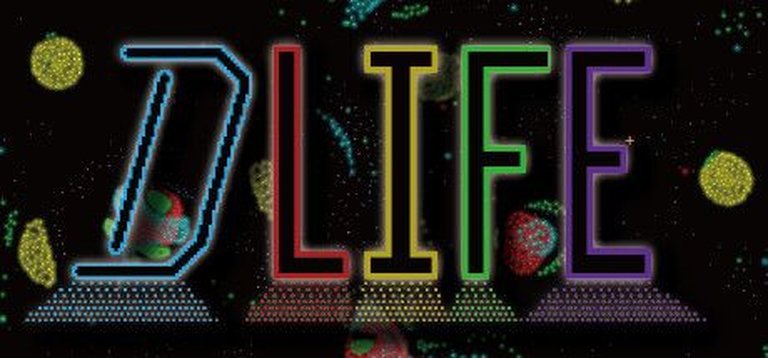
D Life is a meditative simulation game inspired by John Conway’s Game of Life, featuring six interacting colors of cells on a vertically-oriented playfield that evolves dynamically like a hypnotic light show. Styled as a forgotten ’80s arcade cabinet with 8-bit fonts, chiptune music by Yuriko Keino, and risk-reward mechanics for leaderboard competition, it blends retro coin-op aesthetics with modern fluid cellular automata for an interactive art exhibit experience.
Where to Buy D Life
PC
D Life Reviews & Reception
metacritic.com : D-Life accomplishes something totally unique. Hidden behind its simplicity is a system of complexities, just enough to make for a strangely compelling time.
tech-gaming.com : Mindware’s latest work feels like a mixture of retro coin-op and an interactive art exhibit.
store.steampowered.com (93/100): 93% of the 15 user reviews for this game are positive.
opencritic.com : D-Life accomplishes something totally unique. Hidden behind its simplicity is a system of complexities, just enough to make for a strangely compelling time.
D Life: Review
Introduction
Imagine stumbling upon a dusty arcade cabinet in a forgotten Tokyo alley, its screen alive with swirling vortices of colored pixels that pulse like digital organisms—hypnotic, alive, and utterly alien. This is the siren call of D Life, a 2023 indie gem from Mindware that resurrects John Horton Conway’s 1970 cellular automaton masterpiece, The Game of Life, as an interactive light show and photography sim. Released on June 22, 2023, for PC via Steam, D Life (also known as Denshi Life) isn’t just a game; it’s a meditative portal to electronic evolution, where players “photograph” emergent life forms born from mutation and wind. Its legacy lies in pioneering a “new genre” of life-form photography, blending retro arcade nostalgia with modern computational fluidity. My thesis: D Life masterfully distills profound complexity into bite-sized zen sessions, proving that simplicity can birth addictive depth in an era bloated with epics, cementing its place as a hypnotic outlier in indie simulation design.
Development History & Context
Mindware Corp., a Japanese indie studio helmed by polymath Mikito Ichikawa (credited as Micky Albert), birthed D Life as a passion project echoing the golden age of Namco arcade cabinets. Ichikawa—programmer, game designer, and producer—wore multiple hats in this 15-person credit list (mostly special thanks), collaborating with graphic artists TAMA-ON and Shinsuke Yamakawa for visuals, and sound legend Yuriko Keino for audio. Keino, whose resume boasts Dig Dug, Super Pac-Man, Xevious, and Pac-Land, infused dynamic, situational soundscapes—a system where BGM evolves with gameplay, much like her Namco classics.
Developed in Unity for Windows (requiring 64-bit OS and modest specs: Dual-core CPU, 1GB RAM, DirectX 9 graphics), D Life sidesteps era-specific tech constraints by emulating ’80s hardware aesthetics on modern CPUs. Its vertically oriented playfield, 8-bit fonts, and faux 100-yen sticker scream obscure relic, but fluid cell simulations—10,000x more powerful than Conway’s original—reveal contemporary horsepower. Released amid 2023’s blockbuster deluge (Baldur’s Gate 3, Zelda: Tears of the Kingdom), D Life ($6.99 on Steam) targeted the indie itch for “diminutive games” like Ichikawa’s prior Space Mouse 2. Post-launch updates (July 2023) added achievements (e.g., “i4004” for 4004+ lives shot, “neko800” via title screen cheat), nanoKONTROL2 MIDI controller support (with LED feedback), and fixes, extending replayability. A sequel, Denshi Life 2 (December 2024), arrived with new modes, missions, “activation” mechanics, enhanced visuals/sound, and Namco PCB emulation—affirming Mindware’s vision of evolving cellular zen into a franchise.
The 2023 landscape favored sprawling open-worlds and live-services, making D Life‘s meditative brevity a bold counterpoint. Drawing from Conway’s Life—a grid-based sim where cells live/die by neighbor rules (under/overpopulation kills, three revives)—it innovates with color (six hues), mutation, and player wind manipulation, birthing “denshi” (electron-based life). Ichikawa’s retro-futurist lens critiques arcade ephemera while leveraging Steam Deck compatibility and leaderboards for modern hooks.
Narrative & Thematic Deep Dive
D Life eschews traditional plotting for emergent lore, unveiled via idle menu idling or Steam page: In a tech-expanded future, scientists discover “denshi”—electron-based life forms evolving via Conway-esque rules. Players, as photographers, capture them fulfilling criteria (e.g., exact color counts). No dialogue, characters, or branching arcs exist; instead, “narrative” unfolds through attract screens touting computational leaps and in-game evolutions. Idle reveals frame it as “exploring electronic life forms,” with themes of birth, mutation, and capture mirroring real cellular automata.
Thematically profound, it probes life’s fragility: Cells cluster, scatter, rebirth in hypnotic cycles, evoking isolation/overpopulation (Conway’s core). Colors represent DNA diversity; wind/mutation as player-god interventions question agency vs. chaos. “Feel the DNA of Denshi and take the best picture!” urges the blurb, blending sci-fi wonder with philosophical zen—life as fleeting patterns, scored by “lives shot.” Subtle lore nods (achievements like “Z80,” “Apple 2c” homage hardware) weave computing history into electronic mythology. No villains or heroes; conflict is internal, against entropy. This abstract “story” elevates D Life beyond gimmick, thematizing simulation as art: Players don’t conquer, they witness and curate digital biogenesis.
Gameplay Mechanics & Systems
At core, D Life loops Conway’s Life into “life-form photography”: A vertical grid teems with pixel-cells in six colors, mutating per generation (birth/death by neighbors). Goal: Encircle exact color subsets (e.g., “3 colors”) with a mouse-directed, expanding ring (hold LMB). Tolerance for outliers prevents pixel-hunting frustration, but precision demands rapid cluster-scanning—a skill honed over sessions.
Core Loops & Modes
– Basic Mode: Six stages, capture escalating colors (1-6). Success advances; failures retry. Wind tool (keys/gamepad/MIDI) pushes hues horizontally/vertically, enabling setups.
– Time Limit Mode: Countdown per stage, specific reqs (e.g., “purple + green”). Post-stage, choose paths: extra time vs. multipliers. RNG offers easy/hard shots.
Progression is score-attack: Leaderboards (local/global, chiptune rewards for 1st/2nd), Steam achievements (e.g., “JR-100” for 100 plays, “Pasopia 7” for 7007 lives). No meta-progression; replayability stems from procedural emergence—patterns grow cyclically, stagnate, or explode.
Innovations & Flaws
Wind adds agency, sculpting flows impossible in pure Life. MIDI integration (KORG nanoKONTROL2 knobs/sliders control wind, LEDs visualize states) immerses musicians. UI is minimalist: Pulsating cursor, optional arcade bezels/instructions, pause fixes (post-July update). Controls shine on mouse/Deck (remap wind), but ring-growth pacing feels uniform—reviewers crave stage-varying speed or extra lives like retro coin-ops. Punitive mistimes (missing a color by milliseconds) frustrate, yet meditative pacing (fast generations) fosters flow-state zen. No combat; “challenge” is perceptual acuity. Depth hides in mastery: Predict mutations, orchestrate multi-color symphonies. Sessions last minutes, but addiction loops via “one more photo.”
World-Building, Art & Sound
The “world” is a boundless cellular grid—an abstract electron-sea evoking petri dishes, urban sprawl, or cosmic nebulae. Atmosphere: Hypnotic vertigo, cells whirling in fluid dances belying ’80s limits. Vertically scrolling playfield (fixed/flip-screen) mimics upright cabinets; bezels toggle for purity.
Visuals: Pixel-cells (six-color palette: cyan, purple, etc.) render with modern smoothness—impossible on ’80s iron—forming gliders, oscillators, spaceships. Retro fonts, yen sticker, leaderboard jingles sell relic illusion. Art direction (Yamakawa/TAMA-ON) is “molten whirling particles,” psychedelic yet restrained, scoring 80% in Tech-Gaming for aesthetics.
Sound: Keino’s masterpiece—chiptune BGM mutates situationally (e.g., movement-progressive like Dig Dug, bars from Xevious). Leaderboard chimes soothe; first/second-place tunes differentiate. Dynamic SFX (wind whooshes, snaps) enhance immersion, earning praise as “unbearably soothing.” Together, they forge zen transcendence: Visual chaos harmonized by audio evolution, contributing otherworldly escapism.
Reception & Legacy
Launching to niche acclaim, D Life boasts 93% positive Steam reviews (15+), MobyGames 90% (Retro Gamer: “unique premise… well worth your time”), Cubed3 9/10 (“totally unique… highly recommended”), Tech-Gaming 83% (“hypnotic… interactive ingenuity”), GameBlast 7/10 (innovative but repetitive). Metacritic/OpenCritic aggregate ~86% (limited critics). Commercial: Modest $6.99 sales, but Steam Deck Verified and MIDI niche boosted word-of-mouth. No massive hits, yet 2023 updates/achievements sustained engagement.
Reputation evolved positively: Initial “arty arcade” curiosity grew to “permanent hard drive spot” for short-burst players. Legacy: Influences cellular sims (Life Is 2-D), inspires MIDI-gameplay hybrids. Denshi Life 2 (2024) expands with missions/interventions, proving viability. In indie history, it joins Tetris Effect-like sensory innovators, influencing zen sims amid 40-hour fatigue. Mindware’s output (Alice and You, Judgment) positions Ichikawa as retro-futurist torchbearer.
Conclusion
D Life synthesizes Conway’s elegance with arcade soul, crafting a profound sim where photographing digital life yields zen highs and subtle challenges. Mikito Ichikawa’s vision—retro shell, modern fluidity, Keino’s sound alchemy—delivers addictive brevity amid 2023’s sprawl. Flaws like repetition pale against hypnotic innovation, MIDI quirks, and emergent beauty. Verdict: An essential indie artifact, 9/10. Essential for simulation historians, zen seekers, and anyone craving “gimme the D” ingenuity—D Life etches a microscopic miracle into gaming eternity, birthing a franchise from pixels. Buy it, idle the menu, feel the denshi pulse.