
- Release Year: 2019
- Platforms: Nintendo Switch, Windows
- Publisher: Marvelous Inc., Marvelous USA, Inc., Nintendo Co., Ltd., Shanghai Electronic Publish Co., Ltd., Xseed Games
- Developer: Marvelous First Studio
- Genre: Action
- Perspective: Third-person
- Game Mode: Co-op, Online Co-op, Single-player
- Gameplay: Customization, Shooter
- Setting: Fantasy, Futuristic, Post-apocalyptic, Sci-fi
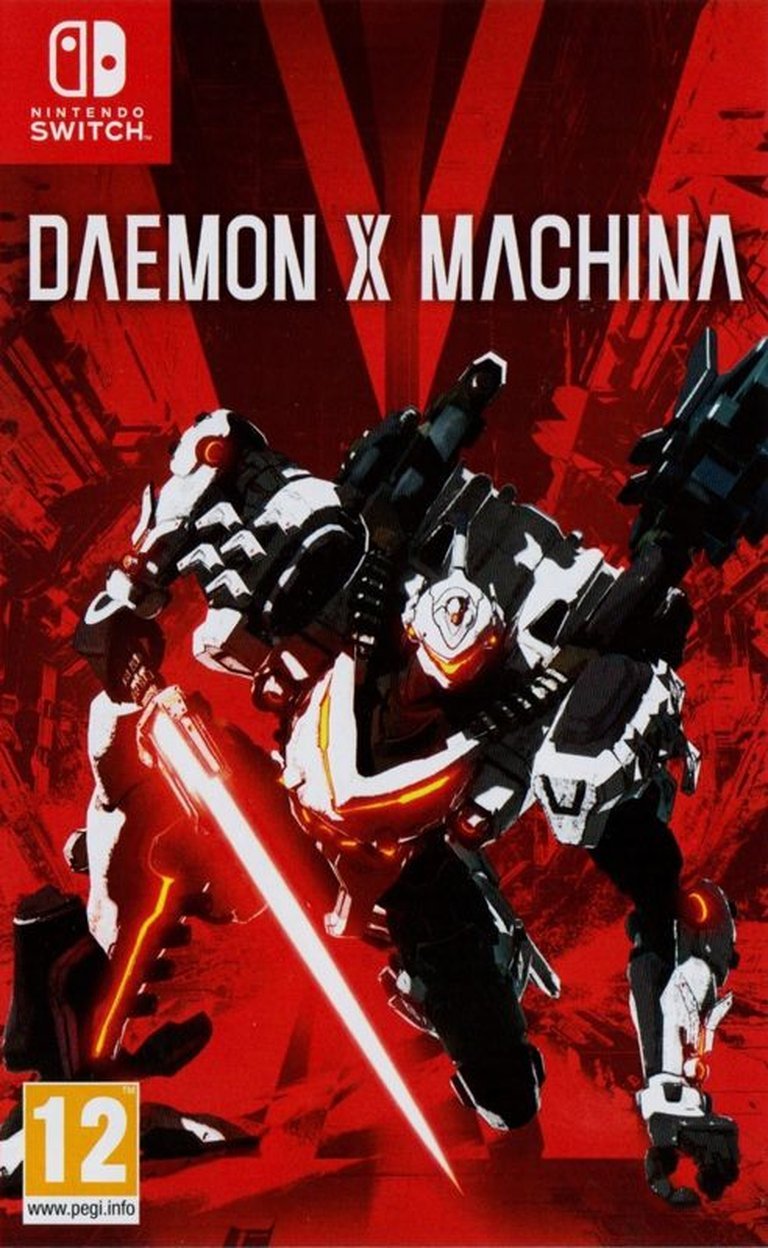
Description
Daemon X Machina is an action shooter set in a post-apocalyptic, sci-fi world with fantasy elements, where players pilot customizable giant mechs in intense combat. Featuring anime-inspired visuals, cinematic camera angles, and deep mech customization, the game blends fast-paced shooting with strategic mech warfare in a futuristic setting.
Gameplay Videos
Where to Buy Daemon X Machina
PC
Daemon X Machina Free Download
Daemon X Machina Cracks & Fixes
Daemon X Machina Mods
Daemon X Machina Guides & Walkthroughs
Daemon X Machina Reviews & Reception
ign.com : isn’t quite as well thought-out as it appears.
Daemon X Machina: A Flawed Landmark in the Mecha Genre Revival
Introduction: A Gorgeous Shell in Need of a Pilot
When Daemon X Machina launched on the Nintendo Switch in September 2019, it arrived with a singular, powerful promise: a true spiritual successor to the revered Armored Core series, helmed by its former producer, Kenichiro Tsukuda, and featuring mech designs by the legendary Shōji Kawamori (Macross, Escaflowne). It delivered spectacularly on its aesthetic promise, presenting a world of vibrant, cel-shaded beauty and kinetic, anime-inspired mech combat. Yet, beneath this stunning veneer lay a game that critics and players would passionately dissect, debate, and often frustrate over. This review argues that Daemon X Machina is a paradox: a mechanically deep and visually exhilarating mech action game that fundamentally misunderstands the structural and narrative principles that elevate a genre revival from a mere nostalgic exercise to a timeless classic. Its legacy is not one of undisputed triumph, but of a crucial, if deeply compromised, stepping stone that re-energized a dormant genre while exposing its most顽固 pitfalls.
Development History & Context: From Armored Core‘s Ashes to Switch’s Sky
The Tsukuda Vision: The project’s provenance is its most potent selling point. Kenichiro Tsukuda, the producer behind several seminal Armored Core titles on the PlayStation 2, left FromSoftware to form Marvelous First Studio. His stated goal was to create “the best mech action game” by distilling the core thrill of customizing and piloting a massive war machine—the “mech-like thrill” of piecing together a unit that feels truly yours—while shedding the perceived dense, simulation-heavy baggage of Armored Core. The vision was for accessibility, speed, and style, leveraging the anime and manga inspirations of the team to create a more vibrant, kinetic identity.
Technological Crucible: The Nintendo Switch: Development began around mid-2017, with the game built from the ground up in Unreal Engine 4 for the then-new Nintendo Switch. This presented monumental challenges. The team had to balance the deep customization systems—dozens of parts with complex stat interactions—with the need for stable, high-frame-rate performance during chaotic, effects-heavy aerial battles. Public demos in February and September 2019 were critical; player feedback on the initial build’s performance issues directly led to patches that improved frame rate stability before launch. The Switch’s hardware limitations inevitably shaped design decisions, contributing to the repetitive mission layouts and simplified enemy AI that would become major points of criticism.
A Genre in Limbo: Daemon X Machina arrived in a mecha game void. The Armored Core series had been dormant since 2013’s Armored Core: Verdict Day. The market was starved for a serious, customization-focused mech shooter. Nintendo’s involvement as a worldwide publisher for the Switch version gave it a massive platform and credibility, but also subtly influenced the game’s direction toward a broader, “family-friendly” (though still Teen-rated) audience, a point heavily debated in community forums. The game’s position was clear: it was the heir to a neglected throne, tasked with proving the genre’s relevance on a modern, portable-first platform.
Narrative & Thematic Deep Dive: The Unraveling of the Plot
The Premise and Its Promise: The story is set in a post-apocalyptic Earth after a catastrophic “Moonfall.” A lunar fragment strikes the planet, releasing “Femto” energy that corrupts global AI, leading to a war waged by colossal AI-controlled mechs (“Immortals” or “Arms of Immortals”) against humanity. Survivors cluster in the “Oval Link” quarantine zone. Humanity’s hope lies in the “Outers”—humans mutated by Femto exposure who pilot customizable “Arsenals.” The player is an amnesiac Outer, the “Rookie,” who works as a mercenary for the neutral “Orbital” organization, taking contracts from three consortiums (Sky Union, Horizon, Zen) to fight the Immortal threat.
Execution: A Masterclass in Confusion: This is the game’s most infamous failing. The narrative is delivered through lengthy, skippable in-mission radio chatter from fellow mercenaries and briefings from the AI “Four.” The structure is muddled. As one Reddit user meticulously catalogued, the plot introduces a torrent of cryptic concepts—”Grief,” “Four,” the “Dominator,” “Black AI,” “Solomon,” “Wraiths,” the “Oval Link Project”—with minimal coherent explanation. Cutscenes show philosophical debates that go nowhere, character motivations that shift arbitrarily, and a central antagonist (Grief) whose grand plan is obscured by obtuse, faux-profound dialogue until a last-second reveal.
Themes Buried Under Tropes: The game attempts to explore profound themes: the cyclical nature of war, the cost of technological evolution (“losing your humanity” through cybernetic augmentation), the ethics of AI, and the manipulation of mercenaries by unseen corporate or AI hands. The idea that the player-character is a “genetic failsafe” or clone created by Grief is a fascinating, Blade Runner-esque twist. However, these themes are utterly drowned out by a script littered with “cringe-inducing anime tropes,” as critics noted. Characters speak in exaggerated, often illogical ways that make them seem like “angst-ridden teenagers bickering over popularity contests,” not hardened mercenaries in a desperate war. The famous “ice cream” motif after dark missions is cited as a jarring, tonal whiplash that exemplifies the narrative’s failure to commit to its own grim setting.
The Divisive “Stepping Stone” Theory: Some fans, like the detailed Reddit post, argue the story is a “stepping stone” intended for a sequel. They posit that the confusing elements—the mercenary-on-mercenary conflicts, the ambiguous role of the consortiums, Grief’s ultimate goal of human evolution via space colonization—are deliberately unresolved seeds. The final choice (“fulfill life’s purpose” or “search for hope”) and the post-credits tease of a new threat support this. In this reading, the narrative is not bad but incomplete, a franchise builder. The overwhelming critical consensus, however, rejects this as excusing poor execution. As one commentator stated, “A good story is about storytelling… Daemon X Machina fails in almost every aspect” of presentation, pacing, and character logic.
Gameplay Mechanics & Systems: Power and Repetition
The Arsenal: A Masterpiece of Customization: This is the game’s undisputed genius. The “Hangar” is a player’s playground. Arsenals are built from scavenged or purchased parts: heads (sensors), bodies (energy/defense), arms (weapon mounts), legs (mobility). Weapons range from rifles and bazookas to laser swords and railguns. Shoulder-mounted auxiliaries add shields, missile pods, or generators. The depth is staggering. Stats like power output, durability, memory usage (a hard cap that applies debuffs if exceeded), and weight directly impact performance. The “Design-It-Yourself Equipment” system is a direct, loving homage to Armored Core, allowing for builds from agile, sword-wielding dodge tanks to slow, artillery-platform behemoths. The tactile feedback is excellent; you feel the difference between a light, fast frame and a heavy armor clunker.
Combat Loop: Thrilling Yet Shallow: The moment-to-moment combat is widely praised. Flying via boosters feels fluid and powerful. Lock-on is forgiving but requires manual adjustment for fast targets. Weapon switching is quick. Melee is visceral, with blade locks and combo systems. The ability to eject from a destroyed Arsenal and fight on foot is a brilliant “Anti-Frustration Feature” compared to Armored Core‘s total mission failure. Bosses, the “Colossal Immortals,” are spectacle-filled affairs requiring pattern recognition and weak-point exploitation, often with environmental interactions (like using a boss’s own cannon against it).
The Fatal Flaw: Mission Design & Enemy AI: Here the cracks widen. Mission variety is abysmal. The structure relentlessly cycles between “Annihilate all enemies,” “Defend this point,” “Destroy this target,” and “Escort this NPC.” Objectives are rarely contextualized within the world. More damningly, enemy AI is notoriously poor. Rival Arsenal pilots exhibit “Artificial Stupidity”: poor spatial awareness (easily lured into water to sink), getting in your line of fire, and failing to use their own gear intelligently. Standard Immortal enemies are mindless cannon fodder. This turns what should be tense, tactical duels into simple chase sequences or damage-sponge fights. As IGN cruelly summarized, the game is “a beautiful shell with not enough to fill it.” The extensive customization feels underutilized against such unchallenging opposition.
Progression & Grind: The loop is: Mission → Credits/Blueprints → Buy/Farm Parts → Customize → Repeat. While satisfying, it becomes grindy. Late-game missions require farming specific Immortals multiple times for rare blueprints. The infamous “Destroy 100,000 enemy AI” achievement encapsulates the potential for meaningless repetition. The “Secret Factory” (unlocked by reaching C-Rank and buying 20 ice creams—a “Guide Dang It!” moment) offers end-game weapon development but feels like tacked-on content.
Multiplayer: The 4-player co-op for Colossal Immortal boss fights is a highlight, scaling difficulty and encouraging coordinated builds. The later-added PvP (1v1, 2v2) is functional but niche. The lack of cross-play between Switch and PC, despite a cross-save feature, fragmented the community.
World-Building, Art & Sound: A Feast for the Senses
Visual Identity: The game’s world is its strongest asset. The “Alien Sky” with its milky white and crimson hues, the devastated cityscapes of Grace City, the sleek orbital hubs—all are rendered in a beautiful, subtle cel-shaded style that pops with “technicolour” vibrancy. Mecha designs by Kawamori are iconic, blending elegance with industrial heft. The “Radiant Gleam” default Arsenal is a direct, gorgeous Armored Core shout-out (“White Glint”). Environmental destruction (smash cars, topple buildings) adds chaotic spectacle. The animation is fluid, especially during melee combos and boost maneuvers.
Soundscape: The soundtrack is a deliberate, successful blend of rock, metal, and electronic, composed by teams from Bandai Namco (responsible for Ace Combat and Tekken). It’s energetic, driving, and perfectly matches the on-screen chaos—a “flamenco piece” for the final boss being a standout, rule-breaking choice. Mickey Mousing ties weapon sounds to musical instruments. The voice acting (fully voiced in English and Japanese) is competent but often hampered by the weak script, with some performances (like Guns Empress’s “Rei Ayanami Expy” Japanese version) being more nuanced than their English counterparts.
Atmosphere vs. Emptiness: While individual missions are visually arresting, the world lacks cohesion. The “Oval Link” hub is just a menu. There’s no sense of a living, breathing warzone. The “Dissonant Serenity” of lore delivered via messages—the annihilation of Sky Union, the destruction of Zen—feels clinical and unearned. The vibrant art style clashes with the attempted grimness of the plot, creating a tonal disconnect that feeds the narrative’s problems.
Reception & Legacy: A Cult Classic in the Making?
Critical Divide: Upon launch, Daemon X Machina received “mixed or average reviews” (Metacritic: 69/100 Switch, 72/100 PC). The schism was clear:
* The Praises: Reviewers like Way Too Many Games (8.5/10), Marooners’ Rock (8.2/10), and Digitally Downloaded (4/5) celebrated its “gorgeous” visuals, “killer soundtrack,” “fun gameplay loop,” and immense customization depth. They saw it as a worthy, vibrant heir to Armored Core.
* The Criticisms: IGN (6.5/10), Game Informer (5.5/10), and Jeuxvideo.com (12/20) lambasted the “plodding narrative,” “repetitive mission design,” “archaic gameplay,” and poor enemy AI. The common refrain: a fantastic foundation with nothing meaningful to build on it. The PC port was widely praised for superior performance (up to 200 FPS, 4K) and modding potential, earning a higher user score.
Commercial Performance: The game debuted strongly in Japan (#4, 42,217 physical copies in first week) and moderately in the UK (#19). Publisher Marvelous stated it performed “very well” on Switch, particularly digitally. The PC port on Steam became a steady seller, with estimated lifetime sales of ~199,000 units and $8.2 million revenue by 2025. Its success was niche but solid, proving the mecha genre still had a dedicated audience.
Evolving Reputation: Over time, the game’s reputation has crystallized around a “flawed gem” or “diamond in the rough” status. The intense customization and satisfying core combat have garnered a passionate cult following who willingly overlook the repetitive missions and narrative incoherence. The post-launch support (free updates, co-op missions, collaborations with Eureka Seven and Code Geass) was seen as diligent but insufficient to address core structural issues. The Reddit discussions remain fiercely divided between those who see a “stepping stone” with a smart, buried story and those who call the narrative “a dumpster fire.”
Influence and Industry Impact: Its direct influence is subtle but significant. It proved that a dedicated, modern mech action game could find an audience on a mainstream platform like the Switch. It directly paved the way for its own sequel, Titanic Scion (2025), which explicitly addresses many criticisms by promising an open world, a co-op campaign, and deeper narrative integration. More broadly, it joined a late-2010s revival of niche genres on Switch (Astral Chain, Xenoblade Chronicles 2), demonstrating that deep, mechanically rich experiences could thrive outside the AAA Sony/Microsoft ecosystem.
Conclusion: A Monumental Misstep or a Necessary Foundation?
Daemon X Machina is an essential, deeply contradictory artifact of its time. It is the game that finally remembered how to make piloting a massive, customizable mech feel empowering and cool after a half-decade of silence. Its Arsenal customization is a masterclass in player expression, and its visual and auditory identity is unforgettable. However, it is also the game that demonstrated how a lack of mission design sophistication, toothless enemy AI, and a narratively bankrupt script can utterly cripple even the most mechanically sound foundation.
It is not, as some hoped, the “ultimate real robot game.” Instead, it is the necessary real robot game. It took the brave, risky step of translating the bespoke, menu-heavy Armored Core ethos into a package with mass appeal. In doing so, it sacrificed the very depth and mystery that gave its inspirations their lasting power. Its legacy is two-fold: it re-established the mech action genre’s commercial viability, ensuring its continuation via the forthcoming Titanic Scion. But it also serves as a cautionary tale—a reminder that a game is more than the sum of its customizing parts. For historians, Daemon X Machina is not a classic to be revered, but a pivotal, flawed experiment whose successes must be studied and whose failures must be remembered. It is, in the end, a daemon in the machine: a powerful, disruptive force that exposed the vulnerabilities of the very system it sought to revive.