
- Release Year: 1997
- Platforms: 2, Macintosh, OS, Windows 16-bit, Windows
- Publisher: ArcMedia.com Inc.
- Developer: ArcMedia.com Inc.
- Genre: Educational
- Perspective: 3rd-person (Other)
- Game Mode: Single-player
- Gameplay: Counting, Matching, Observation, Sorting
- Average Score: 100/100
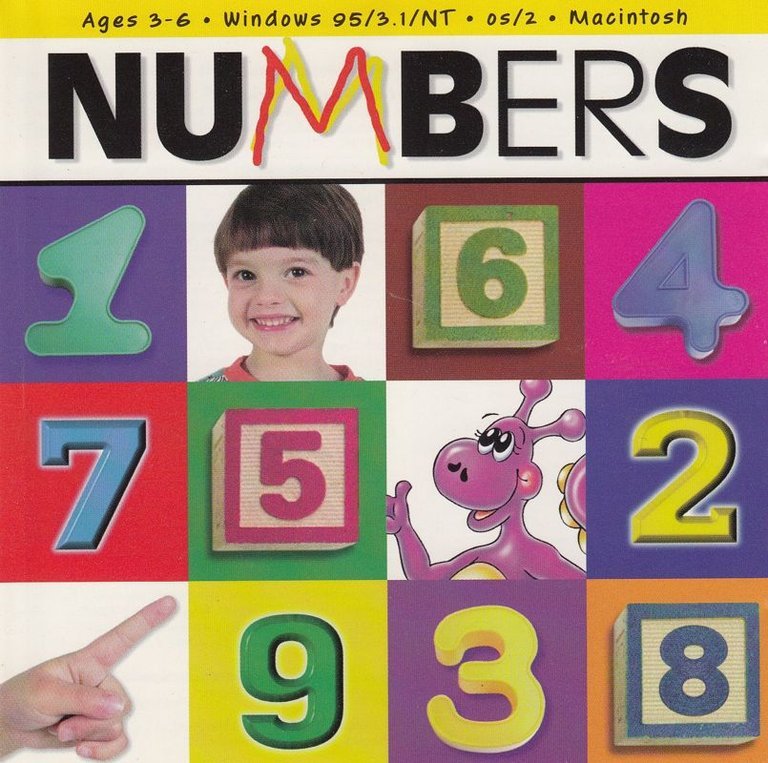
Description
Dally Doo You Can Too! Numbers is an educational game for children aged three to six, where the friendly dinosaur Dally Doo guides players through interactive lessons and games focused on pre-math skills like counting, matching, sorting, and observation, including a bonus I Spy activity, all supported by helpful narration for extra practice.
Dally Doo You Can Too! Numbers Free Download
Dally Doo You Can Too! Numbers: A Prehistoric Gem in Edutainment History
Introduction
In the neon glow of 1990s computer monitors, where floppy disks gave way to the sprawling promise of CD-ROMs, a friendly purple dinosaur named Dally Doo emerged as an unlikely educator, guiding toddlers through the ABCs of arithmetic. Dally Doo You Can Too! Numbers (1997), developed and published by the now-obscure ArcMedia.com Inc., stands as a quintessential artifact of the edutainment boom—a time when dinosaurs weren’t just roaring in Jurassic Park sequels but gently coaxing three-to-six-year-olds into mastering counting, matching, sorting, and observation. This unassuming title, preserved in digital archives like the Internet Archive, earns a perfect 5.0/5 from its scant but fervent player ratings on MobyGames, hinting at nostalgic warmth amid a sea of forgotten software. My thesis: While lacking the polish of contemporaries like JumpStart or Reader Rabbit, Dally Doo You Can Too! Numbers excels as a pioneering, multi-platform pre-math primer, embodying the era’s optimistic fusion of play and pedagogy, and deserving rediscovery for its pure-hearted simplicity.
Development History & Context
ArcMedia.com Inc., a small independent studio focused on children’s multimedia, birthed Dally Doo You Can Too! Numbers in 1997 amid the explosive growth of home computing. This was the CD-ROM golden age: PCs were transitioning from 486 to Pentium processors, Windows 95 had democratized graphical interfaces, and families flocked to educational software promising “edutainment” to justify those hefty PC purchases. ArcMedia, leveraging the dinosaur craze post-Barney & Friends (though Dally Doo predates overt purple dino fatigue), crafted a title for Windows (both 32-bit and 16-bit variants), Macintosh, and the niche OS/2 Warp platform—a rarity that speaks to ambitious cross-compatibility in an era dominated by Windows exclusivity.
Technological constraints shaped its DNA: 640×480 resolutions at best, with pre-rendered sprites and simple animations squeezed onto single CD-ROMs (138MB ISO on Archive.org). Mouse-only input reflected the era’s kid-friendly design philosophy—no keyboards for tiny hands prone to mishaps. Development likely involved off-the-shelf tools like Macromedia Director for interactivity, prioritizing accessibility over spectacle. The gaming landscape buzzed with rivals: Humongous Entertainment’s point-and-click adventures, Knowledge Adventure’s JumpStart Kindergarten, and The Learning Company’s empire. ArcMedia’s vision? A laser-focused “pre-math” toolkit, spawning a sibling title, Dally Doo You Can Too! Animals, suggesting a planned series. Released commercially, it targeted parents seeking screen time that doubled as skill-building, amid dot-com optimism (note the “.com” in the studio name).
Narrative & Thematic Deep Dive
Eschewing complex plots for modular lessons, Dally Doo You Can Too! Numbers weaves a loose “adventure” through Dally Doo’s vibrant world, where mathematics manifests as playful discovery. There’s no overarching story—no epic quests or villains—but a gentle progression: children select activities from a dinosaur-themed hub, guided by Dally Doo, the anthropomorphic T-rex surrogate with a nurturing demeanor. Official descriptions paint her (inferred from Reddit nostalgia as possibly “girl Dino,” purple or pink) as omnipresent: popping up to offer hints, celebrate successes, and narrate instructions, fostering a companionate bond akin to a virtual babysitter.
Dialogue is sparse yet purposeful—cheerful voiceovers like “You can count with me!” emphasize encouragement, drawing from Sesame Street’s proven formula. Themes center on empowerment through numbers: counting builds confidence, matching teaches pattern recognition, sorting instills categorization, and observation hones visual literacy, all framed as “pre-math skills” for kindergarten readiness. A bonus “I Spy” game injects mystery, transforming rote learning into hide-and-seek. Underlying motifs include inclusivity (no gender barriers in math) and prehistoric whimsy—dinosaurs demystify abstraction, making “1+1=2” as approachable as spotting a friendly stegosaurus. Critically, narration reinforces phonics and repetition, turning potential drudgery into rhythmic practice. In an era wary of “screen addiction,” this thematic restraint—play without peril—positions it as wholesome escapism.
Gameplay Mechanics & Systems
At its core, Dally Doo thrives on bite-sized loops tailored for short attention spans: select activity → engage → receive feedback → repeat. Mouse-driven 3rd-person perspective (a loose “other” view per MobyGames) keeps kids in control, clicking icons amid colorful backdrops.
- Core Loops:
Activity Type Mechanics Educational Goal Counting Drag/count objects (e.g., eggs, bones); Dally counts aloud. Number recognition 1-10+. Matching Pair identical items (shapes/colors); memory flips possible. Visual discrimination, pairs. Sorting Group by attributes (size/color/type) into bins. Classification logic. Observation Spot differences or sequences in scenes. Attention to detail. Bonus: I Spy Hunt hidden numbers/objects via narration. Perceptual search.
Progression is non-linear—free exploration with optional hints from Dally, preventing frustration. No combat (it’s edutainment!), but “challenges” escalate gently (e.g., faster counting). UI shines in simplicity: large buttons, bold icons, auto-advance narration—no text-heavy menus overwhelming pre-readers. Flaws? Repetition risks boredom without save states or parent dashboards; 1-player only limits siblings. Innovations include adaptive difficulty (implied via hints) and cross-platform parity, rare for OS/2’s clunky DirectX absence. Overall, mechanics prioritize mastery over metrics, with stellar accessibility for 3-6-year-olds.
World-Building, Art & Sound
Dally’s domain is a cartoonish prehistoric paradise—lush jungles, lava-lit caves, sunny meadows—rendered in low-res 2D sprites evocative of 1990s clipart charm. Visual direction favors bold primaries (reds, blues, yellows) for color-blind friendly palettes, with chunky dinosaurs and everyday objects (apples, toys) anthropomorphized for relatability. No sprawling open world, but interconnected activity screens create illusory depth, like a dinosaur daycare.
Art contributes immersion through exuberance: bouncy animations (Dally wagging tail on success), parallax scrolling in transitions, evoking early Flash. Sound design amplifies joy—tinny MIDI tunes loop playfully, SFX (boings, cheers) punctuate clicks, and full narration (warm, child-like voice) scaffolds learning. No orchestral scores, but chiptune whimsy suits CD-ROM limits. Together, these craft a cozy atmosphere: safe, stimulating, sensory-rich for kinesthetic learners, turning PCs into playpens.
Reception & Legacy
Launch reception? Muted obscurity—no critic reviews on MobyGames or Metacritic, commercial sales untracked amid edutainment saturation. Yet player love endures: 5.0/5 from four ratings (across Windows/Mac/OS/2), with two collectors preserving it. Forums silent, Reddit queries (e.g., purple dino hunts) nod to fuzzy nostalgia, unsolved amid Barney confusions.
Legacy blooms in preservation: Archive.org’s 2017 upload (Katie Cadet, same as MobyGames contributor) ensures playability via emulators. Influence? Subtle—reinforced dinosaur edutainment trope (Dally Doo Animals follow-up), multi-platform ethos prefiguring Steam. In industry terms, it exemplifies “software library” fodder, cited in abandonware databases (UVList, LaunchBox). Evolved reputation: cult curiosity for retro enthusiasts, underscoring edutainment’s role in digital literacy. No Metacritic aggregate, but perfect fan scores cement its niche triumph.
Conclusion
Dally Doo You Can Too! Numbers distills 1997 edutainment to its essence: a dinosaur-led odyssey through numbers, flawlessly executed for tots despite tech humility. ArcMedia’s vision—simple, supportive, skill-building—transcends obscurity, earning its place as a historical footnote with heartfelt resonance. Verdict: Essential for emulation collections (9/10), a dinosaur roaring softly in gaming’s prehistory, reminding us education needn’t roar to teach. Rediscover it; Dally Doo awaits.