
- Release Year: 2019
- Platforms: Nintendo Switch, PlayStation 4, Windows, Xbox One, Xbox Series
- Publisher: Hidden Trap, Salix Games Ltd
- Developer: Salix Games Ltd, Tea Clipper Games Ltd
- Genre: Adventure
- Perspective: 3rd-person (Other)
- Game Mode: Single-player
- Gameplay: Graphic adventure, Puzzle elements
- Setting: Europe, Historical events
- Average Score: 60/100
Description
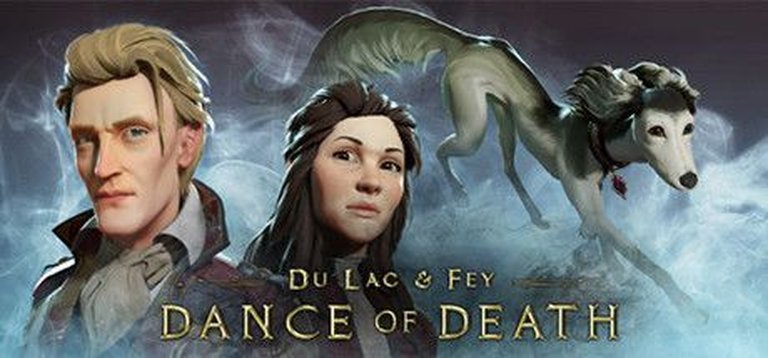
Set in 1888 London during the Jack the Ripper murders, Dance of Death: Du Lac & Fey is a narrative-driven point-and-click adventure that combines historical crime with Arthurian mythology, following legendary figures like Du Lac and Fey in a dark, mature-themed story with an emphasis on atmosphere and storytelling.
Gameplay Videos
Where to Buy Dance of Death: Du Lac & Fey
PC
Dance of Death: Du Lac & Fey Free Download
Dance of Death: Du Lac & Fey Guides & Walkthroughs
Dance of Death: Du Lac & Fey Reviews & Reception
metacritic.com (51/100): As a story it’s fine, but as a game I expect so much more than what’s on offer.
thexboxhub.com (70/100): The storytelling, narrative, and historical research in Dance of Death are of a very high standard, but the gameplay mechanics aren’t as satisfying.
lifeisxbox.eu : Just an absolutely impeccable standard of audio the developers should be proud of.
Dance of Death: Du Lac & Fey: A Flawed, Ambitious Tapestry of Myth and Murder
In the crowded annals of adventure gaming, few titles dare to fuse the grand, fantastical scope of Arthurian legend with the grimy, historical horror of Jack the Ripper’s Whitechapel. Dance of Death: Du Lac & Fey is that audacious, deeply flawed, and strangely compelling attempt. Developed by the fledgling British studio Salix Games and released in 2019, the game stands as a poignant case study in ambition outstripping resources, where a brilliant narrative premise and exceptional audio craftsmanship are perpetually at war with clunky mechanics and a pervasive sense of technical incompletion. This review will dissect the game’s towering aspirations and glaring shortcomings, arguing that its value lies not in its execution as a polished adventure, but as a fascinating, cracked artifact of indie development—a game whose heart is unequivocally in the right place, even if its systems often fail it.
1. Introduction: The Ripper Meets the Round Table
Dance of Death: Du Lac & Fey presents a high-concept collision: immortal Arthurian figures Sir Lancelot Du Lac and the sorceress Morgana le Fey (cursed into canine form) descend upon Victorian London during the Autumn of Terror to hunt Jack the Ripper, aided by the historical figure of Mary Jane Kelly. This is not a rehash of Sherlock Holmes but a deliberate, genre-melding narrative gamble. The thesis of this analysis is that Dance of Death is a game of profound dichotomies—beautiful versus ugly, ambitious versus broken, historically meticulous versus thematically disjointed. Its legacy is that of a “what could have been,” a game that secured its strongest praise for its audio and story conception, yet is consistently undermined by its foundational gameplay and technical presentation. It is a testament to the fact that a great narrative premise and stellar voice acting are not enough to overcome fundamental design and polish issues.
2. Development History & Context: Ambitious Roots, Troubled Growth
The game emerged from Salix Games, a Guildford-based studio whose team included veterans from AAA powerhouses Rocksteady (Batman: Arkham series) and Lionhead (Fable series). This pedigree promised a level of quality and design acuity that many independent projects lack. However, the studio’s debut title was also its first major test.
- The Evolving Vision: The original concept, as noted in Wikipedia, was a simpler “man and his dog” story. Creative Director Jessica Saunders’ fascination with Arthurian mythology and its Victorian reinterpretations (a period saturated with Pre-Raphaelite art and medieval revivalism) dramatically expanded the scope. This shift from intimate to epic narrative complexity was likely a core factor in the project’s later struggles.
- Historical Rigor & Creative Consultancy: The developers pursued surprising historical accuracy for a fantasy game. They enlisted historian Judith Flanders (who worked on Assassin’s Creed Syndicate) to fact-check locations and events. Renowned narrative designer Rhianna Pratchett was credited as a story consultant. This commitment to authenticity for the Victorian setting created a fascinating tension with the fantastical Arthurian elements.
- Artistic Inspiration: The visual style was deliberately chosen to evoke 19th-century painters John Atkinson Grimshaw and James Abbott McNeill Whistler, aiming for a moody, atmospheric, and painterly look—a stark contrast to the more common gritty realism of other Ripper fiction.
- Financial Strain and a Rough Launch: The development was marked by significant constraints. A Kickstarter campaign for console ports (PS4, Xbox One) launched in October 2018 but was cancelled just six weeks later in December, raising alarm bells. CEO Jessica Saunders later admitted in a post-launch statement that the team had “run out of both money and time” before release. This confession explains the most damning critic reviews; the game launched in a “rough” state with a major save-game bug that required a hotfix within days. The promise of a “multi-branching story” with impactful decisions (a key selling point from the Steam store page) also felt under-realized in the final product.
- Context in the Adventure Genre: Released in 2019, the game entered a genre experiencing a renaissance through narrative-driven titles (Life is Strange, What Remains of Edith Finch) but also seeing a decline in traditional, puzzle-heavy point-and-clicks. Dance of Death tried to straddle this line: classic interface with a modern third-person perspective and an emphasis on dialogue/character relationships over logic puzzles—a design choice that would become a major point of contention.
3. Narrative & Thematic Deep Dive: A Clash of Realms
The narrative is the game’s greatest strength and its most profound source of tonal dissonance.
-
Plot Structure and Protagonists: The story is framed as a three-act hunt across Whitechapel and Shoreditch. The trinity of protagonists is its core innovation:
- Sir Lancelot Du Lac (voiced with dignified weariness by Gareth David-Lloyd): The archetypal noble knight, now a weary immortal, serving as the primary “face” for human interactions.
- Morgana le Fey (voiced with sharp wit and regal irritation by Perdita Weeks): Cursed into the form of a dog (a clever narrative device allowing her to talk to animals and “smell” clues). Her arc is one of bitter resignation and a complex, centuries-old bond with Lancelot.
- Mary Jane Kelly (voiced with earthy vulnerability by Alexandra Roach): The final canonical victim of the Ripper, reimagined here with a “magical secret” tied to the occult nature of the murders. Her sections ground the story in the grim reality ofWhitechapel’s poverty and danger.
The interplay between these three—the ancient, the magical, and the tragically mortal—is where the writing shines. Their dialogues reveal backstory, conflict, and reluctant camaraderie.
-
Themes and Their Uneven Execution:
- Myth vs. History: This is the central, fascinating conflict. The game meticulously recreates Victorian London’s geography, social hierarchy, and newspaper headlines, yet injects a secret occult history where the Ripper’s killings are part of a dark ritual. The theme questions whether mythologizing brutal real-world events sanitizes them or provides a necessary narrative framework for understanding evil.
- Class Division: The three protagonists inherently represent different social strata (aristocrat, “cursed” supernatural being, impoverished local). The game attempts to show London through these “vastly different perspectives,” as the Steam description states, though critics noted Mary’s sections often felt more like a different game—more grounded, less fantastical—than a truly integrated perspective.
- Immortality and Trauma: Lancelot and Morgana’s endless history together, witnessed against the backdrop of recurring societal horrors, is a potent theme that is largely told through dialogue rather than shown through systemic gameplay.
- The “Light-Hearted” Critique: This is the most severe critical judgment. Several reviews (from Life is Xbox and Adventure Gamers) argued the game’s tone veered oddly toward “amusement” and lightness, particularly in Morgana’s canine-centric humor and some character interactions, which clashed grotesquely with the subject ofJack the Ripper’s brutal murders. This suggests a fundamental directorial misstep: the writers and designers were not aligned on whether this was a grim horror mystery or a fantastical buddy-comedy.
-
Dialogue and Branching: The writing is consistently praised as “high quality” and “well-acted.” However, the promised “multi-branching story” and decision impact are perceived as superficial. Choices reportedly affect minor relationship meters and some side quest outcomes, but do not meaningfully alter the main plot’s trajectory or endings, leading to a feeling of “illusion of choice” common in adventure games of this scale.
4. Gameplay Mechanics & Systems: The Anchor of Frustration
If the narrative is the game’s soul, its gameplay is its diseased limb.
- Core Loop: A third-person, point-and-click adventure. Players navigate predefined, beautifully painted scenes, interact with hotspots, gather inventory items, and engage in conversations to progress chapters.
- Character Swapping Mechanic: The central “innovation.” Lancelot can convince humans, Fey (as a dog) can converse with animals and detect scents, and Mary has her own unique social connections and occult insights. This mechanic is conceptually sound but poorly implemented. Critics universally cited:
- Clunky, Unresponsive Movement: Described as “painfully slow,” with “input lag” when turning and pathfinding that sends characters into obstacles. This transforms simple navigation—a core activity—into a tedious chore.
- Lack of Feedback: Hotspots are often not highlighted until you are very close, forcing endless pixel-hunting and walking back-and-forth. The camera angles in some scenes compound this, making navigation disorienting.
- Puzzle and Minigame Deficiency: The game was criticized for a near-total lack of traditional puzzles. Instead, it relies on “detective mode” (examining crime scenes), simple inventory combinations, and a few minigames (a potion-brewing chemistry test, a timed bar-parrying combat sequence). These minigames are seen as shallow, repetitive, and often jarring interruptions that break narrative momentum rather than enhancing it. As Adventure Gamers bluntly stated, the game is a “tedious, barely interactive slog” lacking the challenge expected of the genre.
- Systems in Crisis:
- Save System: The infamous launch bug was a game-breaking save issue. Even post-patch, the game relies on frequent, unannounced autosaves with no manual save or chapter select. This frustrates experimentation and punishes players for making a wrong dialogue choice, forcing complete restarts to rectify.
- Pacing and Length: With ~10 chapters, the game can be completed in “just under six hours” (Life is Xbox). Critics felt this was too short for the scope of its world and story, with chapters feeling rushed and underdeveloped. The length feels like a compromise born of the rushed development.
- Replayability: The minimal impact of choices and lack of multiple endings severely limit replay value. Achievements tied to side quests necessitate at least two playthroughs, but there is little narrative incentive to do so.
5. World-Building, Art & Sound: A Split Personality
This is the game’s most striking feature: a vast chasm between its audio/ambient design and its character/technical visual execution.
- Visuals – A Tale of Two Styles:
- Backgrounds and Environments: Universally praised. The watercolor/painterly aesthetic, inspired by Grimshaw and Whistler, is “gorgeous,” “stunning,” and perfectly captures the smog-shrouded, gaslit atmosphere of Victorian London. The use of washed-out colors with subtle highlights is historically evocative. Exploring these environments is often a pleasure in itself.
- Character Models: Universally panned. The 3D character models are described as “goofy,” “bland,” “rough,” and “unfinished,” looking “like they were created from playdough.” They lack detail and sit awkwardly against the lush, painted backgrounds, creating a jarring visual disconnect. This is a classic indie asset-quality issue, suggesting the team’s modeling/animation resources were critically insufficient.
- Technical Bugs: Visual glitches like stuttering backgrounds, missing character models in cutscenes, and “black pixelated blobs” further mar the experience, confirming the “rough” launch state.
- Sound & Voice Acting: The Undisputed Champion: This is the game’s saving grace and its most awarded aspect.
- Voice Cast: The casting is impeccable. Gareth David-Lloyd (Dragon Age’s Solas), Perdita Weeks (Ready Player One’s Kira), and Alexandra Roach (Black Mirror) deliver performances that critics consistently call “outstanding,” “impeccable,” and “possibly some of the best I’ve ever experienced.” They imbue the sometimes-clunky dialogue with genuine pathos, wit, and chemistry, selling the central relationships.
- Music and Sound Design: Composers Jeff Rona and Jools Scott created a dynamic, atmospheric score that shifts with the narrative tone. The sound design effectively builds tension and immersion. This excellence was recognized with the TIGA Award for “Best Audio Design” and a G.A.N.G. Awards nomination for “Best Dialogue for an Indie Game.” The audio is not just good; it is the primary vehicle that elevates the material and makes the story compelling despite gameplay stumbles.
- World-Building and Atmosphere: The meticulous recreation of Whitechapel (The Ten Bells pub, crime scenes based on real reports) and the inclusion of period ephemera (newspapers, Penny Dreadfuls) successfully build an immersive, historically resonant world. The fantasy elements (mythical beasts, occult symbols) are woven into this fabric, creating a unique “secret history” atmosphere that is the game’s most intriguing concept.
6. Reception & Legacy: The Fault Line Between Promise and Product
Dance of Death‘s reception is a perfect map of its internal contradictions.
- Critical Reception (Metacritic 51/100, OpenCritic 23% recommend): The spectrum is wide.
- Praises: “Charming moments” with Du Lac & Fey, “wonderfully written story,” “impressive voice acting,” “beautifully rendered” environments, “stellar” audio.
- Criticisms: “Tedious, barely interactive slog,” “broken” launch, “clunky movement,” “lack of puzzles,” “unfocussed story,” “poor visual appeal,” “awful controls,” “shoddy narrative work” (especially the tonal clash), “uneven and unfinished.”
- The Divide: Reviews like Girl Gamers UK (70%) and Gamer’s Palace (68%) emphasized the strength of the core premise and audio, overlooking technical flaws for narrative fans. Reviews like Adventure Gamers (50%) and Video Games Chronicle (40%) could not reconcile the poor gameplay with the interesting story, finding the former fatally undermined the latter. Gameluster’s PS4 port review (30%) highlighted how the technical issues became even more glaring on console.
- Commercial & Post-Release: The failed Kickstarter for consoles presaged limited commercial success. The game did receive ports to PS4, Xbox One, Switch, and Series X/S in 2023 via publisher Hidden Trap, but these re-releases were seen as doing “no favors” to the title, exposing its aged design without significant bug-fixing. Free DLC (digital artbook, soundtrack) was released post-launch.
- Legacy and Influence: Its direct influence on the industry is negligible. Its legacy is archetypal: it serves as a cautionary tale about scope creep, the perils of running out of time/money, and the paramount importance of gameplay feel (especially in a genre where interaction is the primary verb). It is cited in discussions about the challenges of indie narrative games with high concepts. More poignantly, it is remembered as a cult curiosity—a game that fans of Arthuriana, Ripper lore, or stellar voice acting might seek out despite its flaws, but one that failed to find a broader audience due to its fundamental interactivity problems. It did not revitalize the point-and-click genre; instead, it highlighted the increasing gulf between narrative ambition and gameplay execution in some indie adventures.
7. Conclusion: A Missed Step in a Fascinating Dance
Dance of Death: Du Lac & Fey is a profound disappointment that is also intermittently brilliant. Its undeniable strengths are its audacious, well-researched premise, the superb chemistry and performance of its three central characters (especially the Lancelot-Morgana dynamic), and its award-winning audio design that breathes life into Whitechapel’s fog. It artfully blends myth and history in a way few games attempt.
However, these strengths are perpetually at war with crippling flaws. The clunky, unresponsive movement and camera transform exploration into a frustration. The near-total absence of meaningful puzzles or engaging minigames renders it barely interactive by classic adventure standards. The severe tonal inconsistency—mixing Ripper horror with dog-comedy—undermines its gravitas. The visual disparity between beautiful backgrounds and crude character models is symptomatic of a project stretched beyond its means. The rushed launch and bare-bones save system are the final nails in the coffin of player goodwill.
Final Verdict: Dance of Death: Du Lac & Fey is not a good game by traditional metrics of polish, gameplay engagement, or technical stability. It is, however, a compelling and valuable failure. It is a game that demands to be analyzed, not just played. Its heart is in the right place: a love letter to Arthurian legend, a serious engagement with Victorian history, and a showcase for voice acting excellence. But its body—its core interactivity—is malformed. As a piece of video game history, it is a monument to ambition curbed by reality, a testament to the fact that a great story and great sound cannot, alone, make a great game. For the historian, it is a fascinating “what if.” For the player, it is a recommendation only for the most forgiving narrative adventurers willing to walk—slowly and clumsily—through its beautiful, broken streets. It is the sound of a studio striving for greatness, only to trip over its own feet.