
- Release Year: 2018
- Platforms: PS Vita, Windows
- Publisher: Beijing Happy Entertainment Technology, Rejet Co., Ltd.
- Developer: Rejet Co., Ltd.
- Genre: Adventure
- Perspective: 1st-person
- Game Mode: Single-player
- Gameplay: Visual novel
- Setting: Fantasy
- Average Score: 82/100
- Adult Content: Yes
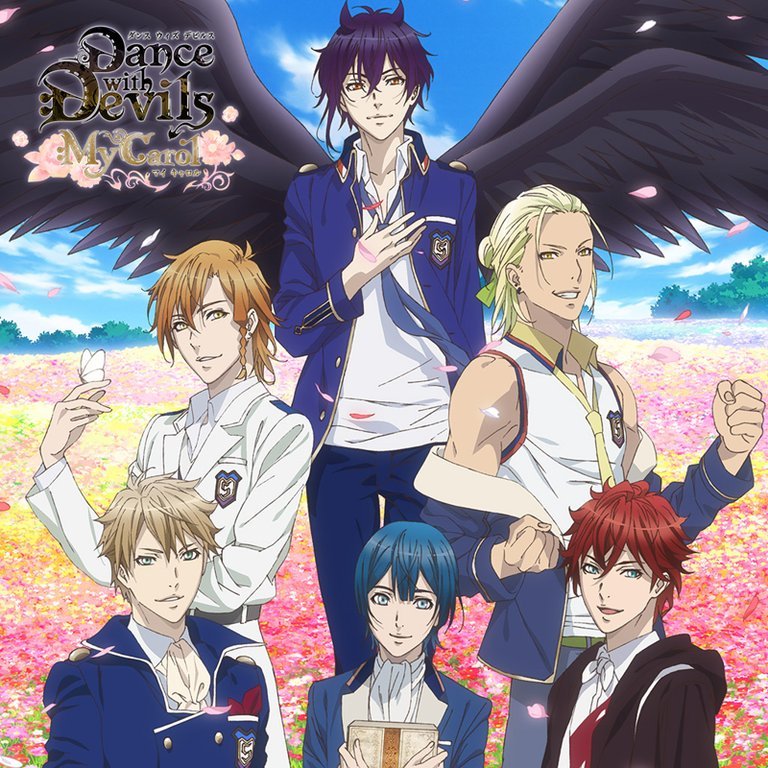
Description
Dance with Devils: My Carol is a romantic visual novel set in the supernatural world of Shikou-cho, where devils and vampires secretly vie for control of a powerful Grimoire. As the player, you navigate a richly branching narrative filled with romance, intrigue, and fantasy, choosing between human and devil paths while uncovering sweet, dramatic, and epilogue-driven storylines. The game features fully voiced interactions, a special voice collection with characters like Jek and Azuna, and a theme song performed by the devilish cast, all wrapped in stunning anime-style artwork.
Gameplay Videos
Dance with Devils: My Carol Guides & Walkthroughs
Dance with Devils: My Carol Reviews & Reception
breadmasterlee.com : A lot of this FD really bored me. Instead of having a bunch of segmented scenarios I would have preferred a more deeply involved one instead.
gematsu.com (80/100): Dance with Devils: My Carol (PS Vita) – 8/8/8/8 [32/40]
vndb.org (85/100): I loved the game! ^_^
Dance with Devils: My Carol – A Flawed but Fascinating Fandisk
Introduction: The Devil’s in the Details
Dance with Devils: My Carol (2018) is a fandisk to the 2016 otome game Dance with Devils, developed by Rejet and published for the PS Vita (with a later PC release in 2023). As a follow-up to a beloved supernatural romance visual novel, My Carol promises to deepen the relationships between protagonist Ritsuka Tachibana and her devilish suitors. However, while it delivers on fan service and atmospheric charm, it stumbles in narrative cohesion and gameplay innovation. This review dissects its strengths, weaknesses, and legacy within the otome genre.
Development History & Context
Rejet’s Signature Style
Rejet, known for its dark, supernatural otome games (Diabolik Lovers, Black Wolves Saga), crafted Dance with Devils as a gothic romance blending devils, vampires, and exorcists. My Carol continues this tradition, expanding on the original’s lore while catering to fans of its ensemble cast.
Technological Constraints
Released on the PS Vita—a platform nearing obsolescence—My Carol leverages Unity for its visual novel framework. The game’s fixed/flip-screen perspective and menu-driven interface are standard for the genre, but its reliance on static CGs and limited animation reflects the hardware’s limitations.
The Otome Landscape in 2018
By 2018, the otome market was shifting toward the Nintendo Switch, leaving the Vita as a niche platform. My Carol’s release coincided with this transition, limiting its commercial reach despite its dedicated fanbase.
Narrative & Thematic Deep Dive
Structure: Four Segments, Uneven Execution
- All Star: A common route where the male leads collaborate on a school play, interrupted by supernatural threats. While charming, it lacks depth.
- My Carol: The meat of the fandisk, offering extended after-stories for each romance route. However, these are often truncated, relying on player familiarity with the original game.
- After Story: Brief vignettes following both good and bad endings, which can feel disjointed or unnecessary.
- Extras: Holiday-themed dates and miscellaneous scenarios, adding fluff but little substance.
Character Dynamics: Love and Cockblocking
- Ritsuka Tachibana: The kind-hearted protagonist remains a blank slate, her agency often overshadowed by the male cast.
- Lindo Tachibana: Her overprotective brother’s constant interference (dubbed “cockblocking” by fans) becomes a running gag, though it wears thin.
- The Devils: Each suitor (Rem, Mage, Shiki, Roen, Urie) gets a route, but their arcs vary in quality. Urie’s wedding ending stands out, while others feel rushed.
Themes: Power, Identity, and Forbidden Love
The game explores:
– Human vs. Devil: Choices force Ritsuka to embrace her humanity or demonic ties, though the impact is superficial.
– Family and Loyalty: Lindo’s protectiveness and the devils’ rivalries add tension but are underdeveloped.
– Romance as Redemption: Many routes hinge on Ritsuka’s ability to “save” her lovers, reinforcing a passive heroine trope.
Gameplay Mechanics & Systems
Visual Novel Framework
- Choices Matter (Sort Of): Dialogue options influence “Pomecoins” (currency for unlocking voice clips) but rarely alter the plot.
- Dummy Head Mic: A gimmick where romantic lines are recorded in binaural audio, though its use is inconsistent.
- Card Collection: A tedious trophy requirement forcing players to replay scenarios for digital cards.
Flaws in Design
- Repetition: After-stories for bad endings feel punitive, alienating players who avoided them in the original.
- Lack of Innovation: The gameplay loop is identical to the first game, offering no new mechanics.
World-Building, Art & Sound
Gothic Aesthetic
The game’s anime/manga art style (by Maeda Hirotaka) excels in character designs, though backgrounds are static. The supernatural setting—Shikou-cho, a town teeming with devils and vampires—is atmospheric but underutilized.
Soundtrack & Voice Acting
- OP Theme: “Hikare CAROL” by PENTACLE★★ (the male leads’ voice actors) is a standout, blending rock and orchestral elements.
- Voice Work: The cast (Soma Saito, Wataru Hatano, etc.) delivers, but the dummy head mic’s potential is wasted on mundane dialogue.
Reception & Legacy
Critical Response
- Famitsu: Scored 32/40, praising its fan service but noting its niche appeal.
- Fan Reactions: Mixed. Devotees of specific characters (e.g., Shiki) enjoyed their routes, while others criticized the lack of meaningful content.
Industry Impact
My Carol exemplifies the challenges of fandisks: balancing fan service with narrative depth. Its PC re-release in 2023 suggests enduring interest, but it remains a footnote in Rejet’s catalog.
Conclusion: A Carol for the Devoted
Dance with Devils: My Carol is a flawed but fascinating artifact of the otome genre. Its strengths lie in its atmospheric presentation and voice acting, but its segmented storytelling and repetitive mechanics hinder its potential. For die-hard fans, it’s a worthwhile epilogue; for newcomers, the original Dance with Devils is the better entry point.
Final Verdict: 6.5/10 – A love letter to fans, but one that could have been more ambitious.
This review synthesizes insights from MobyGames, VNDB, and fan critiques, offering a comprehensive analysis of a game that dances on the edge of greatness but stumbles in execution.