
- Release Year: 2015
- Platforms: Windows
- Publisher: Big Fish Games, Inc
- Developer: Eipix d.o.o.
- Genre: Adventure
- Perspective: 1st-person
- Gameplay: Hidden object, Mini-games, Puzzle elements
- Setting: Fantasy
- Average Score: 85/100
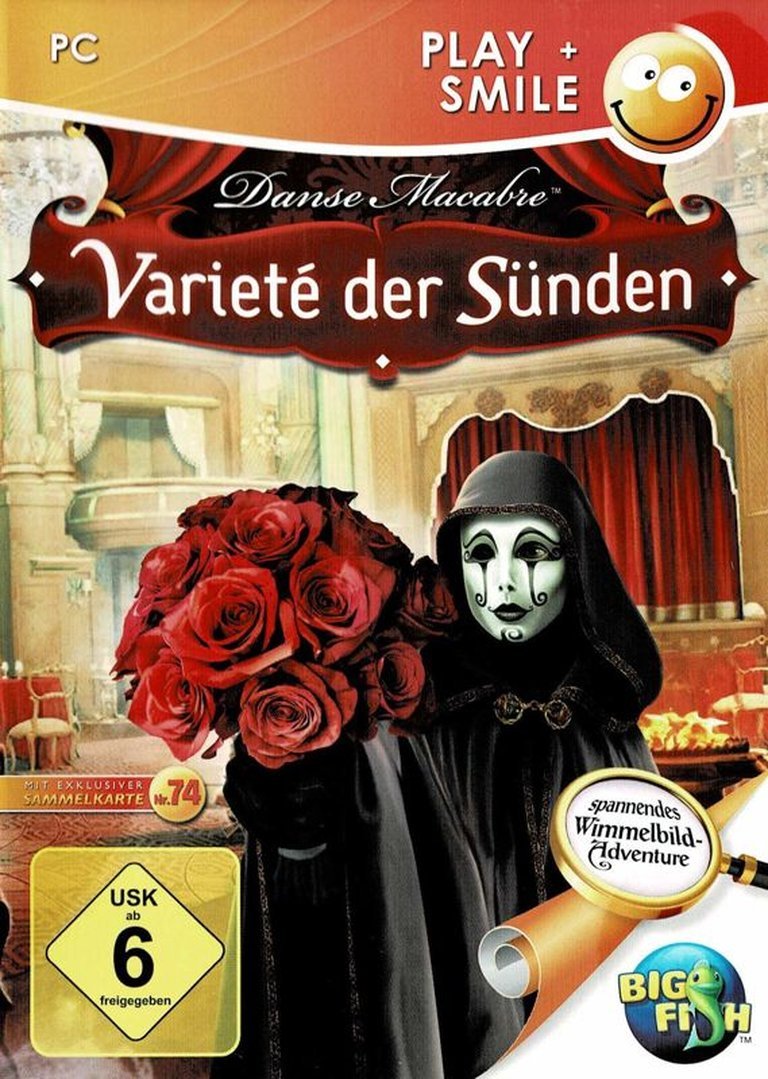
Description
Danse Macabre: Crimson Cabaret is a first-person point-and-click adventure game with hidden object and puzzle elements, set in a fantastical, stylized Parisian cabaret. Players act as a detective investigating the murder of the cabaret’s star dancer, exploring intricate scenes, gathering clues through hidden object searches and mini-games, and interrogating suspects to unmask the killer in this narrative-driven mystery.
Gameplay Videos
Where to Buy Danse Macabre: Crimson Cabaret
PC
Danse Macabre: Crimson Cabaret Guides & Walkthroughs
Danse Macabre: Crimson Cabaret Reviews & Reception
gamezebo.com (85/100): Crimson Cabaret is one of those hidden object games that just works.
Danse Macabre: Crimson Cabaret: A Masterclass in Atmospheric Hidden Object Design
Introduction: The Allure of the Cabaret Curtain
In the mid-2010s, the hidden object puzzle adventure (HOPA) genre was a dominant force in the casual gaming landscape, a bustling digital cabaret of its own filled with familiar tropes, repetitive mechanics, and often-forgettable narratives. Against this noisy backdrop, Eipix Entertainment’s Danse Macabre: Crimson Cabaret (2015) emerged not as a revolutionary spectacle, but as a meticulously crafted, quintessential example of the form at its most confident and coherent. As the third entry in the Danse Macabre series, it inherits a Gothic-tinged sensibility but shifts the舞台 to a fin-de-siècle Parisian cabaret, a setting ripe with artistic intrigue, theatrical deception, and simmering passion. This review argues that Crimson Cabaret represents a pinnacle of the genre’s “golden age” on PC—a game where every system, from its forensic mini-games to its layered hidden object scenes, is subordinated to and enriched by a compelling, character-driven mystery. Its legacy is that of a benchmark for polish, pacing, and atmospheric integration, proving that even within a well-worn formula, a studio with vision can create an experience that feels both comfortably familiar and strikingly elegant.
Development History & Context: Eipix, Big Fish, and the Peak of Casual Adventure
The Studio and the Publisher: A Symbiotic Partnership
Eipix Entertainment, a Croatian studio founded in 2005, had by 2015 carved a significant niche for itself in the casual adventure market. Known for series like Final Cut and Myths of the World, Eipix specialized in polished, story-driven HOPAs with a penchant for historical and fantastical settings. Their development pipeline was optimized for the “collector’s edition” model popularized by their primary partner, Big Fish Games. This model—releasing a standard edition followed by a deluxe version packed with bonus chapters, concept art, and strategy guides—was the economic engine of the casual genre.
Danse Macabre: Crimson Cabaret was developed for this specific ecosystem. Released for Windows on August 26, 2015, with a Collector’s Edition following on mobile platforms and later Steam (2017), it was designed from the ground up for the point-and-click, episodic play sessions of the Big Fish Games audience. The technological constraints were those of mid-2010s PC casual gaming: stable 2D pre-rendered or simply drawn backgrounds (fixed/flip-screen perspective), a lightweight engine capable of running on modest hardware, and an interface built entirely around mouse-driven inventory management and scene interaction. Within these constraints, Eipix’s strength was in artistic cohesion—creating a consistent, immersive visual style across dozens of scenes.
The Gaming Landscape: The HOPA at Its Most Prolific
2015 was the absolute zenith of the hidden object genre’s commercial viability. Big Fish Games, along with competitors like G5 Entertainment and World-Loo, released multiple titles per month. The formula was established: a supernatural or detective mystery, divided into chapters, featuring hidden object scenes (HOPs), item-based puzzles, and simple mini-games. Crimson Cabaret’s competition included titles from the Mystery Case Files and Dark Parables series. What set it apart was its decision to ground its mystery in a pseudo-historical, art-centric setting rather than pure fantasy or horror. The use of Henri de Toulouse-Lautrec, a real historical figure, as a central protagonist/ally lent an immediate sense of authenticity and artistic gravitas that many of its Genre peers lacked.
Narrative & Thematic Deep Dive: Murder in Montmartre
Plot Structure: A Detective Story in Act Form
The game’s narrative is deceptively simple on the surface: the player, an unnamed detective (implicitly working for or with Toulouse-Lautrec), is summoned to investigate the murder of Sophie, the star dancer at the cabaret “La Parisienne.” The initial report suggests a tragic accident, but Lautrec suspects foul play. The investigation unfolds across five distinct chapters, each corresponding to a new major location: the crime scene at the cabaret, the Baron’s Villa, the streets of Montmartre, a park, and finally, the climactic confrontation at the Baron’s estate.
The plot is delivered through a combination of static dialogue with characters (Monsieur Lautrec, the suspicious Baron Vasilyevich, a nervous stagehand, a janitor), item-based exposition (letters, notes, forensic reports), and environmental storytelling. The walkthrough reveals a carefully paced revelation structure: each chapter introduces a new suspect, a new piece of forensic evidence (the “Rose Evidence,” ceramic shards, letters), and a new geographical obstacle that expands the explorable world. The central MacGuffin is the various pieces of a broken miniature (a matryoshka doll, a token, ceramic tiles) that ultimately unlock the Baron’s private chambers and, consequently, the truth.
Characters and Dialogue: Archetypes with Flair
The cast is composed of classic detective fiction archetypes, but each is given just enough distinctive texture to feel engaging.
* Henri de Toulouse-Lautrec: The famous painter acts as the game’s compelling nucleus. His presence immediately elevates the stakes; this is not just a random murder but a personal tragedy for a luminary of the Parisian art scene. His physical disability (historically accurate) is noted but not dwelt upon; his sharp observational skills and social connections are his primary tools.
* Baron Vasilyevich: The primary antagonist is a study in jealous, possessive obsession. His motivation—murdering Sophie for rejecting his advances—is timeless, but the game hints at deeper pathology through his collection of artistic miniatures and his elaborate, ritualistic security systems.
* Sophie: Though deceased for most of the game, her personality is vividly reconstructed through letters, testimonies, and forensic evidence (the wrapped rose, her dressing room). She is portrayed as a talented, independent woman whose ambition and artistry made her a target.
* The Masked Figure: A persistent, eerie motif. This silhouetted villain is seen lurking throughout the locations, a visual shorthand for the pervasive threat. The reveal that he is the Baron’s henchman (or possibly the Baron in disguise) provides a classic, satisfying unmasking.
The dialogue is functional and efficient, serving primarily to provide clues, direct the player to new locations, or offer brief character moments. It lacks the depth of a full visual novel but is perfectly calibrated for the game’s brisk pacing.
Themes: Art, Performance, and Deception
Crimson Cabaret is thematically anchored in the world of performance—both on the stage and in everyday life. The cabaret itself is a space of illusion, where dance masks true emotion. The murder investigation is a process of peeling back these layers of performance to find the “real” beneath. Sophie’s murder is, in a grim way, the ultimate backstage betrayal.
The theme of art as both obsession and evidence is central. Toulouse-Lautrec’s artistic eye is the player’s guiding principle. Forensic analysis involves “reading” textures and patterns (like matching colored pairs on fabric or letters). The Baron’s obsession manifests in his collection of intricate, seemingly pointless mechanical puzzles and miniatures (the elephant, the train model)—artistic endeavors perverted into traps and locks. The player’s own progress is a form of curation and interpretation, assembling disparate artistic fragments (tiles, tokens, a doll dress-up kit) into a coherent narrative.
Gameplay Mechanics & Systems: The Forensic Toolkit as Gameplay Heart
Core Loop and Interface
The gameplay follows the classic HOPA loop: explore a static scene, find hidden objects to add to inventory, use those objects to solve puzzles that unlock new areas or progress the story, and engage in mini-games that provide key items or narrative beats. The interface is a standard point-and-click; a cursor changes to indicate interactive hotspots, and an inventory panel at the bottom of the screen holds all collected items.
The Forensic Kit: An Innovative Framework
What elevates Crimson Cabaret mechanically is its consistent, narrative-integrated use of the Forensic Kit. This isn’t just a gimmick; it’s a recurring gameplay system that transforms the player from a passive item-finder into an active investigator. Accessed from the inventory, the kit presents a workspace with slots for magnifying glass, tweezers, gloves, cotton swabs, etc. Using it on specific evidence (a corpse, a mask, a letter) triggers a dedicated, often visually distinct mini-game:
* Magnifying Glass: A “find the detail” scene within a circular lens, searching for silhouetted items.
* Swab/Cotton: A color-matching puzzle, often pairing fibers or stains.
* Pincers/Tweezers: Selecting and collecting trace evidence from a cluttered surface.
These mini-games are not random; their solutions are fixed and advance the plot directly (e.g., “Rose Evidence” is synthesized from two forensic analyses). This system brilliantly ties the abstract act of “using an item” to the tangible, methodical work of forensic science, reinforcing the game’s detective theme.
Hidden Object Scenes: Layered and Logical
The hidden object puzzles are the genre’s staple, but Crimson Cabaret employs a layered structure that Gamezebo accurately described as “nested mini-games.” A scene might start with a simple list of items. Finding them unlocks a second tier with object outlines. Completing that might reveal a text riddle. This progressive revelation makes each HOP feel like a deeper dive into the environment, avoiding the monotony of a single, static list. The objects themselves are thematically appropriate (cabaret props, detective tools, Parisian souvenirs), grounding the fantasy in the setting.
Puzzle Design: Quantity Over Complexity, But With Flair
The game is packed with item-combination and environmental puzzles. The walkthrough documents dozens: assembling a broken lock, fixing a fountain valve, creating a hangover remedy from a cocktail shaker, building a token from a mold and wax. Most follow a clear, if sometimes obtuse, logic chain. The innovation lies in how these puzzles are woven into the world. You don’t just “find a key for a door”; you might need to make a key (the wax token for the funicular), or repair a mechanism (the organ pipes). The puzzles often serve as barriers that gate access to new chapters, creating a strong sense of progression.
Some puzzles stand out for their creativity:
* The Spider Web Mini-game: A path-drawing puzzle where you guide a spider to clear the web, a neat metaphor for untangling a web of clues.
* The Elephant Puzzle: A complex, multi-stage puzzle involving a golden elephant statue that requires inputting sequences—a genuine difficulty spike that feels earned.
* The Clock and Tile Puzzles: Logic-based challenges that require careful attention to notes and placed items.
The inventory system is robust, with numerous items that combine (e.g., glue + brush, two dog whistle parts, broken doll pieces). The game is generally good about providing logical clues, though some combinations are classic “adventure game logic” (using a fork to retrieve a pipe from a high ledge).
Flaws and Friction
The primary flaw is a common one in the genre: occasional “pixel hunts” where a required interactive hotspot is visually obscure. The dependency on a linear, chapter-based structure can also feel restrictive; there’s little non-linear exploration, and the map is purely functional for traveling between fixed locations. The narrative twists, as Gamezebo notes, can be predictable—the jealous Baron being the killer is a classic trope. The game’s strength is in the journey to that conclusion, not the shock of the reveal itself.
World-Building, Art & Sound: The Parisian Dream
Visual Design and Atmosphere
The game’s greatest triumph is its atmosphere. Using a fixed-perspective, hand-painted art style, Eipix creates a vivid, cohesive vision of Belle Époque Paris. The locations are a blend of the opulent (Baron’s villa, cabaret ballroom) and the grimy (back alleys, under-stage areas), all rendered with a slightly desaturated, moody palette that suits the “Danse Macabre” (Dance of Death) theme perfectly. The cabaret “La Parisienne” is the standout location, bursting with theatrical posters, velvet curtains, and gleaming stage props. The attention to detail in the backgrounds makes each scene a pleasure to simply observe.
The character portraits, while static, are well-drawn and expressive. The use of light and shadow—especially in scenes involving the masked figure lurking in doorways—effectively sells the sense of being watched.
Sound Design and Music
Information on sound design is sparse in the provided sources, but given the genre conventions and the setting, it can be inferred that the audio serves a supportive role. The background music likely consists of looping, period-inspiredmelancholic or mysterious tracks (accordions, strings) to reinforce the Parisian cabaret vibe. Sound effects for interactions (item picks, puzzle mechanisms, character voices) are standard for the genre. The absence of voiced dialogue is a notable omission for a story-heavy game, but it was a common cost-saving measure in mid-tier casual adventures, allowing the budget to focus on art and puzzle design.
The audio, while not groundbreaking, would have been competent and atmospheric, completing the package without drawing attention to itself—a successful achievement in immersive design.
Reception & Legacy: A Cult Favorite in a crowded Genre
Commercial and Critical Reception
Danse Macabre: Crimson Cabaret existed in a strange critical vacuum. Mainstream video game press largely ignored pure HOPAs. Metacritic lists no critic reviews, and aggregator scores are absent. Its reception was entirely through its core audience on platforms like Big Fish Games and later Steam.
On Steam (for the 2017 Collector’s Edition), it holds 9 user reviews, with 8 positive and 1 negative—a strong 89% positive rating. Reviewers, while few, consistently praise its puzzles, story, and atmosphere, with criticisms aimed at occasional difficulty spikes or linearity. The Gamezebo review (85/100) is representative: it lauds the “wonderful setting,” “excellent puzzles,” and “curious” nested HOP structure, while noting “predictable twists.” This encapsulates the consensus: it’s a superbly crafted genre piece that doesn’t reinvent the wheel but executes every turn with precision.
Commercially, it was successful enough to warrant a Collector’s Edition, multiple platform ports (iOS, Android, Mac), and its own entry in the continuing Danse Macabre series (Deadly Deception, Thin Ice). Its presence in the “Danse Macabre Collection” on Steam (2018) confirms its status as a pillar of the franchise for Big Fish.
Influence and Place in History
Within the history of the hidden object genre, Crimson Cabaret does not represent a paradigm shift. Games like Mystery Case Files or Enigmatis introduced more ambitious narratives or 3D elements. Instead, its legacy is one of perfection of the established template. It demonstrated that a game could be deeply conservative in its mechanics yet feel fresh and engaging through impeccable thematic integration. The forensic kit system, while not unique, is implemented here with a consistency and narrative weight that many peers lacked.
It stands as a high point for Eipix and for the “classic” Big Fish HOPA model—a model that would gradually decline with the rise of mobile-first, hyper-casual games and changing player habits. For historians, it is a text-book example of mid-2010s casual adventure design: a focus on single-player, narrative cohesion, puzzle variety, and artistic presentation over replayability or complex systems. It preserves the spirit of the classic point-and-click adventure but filters it through the accessible, item-centric lens of the HOPA.
Conclusion: The Final Curtain Call
Danse Macabre: Crimson Cabaret is not a hidden gem in the sense of being obscure or unrecognized. It is, rather, a gem that is perfectly cut for its setting. It understands explicitly that its purpose is to tell a detective story through the language of hidden objects and puzzles, and it executes this with a craftsman’s dedication. Its narrative is engaging enough to propel the player forward, its puzzles are logical and satisfying, and its world—a sumptuous, sinister Parisian cabaret—is utterly convincing.
Its flaws are the genre’s flaws: a predictable plot, linear progression, and a lack of voice acting. But its strengths are its own: a brilliant forensic-gamesystem, a layered approach to hidden objects, and an atmosphere that never falters. In the grand theatre of video game history, it will not have a starring role in the main narrative of “important” games. But in the crowded, often-derided wings of the casual adventure genre, it remains a shining example of what the form could achieve at its peak: a harmonious, immersive, and thoroughly entertaining dance of mystery, art, and puzzle-solving. For anyone seeking to understand the appeal and design principles of the classic HOPA, Danse Macabre: Crimson Cabaret is an essential, encore-worthy performance.