
- Release Year: 2018
- Platforms: Android, iPhone, Windows
- Publisher: Hublots Co., Ltd, Sol Press, LLC
- Developer: Anagram
- Genre: Adventure
- Perspective: 1st-person
- Game Mode: Single-player
- Gameplay: Visual novel
- Setting: Fantasy
- Average Score: 61/100
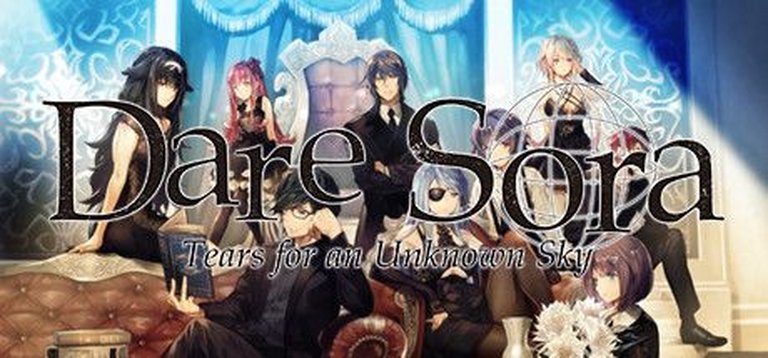
Description
DareSora: Tears for an Unknown Sky is a fantasy visual novel set in a mysterious celestial realm, where protagonist Haruka Tendou gazes at the sky and makes two desperate wishes—to uncover a hidden truth and reclaim someone lost. Luna, the powerful ruler of Eclipse, agrees to grant his pleas but demands he complete perilous Oracles with his soul hanging in the balance, leading to a solitary war between them, a tale of grief and tears unknown to the world.
DareSora: Tears for an Unknown Sky Cracks & Fixes
DareSora: Tears for an Unknown Sky Guides & Walkthroughs
DareSora: Tears for an Unknown Sky Reviews & Reception
thedrastikmeasure.com : DareSora is an interesting game that I would love to see more of.
nookgaming.com : When you look at the narrative as a whole, it’s quite mediocre.
steambase.io (61/100): Mixed
DareSora: Tears for an Unknown Sky: Review
Introduction
Imagine a visual novel that opens with a protagonist gazing at the stars, pleading for truth and resurrection, only to unravel into a nightmarish tale of forced betrayal and cosmic manipulation—then abruptly vanish from digital storefronts, its sequels forever lost to developer dissolution. DareSora: Tears for an Unknown Sky (original Japanese: Daremo Shiranai Tentai e no Namida), released in 2018 as the debut from doujin circle Anagram and English publisher Sol Press, promised an episodic saga of psychological horror and mystery. Yet, this “Volume 1” stands as a haunting artifact of unfulfilled ambition: a visually arresting but narratively anemic entry that captivates in bursts but crumbles under its brevity and abandonment. My thesis: DareSora exemplifies the perils of episodic visual novels in the indie era—stunning presentation masking shallow storytelling, ultimately doomed by industry instability, rendering it a curious footnote rather than a landmark.
Development History & Context
Anagram, a small Japanese doujin (independent hobbyist) group, entered the scene with DareSora as their inaugural project, leveraging the accessible KiriKiri/KAG engine—a staple for visual novels since the early 2000s, known for its scripting ease but visual limitations like fixed/flip-screen perspectives and modest resolutions (max 1600×900). Director Ryosuke Hayashi (credited as “Ryo-chin”) helmed the effort, with Maruo Sakuraba crafting the planning and scenario, and artist Megumi Nagahama delivering key art and character designs. A 36-person credit list includes background artists from Future-hands (ARA, Yuusuke Merushii, Towa Fujimi), programmer wamsoft, and composer/lyricist Colega, whose BGM and vocals (by Yuki Kira) were recorded at STUDIO696. This collaborative, grassroots production reflects the 2018 doujin landscape, where Steam’s Greenlight (pre-Direct) democratized releases for niche anime-style VNs.
Published by Sol Press, LLC—an American outfit localizing Japanese indies like Under One Wing—and Hublots Co., Ltd., DareSora launched on September 14, 2018, for Windows (Steam App ID 913450), with mobile ports for iOS and Android. Priced at a modest $2.99, it targeted the booming VN market post-Doki Doki Literature Club‘s 2017 meta-horror success and amid episodic hits like Higurashi When They Cry. Technological constraints were minimal (Intel Core 2 Duo, 2GB RAM minimum), prioritizing accessibility over spectacle. However, Sol Press’s later struggles—slowing VN output amid licensing woes—led to DareSora‘s delisting from Steam in late 2020 “at the publisher’s request.” By 2021, Anagram dissolved entirely, canceling future volumes and stranding the series after just one chapter. In a landscape dominated by polished giants like Key or Type-Moon, DareSora embodied indie fragility: bold visions stifled by funding, team burnout, and market saturation.
Narrative & Thematic Deep Dive
At its core, DareSora unfolds as a taut, irony-drenched mystery framed by protagonist Haruka Tendou’s dual wishes: uncovering “the truth” and reclaiming a lost someone, granted by Luna, the capricious ruler of the ethereal realm Eclipse. Volume 1, subtitled “Week Six: A Weekend in Eclipse (Difficulty: Half Moon),” drops players six weeks into Haruka’s “solitary war,” his soul wagered on completing Luna’s sadistic “Oracles”—tasks escalating from psychological torment to outright violence.
The plot kicks off mid-conversation in the Chakapoko Club, a vaguely defined high school group featuring archetypes: the eyepatch-wearing Mio Kishigure (studious yet enigmatic), boisterous best friend Makishi Arashi, innocent Yuni Sakasa, and others like Chiyo Konpira, Ria Akai, Sekka Wakou, and cameos (Haru Aoi, Shouichi Dokkoi, Myuu Kaneda). Haruka’s internal monologues build dread, foreshadowing doom. A single choice on Day 2 branches to character-specific vignettes, but all converge on Day 3’s gut-punch: Haruka murders his friends (e.g., shooting Makishi and Chiyo), awakening in a “Weird Zone” to Luna’s mocking praise and a childish “well done” sticker. The epilogue introduces Luna fully—playful antagonist monologuing on human selfishness (“We know of no creature more selfish than humans”)—hinting at deeper lore amid Haruka’s grief-fueled pact.
Thematically, DareSora probes isolation, moral compromise, and cosmic indifference. Luna embodies capricious divinity, her Oracles a metaphor for grief’s dehumanizing trials; Haruka’s arc critiques selfish desperation. Yet, execution falters: at ~1 hour per route (multiple replays needed), pacing rushes to the anti-climactic reveal, starving character development. Archetypes feel rote—the androgynous pretty boy, meek girl—save Luna (voiced memorably by Akino Hana), whose provocative charm shines in scenes like coupon-signing. Dialogue, penned by Sakuraba, mixes natural English translation with wordy openings, but lacks investment-building depth. As an episodic opener akin to Higurashi, it teases expansion (future Oracles, club backstories), but abandonment leaves themes embryonic, irony turning tragic: a story of unfinished pleas mirroring its cancellation.
Gameplay Mechanics & Systems
As a pure visual novel, DareSora adheres to genre conventions: auto/click-to-advance text, save/load via menu structures, and 1st-person narration. Core loop: read branching dialogue across three days, with one pivotal choice dictating the interacted club member (e.g., Mio path emphasizes her eyepatch quirk). Replays unlock variants, fostering “replayability value” per reviewers, though endings converge identically—prompting questions on choice’s purpose. No complex progression; Steam Achievements and Cloud saves add minor hooks.
UI shines with customization: adjustable text transparency/window, skip modes, font swaps (Comic Sans viable), bilingual English/Japanese text, and granular audio toggles (voices by gender). Japanese VO (full-cast minus Haruka) syncs expressions dynamically—multiple per box—elevating immersion. Flaws include low-res cap and single-pose sprites (mitigated by animations), but KiriKiri’s reliability ensures smooth play. Innovative? Marginally—the meta twist evokes Doki Doki Literature Club—but brevity undermines loops, feeling more demo than game.
World-Building, Art & Sound
Set in a liminal blend of mundane school life and Eclipse’s otherworldly voids, DareSora‘s world-building tantalizes: Chakapoko Clubroom teems with detailed board games (spot-the-reference joy), Weird Zone warps reality, Eclipse looms as grief’s celestial prison. Atmosphere builds unease via Haruka’s monologues and Luna’s domain—napkin-clad demon queen amid bunnies (Red Bunny’s sexualized mask grating fanservice).
Nagahama’s anime/manga art dazzles: expressive sprites (Mio’s eyepatch eye a standout), event CGs, and Future-hands backgrounds ooze polish. Facial shifts during VO enhance liveliness despite static poses. Sound design elevates: Colega’s BGM mixes piano (distractingly overwrought) with guitar stings (Luna intro iconic); Yua’s production and STUDIO696 recording yield stellar JP VA—Luna steals scenes with obnoxious charisma. Effects sync impeccably, crafting dissonance (murder sticker scene’s whimsy). Collectively, they forge a “pretty skin” masking narrative thinness, atmosphere potent in shorts bursts.
Reception & Legacy
Critically, DareSora polarized: MobyGames logs 30% (NookGaming’s 3/10, lambasting “mediocre” story/characters as “skin deep”); Steam’s 61/100 (Mixed, 18 reviews) echoes shortness vs. charm. The Drastik Measure bucks at 82/100, lauding “fun meta twist” and art. No Metacritic aggregate; VNDB ranks low (#11699 score, #5660 popularity). Commercially obscure (1 MobyGames collector), mobile ports fizzled.
Legacy? Nil, tragically. Delisted 2020 amid Sol Press’s pivot (later dissolution), Anagram’s 2021 disbandment killed sequels—Steam forums mourn the “promised greater” saga. Influences trace to doujin horror VNs (Cyanotype Daydream shared credits), prefiguring unlocalized epics, but no direct progeny. As historian, it symbolizes 2018’s indie VN bubble: Sol Press’s licenses (dropped post-challenges) highlight localization risks. No industry ripple; a relic for preservationists.
Conclusion
DareSora: Tears for an Unknown Sky tantalizes with Luna’s allure, exquisite presentation, and twisty premise, yet collapses under rushed pacing, archetypal shallowness, and existential truncation—its “solitary war” mirroring Anagram’s demise. Visually/audibly superior, mechanically standard, narratively promising-but-unrealized, it earns 6/10: a doujin gem for VN completists craving aborted curiosities, but skip for depth-seekers amid Steam’s bounty. In history, it resides as cautionary ephemera—an unknown sky’s tear, shed briefly before eclipse. Hunt secondhand; its void endures.