
- Release Year: 2013
- Platforms: Macintosh, Windows
- Publisher: Big Fish Games, Inc
- Developer: Daily Magic Productions Inc.
- Genre: Adventure
- Perspective: 1st-person
- Game Mode: Single-player
- Gameplay: Puzzle elements
Description
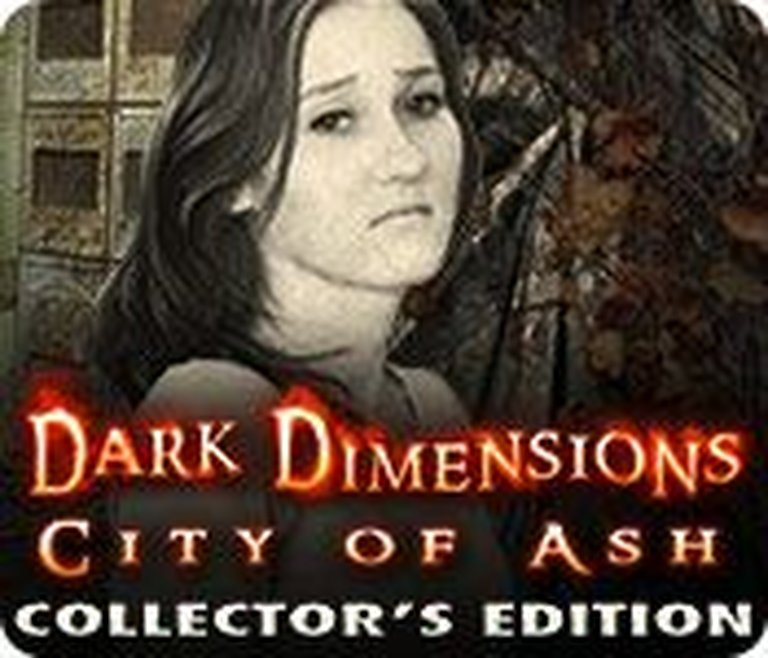
In ‘Dark Dimensions: City of Ash (Collector’s Edition),’ players step into the shoes of an investigator drawn to the cursed town of Phoenix Hill, where a dark dimension has reduced its residents to volcanic ash. This first-person adventure challenges you to unravel supernatural secrets, solve intricate puzzles, and restore the town while navigating haunting environments. The Collector’s Edition enhances the experience with bonus gameplay, concept art, a strategy guide, and immersive wallpapers.
Gameplay Videos
Dark Dimensions: City of Ash (Collector’s Edition) Guides & Walkthroughs
Dark Dimensions: City of Ash (Collector’s Edition): A Relic of Hidden Object Ambition
Introduction
In 2013, the hidden-object genre was a battleground of atmospheric storytelling and formulaic repetition. Dark Dimensions: City of Ash (Collector’s Edition) arrived as a paradox: a game deeply rooted in genre traditions yet striving to transcend them through its volcanic gothic flair and emotional stakes. Developed by Daily Magic Productions—a studio synonymous with mood-driven puzzle adventures—this entry in the Dark Dimensions series promised a haunting tale of loss and spectral redemption. But does it rise from the ashes of obscurity, or crumble under the weight of its own ambitions?
Development History & Context
The Studio & Vision
Daily Magic Productions, founded in 2011, carved its niche by refining the hidden-object adventure (HOA) formula. Their Dark Dimensions series (2011–2018) became a flagship, blending supernatural mysteries with intricate object-finding mechanics. City of Ash marked the series’ fifth installment, releasing June 2, 2013, for Windows and Macintosh via Big Fish Games’ shareware model—a dominant distribution method for HOAs at the time.
Technological Constraints & Market Landscape
Built for casual players on modest hardware, the game required only 2.5 GHz CPUs, 1GB RAM, and DirectX 9. The early 2010s saw HOAs flourishing on digital platforms like Steam and Big Fish, targeting mid-core audiences seeking story-driven escapism. Yet, the genre faced criticism for repetitive design. City of Ash (Collector’s Edition) responded with enhanced content—bonus chapters, concept art, and integrated guides—to justify its premium pricing in a crowded market.
Narrative & Thematic Deep Dive
Plot & Characters
The game thrusts players into Phoenix Hill, a 1950s mining town cursed by a volcanic eruption that transformed its residents into “spirits of ash.” As an investigator haunted by a missing family, you unravel the tragedy binding these souls—a quest interlaced with environmental metaphors (volcanic rage as unresolved trauma) and gothic dread.
Themes & Symbolism
- Loss & Redemption: The ashen citizens symbolize stasis; freeing them mirrors the protagonist’s need to confront personal grief.
- Industrial Ruin: Decaying mines and smoldering landscapes critique unchecked resource exploitation.
- Duality of Fire: The volcano represents both destruction (eruption) and renewal (cleansing).
The narrative’s weakest link is its antagonist—a “fiery ghost” whose motives feel underdeveloped, reducing tension to a simplistic cat-and-mouse chase.
Gameplay Mechanics & Systems
Core Loop & Innovation
City of Ash follows the HOA blueprint:
1. Exploration: First-person slideshow navigation through lavishly painted scenes.
2. Puzzles: Logic-based minigames (e.g., reassembling shattered artifacts) disrupt object-finding monotony.
3. Hidden Object Scenes (HOS): Items are contextually integrated (e.g., mining tools in a collapsed shaft).
The Collector’s Edition elevates this with:
– Bonus Chapter: Expands lore through a subplot about “mysterious forces” manipulating the volcano.
– Strategy Guide: Seamlessly integrated UI reduces frustration but risks over-reliance.
Flaws & Frustrations
- Predictable Pacing: The “three-act curse-breaking” structure lacks surprises.
- Inventory Limitations: Key items vanish post-use, limiting creative puzzle-solving.
World-Building, Art & Sound
Visual Direction
Daily Magic employs an “illustrated realism” style—hand-painted backdrops blend photorealistic textures with surreal color grading (charcoal grays, magma oranges). Phoenix Hill’s landmarks—a fossilized town square, ash-veiled forests—evoke Pompeii-inspired desolation. Concept art (included in the CE) reveals discarded ideas like a fuller lava-dragon boss, hinting at scaled-back ambitions.
Sound Design
Ambient drones and distant tremors create unease, while voice acting wavers between solemn (the protagonist) and melodramatic (the fiery ghost). The soundtrack’s highlight is its choral leitmotif—a mourning hymn that crescendos during spectral encounters.
Reception & Legacy
Initial Reception
No critic reviews were archived on MobyGames, but player testimonials (via ParentingPatch) praised its “eerie atmosphere” while noting its “mild violence” (characters consumed by lava) and “inherent repetition.” The ESRB’s E10+ rating (“Alcohol Reference,” “Fantasy Violence”) aligned with Big Fish’s family-friendly branding.
Evolving Reputation
Though overshadowed by genre giants like Mystery Case Files, City of Ash cultivated a cult following for its lore depth. Its legacy lies in refining the Dark Dimensions formula—later entries like Somber Song (2014) expanded its supernatural world-building. Yet, it remains a relic of the HOA golden age, before mobile gaming diluted the genre’s complexity.
Conclusion
Dark Dimensions: City of Ash (Collector’s Edition) is a flawed but fascinating time capsule. Its volcanic gothic aesthetic and emotional core elevate it above trite HOA clichés, even as its mechanics remain shackled to genre conventions. For historians, it exemplifies Daily Magic’s ambition to marry artistry with accessibility; for players, it offers a haunting—if uneven—journey. In the annals of hidden-object history, it is neither ash nor flame, but embers: glowing with unfulfilled potential.
Final Verdict: A B-tier gem for genre enthusiasts, but a footnote in wider gaming canon.