
- Release Year: 2015
- Platforms: Linux, Windows
- Publisher: DFour Games
- Developer: DFour Games
- Genre: RPG
- Perspective: Top-down
- Game Mode: Single-player
- Gameplay: Turn-based
- Setting: Fantasy
- Average Score: 41/100
Description
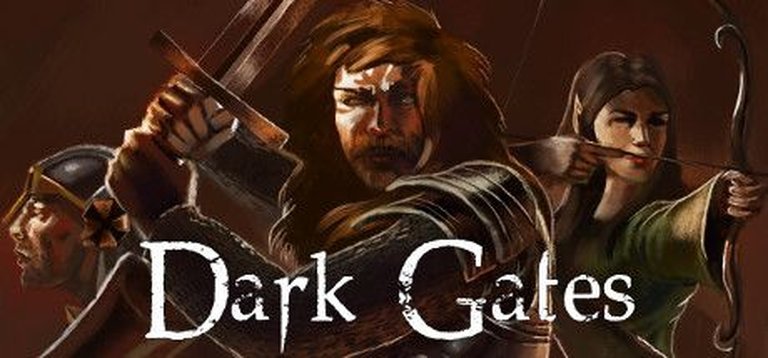
Dark Gates is a fantasy turn-based RPG set in the land of Umber Veil, where a once-righteous Count transforms into a monstrous entity called the Unnamed and constructs Dark Gates within a mountain labyrinth to unleash hellish forces. After the initial gates are destroyed but the Unnamed survives, years later new gates reopen, and a band of heroes must journey to seal them and eradicate the Unnamed’s threat forever.
Where to Buy Dark Gates
PC
Dark Gates Cracks & Fixes
Dark Gates Reviews & Reception
rpggamers.com : Dark Gates promises to be a thrilling ride for anyone looking for an authentic classic tabletop experience.
Dark Gates: A Labyrinthine Love Letter to Tabletop Roots
In an era dominated by cinematic AAA spectacles and live-service models, Dark Gates emerges as a deliberate anachronism—a rugged, unpolished gem forged in the crucible of passion project development. Released in 2015 by the Polish indie studio DFour Games, this title is not merely a game but a meticulous act of archaeological reconstruction, aiming to digitally preserve the tactile, imagination-driven experience of 1980s tabletop dungeon crawlers like Citadel of Blood. Its reception, a modest “Mixed” score on Steam, belies a deeper significance: Dark Gates stands as a crucial, if flawed, bridge between the analog RPG heritage and the digital roguelike renaissance of the 2010s. This review argues that while its technical execution and surface accessibility falter, its core design philosophy—emphasizing emergent narrative, systemic challenge, and player-authored storytelling—represents a vital, preserved strand of gaming history that continues to quietly influence the niche it actively caters to.
Development History & Context: A Five-Year Pilgrimage
The story of Dark Gates is intrinsically the story of DFour Games and its founder, Bartosz Debski. Founded in 2010, the studio’s debut project began its life not in a bustling office but in the fragmented hours of spare-time development, a journey chronicled in granular detail across the IndieDB dev logs from 2012 to 2015. This was no sprint but a marathon spanning nearly five years, marked by incremental alphas (starting with 0.1.3 in February 2012) and steady, community-influenced evolution. The development timeline itself tells a story of indie perseverance: initial releases focused on core mechanics and Linux support, followed by a public “Hero Edition” that allowed backers to have their likenesses included—a direct callback to the personal, community-driven nature of old-school tabletop publishing.
Technologically, Dark Gates was built with a custom engine, a pragmatic choice for a small team seeking specific control over a 2D, top-down, scrolling visual style. This constrained perspective was not a limitation but a deliberate design ethos, directly mirroring the grid-based, god-view perspective of its paper-and-pencil inspirations. The game’s existence is a direct tribute, as explicitly stated in its IndieDB description: “If you ever played paper RPG Death Maze, Citadel of Blood or Labirynt Śmierci then you already know this game.” It is a digital facsimile of a specific subgenre—the solo/co-op “dungeon crawler” board game or RPG—that had seen few faithful adaptations at the time.
The 2015 release window placed Dark Gates at a fascinating crossroads. The “roguelike” renaissance was in full swing, with titles like FTL: Faster Than Light (2012), The Binding of Isaac (2011), and the looming shadow of Darkest Dungeon (2016) redefining player expectations for permadeath, procedural generation, and atmospheric tension. Dark Gates entered this landscape not as a innovator of these systems, but as a purist. It presented a pre-Internet, pre-video-game-RPG complexification model: a focus on tactical positioning, resource management (gold for bribes, spell slots, lockpicks), and the sheer, unforgiving randomness of dice rolls (simulated). Its Greenlight campaign on Steam in late 2013 (noted in the 0.6.0 release log) was a testament to the enduring, niche demand for this specific brand of hardcore, systemic role-playing.
Narrative & Thematic Deep Dive: The Cycle of the Unnamed
Dark Gates‘s narrative is delivered with the sparse efficiency of a dungeon master’s prompt, not a novelist’s epic. The lore, as detailed on VideoGameGeek and the store page, is a cyclical tale of corruption and recurring evil:
“Some time ago, the Count of Umber Veil lived on these lands. He was a good and just leader, but one day, tragedy struck. The count became a monster in the shell of a man. Darkness swiftly befell Umber Veil. The monster enslaved his countrymen and forced them to build a labyrinth in the heart of the mountain that was now his lair, and built the first of the Dark Gates. Once these gates were completed, hell itself broke loose on Umber Veil. The Count was no more – he had become an Unnamed. In the end, the First Gates were destroyed, but the Unnamed survived.”
This is not a story of a single villain but of a condition. The “Unnamed” is less a character and more a force of nature, a corrupting paradigm. The tragedy of the Count of Umber Veil is the classic fantasy fall: a benevolent ruler is transformed by an unspecified tragedy into a despot, his identity erased by his own monstrousness. The labyrinth he builds is not just a prison for others but a manifestation of his fractured psyche—a endless, shifting prison designed to contain and amplify the “hell” he unleashes.
Thematically, the game explores several potent concepts:
1. The Futility and Necessity of Heroism: The narrative explicitly states that after the first gates were destroyed, “Years went by in peace, until the inevitable return of the darkness.” This establishes a grim, cyclical cosmology. Heroes are not saving the world permanently; they are performing a recurring duty, a pesonalistic eternal return. The player’s victory is temporary, a stylistic pause in an endless war.
2. The Labyrinth as Metaphor: The procedurally generated dungeon is not merely a gameplay mechanic but the literal and thematic core. It represents the chaotic, unpredictable nature of evil and the internal struggle. The fact that it “is never the same” echoes the psychological state of the Unnamed—a shifting, illogical realm.
3. Permadeath as Narrative Weight: The lore’s focus on “a few heroes banded together” contrasts sharply with the gameplay’s potential for total party wipeouts. The theme of heroic sacrifice is embedded in the system. When a hero dies permanently (only reversible by a timely Resurrection spell), the player experiences the literal loss of a named individual from that cyclical struggle. The backstory’s emphasis on the Count becoming “an Unnamed” underscores the terror of identity loss, which permadeath mechanically mimics for the player’s own party members.
The narrative is, by modern standards, thin. There are no cutscenes, no dialogue trees with villagers, no quest logs with paragraphs of text. The story is the premise, the world-building is the environment, and the actual narrative is what happens in the player’s mind as they navigate the procedural chambers: the desperate gamble with a troll for passage, the narrowly disarmed trap that saved the healer, the final, bleeding stand against the gate’s guardian. It is a game that believes the player’s own trials are the story.
Gameplay Mechanics & Systems: The Tabletop Blueprint in Digital Form
Dark Gates’s gameplay is a direct, unmediated translation of its tabletop antecedents. The core loop is deceptively simple: assemble a party, explore a dungeon, fight/flee/negotiate, find and destroy gates. Within this simplicity lies a dense web of interconnected systems demanding tactical foresight.
-
Procedural Generation as Core Mechanic: The game’s signature feature is its truly unique, unfolding labyrinth. As stated in the Steam description, “As you play a map unfolds before you and is never the same.” This is not mere room placement variation; it is a fundamental design choice that ensures no two adventures are alike. This procedural DNA directly channels the “random dungeon generation” of early computer RPGs like Rogue and Moria, but applies it to a party-based, tactical context. The unpredictability is the primary source of replayability and challenge.
-
The Chamber and Mirror Gate Mechanic: The central objective is elegantly twisted. Dark Gates are not simply found; they are “hidden behind mirrors.” The party must locate a pair of mirrors within the dungeon’s locked chambers to reveal a gate. This creates a two-layer exploration problem: first, finding chamber keys/mechanisms to enter rooms, and second, within those rooms, discovering the mirror pairs. As the store page warns, “Each chamber is locked and entering into a chamber is always dangerous. Traps are everywhere.” This mechanic brilliantly marries progression (unlocking chambers) with risk assessment (is this chamber worth the trap disarm attempt?).
-
Turn-Based Tactical Combat: Combat is grid-based and turn-based, a direct homage to titles like Wasteland or Fallout. Positioning is paramount, as noted in the RPG Gamers summary: “The key to victory is using the right tactic and positioning of the party.” The Steam community discussions reveal a nuanced system—players debate the value of the “Fear” spell (noted as buggy in a 2015 thread) and strategize about party composition. The game’s combat is less about flashy animations and more about action economy, threat assessment, and resource (spell slots, healing) management.
-
Character Progression & Party Composition: Heroes are defined by simple attributes and specific skills. The Steam description emphasizes: “Talking about skills. Who you chose into a party is important. Balanced team is a key to make sure you will survive.” Skills explicitly include lockpicking and trap disarming, tying dungeon navigation directly to character builds. Progression is through experience points (added in the 0.3.1 alpha update per IndieDB) and loot, with equipment directly impacting combat efficacy. The rigid six-hero party size is a classic constraint, forcing difficult choices about who to bring and who to leave behind in the staging area.
-
Negotiation and Systemic Interaction: A standout feature is the ability to engage with monsters non-lethally. “In the maze you will find monsters which you can negotiate with, fight or try to bribe it with gold.” This is a profound systems-driven approach to RPG design. A goblin patrol is not just XP to be gained but a potential obstacle to be bypassed with gold, a diplomatic challenge, or a tactical problem to be solved. It recalls the “pacifist” options of older CRPGs but makes it a core, expected part of the loop, not a special build choice.
-
Permadeath and Legacy: Permadeath is absolute and brutal. “Remember that if hero dies only a Resurrection spell can bring him/her back if you are quick enough.” The window is narrow, creating immense tension. Furthermore, the game possesses a “roguelike” legacy mechanic: “even if all party dies, you can continue current adventure with a new party—assuming you still got some heroes alive.” This creates a cascading legacy where a successful run might start with the hardened veterans of three previous failed expeditions, their experience points and gear a fragile lifeline. This system is the ultimate test of the “classic tabletop experience,” where character sheets are precious and loss is permanent.
-
Flaws and Jank: The gameplay is not without documented issues. Steam community threads from 2015-2017 report crashes on character selection and at the start screen, a problematic “Fear” spell bug, and questions about key bindings for controller support (added in 0.5.0). These point to a small team struggling with the QA demands of a complex, systemic game. The interface, while functional, is rudimentary, and the learning curve is steep, with crucial information (like what a “chamber” is or how mirror gates work) buried in the store description rather than in-game tutorials.
World-Building, Art & Sound: Spooky Atmosphere Through Restraint
Dark Gates understands that horror and tension are born from ambiguity and suggestion, not graphical fidelity. Its world-building is achieved through a potent combination of minimalist 2D art, constrained perspective, and implied sound design.
-
Visual Direction: The game employs a top-down, 2D scrolling perspective with hand-drawn graphics, as catalogued on MobyGames. The screenshots (9 available on RPG Gamers) reveal a palette of dark browns, greys, and muted colors. Environments are simple but evocative: stone corridors, flickering torchlights (implied), and chamber doors. The hero and monster sprites are small, iconic, and clear in their function. This aesthetic is not about immersion through realism but through recognition. It visually evokes the hand-drawn maps and tokens of a tabletop session. The “spooky atmosphere” praised by RPG Gamers stems from this visual restraint—the shadows between tiles, the limited view radius (a classic “fog of war” mechanic), and the sudden, pixelated emergence of a snarling monster sprite from the darkness.
-
Sound Design: Direct commentary on sound is scarce in the sources, but the repeated emphasis on a “spooky atmosphere” and the inclusion of “original Dark Gates music” in the 0.9.0 release (IndieDB) confirm its importance. The soundtrack and sound effects likely rely on minimalist, ambient drones, unsettling tonal shifts, and sharp, retro-fied combat sounds (clanging metal, monster roars) to create tension. The lack of voice acting or complex audio cues forces the player’s imagination to fill the gaps, a technique that actively engages the player in the same way reading a descriptive paragraph in a RPG module does.
-
The Labyrinth as a Character: The procedurally generated dungeon is the game’s true setting and primary antagonist. It is not a place with a name or history beyond the Count’s tragedy; it is an experience. Its shifting nature makes it an intelligent, hostile entity—a perfect digital analog for a sadistic Dungeon Master constantly changing the rules. The atmosphere is one of profound isolation and dread, amplified by the permadeath system and the constant resource scarcity.
Reception & Legacy: A Cult Classic in the Making
Dark Gates’s commercial and critical reception is a study in muted, niche success. On Steam, it holds a “Mixed” rating based on 44 reviews, with approximately 46% positive. As of early 2026, Steambase calculates a Player Score of 41/100. Digging into the review patterns (from the Steam page widget), the positives consistently praise its authenticity: “captures classic tabletop RPG experience,” “truly immersive,” “spooky atmosphere.” The negatives are equally consistent: crashes, bugs, a steep and unforgiving difficulty curve, and a perceived lack of polish.
There are no professional critic reviews aggregated on Metacritic, and its MobyGames “Moby Score” is listed as “n/a,” with only 9-10 players having added it to their collection. This signals a game that flew under the mainstream radar, existing in a dedicated, small-circle community. The active Steam Community Hub (with 28 discussion topics at the time of writing) and the multi-year dev log history on IndieDB show a persistent, if quiet, player base invested enough to report bugs, ask mechanics questions (“How do stats work?”, “Rogue-Like Elements?”), and share strategies.
Its legacy is twofold:
1. As a Guardian of a Design Ethos: Dark Gates is a primary source document for a specific design philosophy—the “pure” tabletop adaptation that prioritizes systemic depth, player agency, and emergent narrative over cinematic presentation. It sits alongside other niche 2010s successes like Legend of Grimrock (2012, first-person) and the earlier Dungeons of Dredmor (2011) as part of a movement to resurrect and modernize the classic dungeon crawl. Its procedural generation of a tactical, party-based map was an innovative solution to the replayability problem that plagues such adaptations.
2. As a Cautionary Tale: Its reception also highlights the immense challenge of executing such a vision with limited resources. The bugs, crashes, and opaque mechanics reported by players show the tightrope walk of indie development when targeting such a complex, systemic design. It serves as a benchmark for what is required—more robust QA, better in-game documentation, UI polish—to bring such a niche vision to a broader, yet still dedicated, audience.
Conclusion: An Imperfect Artifact of Essential Design
Dark Gates is not a game for everyone. Its stark visuals, brutal difficulty, and occasionally frustrating technical state create a high barrier to entry. However, for the student of game design, the historian of RPGs, or the player yearning for the cerebral, unguided thrill of a true tabletop session translated to digital, it is an invaluable artifact.
Bartosz Debski and DFour Games did not set out to reinvent the RPG genre. They set out to preserve a specific, endangered species of it: the solo, tactical, procedurally generated dungeon crawl. In this, they succeeded. The game’s core systems—the chamber/gate mechanic, the negotiation option, the legacy-based permadeath—are brilliant, interlocking pieces of design that create compelling, unique stories every playthrough. Its flaws are the flaws of ambition: a scope that perhaps outstretched its small team’s ability to thoroughly test and smooth, a commitment to complexity over accessibility.
In the grand canon of video game history, Dark Gates occupies a small but significant chapter. It is a testament to the enduring power of simple, systemic rules to generate complex, memorable narratives. It is a bridge between the analog past and the digital present, proving that the soul of the tabletop experience—the tension of the unknown, the weight of every decision, the camaraderie (and tragedy) of a party—can be captured in code, even if the capture is sometimes grainy and unstable. It is, ultimately, a victory of design purity over polish, and a reminder that the labyrinth’s true value lies not in its gold or its gates, but in the stories of those who dare to get lost within it. For that reason, Dark Gates deserves study, preservation, and a place in the history of the indie RPG revival.