
- Release Year: 2008
- Platforms: GP2X, Windows
- Genre: Strategy, Tactics
- Perspective: Top-down
- Game Mode: Single-player
- Gameplay: Random map generation, Turn-based combat, Unit management
- Setting: Fantasy
- Average Score: 56/100
Description
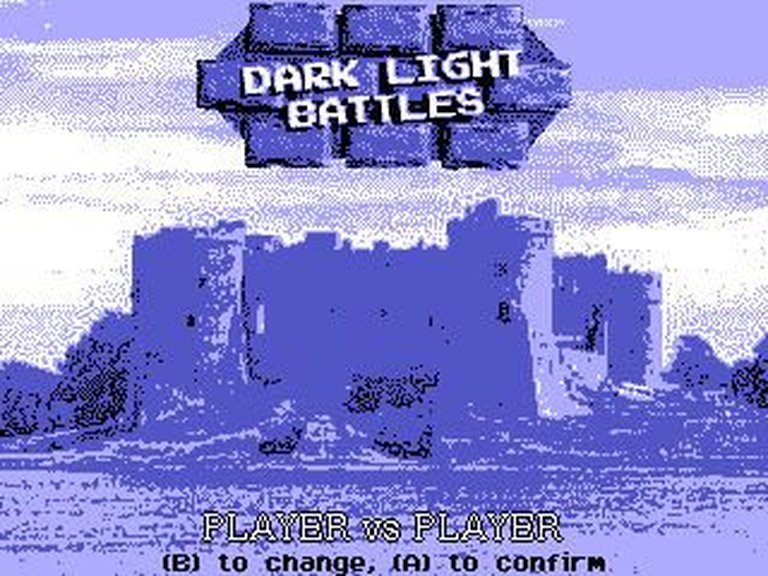
Dark Light Battles SDL2X is a 2D top-down turn-based strategy game set in a fantasy world where players choose between the Light or Dark faction. The game features tactical combat on randomly generated maps, with units possessing unique statistics like Attack, Defense, Movement, and Range. Players must capture castles to recruit new units, and turns alternate after all units have moved, creating a simple yet strategic battlefield experience.
Dark Light Battles SDL2X Guides & Walkthroughs
Dark Light Battles SDL2X Reviews & Reception
mobygames.com (56/100): A simple 2D top-down turn based strategy game.
pyra-handheld.com : Nice little game.
Dark Light Battles SDL2X: A Retrospective on a Forgotten Turn-Based Strategy Gem
Introduction
In the vast, ever-expanding universe of video games, some titles shine brightly for a moment before fading into obscurity, remembered only by a dedicated few. Dark Light Battles SDL2X is one such game—a modest yet charming turn-based strategy experience that emerged from the indie development scene of the mid-2000s. Released in 2008, this unassuming title is a port of Richard Phipps’ original Dark Light Battles, a 2005 entry in the Allegro.cc Speedhack competition. While it may lack the polish and depth of mainstream strategy giants like Fire Emblem or Advance Wars, Dark Light Battles SDL2X carries with it a unique charm, a snapshot of a time when passion projects and homebrew development thrived on platforms like the GP2X.
This review aims to dissect Dark Light Battles SDL2X in exhaustive detail, exploring its development history, gameplay mechanics, narrative (or lack thereof), and its lasting legacy. We will examine why this game, despite its simplicity, resonated with a niche audience and how it fits into the broader tapestry of turn-based strategy games.
Development History & Context
The Birth of a Speedhack Entry
Dark Light Battles was originally conceived by Richard Phipps as an entry for the 2005 Speedhack competition hosted on Allegro.cc. Speedhack was a programming challenge where participants were tasked with creating a game within a strict time limit—typically 48 hours. The goal was to foster creativity under constraints, pushing developers to deliver functional, entertaining games in a short span. Phipps’ entry, Dark Light Battles, was a turn-based strategy game that pitted two factions—Light and Dark—against each other in a battle for supremacy.
The original game was built using the Allegro library, a popular choice among indie developers at the time for its simplicity and cross-platform capabilities. However, its reach was limited to PC players who could run the Allegro-based executable. This changed in 2008 when Peter Sundling undertook the task of porting the game to SDL (Simple DirectMedia Layer), a more versatile multimedia library, and adapting it to run on the GP2X, a handheld gaming console known for its open-source-friendly architecture.
The GP2X and the Homebrew Renaissance
The GP2X, developed by GamePark Holdings, was a handheld console released in 2005 that quickly became a darling of the homebrew community. Unlike proprietary systems like the Nintendo DS or PlayStation Portable, the GP2X ran on open-source firmware and supported Linux, making it an ideal platform for indie developers to experiment with. Its dual-CPU architecture and SDL compatibility allowed for relatively easy porting of PC games, and Dark Light Battles SDL2X was one of many titles to benefit from this ecosystem.
Peter Sundling’s port was not just a technical achievement but also a labor of love. The original Allegro code was rewritten to use SDL, ensuring compatibility with both Windows and the GP2X. The port retained the core gameplay mechanics while making necessary adjustments to fit the GP2X’s control scheme. The result was a game that felt at home on the handheld, offering a portable strategy experience that was rare at the time.
The Gaming Landscape of 2008
To understand Dark Light Battles SDL2X’s place in history, it’s essential to consider the gaming landscape of 2008. The late 2000s were dominated by high-budget AAA titles, with franchises like Call of Duty, Grand Theft Auto, and Halo taking center stage. Meanwhile, the indie scene was beginning to gain traction, thanks in part to digital distribution platforms like Steam and the rise of communities like IndieDB and TIGSource.
Turn-based strategy games, while not as mainstream as first-person shooters or open-world adventures, had a dedicated following. Titles like Advance Wars: Days of Ruin (2008) and Civilization Revolution (2008) proved that there was still an audience for tactical, grid-based combat. However, these games were polished, commercially driven products with significant budgets behind them. Dark Light Battles SDL2X, by contrast, was a passion project—a game made for the love of the genre rather than financial gain.
The GP2X, while niche, provided a haven for games like Dark Light Battles SDL2X. It was a platform where creativity and experimentation were celebrated, and where developers could reach an audience hungry for unique experiences. The fact that Dark Light Battles SDL2X was released for free further endeared it to the homebrew community, embodying the spirit of sharing and collaboration that defined the era.
Narrative & Thematic Deep Dive
A Minimalist Approach to Storytelling
Dark Light Battles SDL2X is not a game that relies on a deep, sprawling narrative. In fact, it barely has a story at all. The premise is simple: two factions, Light and Dark, are locked in an eternal struggle for dominance. The player chooses a side and engages in turn-based combat on randomly generated maps, with the goal of eliminating the enemy forces or capturing strategic castles.
This minimalist approach to storytelling is not necessarily a flaw. Many classic strategy games, from Chess to Go, thrive without narrative context, focusing instead on pure gameplay mechanics. Dark Light Battles SDL2X follows this tradition, offering a straightforward, no-frills experience that emphasizes tactical decision-making over lore or character development.
Themes of Duality and Strategy
The game’s central theme is duality—the conflict between Light and Dark. This binary opposition is a common trope in fantasy and strategy games, symbolizing the eternal struggle between good and evil, order and chaos. However, Dark Light Battles SDL2X does not delve deeply into the moral implications of this conflict. There is no exploration of why the factions are fighting, nor is there any character development to humanize the combatants. The Light and Dark factions are essentially interchangeable, distinguished only by their unit sprites and castle designs.
This lack of narrative depth is both a strength and a weakness. On one hand, it allows the game to focus entirely on gameplay, ensuring that the player’s attention is directed toward tactical decisions rather than story beats. On the other hand, it robs the game of emotional resonance. There is no sense of attachment to the units or the factions they represent, which can make the experience feel somewhat hollow.
The Role of Randomness and Chance
One of the most defining aspects of Dark Light Battles SDL2X is its reliance on randomness. Combat outcomes are determined by a combination of unit statistics (Attack, Defense, Movement, and Range) and probabilistic calculations. For example, a knight attacking a soldier may not always result in a kill, even if the knight’s Attack stat is higher than the soldier’s Defense. This element of chance introduces unpredictability into the gameplay, forcing players to adapt their strategies on the fly.
This mechanic has been a point of contention among players. Some appreciate the unpredictability, arguing that it adds tension and replayability to the game. Others find it frustrating, particularly when a seemingly overpowered unit fails to eliminate a weaker opponent after multiple attempts. The lack of hit points means that each attack is a binary outcome—either the unit dies, or it doesn’t—which can lead to moments of sheer luck determining the course of a battle.
The Absence of Dialogue and Character
Dark Light Battles SDL2X features no dialogue, no cutscenes, and no character interactions. The game’s world is conveyed entirely through its visual design and gameplay mechanics. Units are represented by simple sprites, and castles are static structures that serve as strategic objectives. There is no voice acting, no text-based storytelling, and no lore to speak of.
This absence of narrative elements is a double-edged sword. For players who prefer pure strategy games, it is a welcome simplification. For those who enjoy a rich, immersive world, it may feel like a missed opportunity. The game’s fantasy setting is hinted at through its unit designs (soldiers, knights, archers, and mages) and castle aesthetics, but it never fully commits to building a cohesive world.
Gameplay Mechanics & Systems
Core Gameplay Loop
At its heart, Dark Light Battles SDL2X is a turn-based strategy game where players take turns moving their units across a grid-based map. The core gameplay loop is as follows:
- Unit Selection: The player selects a unit from their army.
- Movement: The unit is moved across the map, with movement points dictating how far it can travel in a single turn.
- Combat: If the unit encounters an enemy, it can attack, with the outcome determined by the unit’s stats and a random probability calculation.
- Castle Capture: If the unit moves adjacent to a neutral or enemy castle, it captures the castle, potentially spawning additional units for the player’s faction.
- Turn End: Once all units have been moved, the turn ends, and the opponent takes their turn.
This loop is repeated until one faction is completely eliminated or all castles are captured.
Unit Types and Statistics
Dark Light Battles SDL2X features four distinct unit types, each with unique strengths and weaknesses:
- Soldiers: The weakest units in terms of Attack but boast the highest Defense. They are the only units that can move two squares per turn, making them ideal for scouting and capturing castles.
- Knights: Balanced units with decent Attack and Defense. They are versatile and can hold their own in most situations.
- Archers: Fragile units with low Defense but high Attack and a Range of three squares. They excel at dealing damage from a distance but are vulnerable in close combat.
- Mages: Powerful units with high Defense and the highest Attack stat. Like archers, they have a Range of three squares, making them formidable long-range combatants.
Each unit type has a specific role to play, and successful players must learn to leverage their strengths while mitigating their weaknesses. For example, archers and mages should be kept at a distance to maximize their effectiveness, while soldiers and knights can be used to absorb damage and capture castles.
Combat Mechanics
Combat in Dark Light Battles SDL2X is resolved through a simple probability-based system. When a unit attacks an enemy, the game calculates the chance of a successful kill based on the difference between the attacker’s Attack stat and the defender’s Defense stat. The larger the difference, the higher the probability of a kill.
This system is straightforward but can lead to frustrating moments of randomness. For instance, a mage with a high Attack stat may fail to kill a soldier with low Defense multiple times in a row, purely due to bad luck. Conversely, a soldier with low Attack might land a lucky blow and eliminate a knight. This unpredictability can make battles feel unfair, but it also adds an element of tension, as no outcome is ever guaranteed.
Castle Capture and Unit Spawning
Castles are the most strategically important elements in Dark Light Battles SDL2X. At the start of the game, each faction controls one castle (either Light or Dark), and there are approximately eight neutral castles scattered across the map. Capturing a castle is as simple as moving a unit adjacent to it. Once captured, the castle changes allegiance, and there is a random chance that a new unit will spawn for the capturing faction.
This mechanic is crucial for building a larger army. Since players start with only eight units (three soldiers, two knights, two archers, and one mage), capturing castles is essential for gaining a numerical advantage. However, the randomness of unit spawning means that luck plays a significant role in determining the pace of the game. A player who captures multiple castles early on may find themselves with a substantial army, while an unlucky player might struggle to reinforce their ranks.
Movement and Positioning
Movement is a key aspect of Dark Light Battles SDL2X’s strategy. Each unit has a set number of movement points, which dictate how far it can travel in a single turn. Soldiers, with their two-square movement, are the most mobile units, while knights, archers, and mages are limited to one square per turn.
Positioning is critical, particularly for ranged units like archers and mages. These units must be kept at a safe distance from enemy melee units to avoid being overwhelmed. Conversely, melee units like soldiers and knights can be used to block enemy advances or capture castles.
One notable limitation of the game’s movement system is the lack of a “hold to move” feature. Players must press the D-pad repeatedly to move the cursor one square at a time, which can be tedious, especially on larger maps. This design choice was likely a holdover from the original Allegro version, where keyboard controls were the primary input method. While it works adequately on PC, it feels clunky on the GP2X, where a more fluid control scheme would have been preferable.
AI and Difficulty
Dark Light Battles SDL2X features a simple AI opponent that follows basic strategic principles. The AI will attempt to capture castles, move units into advantageous positions, and attack enemy units when possible. However, it is not particularly sophisticated and can be exploited with relative ease.
For example, the AI does not prioritize protecting its ranged units, often leaving archers and mages vulnerable to melee attacks. It also does not employ advanced tactics like flanking or feints, making it predictable once the player understands its behavior. As a result, the game’s difficulty is relatively low, and experienced strategy players will likely find it easy to overcome.
This simplicity is not necessarily a flaw, as the game was designed as a casual, accessible strategy experience. However, it does limit the game’s replayability, as there is little challenge to be found once the player masters the basic mechanics.
User Interface and Controls
The user interface in Dark Light Battles SDL2X is functional but sparse. The game features a top-down perspective, with units and castles represented by simple sprites. The UI provides basic information, such as unit stats (Attack, Defense, Movement, and Range) and the current turn status.
Controls are straightforward, with the D-pad used for navigation and the A button for selection and confirmation. The B button is used to deselect units or view unit stats. On the GP2X, the X button can be used to manually end a turn, though the game is supposed to do this automatically once all units have been moved.
One of the most notable UI quirks is the display of movement points. When a unit has exhausted its movement for the turn, its remaining movement points are displayed as -1, rather than 0. This is a minor but odd design choice, likely a remnant from the original Allegro code. While it does not affect gameplay, it is a small detail that could have been polished during the porting process.
World-Building, Art & Sound
Visual Design and Aesthetics
Dark Light Battles SDL2X employs a minimalist visual style that is both charming and functional. The game’s top-down perspective is reminiscent of classic strategy titles like Advance Wars or Fire Emblem, though with far less detail. Units are represented by simple, pixelated sprites, and the environment consists of basic tiles, including grass, trees, and castles.
The art style is deliberately retro, evoking the aesthetic of early Game Boy or NES games. This choice aligns with the game’s indie roots and the technical limitations of the GP2X. While the visuals are not particularly impressive by modern standards, they are effective in conveying the necessary information to the player. The distinction between Light and Dark factions is clear, and unit types are easily identifiable at a glance.
Sound Design and Music
Sound design in Dark Light Battles SDL2X is minimal, with no background music and only basic sound effects for actions like unit movement and combat. This lack of audio polish is understandable given the game’s origins as a Speedhack entry, where developers had limited time to implement non-essential features.
The absence of music is particularly noticeable, as it leaves the game feeling somewhat sterile. Even a simple looped track would have added atmosphere and immersion, particularly during the tense moments of combat. However, the sound effects that are present—such as the clinking of swords or the thud of a unit being eliminated—are functional and serve their purpose.
Atmosphere and Immersion
Given its minimalist approach to art and sound, Dark Light Battles SDL2X does not prioritize immersion. The game’s world is abstract, with no attempt to create a cohesive fantasy setting. Instead, the focus is entirely on gameplay mechanics, with the visual and auditory elements serving as functional tools rather than immersive experiences.
This is not necessarily a criticism, as the game was never intended to be a deep, narrative-driven experience. However, it does mean that Dark Light Battles SDL2X lacks the atmospheric depth of games like Final Fantasy Tactics or Disgaea, where world-building and storytelling play a significant role in the player’s engagement.
Reception & Legacy
Critical and Commercial Reception
Dark Light Battles SDL2X was released to a niche audience, primarily consisting of GP2X enthusiasts and homebrew gaming fans. As such, it did not receive widespread critical attention. On MobyGames, the game holds an average player score of 2.8 out of 5, based on a single rating. While this score is not particularly high, it is important to contextualize it within the game’s intended audience.
The GP2X community, in particular, received the game warmly. Forum posts from the time of its release (such as those on Pyra-Handheld.com) indicate that players appreciated the game’s simplicity and accessibility. Comments like “Nice little game” and “Very easy to play and just all around fun” suggest that Dark Light Battles SDL2X found a receptive audience among those who enjoyed casual, pick-up-and-play strategy experiences.
However, the game was not without its critics. Some players found the reliance on randomness frustrating, particularly in combat outcomes. Others noted the lack of depth in both gameplay and presentation, arguing that the game felt more like a tech demo than a fully realized strategy title.
Evolution of the Game’s Reputation
Over the years, Dark Light Battles SDL2X has faded into obscurity, remembered primarily by those who were part of the GP2X and homebrew scenes in the late 2000s. It has not achieved the cult status of other indie strategy games, nor has it been revisited or remastered in the years since its release.
That said, the game’s legacy lives on in the broader context of indie and homebrew development. It serves as a reminder of a time when passion projects and programming challenges like Speedhack fostered creativity and innovation. The fact that Dark Light Battles SDL2X was ported to multiple platforms (including the GCW Zero in 2018) demonstrates its enduring appeal within niche communities.
Influence on Subsequent Games
While Dark Light Battles SDL2X did not directly influence mainstream strategy games, it is part of a larger tradition of indie turn-based tactics titles. Games like Battle for Wesnoth, Frozen Synapse, and Into the Breach all share DNA with Dark Light Battles SDL2X, emphasizing tactical depth and accessibility over narrative complexity.
The game’s reliance on randomness and probability-based combat also foreshadowed mechanics seen in later roguelike strategy games, where unpredictability is a core design principle. While Dark Light Battles SDL2X may not have been a trailblazer, it contributed to the ongoing evolution of the genre by demonstrating that even simple, minimalist strategy games could find an audience.
Conclusion: A Modest Gem in the Strategy Pantheon
Dark Light Battles SDL2X is not a game that will be remembered as a classic of the turn-based strategy genre. It lacks the polish, depth, and narrative ambition of titles like Fire Emblem or XCOM. However, it is a game that deserves recognition for what it is: a charming, accessible strategy experience born from the passion of indie developers and the spirit of the homebrew community.
Its strengths lie in its simplicity and tactical clarity. The game’s minimalist design ensures that players can jump in and start playing without a steep learning curve, while the core mechanics—unit movement, combat, and castle capture—provide enough strategic depth to keep engagements interesting. The reliance on randomness, while frustrating at times, adds an element of unpredictability that can make each battle feel unique.
Yet, Dark Light Battles SDL2X is also a product of its limitations. The lack of narrative depth, the rudimentary AI, and the clunky controls (particularly on the GP2X) hold it back from being a truly great game. It is, in many ways, a relic of its time—a snapshot of what indie developers could achieve with limited resources and a tight deadline.
In the grand tapestry of video game history, Dark Light Battles SDL2X may be a small, easily overlooked thread. But for those who played it on the GP2X or discovered it in the annals of homebrew gaming, it remains a fondly remembered gem—a testament to the creativity and passion that define the indie development scene.
Final Verdict: 6.5/10 – A flawed but charming strategy experience that shines brightest in the hands of those who appreciate its modest ambitions.
Additional Resources
For those interested in exploring Dark Light Battles SDL2X further, the following resources provide additional context and downloads:
- MobyGames Entry: Dark Light Battles SDL2X on MobyGames
- GP2X Wiki: Dark Light Battles SDL2X on wiki.gp2x.org
- Pyra-Handheld Forum Thread: Dark Light Battles Sdl2x Discussion
- GitHub Port for GCW Zero: gameblabla/darklight_gcw0
- Download Link (GP2X): PDRoms – Dark Light Battles SDL2x
Whether you’re a strategy enthusiast, a retro gaming aficionado, or simply curious about the indie development scene of the 2000s, Dark Light Battles SDL2X offers a glimpse into a bygone era of gaming—one defined by creativity, community, and the sheer joy of making games for the love of the craft.