
- Release Year: 2006
- Platforms: Windows
- Publisher: Buka Entertainment, Global Software Publishing Ltd., Mindscape SA, Ubisoft Entertainment SA
- Developer: Arkane Studios SASU
- Genre: Role-playing (RPG)
- Perspective: First-person
- Game Mode: LAN, Online PVP, Single-player
- Gameplay: Action RPG, Environmental interaction, First-person combat, Skill trees
- Setting: Fantasy
- Average Score: 81/100
- Adult Content: Yes
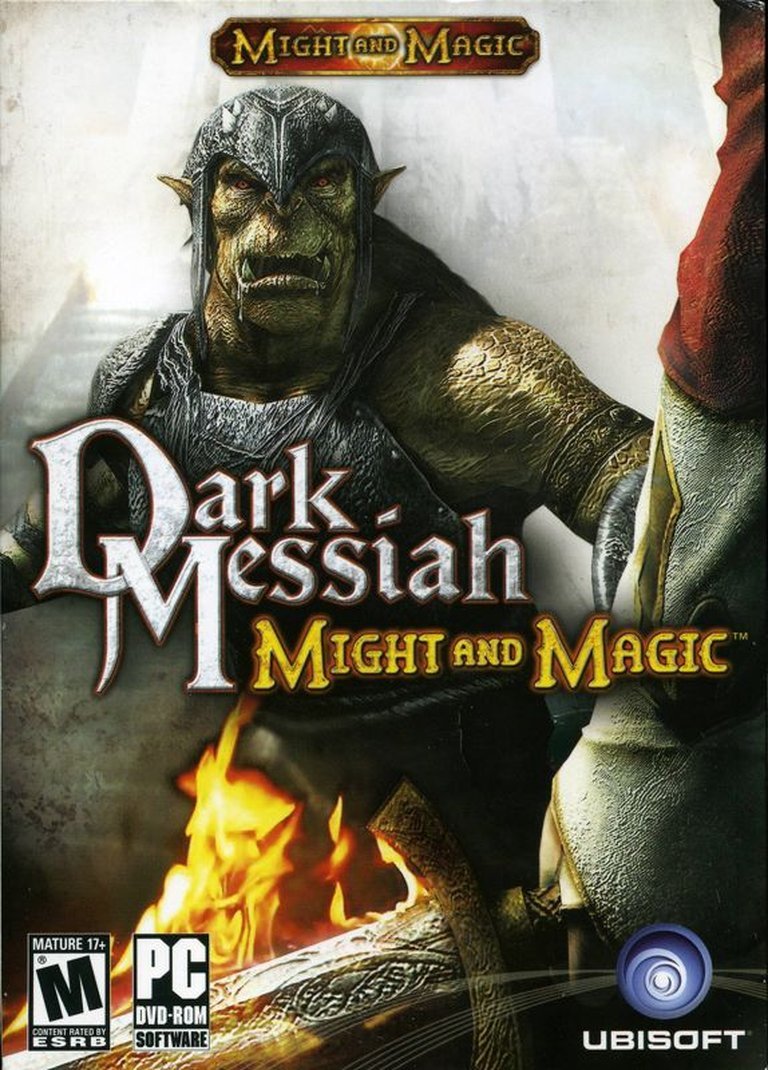
Description
Set in a medieval fantasy world, Dark Messiah: Might and Magic casts players as Sareth, the half-human, half-demon Dark Messiah prophesied to destroy the barrier between worlds. Tasked with retrieving the Skull of the Seventh Dragon, players navigate a story-driven first-person action RPG, skillfully blending sword combat, magic, and stealth. The game emphasizes environmental interaction—throwing objects, setting traps, and using terrain for tactical advantage—while its Body Awareness System intensifies combat through realistic physical interactions with enemies and the world itself.
Gameplay Videos
Dark Messiah: Might and Magic Free Download
Dark Messiah: Might and Magic Cracks & Fixes
Dark Messiah: Might and Magic Patches & Updates
Dark Messiah: Might and Magic Mods
Dark Messiah: Might and Magic Guides & Walkthroughs
Dark Messiah: Might and Magic Reviews & Reception
steambase.io (91/100): Dark Messiah of Might & Magic has earned a Player Score of 91 / 100.
metacritic.com (72/100): The core first-person melee combat is incredibly solid and the exploration, storytelling, and character growth are integrated brilliantly to create a unique and compelling experience.
howlongtobeat.com (95/100): Very hard but amazing game with a lot of realism.
monstercritic.com (72/100): The core first-person melee combat is incredibly solid and the exploration, storytelling, and character growth are integrated brilliantly to create a unique and compelling experience.
mobygames.com (76/100): The core first-person melee combat is incredibly solid and the exploration, storytelling, and character growth are integrated brilliantly to create a unique and compelling experience.
Dark Messiah: Might and Magic Cheats & Codes
PC
Enable the console via ‘-console’ launch parameter or in-game settings. Press ~ to open the console. Use ‘sv_cheats 1’ before other cheats.
| Code | Effect |
|---|---|
| god | Toggle invulnerability |
| noclip | Toggle no-clipping mode |
| give [item name] | Spawn specified item |
| buddha | Cannot die (health drops to 1 HP) |
| mm_npc_create [npc name] | Spawn specified NPC |
| notarget | Enemies ignore player |
| mm_player_add_skillpoints [number] | Add skill points |
| mm_player_add_adrenaline 100 | Full adrenaline |
| mm_player_add_gold [number] | Add gold |
| arrow_unlimited 1 | Unlimited arrows |
| map [map name] | Load specified map |
| restart_assassin | Restart map as Assassin |
| restart_warrior | Restart map as Warrior |
| restart_wizard | Restart map as Wizard |
| developer 1 | Enable developer mode |
| con_enable 1 | Enable console access |
| sv_gravity [number] | Adjust gravity |
| impulse 101 | All weapons and ammo |
| ai_disable 1 | Disable enemy AI |
| hurtme [number] | Hurt player by specified amount |
| mat_wireframe 1 | Wireframe view |
| mat_depthbias_normal [1 or 2] | See enemies/items through walls |
| mat_fullbright 1 | Disable darkness/shadows |
| sv_showhitboxes 2 | Display hitboxes |
| mm_player_stamina_megasprint_cost_per_second 0 | No stamina cost for sprinting |
| mm_player_stamina_needed_for_kick 0 | No stamina cost for kicking |
| mm_player_time_to_add_mana 0 | Instant mana regeneration |
| sv_cheats 1 | Enable cheat mode |
Dark Messiah: Might and Magic: Review
Introduction
In the pantheon of first-person action RPGs, few titles spark as fierce a debate as Dark Messiah: Might and Magic. Released in 2006 by Arkane Studios and Ubisoft, this ambitious experiment blended visceral melee combat, environmental storytelling, and dark fantasy tropes into a package that was both revolutionary and deeply flawed. While its legacy remains contentious—haunted by technical woes and narrative clichés—it endures as a cult classic, celebrated for its innovative physics-based combat and audacious design choices. This review dissects Dark Messiah through multiple lenses: its tumultuous development, narrative ambitions, groundbreaking mechanics, artistic execution, and lasting impact. Ultimately, we confront the central question: Was this a messiah of its genre or a cautionary tale of unrealized potential?
Development History & Context
Dark Messiah emerged from a pivotal moment for Arkane Studios. Following the critical but commercially underwhelming Arx Fatalis (2002), the studio sought to leverage Valve’s cutting-edge Source engine—a choice driven by Arkane’s desire to refine its signature immersive sim philosophy with modern technology. Director Raphaël Colantonio envisioned a sequel to Arx Fatalis, but Ubisoft, having acquired the Might and Magic license, redirected the project into a fantasy action-RPG. This shift strained creative cohesion, as Arkane prioritized combat over RPG depth, a compromise evident in the final product.
The Source engine enabled unprecedented physics integration, allowing for dynamic environmental kills and fluid character animations. However, this ambition clashed with technical constraints. The game suffered from crippling instability, RAM-hogging design, and abysmal loading times—issues exacerbated by Ubisoft’s aggressive release timeline. Critics noted “an uncanny ability to tap into primeval bloodlust” but lamented that “frustration with stability issues was never far away” (Eurogamer.de). The 2006 gaming landscape, dominated by Oblivion and Gears of War, positioned Dark Messiah as an oddity: a niche, unapologetically violent fantasy shooter. Its multiplayer, developed separately by Kuju Entertainment, offered a tantalizing glimpse of class-based chaos but lacked the polish to sustain a community.
Narrative & Thematic Deep Dive
The plot of Dark Messiah operates on a dual axis: grandiose prophecy and intimate betrayal. Players control Sareth, a half-demon “Dark Messiah” prophesied to shatter the prison of his demonic father, Kha-Beleth. The narrative unfolds through a series of escalating betrayals—Sareth’s master Phenrig, the necromancer Arantir, and even his guide, the succubus Xana, whose demonic whispers alternate between seduction and scorn. The story’s core strength lies in its twist-driven second act: Sareth’s resurrection as a demon-human hybrid forces players to confront themes of identity and free will. As one retrospective analysis noted, “betrayal, love, dramatic twists, and shocking revelations await” (theGeek.games), elevating the clichéd fantasy setup into a surprisingly compelling morality play.
Yet the narrative is undermined by uneven execution. Voice acting ranges from ham-fisted melodrama (e.g., villains’ cackling) to nuanced performances (Xana’s multi-layered seduction). Leanna, Sareth’s ally, epitomizes the game’s gendered shortcomings: reduced to a damsel in distress or a lichified plot device, she embodies “ludicrous and sexist portrayals” common in the era (Chase Dahl, MobyGames). The script oscillates between profound revelations (“I am your father!”) and rote fantasy tropes, with dialogue that “made [players] cringe” (Tom Cross, MobyGames). Thematically, Dark Messiah explores corruption and duality but often lacks the subtlety to land its blows.
Gameplay Mechanics & Systems
Dark Messiah’s legacy rests on its combat—a revolutionary fusion of physics, timing, and environmental lethality. The “Body Awareness System” ensured Sareth felt corporeal: every swing, dodge, and kick registered with weight and consequence. Combat demanded mastery of three interconnected systems: Melee, Magic, and Stealth.
- Melee: The game’s pinnacle. Blocking, dodging, and parrying formed a rhythm-based dance where mistiming a left slash could lead to decapitation. Environmental kills—kicking orcs into spikes, severing ropes to crush foes—provided cathartic, physics-driven spectacle. Critics lauded the “visceral, face-to-face” combat as “endlessly amusing” (MichaelPalin, MobyGames), though late-game repetition dulled its edge.
- Magic: Spells like “Inferno” and “Telekinesis” offered tactical options but were often outshone by melee. Mana constraints and slow casting left magic feeling like an afterthought, especially against aggressive AI.
- Stealth: Backstabs and shadowmelding satisfied players craving a thief archetype, but the system was poorly balanced. Enemies magically detected players after a single failed sneak attack, rendering stealth “unerringly locat[ing]” players regardless of skill investment (Chase Dahl, MobyGames).
Character progression eschewed traditional leveling for a “Skill Evolution System” tied to objective completion. With only 90 skill points available, players had to specialize—warrior, mage, or assassin—but mixed builds were penalized by linear level design. The inventory, meanwhile, was “so huge” that resource management felt trivial (MichaelPalin, MobyGames). Multiplayer introduced class-based warfare but struggled with balance; the Priestess’s self-heal, for example, was deemed “insane” (gi han, MobyGames).
World-Building, Art & Sound
Set in Ubisoft’s newly minted Might and Magic universe, Ashan, Dark Messiah traded the franchise’s sci-fi roots for a “pure fantasy” world (Wikipedia). The setting vibrated with contrasts: Stonehelm’s opulent manors versus its grimy sewers, the sun-drenched orcish highlands versus the oppressive necropolis. Art director Daniel Balage crafted environments that blended Source engine versatility with painterly detail—HDR lighting blinding players during transitions, underwater distortion, and crumbling architecture that begged to be weaponized. Critics marveled at the “stunning visuals” and “haunting, sinister atmosphere” (theGeek.games), though some outdoor zones suffered from blurry textures.
Creatures drew from fantasy archetypes but with distinctive flair. Orcs were hulking brutes, goblins skittish pests, and undead a grotesque chorus of groans and clattering bones. The standout was the cyclops—its entrance marked by city-shattering destruction—a “towering figure” that “reminded players of Lord of the Rings” (PC Games, Germany). Sound design amplified the brutality: steel-on-flesh squelches, firecrackling, and Xana’s sultry whispers. Yet audio stuttering and repetitive enemy voices (“Stranger dies!”) undermined immersion. The score, by Sascha Dikiciyan and Cris Velasco, elevated key moments but felt underutilized.
Reception & Legacy
At launch, Dark Messiah polarized critics. Aggregators scored it 76% on PC (Metacritic) and 52% on Xbox 360 (Elements). Praise heaped on its combat: Game Informer called it “sheer fun,” while PC Action awarded it “Best PC Action Game in 2006.” Yet technical issues dominated critiques: “crash[es] more often than [players] care to count” (Worth Playing), “RAM pig” (Chase Dahl, MobyGames), and “unbearable audio stuttering” (theGeek.games). The story was deemed “throwaway” (GameSpot), and multiplayer “a mess” (Chase Dahl, MobyGames).
Over time, Dark Messiah’s reputation evolved. Players rediscovered its strengths: the “sheer joy of mutilating orcish hordes” (Eurogamer.net) and emergent, physics-driven chaos. It influenced later titles, from Dishonored (Arkane’s spiritual successor) to Dark Souls (which borrowed environmental lethality). The German censorship controversy—removing dismemberment—highlighted industry debates on violence. By 2025, retro reviews hailed it as “an absolute gem” (theGeek.games), with modders extending its life via fixes and content.
Conclusion
Dark Messiah: Might and Magic is a masterpiece of contradictions. Its combat remains a benchmark for first-person melee, blending brutality with balletic grace. Its narrative, though flawed, offers twists that resonate in hindsight. Yet it is shackled by technical instability, uneven design, and Ubisoft’s rushed release. For every moment of triumph—kicking a necromancer into a chasm—there was a loading screen or a frustrating design choice.
Ultimately, Dark Messiah is a flawed messiah: a game that promised salvation for the fantasy FPS genre but was crucified by its own ambition. Yet its legacy endures in the studios it inspired and the players who cherish its chaotic brilliance. As a cult classic, it stands as a testament to the power of risk-taking—and the cost of compromise. For those willing to endure its flaws, Dark Messiah offers not just a game, but a visceral, unforgettable experience. In the words of one retrospective: “It exceeded my expectations… an absolute gem” (theGeek.games). For others, it remains a cautionary tale of what happens when vision outpaces execution. Verdict: Essential for action-RPG enthusiasts, with caveats for the faint of heart.