
- Release Year: 1999
- Platforms: Windows
- Publisher: Magic Bytes, THQ Inc.
- Developer: New Generation Software
- Genre: Action
- Perspective: Diagonal-down
- Game Mode: Single-player
- Gameplay: Exploration, Isometric, Magic, Point & click, RPG
- Setting: Africa
- Average Score: 58/100
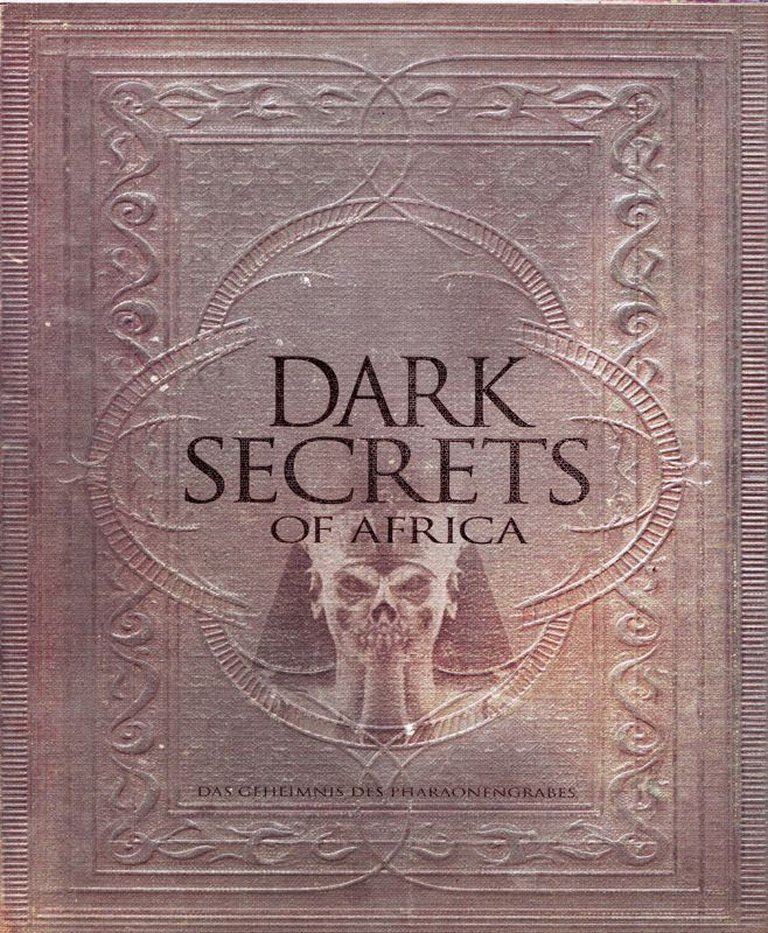
Description
In 1876 Africa, players take on the role of historian Howard Hawk, who joins the Marduk/Anubis brotherhood to battle the followers of the god Azag-Thot. Explore 15 diverse African locales, wielding a rifle and learning magic spells while battling monstrous creatures like Azag-Thot minions and cursed spidermen. Collect occult artifacts from hidden temples—such as ancient books, amulets, and swords—to defeat the dark cult with the aid of up to six African companions.
Gameplay Videos
Where to Buy Dark Secrets of Africa
PC
Dark Secrets of Africa Free Download
Dark Secrets of Africa Cracks & Fixes
Dark Secrets of Africa Reviews & Reception
mobygames.com (58/100): Average score: 58% (based on 9 ratings)
en.wikipedia.org : Gamezone felt the title had enjoyable gameplay.
collectionchamber.blogspot.com : At its heart, this German-made game is a decent enough real-time RPG with an entertaining if repetitive gameplay loop.
Dark Secrets of Africa Cheats & Codes
PC
Press F1 to F9 keys in the game window (after opening the cheat table).
| Code | Effect |
|---|---|
| F1 | Set main character Vitaliy 600 |
| F2 | Set main character Energy 100 |
| F3 | Set main character Hunger 600 |
| F4 | Set main character Thirst 600 |
| F5 | Add main character EXP + 1000 |
| F6 | Set Warrior Vitaliy 600 |
| F7 | Set Warrior Energy 100 |
| F8 | Set Warrior Hunger 600 |
| F9 | Set Warrior Thirst 600 |
PC
Enter codes during gameplay (press Enter and type the code quickly, no input prompt).
| Code | Effect |
|---|---|
| ds ghostwalk | Durch Wände gehen |
| ds azahgthoth | God Mode |
| ds speedy gonzales | Schneller laufen |
| ds gimme xx | Gegenstand bekommen |
| DSAZAGTHOTH | unverwundbar |
| DSGIMMELIGHT | Fackeln erhalten |
| DSGIMMEWATER | Wasser erhalten |
| DSGIMMEFOOD | Nahrung erhalten |
| DSGIMMEMEDPACK | Medipacks erhalten |
| DSGIMMEGEMS | Edelsteine erhalten |
| DSREVEALMAP | ganze Karte aufdecken |
| DSGHOSTWALK | durch Wände gehen |
| DSNEXTEPLEVEL | Erfahrungsstufe um 1 erhöhen |
| DSKILLEASY | leichte Gegner |
| DSHERCULES | (?) |
| DSSPEEDYGONZALES | (?); rennen vielleicht |
| DSPARTYREFRESH | Party heilen (?) |
| DSNECROMANCER | Zauberkräfte (?) |
| DSBIRTHKRIEGER | Krieger erschaffen |
| DSBIRTHTRAEGER | Träger erschaffen |
| DSBIRTHHELFER | Helfer erschaffen |
| DSSPELLPAUSEFAST | kurze Pause zwischen zwei Sprüchen (?) |
| DSSPELLPAUSENORMAL | normale Pause zwischen zwei Sprüchen (?) |
| DSTIMEMORNING | Zeit auf morgens setzen |
| DSTIMELUNCH | Zeit auf mittags setzen |
| DSTIMEAFTERNOON | Zeit auf nachmittags setzen |
| DSTIMEMIDNIGHT | Zeit auf Mitternacht setzen |
| DSSPEEDNONE | Spiel-Geschwindigkeit auf 0 setzrn |
| DSSPEEDNORMAL | normale Spiel-Geschwindigkeit |
| DSSPEEDMEDIUM | mittlere Spiel-Geschwindigkeit |
| DSSPEEDFAST | hohe Spiel-Geschwindigkeit |
| DSSPEEDFRANTIC | sehr hohe Spiel-Geschwindigkeit |
| DSRAIN | Regen |
| DSQUIT | Spielfigur stirbt |
| DSEXIT | Spielende |
| DSLIST | ? |
| PRGSHOWPATH | ? |
| PRGANIM | ? |
| PRGTIMES | ? |
| PRGFPS | Frame-Rate anzeigen |
| PRGSHADEMONO | ? |
| PRGSHADERGB | ? |
Dark Secrets of Africa: Review
Introduction
In the shadowed corners of 1999’s PC gaming landscape, a peculiar artifact emerged: Dark Secrets of Africa. Developed by German studio New Generation Software and published by Magic Bytes and THQ, this isometric action-RPG promised a journey into the untamed heart of colonial Africa, steeped in occult lore and historical adventure. Yet, despite its ambitious premise, Dark Secrets remains a curio—a title lauded for atmosphere but criticized for technical flaws and tonal dissonance. This review deconstructs the game’s legacy, examining its narrative ambitions, mechanical execution, cultural context, and enduring significance as both a product of its era and a cautionary tale in representation. Ultimately, Dark Secrets of Africa stands as a fascinating, flawed relic of a bygone era, where ambition often outpaced execution.
Development History & Context
Dark Secrets of Africa was crafted by New Generation Software (NGS), a German studio with a portfolio spanning from Star Wars titles to niche action games. The project, helmed by project managers Carsten Korte and Andreas Adamek, aimed to capitalize on the late-1990s trend of atmospheric RPGs like Diablo but with a unique African setting. Released on August 18, 1999, the game arrived during a transitional period: the RPG genre was exploding with Baldur’s Gate and Diablo II on the horizon, yet NGS operated with the constraints of mid-tier development.
Technologically, the game pushed an isometric engine with features like dynamic weather, day/night cycles, and a “complex multicolored lighting system” per the box art. However, these ambitions were hampered by era-specific limitations. The team struggled with pathfinding AI, collision detection, and UI responsiveness issues, as noted in contemporary reviews. The German gaming landscape of 1999 was dominated by pragmatic development—budget titles aimed at the bargain-bin market—explaining the game’s mixed execution. Published by Magic Bytes in Europe and THQ in North America, Dark Secrets reflected a European developer’s attempt to blend historical adventure with occult horror, a niche rarely explored at the time.
Narrative & Thematic Deep Dive
Set in 1876, Dark Secrets casts players as Howard Hawk, a historian embroiled in a cosmic conflict between African deities. The plot revolves around the cult of Azag-Thot, a Lovecraftian entity whose followers threaten the continent, opposing them are the brotherhoods of Marduk and Anubis. Hawk’s quest involves traversing 15 distinct African locales—from deserts to jungles—to recover occult artifacts (amulets, magic swords) and defeat Azag-Thot’s minions.
The narrative, however, is a study in missed potential. Dialogue is sparse and functional, with factions like Marduk/Anubis relegated to expository lore in the manual rather than in-game depth. Characters lack development beyond archetypes: Hawk is a bland Indiana Jones stand-in, while African villagers are stereotyped as either “noble allies” or “exotic laborers.” The game’s most contentious theme is its portrayal of African characters. Players hire up to six “inhabitants” as warriors, workers, or carriers—literally purchased with gems—who function as disposable party members and pack mules. The Collection Chamber review aptly notes their treatment as “slaves in all but name,” void of personality or agency. This reflects colonial-era tropes that, despite the game’s occult premise, remain unexamined. The clash between occult mythos and colonial subtext creates a jarring tonal dissonance, making the narrative a patchwork of adventure clichés and unintentional insensitivity.
Gameplay Mechanics & Systems
Core gameplay alternates between above-ground exploration and underground dungeon crawling. In outdoor zones, Hawk must manage resources like hunger, thirst, and energy while navigating hostile environments. Combat is rudimentary: real-time point-and-click attacks against Azag-Thot’s “munchs” (zombie-like followers) and “cursed spidermen.” The addition of 16 magic spells adds variety—fireballs or healing incantants—but rarely elevates the repetitive loop.
Party management forms the game’s most innovative yet flawed system. Hiring African inhabitants (warriors, workers, carriers) expands tactical options but introduces friction. Carriers enable tent-pitching for healing, while warriors provide combat support. Yet, their AI is unreliable, and their fragility (e.g., dying of thirst) forces constant micromanagement. RPG elements include character attributes and inventory management, but progression feels shallow. The UI is a frequent point of contention: reviewers from PC Action and GameStar criticized “hakelige [jerky] mouse control” and poor pathfinding, especially in dungeons. Resolution-switching (640×480 to higher) mitigates visual clutter but exacerbates performance issues in emulators. Ultimately, the systems create a “war of attrition” rather than strategic depth, with dungeons devolving into tedious mazes.
World-Building, Art & Sound
The game’s setting is its strongest asset. NGS meticulously crafts diverse African biomes—swamps, deserts, ruins—using isometric perspectives and environmental storytelling. Occult sites like temples and cursed tombs brim with atmosphere, complemented by a “fog of war” and dynamic lighting. Visuals, while dated, impress in moments: particle effects for fire/fountains and weather transitions (rain, night) evoke a tangible sense of place. Character models and terrain textures, however, are inconsistent—monsters range from detailed to laughably simplistic.
Sound design enhances the ambiance: Jo Evlyn’s score blends tribal rhythms with orchestral dread, though limited to a single looping track. German voice acting adds authenticity, but English translations feel stilted. Sound effects (gunshots, spellcasts) are serviceable yet unremarkable. The audio-visual synergy succeeds in immersion, but technical glitches—like the dungeon-lighting bug noted in the Collection Chamber review—undermine cohesion. Despite flaws, the world-building stands as a testament to NGS’s ambition, creating a vivid if imperfect vision of “colonial Africa.”
Reception & Legacy
Upon release, Dark Secrets received mixed-to-negative reviews. MobyGames aggregates a 58% critic score, with highs like PC Games Germany (73%) praising it as “Indy meets Diablo” for beginners, and lows like GameStar (47%) decrying “langweilige Aufträge” (boring quests). Complaints centered on controls, graphics, and shallow combat, while positives highlighted atmosphere and unique concepts. Commercial performance remains obscure, but its presence on bargain-bin compilations suggests limited mainstream impact.
Its legacy is one of retrospective reevaluation. Modern analyses, like the Collection Chamber review, acknowledge its problematic racial portrayal while noting its enjoyability as a “simple RPG.” Influences are hard to trace; it predates the occult-revival trend of the 2010s (e.g., Darkest Dungeon) and lacks the polish of contemporaries. Yet, it persists in niche circles as a cautionary study in 1990s game design—ambitious but undercooked, atmospheric but tonally conflicted. Its preservation sites (My Abandonware, GOG Dreamlist) underscore cult status, where it’s revered for quirks rather than quality.
Conclusion
Dark Secrets of Africa is a time capsule of 1999 gaming ambition: a title that dared to explore Africa’s occult myths but stumbled under the weight of technical limitations and cultural insensitivity. Its narrative, rich in potential, is undone by shallow characterization and problematic tropes. Gameplay, while innovative in party mechanics, is undermined by jank and repetition. Yet, its world-building and atmosphere remain commendable, evoking a forgotten era of colonial adventure.
Historically, Dark Secrets occupies a peculiar space—neither a classic nor a disaster, but a flawed artifact that reflects its time. For historians, it’s a study in era-specific design; for players, it’s a curiosity best approached with tempered expectations. Its legacy is ultimately defined by its contradictions: a game that, for all its faults, still manages to whisper “dark secrets” worthy of rediscovery. Verdict: A flawed but fascinating relic of gaming’s past, best experienced as a historical artifact rather than a modern masterpiece.