
- Release Year: 2020
- Platforms: Windows
- Publisher: KazakovStudios
- Developer: NL Studio
- Genre: Action
- Perspective: 1st-person
- Game Mode: Single-player
- Gameplay: Shooter
- Setting: World War II
- Average Score: 45/100
Description
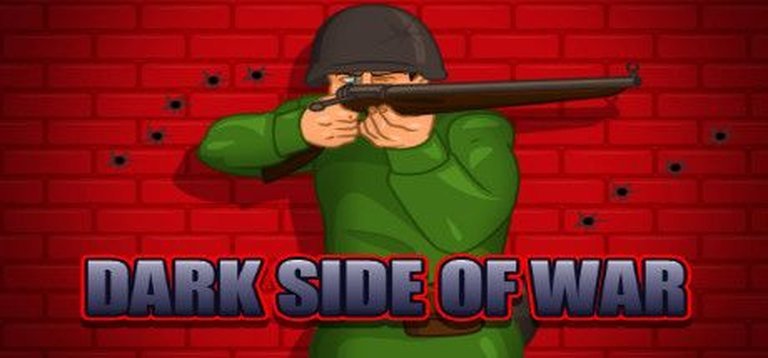
Set in 1942 during the peak of the Great Patriotic War, Dark Side of War is a classic 3D shooter with hardcore elements where the player takes on the role of a single soldier operating deep in the enemy rear. The objective is to infiltrate and destroy an enemy base while relying solely on the player’s skills and resource management, as every bullet is important and there is only one life for the entire mission. Featuring gameplay reminiscent of the 1990s, the game presents various levels with unique designs and special soundtracks to create a challenging and immersive WWII experience.
Where to Buy Dark Side of War
PC
Guides & Walkthroughs
Reviews & Reception
niklasnotes.com (58/100): The reviews for ‘Dark Side of War’ reveal a polarized reception, with significant criticism directed at the controls, graphics, and limited content. However, the game resonates with players seeking nostalgic experiences and hardcore gameplay, particularly in co-op mode, while some players find enjoyment in its retro style despite its shortcomings.
Dark Side of War: Review
Introduction
In the ever-crowded landscape of World War II shooters, few titles dare to embrace the unforgiving spirit of the 1990s era of gaming. Dark Side of War, a 2020 indie release by Tactical Mayhem Realms and NL Studio, stands as a deliberate time capsule—a hardcore first-person shooter where every bullet is a lifeline and survival is an exception, not a promise. With its stark permadeath mechanic and minimalist design, the game positions itself as a niche artifact for players seeking a raw, nostalgic challenge. Yet beneath its retro veneer lies a divisive experience that oscillates between brutal authenticity and frustrating obscurity. This review dissects Dark Side of War as both a historical curiosity and a functional artifact of modern indie development, examining its place in the broader tapestry of war games and its peculiar legacy as a cult curiosity.
Development History & Context
Emerging in December 2020—a year dominated by AAA titles like Cyberpunk 2077 and Assassin’s Creed Valhalla—Dark Side of War was a stark counterpoint to mainstream gaming’s spectacle-driven ambitions. Developed by the small studio NL Studio (later credited alongside Tactical Mayhem Realms and “NL Studio 2” in some listings), the project was born from a deliberate desire to evoke the simplicity and difficulty of 90s shooters like Wolfenstein 3D and Doom. The developers’ vision, as articulated in Steam store descriptions, was to create a “classic 3D shooter with hardcore elements,” prioritizing tension over polish.
Technologically, Dark Side of War operated within the constraints of a shoestring budget. Its “pixel graphics” and retro aesthetic were less a stylistic choice than a practical necessity, allowing the team to focus on gameplay over graphical fidelity. The game ran on minimal system requirements (Windows XP/Vista/7/8+, 1GB RAM), ensuring accessibility for aging hardware—a nod to the era it emulated. The 2020 release landscape was ripe for such a title. Amidst the indie boom, the “boomer shooter” revival (games like Doom and Wolfenstein reimagined) was gaining traction, but Dark Side of War distinguished itself by stripping these games to their barest bones: one life, no saves, and relentless enemy encounters. Its publisher, KazakovStudios, further emphasized its budget nature with a launch price of $4.99, which later plummeted to $0.49 during deep sales—a reflection of both its niche appeal and technical shortcomings.
Narrative & Thematic Deep Dive
Dark Side of War eschews traditional narrative complexity for a focused, grim vignette. Set in 1942 at the peak of the “Great Patriotic War” (the Eastern Front of WWII), the player assumes the role of an unnamed Soviet soldier deployed deep behind enemy lines. There are no cutscenes, no character arcs, and no dialogue—only the stark imperative: “clean one of the enemy’s bases and possibly survive.” This minimalist approach transforms the game into a parable of isolation. The Great Patriotic War setting, a cornerstone of Soviet/Russian war memory, lends the scenario historical weight, but the game avoids jingoism or grand morality. Instead, it immerses the player in the claustrophobia of asymmetrical warfare: a lone operative against fortified enemy positions, where every decision echoes with finality.
Thematically, the game revolves around two interconnected concepts: resource scarcity and mortality. The permadeath mechanic (“you have the only life for ending the mission”) is not a gimmick but the narrative’s core. It mirrors the unforgiving reality of wartime survival, where a single misstep—misfiring a weapon, cornering oneself—results in total failure. This “choices matter” ethos extends to resource management; ammunition is scarce, forcing players to weigh aggression against conservation. The absence of allies or backstory reinforces the theme of existential solitude, evoking the psychological dread of soldiers trapped behind enemy lines. Yet, the narrative’s brevity (the game can be completed in under an hour) leaves these themes underdeveloped. The “enemy” remains faceless, and the “bases” lack context, reducing the narrative to a grim arcade loop rather than a profound exploration of war’s dehumanization.
Gameplay Mechanics & Systems
At its core, Dark Side of War is a distilled expression of the 90s FPS formula: run, shoot, survive. The gameplay loop revolves around three pillars: exploration, combat, and resource management. Players navigate maze-like levels, searching for keys and ammunition while evading or eliminating enemy guards. The “classic 90s gameplay” promised by developers translates to direct, keyboard-and-mouse controls: WASD for movement, mouse-look, and left-click to fire. The combat system is brutally simple: a single weapon (a pistol) with limited ammo, and enemies that die in one or two hits but strike back with lethal precision. This simplicity, however, masks significant flaws.
Combat suffers from clunky mechanics. Enemies often pop into view with telegraphed movements, but their AI is rudimentary—some patrol linearly, while others stand motionless until fired upon. The shooting feedback is muted; weapons lack recoil, and impacts feel weightless, undermining the “hardcore” illusion. Worse, many players reported broken controls: mouse sensitivity issues, unresponsive inputs, and a notorious bug where “the picture only turns right,” as noted in Steam discussions. These technical glitches transform intended challenge into frustration.
Progression is nonexistent outside of level completion. There are no skill trees, weapon upgrades, or character abilities. The game’s length exacerbates this; with only a handful of levels (estimated at 6–8 by reviewers), the experience feels skeletal. Resource management is the only depth: scavenging for ammo boxes becomes a tense minigame, forcing risk-reward calculus. The UI, a minimalist health/ammo display, is functional but dated, lacking even basic features like a minimap.
Innovative systems are absent. The permadeath mechanic is the only standout, but its execution is undermined by the game’s brevity. Dying after 20 minutes of progress is punishing, yet the content is so limited that repetition feels hollow. Ultimately, Dark Side of War’s gameplay is a double-edged sword: it honors retro design but fails to refine it, leaving players nostalgic for the idea of 90s shooters rather than their execution.
World-Building, Art & Sound
Dark Side of War’s world-building is defined by its limitations. Set in generic WWII locales—bunkers, warehouses, and trenches—the environments lack historical specificity or verticality. Levels are boxy, maze-like corridors with reused textures, a clear product of the developers’ budget constraints. While “diverse levels” are promised (snowy forts, industrial zones, forest outposts), they blend into a monochrome palette of browns, greys, and muted greens. The art direction leans into “pixel graphics,” but this aesthetic is marred by low-resolution textures, jagged edges, and repetitive enemy models (generic soldiers in green or grey uniforms). Critics on Steam and Steambase derided the visuals as “outdated” and “poorly executed,” noting that even indie contemporaries like Dusk or Prodeus offered more polish.
Atmosphere, however, is the game’s unexpected strength. Despite its graphical flaws, Dark Side of War succeeds in evoking a sense of oppressive dread. Tight corridors, flickering lights, and the constant threat of ambush create tension. Sound design amplifies this: “atmospheric soundtracks” (a mix of droning ambient music and percussive gunfire) blend with environmental audio—footsteps, distant explosions, and enemy shouts—to build immersion. In reviews, players highlighted the soundtrack as a “positive” element, noting its ability to “enhance the atmosphere.” Yet this is undermined by technical hiccups. Gunshots sometimes lack punch, and audio glitches—such as looping footsteps—break immersion. The result is a world that feels both authentically grim and technically threadbare, like a forgotten war film with spliced reels.
Reception & Legacy
Dark Side of War’s reception is a study in polarization. At launch, it garnered a “Mostly Positive” rating on Steam (70% of 77 reviews), but this masks deep divisions. Player reviews on Steambase (103 reviews) and Niklas Notes (58/100 Player Score) reveal a mixed-to-negative consensus, with common criticisms including “poor controls,” “short gameplay,” and “graphics quality.” Positive reviews, however, praised its “nostalgic appeal” and “hardcore gameplay,” with some players comparing it favorably to Wolfenstein 3D. The game’s price point became a key talking point; at $0.49 during sales, it was deemed a “value for money” experiment, but at full price, it was seen as a “rip-off.”
Critically, the title was largely ignored. Metacritic lists no critic reviews, and major outlets like Kotaku only covered it in passing as part of broader indie roundups. Its legacy is thus defined by its niche appeal. On Steam Community, players debated its merits: some celebrated its “choices matter” design, while others lamented its bugs (e.g., “left mouse not working for shooting”). The game also spawned a subculture of “ironic” streamers who showcased its glitches for comedic effect.
Influence on the industry is negligible. Dark Side of War did not spawn sequels (though a “Dark Side of War 2” was requested in discussions) or inspire major design trends. Instead, it occupies a curious space as a cautionary tale for low-budget indies: a game that understands its audience but fails to deliver on its vision. Its true legacy lies in its preservation on platforms like MobyGames, where it documents the enduring appeal—and pitfalls—of retro-inspired design.
Conclusion
Dark Side of War is a paradox: a game that honors the past while stumbling in the present. Its hardcore permadeath, minimalist narrative, and 90s aesthetics resonate with a specific audience seeking unfiltered challenge, yet its technical flaws and brevity alienate all but the most patient players. As a historical artifact, it exemplifies the risks of nostalgia-driven development—without the polish of AAA titles, it risks becoming a footnote in gaming history. For retro enthusiasts, it offers a fleeting glimpse into the raw tension of 90s shooters; for critics, it serves as a reminder that “hardcore” and “broken” are not synonymous.
Ultimately, Dark Side of War belongs to the category of “cult classics”—a game worth experiencing for its audacity, not its execution. Its place in video game history is secure not as an innovator, but as a testament to the enduring, if fractured, spirit of indie experimentation. In a market saturated with polished war epics, this flawed, forgotten shooter remains a poignant reminder that war, like game development, is often a story of survival against the odds.