
- Release Year: 2024
- Platforms: Windows
- Publisher: Midwest Games
- Developer: Ganymede Games
- Genre: Role-playing (RPG), Strategy, Tactics
- Perspective: Diagonal-down
- Game Mode: Single-player
- Gameplay: Cards, characters control, Multiple units, RPG elements, Tiles, Turn-based tactics
- Setting: Futuristic, Sci-fi
- Average Score: 85/100
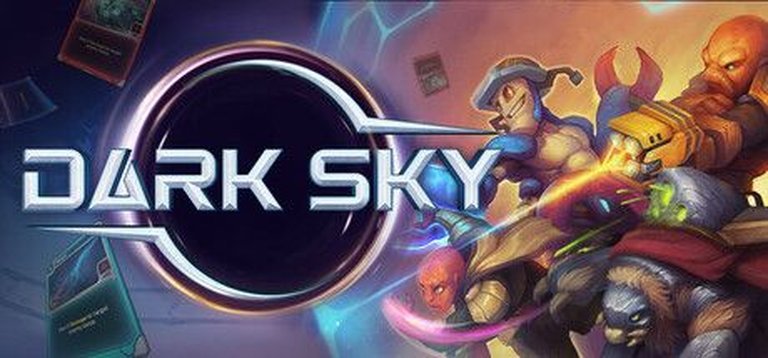
Description
Dark Sky is a turn-based sci-fi RPG set on the apocalyptic mining planet Wolf Prime, where a mysterious force has caused spacecraft to plummet from the sky. Players follow unlikely heroes Squig and Norton on a narrative-driven quest to uncover the cataclysm’s cause, engaging in strategic card-based battles with customizable decks for six characters, exploring hand-painted environments, and interacting with factions like the Mining Guild and Runshaka death cult.
Gameplay Videos
Where to Buy Dark Sky
Dark Sky Free Download
Dark Sky Guides & Walkthroughs
Dark Sky Reviews & Reception
metacritic.com (85/100): But for fans of card-focused combat with a strong deck-building focus, Dark Sky is a great experience.
gameluster.com : The gameplay of Dark Sky follows a similar trajectory to the narrative design. It starts strong, but it can’t fully capitalize on its strong foundation.
Dark Sky: A Troublesome Ascent in the Deckbuilder Pantheon
Introduction: A Star-Crossed Debut
In the crowded field of modern deckbuilders, where titles like Slay the Spire and Balatro have set towering standards for emergent strategy and compulsive one-more-run appeal, Dark Sky arrives with the weight of ambition on its shoulders. This 2024 turn-based RPG from Ganymede Games and Midwest Games is not content to merely ride the coattails of the genre’s resurgence. Instead, it brazenly fuses tactical grid combat, a sprawling sci-fi narrative, and deep character-specific deck customization into a single, often unwieldy, package. The result is a game of striking contradictions: a visually sumptuous world housed in a structural framework that struggles to support its own grand designs, a narrative with potent hooks that gets tangled in its own lore, and a combat system brimming with fascinating ideas that fail to synergize into a consistently thrilling whole. This review will argue that Dark Sky is a profoundly important, if ultimately flawed, landmark—not for what it perfectly achieves, but for the audacious blueprint it sketches for a deeper, more narratively integrated deckbuilder. It stands as a testament to the risks of genre fusion, where the sum of its impressive parts never quite coalesces into the transcendent experience its concepts promise.
Development History & Context: From Xenotheria to the Brink
The journey of Dark Sky is intrinsically linked to the identity of its creator, Ganymede Games, and the publishing vision of Midwest Games. Originally conceived under the working title Xenotheria, the project represents the debut title for Ganymede, an indie studio founded in 2019 in Las Cruces, New Mexico. The studio’s leadership comprises industry veterans—CEO Jerry Prochazka and Co-founder Rob Thompson—whose résumés include stints at titans like Riot Games and Wargaming. This pedigree suggests an expectation of tactical and systemic depth, yet Ganymede’s stated mission focuses on “immersive worlds that ignite the spirit of exploration” and “curiosity-inducing adventures,” hinting at a primary drive toward world-building and narrative over pure mechanical innovation.
The partnership with Midwest Games, a publisher founded in 2021 with a mission to foster talent from the Midwest and other underrepresented regions, provided the crucial launchpad. Midwest’s Ben Kvalo framed the partnership around Ganymede’s “impressive talent from writing to development,” positioning Dark Sky as a flagship for a new kind of regional indie development. The game’s rebranding from Xenotheria to Dark Sky in early 2024 coincided with this publishing announcement, signaling a final push toward commercial viability and a clearer, more marketable identity.
Technologically, the game was built in Unity, a common engine for indies but one that posed specific constraints for a game demanding both detailed hand-painted art and complex grid-based tactical simulations. The decision for a diagonal-down isometric perspective with fixed/flip-screen area transitions speaks to a design philosophy that values hand-crafted environmental storytelling over procedural generation—a choice that prioritizes artistic control but limits the sense of an open, explorable world.
Contextually, Dark Sky launched in Q3 2024, a period saturated with deckbuilders and tactical RPGs. It entered a market recently captivated by the速攻 (shūkō) or “rapid attack” pace of Balatro and the meticulous run-building of Slay the Spire. Its competition was not just other card games, but any title vying for the “thinking player’s” attention. By blending genres so explicitly—card combat, RPG progression, tactical positioning—Ganymede aimed for a niche that was both familiar and novel: the narrative-heavy, party-centric deckbuilder. The source material repeatedly emphasizes this fusion, with descriptions like “strategic, party-centric card battles” and “fuses elements of role-playing and card games.” This ambition is its defining characteristic and its greatest point of friction.
Narrative & Thematic Deep Dive: The Weight of a Falling Sky
The narrative premise of Dark Sky is elegantly catastrophic: the once-peaceful mining planet Wolf Prime is thrown into apocalyptic chaos when a mysterious force begins “pulling all spacecraft from the sky,” raining fiery wreckage and existential dread upon its surface. Players assume the role of Squig, a humble shipyard worker, and his ally Norton, who must assemble a crew of “unlikely heroes” to uncover the truth behind this “sudden cataclysm.”
Thematically, the game grapples with planetary-scale catastrophe and societal fracture. Wolf Prime is not a monolithic entity but a “multicultural hotspot” and a “frontier mining planet,” a melting pot of species and factions drawn by its resources. This setting instantly creates a rich political tapestry. The primary antagonistic forces are identified as:
* The Outworld Collective Fleet: An external, presumably militaristic power.
* The Mining Guild: The planet’s original governing/economical body, likely complicit or corrupted.
* The Runshaka: A cryptic “death cult” whose motivations are shrouded in mystery.
The narrative’s strength, as noted by the GameLuster review, lies in its “masterfully done opening section.” The tutorial-integrated crash sequence effectively establishes stakes, character camaraderie, and immediate peril. The moment of rescuing a friend and having them join the party is a classic RPG beat executed with emotional punch. This promising start, however, gives way to a significant pacing and accessibility flaw identified across critical analysis: lore opacity.
The GameLuster critic is blunt: “Dark Sky’s narrative falls into the scifi and fantasy trap of using proper names and bits of lore without any previous context… It’s such a shame because even short bits of explanation as tooltips whenever these terms came up, would’ve helped a lot.” Terms like “Moros” (mentioned as a government), the full history of the Runshaka, and the deep-seated conflicts between factions are presented as if the player should already be versed in this universe. This creates a barrier to relateability and slows narrative momentum. The payoff for players who persevere is described as “worth it”—character backstories are revealed through dialogues and cutscenes, weaving personal stakes into the planetary crisis. The story successfully “blurs the line between reality and fantasy,” but it does so by asking the player to navigate a dense thicket of proper nouns without a map.
The framework positions Dark Sky as “the initial chapter in a much larger narrative universe.” This serialized ambition is evident in the scale of the planetary conflict and the introduction of multiple powerful factions, suggesting a lore designed for expansion. However, as a standalone debut, it risks feeling like the middle act of a larger story, where the “why” and “who” of the central mystery (the force pulling ships down) competes for attention with the complex geopolitics of Wolf Prime itself.
Gameplay Mechanics & Systems: The Deckbuilding Dilemma
This is the section where Dark Sky’s grand design reveals its most profound structural tensions. The game’s core promise is a deep fusion of tactical grid combat and personalized deckbuilding, where each of the six playable characters has a unique deck that can be upgraded along branching paths.
1. The Combat Loop: A Foundation of Potential
Combat is turn-based and grid-focused, with positioning—“dodging and blocking enemy attacks and abilities”—playing a “major part in our success.” Players select up to three characters per encounter, whose individual decks combine into a single draw pile. The objective is to use cards to attack, defend, inflict status effects (like “burning lasers and poison darts”), and manipulate the board state.
The card upgrade system is a standout feature. Each card possesses “two levels of upgrades and four upgrades in total,” presented as a branching tree. This allows for profound customization, letting players tailor a single card’s identity—turning a simple attack into a debuff-applying, area-of-effect, or card-drawing tool. The GameLuster review notes the “potential for exciting combos and strategies was endless.”
2. The Fatal Flaw: Deck Fusion vs. Character Identity
The system’s Achilles’ heel is precisely this deck combination. While each character has a unique identity (Squig the brawler, a mage-type, etc.), merging three disparate decks into one draw pile “meant that the chances of us drawing our next piece of combo were lowered.” The critic astutely observes that the optimal strategy often devolved into “each character to do what it’s best at, and hope for one or two combos to happen on their own.” The interaction between character-specific mechanics is “underwhelming.”
This creates a design paradox: the system encourages building a synergistic party, but the random draw mechanic actively works against sequencing those synergies. A combo that requires Card A (from Character 1) followed by Card B (from Character 2) becomes less reliable as the deck size grows with more characters. Unlike Slay the Spire, where your single deck is a cohesive engine, Dark Sky asks you to manage three potential engines simultaneously within one stochastic system. The “combined decks… could sometimes be a hindrance rather than a help.”
3. Difficulty and Pacing: A Toothless Challenge
Combat difficulty is another critical point of failure. The GameLuster reviewer, an enthusiast of challenging deckbuilders, states they “rarely lost combat” and found boss fights, while potentially requiring an hour of attempts, lacked the demand for “drastic changes to my decks and plans.” The game “doesn’t want challenging combat to get in the way of the story,” but this accommodation has a corrosive effect. It removes the core tension that drives engagement in the genre—the desperate scramble to salvage a failing run through clever deck manipulation. Here, failure is a minor inconvenience, robbing victories of their triumphant weight and reducing encounters to predictable, low-stress puzzles. The “survival mode” mentioned in the RPG Gamers summary, involving “dodging falling wreckage from the sky,” suggests an attempt to inject urgency that isn’t fully realized in the core tactical loop.
4. UI and Presentation: A Shining Beacon
Against these mechanical critiques, Dark Sky’s UI design is universally praised. The GameLuster review highlights it explicitly: “I never felt lost or confused about what was going on in combat.” For a game introducing “tons of new keywords, effects, and mechanics,” this is no small feat. The interface successfully conveys complex information about card upgrades, status effects, and enemy intents, a testament to clear iterative design. This strength makes the surrounding mechanical weaknesses all the more puzzling; the game communicates its depth brilliantly but fails to reward its exploration sufficiently.
World-Building, Art & Sound: The Aesthetic Salvation
If the gameplay is a deck of missed opportunities, the world of Wolf Prime is its most beautifully rendered card. This is where Dark Sky most reliably soars.
Visual Design & World-Building: The game is presented through a “colorful hand-painted” art style, with environments described as “striking” and the overall aesthetic as “charming and memorable.” The isometric perspective serves this art well, offering a clear, detailed view of the alien landscapes. The world itself is the primary vehicle for storytelling. The “realistic and diverse interactive environment” is populated by “vibrant characters, characteristically ranging from whimsical to somber.” The factions—the bureaucratic Mining Guild, the ominous Outworld Collective, the fanatical Runshaka—are given visual distinction that reinforces their narrative roles. Exploring Wolf Prime, even along a “linear” path with few true secrets, is a pleasure because the scenery is consistently engaging and conveys a sense of a lived-in, recently shattered world.
Sound Design: While less detailed in the source material, the mention of an “evocative soundtrack” in the RPG Gamers summary suggests an audio landscape designed to underscore the sci-fi alienation and desperate survivalism of the setting. It likely complements the hand-painted art, filling in emotional and atmospheric gaps that the sometimes clunky narrative exposition creates.
The atmosphere is Dark Sky’s greatest unifying strength. The “apocalyptic landscape,” the “falling wreckage from the sky,” and the diverse alien species create a cohesive sense of place. You believe you are on a rugged, battered frontier planet. This visceral buy-in is what keeps the player pushing through the mechanical and narrative fog. The world feels real, even when its systems and stories feel incomplete.
Reception & Legacy: A Critically Divided Debut
At launch in September 2024, Dark Sky landed with a thud of mixed expectations, not a splash of universal acclaim.
Critical Reception: The reception is defined by a small sample size but clear consensus. On Metacritic, it holds a “tbd” metascore based on two critic reviews. The more expansive MobyGames aggregator shows a 70% average from one critic (Gameluster). The GameLuster 7/10 (“Shiny”) review has become the de facto benchmark: “offers a beautiful art style and character design, with a decent narrative and gameplay that shows a lot of potential that doesn’t get fully realized.” Other cited reviews from Metacritic paint a similar picture: Softpedia (85/100) praises its focused mix and tense combat but notes frustration spikes, while GameGrin (80/100) calls it a “very solid deckbuilder” that requires strategic thought. The player score on MobyGames is a grim 2.0/5 from one rating, indicating a significant disconnect between critic appreciation of its ambitions and player tolerance for its flaws.
Commercial & Cultural Impact: As a new IP from a small indie studio, Dark Sky was never positioned for a blockbuster smash. Its placement on Steam, GOG, and the Epic Games Store at a $9.99 price point (with a launch discount) targets a niche audience of genre enthusiasts. Its legacy, therefore, will not be measured in sales but in influence and precedent.
Influence & Place in History: Dark Sky is unlikely to be remembered as a classic. Instead, its historical significance may be as a “cautionary tale with a beautiful facade” and a “proof-of-concept for deeper narrative integration.” It demonstrates the extreme difficulty of seamlessly blending three complex genres (deckbuilder, tactical RPG, visual novel). It proves that a stunning art direction and a compelling world can carry a game through significant mechanical shortcomings, but not indefinitely. For future indie developers, it serves as a case study in:
1. The perils of over-fusing mechanics without ensuring their core loops amplify each other.
2. The critical importance of lore accessibility—no amount of deep world-building matters if players bounce off the exposition.
3. The challenge of balancing narrative pacing with genre expectations (in this case, the need for engaging, repeatable challenge in a deckbuilder).
It is a museum piece of 2020s indie ambition, capturing a moment where studios with AAA pedigree aim for theCreative freedom of indie, sometimes losing sight of the elegant focus that defines genre greats. It stands alongside titles like Griftlands in trying to marry cards and story, but where Griftlands succeeded by making its narrative branches integral to its deckbuilding, Dark Sky keeps them in adjacent, sometimes conflicting, lanes.
Conclusion: The Unfulfilled Promise of Wolf Prime
Dark Sky is a game that should, by all rights, be a masterpiece. It assembles a dream team of genre components: the bespoke card upgrade trees of Slay the Spire, the party-based tactical positioning of Into the Breach or Fell Seal, the immersive world and character focus of a classic BioWare RPG, all rendered in a gorgeous, cohesive hand-painted style. The vision is breathtaking.
The execution, however, is where the celestial mechanics faltter. The fusion of character decks creates a dilution of identity rather than a synergy of powers. The narrative, while rich, is communicated with the opacity of a lore bible handed to you on page 300. The difficulty is so neutered that it undermines the core engagement loop of a deckbuilder—the desperate, clever struggle against the odds. The game’s own systems work at cross-purposes, asking you to strategize deeply while consistently rewarding a more passive, “wait for the combo” approach.
Yet, to dismiss Dark Sky as a failure is to ignore its profound successes. Its world is worth saving. Its characters are worth meeting. Its UI is a masterclass in clarity. Its art is a consistent delight. For a player willing to forgive the combat’s lack of sharp teeth and the story’s initial impenetrability, there is a 15-20 hour journey through a truly unique sci-fi setting that offers moments of genuine tactical satisfaction and narrative payoff.
Final Verdict: Dark Sky is a noble, flawed, and deeply fascinating artifact. It is a 7/10 experience—”shiny” indeed, but deeply scratched. It does not realize its full potential, leaving players with the persistent feeling of a “what if” hanging over every beautiful vista and clever card upgrade. Its place in video game history is not as a classic to be studied for its perfection, but as a compelling case study in ambition’s double-edged sword. It is the game that asked, “What if a deckbuilder had the narrative depth of an RPG and the tactics of a wargame?” and received a promising, messy, beautiful answer: “Here’s how we tried. Now, how do we make it sing?” For Ganymede Games, Dark Sky is a debut that promises more than it delivers, but promises so much that the anticipation for their next attempt, hopefully with these valuable lessons learned, is already burning bright on the horizon of Wolf Prime.