
- Release Year: 2014
- Platforms: PlayStation 3, Windows, Xbox 360
- Publisher: Namco Bandai Games America Inc., Namco Bandai Games Europe SAS
- Developer: FromSoftware, Inc.
- Genre: RPG
- Perspective: Third-person
- Game Mode: Online Co-op, Online PVP, Single-player
- Gameplay: Action RPG, Hack and Slash
- Setting: Fantasy
- Average Score: 90/100
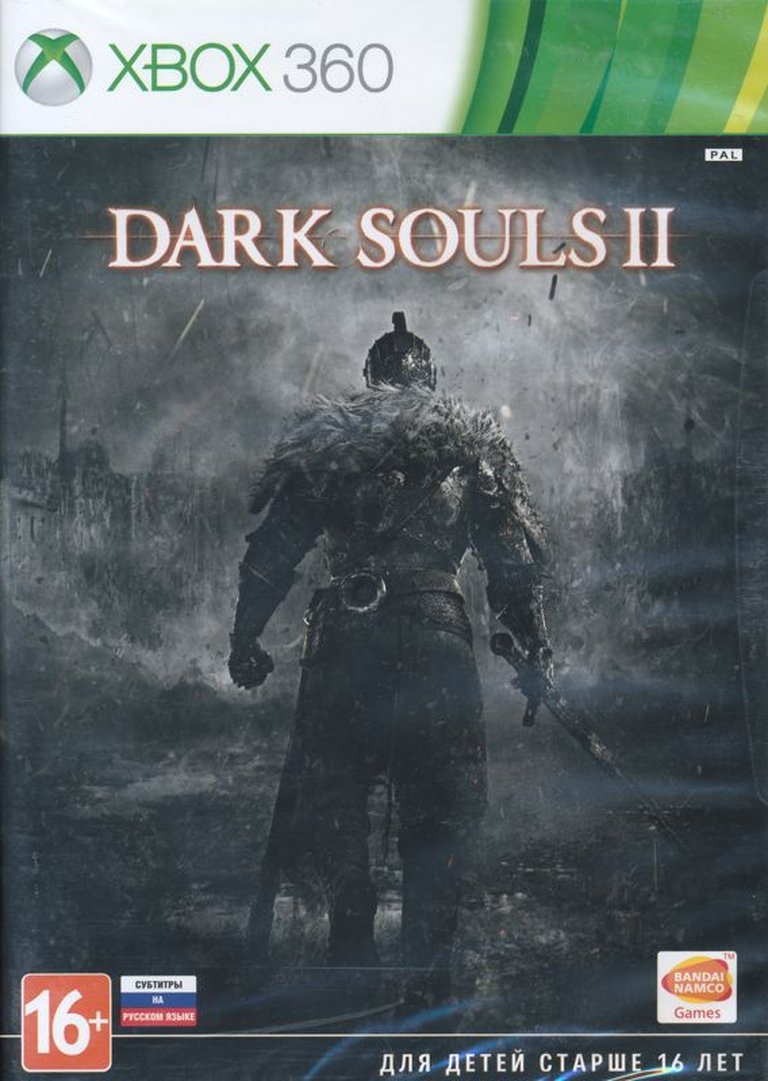
Description
Set in the desolate Kingdom of Drangleic, Dark Souls II follows a cursed traveler seeking redemption by collecting the Four Grand Souls under the guidance of the Emerald Herald. This third-person action RPG retains the series’ signature challenging combat, emphasizing precise dodging, blocking, and stamina management, while introducing a curse mechanic that erodes humanity with each death and limits enemy respawns. Players explore an interconnected world, level up at a central bonfire, and engage in multiplayer covenants for dueling and cooperative play.
Gameplay Videos
Where to Buy Dark Souls II
PC
Dark Souls II Free Download
Dark Souls II Patches & Updates
Dark Souls II Mods
Dark Souls II Guides & Walkthroughs
Dark Souls II Reviews & Reception
metacritic.com (92/100): Dark Souls 2 bears the torch of Dark Souls with honor. No mean feat!
ign.com : Dark Souls II feels like playing baseball with a familiar, worn-in, comfortable mitt, only the rules of the sport have been slightly tweaked.
opencritic.com (91/100): More accessible, challenging, and rewarding than its predecessor, this is the Dark Souls sequel PC gamers deserve.
darksouls2.wiki.fextralife.com (90/100): Dark Souls 2 is a smart, massive and incredibly rewarding sequel
Dark Souls II: Review
1. Introduction
In the pantheon of video game history, few series command the reverence and terror of Dark Souls. FromSoftware’s 2011 masterpiece redefined action RPGs, merging punishing difficulty with unparalleled atmosphere and cryptic storytelling. Its sequel, Dark Souls II, arrived in 2014 under immense pressure. Would it innovate or merely repeat? Dark Souls II chooses both. It meticulously preserves the series’ DNA—bonfires, hollowing, and the dance of death—while excavating new thematic depths and mechanical refinements. This review argues that Dark Souls II is not merely a shadow of its predecessor but a distinct, ambitious chapter. It expands the world’s lore, challenges players with systemic overhauls, and crafts a haunting narrative about fate, repetition, and the illusion of choice. Yet, its deviations from the first game’s philosophy and occasional design inconsistencies create a complex legacy, making it both a worthy successor and a cautionary tale against complacency.
2. Development History & Context
Dark Souls II emerged from a period of seismic growth for FromSoftware. After Dark Souls’ surprise success, the studio faced the daunting task of crafting a sequel without series creator Hidetaka Miyazaki, who served as supervisor. Directors Tomohiro Shibuya and Yui Tanimura inherited a franchise with a fervent fanbase and a reputation for uncompromising difficulty. Their mandate was clear: preserve the core experience while pushing forward technologically and thematically.
The game was announced in 2012 and showcased at E3 2013, promising a new world, Drangleic, and refined mechanics. Development occurred across PlayStation 3, Xbox 360, and PC, with the latter benefiting from a delayed release (April 2014) to address port issues that plagued the first game’s PC launch. The team employed a more advanced graphics engine, enabling richer environments and dynamic lighting, though technical constraints of the era—particularly on consoles—resulted in inconsistent frame rates and texture pop-in.
The gaming landscape in 2014 was pivotal. Dark Souls had proven that niche, challenging games could achieve mainstream success, inspiring a wave of “Souls-likes” and cementing the genre’s viability. Dark Souls II capitalized on this momentum but faced scrutiny. Critics and fans wondered if it would dilute the series’ identity for broader appeal. Tanimura’s insistence that “challenge and difficulty are core elements” reassured purists, but the absence of Miyazaki’s singular vision cast a long shadow. The result was a game that felt both familiar and foreign—a product of its creators’ reverence and their desire to innovate.
3. Narrative & Thematic Deep Dive
Dark Souls II’s narrative is a tapestry woven from ambiguity, echoing its predecessor’s commitment to environmental storytelling. Unlike Dark Souls’ focus on Lordran, Drangleic exists as a fractured echo of that world, connected through lore rather than geography. The player awakens as a cursed undead in the liminal space of Things Betwixt, guided by the enigmatic Emerald Herald (Shanalotte) to seek King Vendrick and the Four Great Souls. This quest masks a deeper exploration of fate, undeath, and cyclical despair.
Plot and Characters:
The story unfolds through NPC dialogues, item descriptions, and environmental clues. King Vendrick, a figure once revered for defeating giants and controlling souls, is revealed as a hollowed monarch manipulated by his queen, Nashandra—a fragment of Manus, the Abyssal entity from Dark Souls’ DLC. Nashandra orchestrated Drangleic’s ruin by goading Vendrick into a war with giants, stealing their power to fuel her own ambitions. The player’s journey culminates in confronting Nashandra at the Throne of Want, with the option to “link the fire” (perpetuating the cycle) or “abandon the throne” (seeking a path beyond light and dark).
Key NPCs embody the game’s themes:
– Aldia, Scholar of the First Sin: Vendrick’s brother, represents the futility of defying fate. His experiments (e.g., creating the Emerald Herald) symbolize humanity’s hubris to break the curse.
– Lucatiel of Mirrah: A knight seeking redemption, her decay mirrors the player’s hollowing, highlighting the inevitability of loss.
– The Old Ones (Primal Bosses): The Lost Sinner, Iron King, and Rotten are reincarnations of Dark Souls’ Witch of Izalith, Gwyn, and Nito, respectively. Their existence underscores the game’s central theme: repetition as a prison.
Underlying Themes:
Dark Souls II interrogates the nature of power and identity. Souls are both currency and curse, fueling kingdoms and hollowing minds. The game’s lore posits that Drangleic is built on stolen giant souls, echoing Dark Souls’ reliance on Lord Souls. Unlike its predecessor’s existential ambiguity, Dark Souls II explicitly critiques monarchy and sacrifice. Vendrick’s hollowing and Nashandra’s betrayal expose the “sovereign” as a hollow ideal, while Aldia’s search for a third path questions if true freedom lies beyond the cycle. The ending—abandoning the throne—is a radical rejection of established order, framing the player as a potential catalyst for change rather than another cog in the machine.
4. Gameplay Mechanics & Systems
Dark Souls II refines the series’ core systems while introducing controversial changes that redefined player engagement. Its combat retains the weighty, tactical precision of its predecessor but alters progression, death penalties, and multiplayer integration.
Core Loops:
– Combat: Stamina management, dodging, and parrying remain paramount. New animations and enemy behaviors (e.g., faster attacks) increase lethality. Weapon degradation returns, though it’s more punishing due to a frame-rate-dependent bug that faster weapons broke quickly.
– Death and Hollowing: Each death reduces the player’s max HP by 5% (to a minimum of 50%), reversed only by using a rare Human Effigy. This “hollowing” mechanic heightens stakes but sparked debate, as it felt more punitive than Dark Souls’ humanity system.
– Souls and Leveling: Souls function as currency and XP. Leveling is restricted to one bonfire (Majula), a departure from the first game’s flexibility. However, bonfire teleportation is unlocked early, mitigating tedious backtracking.
Key Innovations and Flaws:
– Enemy Respawn: Enemies respawn only a finite number of times (usually 12), preventing “soul farming” and encouraging forward momentum. This shift balanced grinding but limited character progression for players reliant on repetition.
– Soul Memory: Matchmaking in multiplayer uses total souls collected, not soul level. This aimed to prevent twinking but often paired low-level players with over-leveled opponents.
– Magic and Elements: Spells and pyromancy are more potent, with enemies showing clear elemental weaknesses. However, magic felt overpowered, reducing melee viability in some builds.
– Covenants: Factions like the Bell Keepers and Brotherhood of Blood return, offering unique multiplayer experiences but with less integration into the world than Dark Souls’.
UI and Quality of Life:
The interface is cleaner, with a more accessible inventory system. However, the removal of a dedicated “humanity” bar and the emphasis on hollowing made character feel less visceral. The PC port addressed earlier issues with keybinding and resolution, though frame rate instability persisted on consoles. Despite tweaks, Dark Souls II never replicated the first game’s organic “aha!” moments, favoring systemic rigor over emergent brilliance.
5. World-Building, Art & Sound
Drangleic is a masterpiece of environmental storytelling, a kingdom in decay where architecture and ecology narrate its downfall. FromSoftware’s art direction blends Gothic grandeur with grotesquerie, creating spaces that are both beautiful and oppressive.
Setting and Atmosphere:
– Majula: The hub area, a sun-drenched coastal town framed by a crumbling mansion and a seaside cliff. Its tranquility masks the horrors beyond.
– Diverse Regions: From the poison-soaked Forest of the Fallen Giants to the sunken majesty of Heide’s Tower of Flame and the claustrophobic horror of Undead Crypt, each area has distinct biomes and enemies. The Iron Keep’s molten lava and Smelter Demon fight epitomize the game’s blend of beauty and danger.
– Interconnectivity: While less seamless than Dark Souls’, paths like the Earthen Peak’s collapsing tower leading to Harvest Valley showcase clever level design. However, frequent loading breaks and disjointed transitions (e.g., lava-filled castles near snowfields) mar immersion.
Visual Design:
Dark Souls II employs a muted palette of grays, browns, and sickly greens, punctuated by bursts of crimson (blood) and gold (souls). Character designs are more elaborate—e.g., Nashandra’s ethereal elegance contrasts with the Rotten’s bloated decay. The PC version’s enhanced lighting and higher resolution accentuate textures like the Ancient Dragon’s scales or the Emerald Herald’s emerald skin, but the base game’s visual inconsistencies (e.g., low-detail NPCs) reflect console limitations.
Sound Design:
Motoi Sakuraba’s score is melancholic and understated, using strings and piano to underscore isolation. Standout tracks like “Nashandra” and “Old Dragonslayer” merge grandeur with dread. Sound design is equally effective: the clank of armor, the squelch of tentacles, and the distant toll of bells amplify tension. Voice acting is sparse but impactful, with NPCs like Lucatiel delivering haunting monologues. The overall soundscape—whispers, wind, and the omnipresent drip of water—immerses players in Drangleic’s despair, making even silence a character.
6. Reception & Legacy
Dark Souls II launched to universal acclaim, with Metacritic scores of 91/100 across platforms. Critics lauded its world design, atmosphere, and accessibility tweaks (e.g., early teleportation), though debates raged over its place in the series.
Critical Consensus:
– Praise: Eurogamer hailed it as a “marriage of phenomenal world design and tight mechanics,” while Polygon noted its “sense of accomplishment.” The Golden Joystick Award for “Game of the Year” affirmed its mainstream impact.
– Criticism: Edge and 4Players.de lamented its “less open” world and “sterile” bonfire placement. Combat was criticized for lacking Dark Souls’ nuance, with some bosses (e.g., the Lost Sinner) feeling repetitive. The PC version’s durability bug and frame rate issues drew ire.
Commercial Success:
The game shipped over 2.5 million copies within a year, solidifying FromSoftware’s commercial viability. DLC (The Lost Crowns trilogy) expanded lore and refined mechanics, culminating in 2015’s Scholar of the First Sin—an enhanced edition featuring new enemies, story beats (e.g., Aldia’s expanded role), and next-gen versions.
Legacy and Influence:
– Within the Series: Often dubbed the “black sheep,” Dark Souls II diverged from Miyazaki’s vision but pushed the series toward greater narrative clarity. Its themes of repetition and fate would echo in Dark Souls III, while Aldia’s quest for a third path influenced Elden Ring’s existential ambiguity.
– Industry Impact: The game popularized “Souls-like” mechanics (e.g., limited enemy respawns, soul currency) in titles like Nioh and Salt and Sanctuary. Its success proved that challenging games could thrive in a market dominated by accessibility.
– Reassessment: Over time, Dark Souls II gained appreciation for its ambition. Its world-building and covenants remain influential, while Scholar of the First Sin addressed launch flaws. Yet, it remains divisive—some see it as a misstep, others as a bold experiment.
7. Conclusion
Dark Souls II is a paradox: a sequel that both honors and defies its heritage. It refines the series’ punishing combat and atmospheric world-building while introducing systemic changes that sparked debate. Its narrative, more explicit than Dark Souls’, offers a poignant critique of fate and power, though at the cost of the first game’s mystique. Flaws like the hollowing mechanic and inconsistent world design prevent it from reaching the heights of its predecessor, yet ambition and ambition alone make it indispensable.
Verdict: Dark Souls II stands as a testament to FromSoftware’s creative restlessness. It is not Dark Souls, nor does it try to be. Instead, it carves its own identity—a kingdom built on stolen souls and shattered dreams, where every victory feels hard-won and every choice echoes through eternity. For players, it remains a challenging, rewarding journey into the heart of despair and defiance. In the pantheon of action RPGs, it is flawed, unforgettable, and utterly essential.