
- Release Year: 2012
- Platforms: PlayStation 3, Windows, Xbox 360
- Publisher: ak tronic Software & Services GmbH, Namco Bandai Games America Inc., Namco Bandai Games Europe SAS
- Developer: FromSoftware, Inc.
- Genre: Compilation, Role-playing, RPG
- Perspective: Third-person
- Game Mode: Online PVP, Single-player
- Gameplay: Action RPG, Hack and Slash
- Setting: Fantasy
- Average Score: 85/100
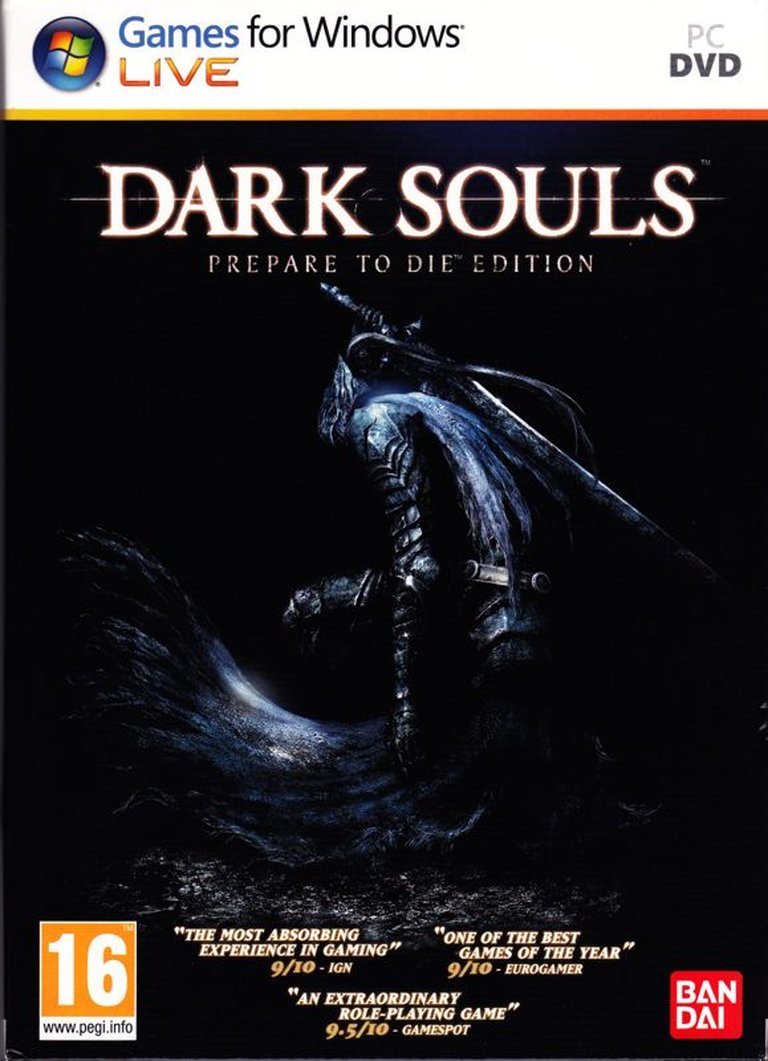
Description
Dark Souls: Prepare to Die Edition is an expanded version of the original Dark Souls, introducing players to a challenging dark fantasy world filled with perilous exploration, strategic combat, and interconnected level design. This enhanced release includes new content such as the Oolacile area, additional bosses like Artorias of the Abyss and Black Dragon, new enemies, weapons, armor, and multiplayer arenas for PvP duels and team battles, while maintaining the series’ signature difficulty and atmospheric storytelling.
Gameplay Videos
Dark Souls: Prepare to Die Edition Free Download
Dark Souls: Prepare to Die Edition Patches & Updates
Dark Souls: Prepare to Die Edition Mods
Dark Souls: Prepare to Die Edition Guides & Walkthroughs
Dark Souls: Prepare to Die Edition Reviews & Reception
ign.com : It and sequel Dark Souls summoned staggering review scores, gifting a generation of jaded gamers with a cocktail of fear and self-respect.
metacritic.com (85/100): A bare-bones port can’t sully one of the outstanding titles of this generation.
vgtimes.com : Who even thought of asking to port this abomination to PC? Leave it for the consoles!
primagames.com : Dark Souls is a bare-bones port. This brings with it a number of issues; some of which can be solved, others that may have been necessary and one or two that PC users are going to find particularly galling.
Dark Souls: Prepare to Die Edition: Review
Introduction
In the annals of video game history, few titles are as synonymous with punishing difficulty and profound artistic vision as Dark Souls: Prepare to Die Edition. Released in 2012 as the definitive version of FromSoftware’s 2011 masterpiece, this compilation bundled the base game with the Artorias of the Abyss expansion, bringing Lordran’s grim majesty to PC for the first time. Its legacy transcends mere gameplay; it birthed the “Soulslike” genre, redefined player expectations for challenge and immersion, and became a cultural touchstone for resilience and discovery. Yet, its PC port was marred by technical compromises, sparking debates about artistic integrity versus platform fidelity. This review dissects Prepare to Die Edition as both a landmark achievement and a flawed artifact, arguing that while its technical shortcomings are undeniable, its revolutionary design and expanded content cement its status as a watershed moment in gaming.
Development History & Context
Dark Souls emerged from the crucible of FromSoftware’s experimental spirit, led by director Hidetaka Miyazaki. The studio’s roots in the slow-burn RPGs of the 1990s—King’s Field and Ultima Underworld—fostered a design ethos prioritizing exploration, consequence, and atmospheric density over hand-holding. Miyazaki’s vision rejected the prevailing trend of streamlined, narrative-driven games, instead crafting a world where mystery and mastery were intertwined. The original Dark Souls (2011) was a spiritual successor to Demon’s Souls (2009), but Sony’s IP ownership prevented a direct sequel, prompting FromSoftware to reinvent its formula for multi-platform release.
The Prepare to Die Edition materialized due to overwhelming fan demand. By 2012, a grassroots petition garnered 93,000 signatures, pushing Bandai Namco to greenlight a PC port. Yet, FromSoftware’s inexperience with PC development led to compromises. The Windows version retained console-centric UI elements, suffered from a locked 30 FPS, and relied on Games for Windows Live (GfWL) for multiplayer—a move that sparked fan backlash. Meanwhile, the gaming landscape teetered between the accessibility of mainstream titles (e.g., Call of Duty: Modern Warfare 3) and the rise of niche, demanding experiences. Prepare to Die Edition positioned itself as an anomaly: a commercially viable product that doubled down on alienation, proving that “hard” games could thrive in an era of “easy” design.
Narrative & Thematic Deep Dive
Dark Souls eschews conventional storytelling, weaving a tapestry of despair and existential dread through environmental storytelling, item lore, and cryptic NPC dialogue. The plot centers on the Chosen Undead, a cursed escapee from the Northern Undead Asylum, tasked with ringing the Bells of Awakening to stave off the Age of Dark—a cyclical decline where fire fades and humanity hollows. This framework is deceptively simple, yet it unfurls into a meditation on inevitability: Gwyn’s sacrifice to prolong the First Fire, the Furtive Pygmy’s forgotten legacy, and the player’s pivotal choice to either rekindle the flame or embrace the Abyss.
Characters embody this nihilistic grandeur. Gwynevere, the daughter of Gwyn, offers false hope, while Kaathe, the primordial serpent, advocates for the Age of Dark—a rebellion against divine tyranny. Artorias, the Abyss-fallen knight, becomes a tragic figure in the expansion, his corruption by Manus symbolizing humanity’s descent into madness. Even item descriptions carry weight: the Humanity item (a droplet with a black core and white shell) visually critiques human greed, contrasting the “white” purity of souls with the “black” corruption of ambition. This symbolism—black for the Abyss, white for the Crystal Cave, pale green for bloodstains—creates a visual language of decay and hope. As one player reviewer noted, the “white light” door represents a nod to The Velvet Underground’s White Light/White Heat, a surreal beacon of salvation in a world governed by despair. The result is a narrative that demands interpretation, rewarding players who piece together lore from crumbling cathedrals and hollowed-out knights.
Gameplay Mechanics & Systems
Prepare to Die Edition refines Dark Souls’s core gameplay loop into a masterclass in systems design. Exploration is paramount: Lordran’s interconnected zones—Anor Londo, Blighttown, the Tomb of the Giants—are not merely levels but living ecosystems where backtracking reveals shortcuts and secrets. This design, inspired by Super Metroid and FromSoftware’s own King’s Field, incentivizes curiosity; a glimpse of a distant landmark becomes a siren’s call, driving players to overcome obstacles for the thrill of access.
Combat is the game’s beating heart, blending weighty melee, precise parries, and pyromancy into a ballet of risk and reward. Every swing, dodge, and spell consumes stamina, forcing players to balance aggression and defense. The variety of weapons—from katanas to greatswords—encourages experimentation, though a critique rings true: 90% of gear is functionally redundant, pushing players toward min-maxed builds. The soul system elegantly merges experience points and currency, while bonfires serve as dual-purpose checkpoints and penalty points. Restoring health and refilling Estus Flasks resets enemies, a mechanic that transforms death into a strategic tool: failure teaches patterns, and success feels earned.
Yet Prepare to Die Edition introduces systemic enhancements. The Artorias of the Abyss expansion adds Oolacile, a realm of surreal dread where players face new bosses like the Black Dragon and Sanctuary Guardian. The multiplayer arena introduces structured PvP—duels, team battles—while new covenants like the Gravelord Servants deepen online interactions. Critically, the PC port’s flaws are undeniable: the camera mimics analog stick jitters, keyboard controls are cumbersome, and GfWL integration is clunky. As one critic noted, “the laughable tutorials tell you to press console buttons.” Patches and community fixes like DSMod partially mitigated these issues, but the core experience demanded a gamepad—a barrier for many.
World-Building, Art & Sound
Lordran is a character in its own right, a gothic tapestry of decaying grandeur and claustrophobic terror. Its design draws from real-world landmarks: Anor Londo’s cathedral echoes Milan’s Duomo, while Sen’s Fortress evokes the spiraling madness of Château de Chambord. This architectural verisimilitude grounds the fantasy, making the surreal—like the Crystal Cave’s weightless gravity or the Tomb of the Giants’ bottomless abyss—feel both alien and inevitable. Color symbolism reinforces themes: the Abyss’s oppressive black contrasts with the Crystal Cave’s sterile white, while Ash Lake’s pale green mirrors the bloodstains of fallen players, linking life and death.
Sound design amplifies this atmosphere. Motoi Sakuraba’s score is sparse but haunting—swelling during boss fights, receding during quiet exploration. Sound effects are equally potent: the clang of parrying with the Eagle Shield, the distant wails of undead, and the unsettling silence of Blighttown’s poison fog. Critics lauded this audio design as “exceptionally dense,” though one player lamented the music’s weakness. Visuals, while technically dated on PC, leverage artistry over fidelity: the ornate armor of Ornstein and Smough, the grotesque mutations of Quelaag, and the ethereal beauty of Sif—all rendered with a painterly attention to detail that compensates for technical limitations.
Reception & Legacy
Prepare to Die Edition arrived to acclaim tempered by controversy. On consoles, the expansion was praised for deepening Lordran’s lore, while the PC port drew ire. Metacritic scores reflected this divide: consoles averaged 89%, but PC languished at 85%. Critics like GameSpot hailed it as “one of the greatest games ever made,” commending its combat and world design. Eurogamer similarly lauded its “awe-inspiring” architecture, though noted the difficulty’s divisive nature. Conversely, The Adrenaline Vault dismissed the PC port as “a niche game for a small subset of players,” citing GfWL and poor optimization.
Player reviews were equally polarized. One Xbox 360 owner celebrated the game’s “old-school spartan soul,” calling it a “blessed anomaly” in an era of hand-holding design. A PC player, however, fumed over the port’s “hasty job,” arguing that FromSoftware “left console traces all over.” Despite this, Prepare to Die Edition was a commercial juggernaut, selling over 2 million copies by 2013 and propelling the series to 39 million lifetime sales by 2025. Its legacy is immeasurable: it coined the term “Soulslike,” inspiring Bloodborne, Sekiro, and Elden Ring. It also influenced broader gaming culture, with the bonfire and bloodstain mechanics becoming industry standards. As Miyazaki noted, its success proved that “challenge and reward could coexist,” paving the way for a renaissance of hardcore design.
Conclusion
Dark Souls: Prepare to Die Edition is a monument to creative ambition and technical compromise. Its expanded content, philosophical depth, and revolutionary gameplay redefine what an RPG could be, while its flawed PC port serves as a cautionary tale about multi-platform development. Yet, these flaws are overshadowed by its brilliance: the joy of conquering a boss after 40 deaths, the thrill of discovering a hidden shortcut, and the melancholic beauty of a world resigned to decay. Prepare to Die Edition is not merely a game; it is a dialogue between player and designer, a testament to the idea that overcoming failure is the ultimate victory. For all its imperfections, it remains a towering achievement—a dark, glorious ode to the indomitable spirit of those who dare to embrace the challenge. To call it anything less than a masterpiece would be a disservice to its legacy and the millions it inspired to “prepare to die” again and again.