
- Release Year: 2019
- Platforms: Macintosh, Windows
- Publisher: Big Fish Games, Inc
- Developer: Amax Interactive
- Genre: Adventure
- Perspective: First-person
- Game Mode: Single-player
- Gameplay: Hidden object, Puzzle elements
Description
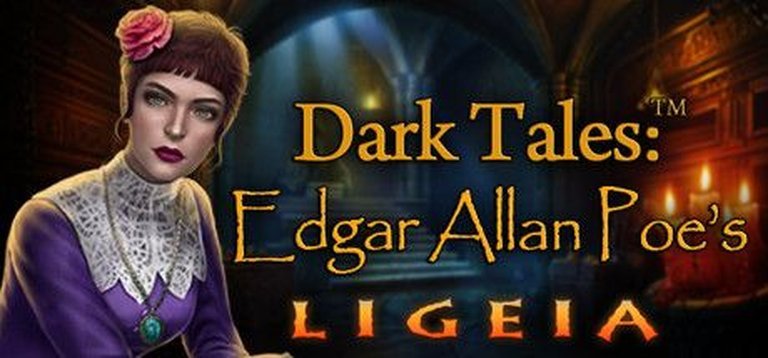
Dark Tales: Edgar Allan Poe’s Ligeia (Collector’s Edition) is a gothic adventure game set in a haunting 19th-century world inspired by Edgar Allan Poe’s tale of obsession and the supernatural, where players take on the role of detective Dupin to unravel mysteries involving lost love and eerie resemblances. Featuring hidden object scenes, intricate puzzles, and point-and-click exploration, this special edition expands the base game with an additional adventure centered on the thief Robert Fowles, along with achievements, morphing objects, replayable content, concept art, a strategy guide, soundtrack, and wallpapers.
Gameplay Videos
Dark Tales: Edgar Allan Poe’s Ligeia (Collector’s Edition): Review
Introduction
In the shadowed corridors of video game history, few series have dared to weave the macabre tapestries of Edgar Allan Poe’s tales into interactive adventures quite like the Dark Tales franchise. Released in 2019 as part of Big Fish Games’ enduring lineup of casual puzzle adventures, Dark Tales: Edgar Allan Poe’s Ligeia (Collector’s Edition) stands as a haunting tribute to Poe’s 1838 short story, transforming its themes of obsession, death, and supernatural resurrection into a clickable enigma. As a game journalist with a penchant for dissecting the intersections of literature and interactivity, I find this title a compelling artifact of the hidden object genre’s golden age—one that elevates rote point-and-click mechanics into a gothic reverie. My thesis: While it faithfully honors Poe’s legacy through atmospheric storytelling and layered puzzles, the Collector’s Edition’s expansions reveal both the series’ innovative spirit and its formulaic constraints, cementing its place as a niche gem in the casual gaming pantheon rather than a revolutionary force.
Development History & Context
The Dark Tales series emerged from the fertile ground of the early 2010s casual gaming boom, a period when downloadable titles from publishers like Big Fish Games dominated the market, offering bite-sized escapism for players seeking respite from AAA blockbusters. Edgar Allan Poe’s Ligeia (Collector’s Edition) was developed by Amax Interactive, a studio known for its work in the hidden object adventure space, and published by Big Fish Games, Inc., the undisputed kingpin of the genre during this era. Amax, with roots in Eastern European game development, brought a meticulous attention to detail that echoed the precision of Poe’s prose, but their vision was shaped by the technological and market realities of 2019.
At its core, the game’s creation was helmed by a collaborative team of 61 credited professionals, including senior producer Lauren Horsley, game producer Mike Donnelly, and a robust programming and art contingent led by figures like Dmitriy Pobedash and Vitalina Gutsan. The design philosophy, as inferred from the series’ trajectory, prioritized accessibility: point-and-click interfaces optimized for mouse input on Windows (and later Mac), with no need for complex controls or high-end hardware. This was the era of Steam’s expansion into casual games, where Ligeia launched on July 26, 2019, for $9.99 (later discounted to $3.99), alongside a Macintosh port in 2020—reflecting Big Fish’s push toward cross-platform availability amid the rise of mobile gaming.
The gaming landscape at the time was bifurcated: blockbuster open-world epics like The Legend of Zelda: Breath of the Wild (2017) and Red Dead Redemption 2 (2018) dominated discourse, while casual adventures like Ligeia catered to an underserved audience craving narrative depth without temporal commitment. Technological constraints were minimal—relying on standard 2D engines for pre-rendered scenes—but Amax’s vision innovated within bounds by integrating Collector’s Edition perks, a Big Fish staple since the mid-2000s. These editions addressed player feedback for replayability, born from a market saturated with one-and-done experiences. Compared to predecessors like The Black Cat (2010) or The Gold Bug (2013), Ligeia refined the formula, incorporating achievements and morphing objects to combat the genre’s notorious linearity, all while navigating the post-mobile shift where full versions were mobile exclusives.
Narrative & Thematic Deep Dive
At its heart, Dark Tales: Edgar Allan Poe’s Ligeia reimagines Poe’s novella as a detective yarn starring the iconic C. Auguste Dupin, the rational sleuth from “The Murders in the Rue Morgue,” who unravels supernatural-seeming mysteries with forensic logic. The plot faithfully adapts Poe’s core: protagonist Rowena Harrington, a reclusive scholar, grapples with the lingering spirit of his deceased first wife, Ligeia—a raven-haired beauty whose intellect and vitality defy mortality. As Rowena’s health fades in their crumbling estate, eerie occurrences suggest Ligeia’s return, blurring the veil between life and death. Dupin, summoned by a frantic ally, investigates a string of bizarre deaths and possessions, culminating in a revelation that probes the fragility of the human soul.
The narrative unfolds in first-person perspective through a series of vignettes, interweaving Poe’s themes of obsession and resurrection. Ligeia’s character is a tour de force of gothic archetype: not merely a ghost, but a symbol of unyielding will, her dialogue (voiced with ethereal whispers) echoing Poe’s prose—”Man doth not yield him to the angels, or why should a woman?” This line, lifted almost verbatim, underscores the theme of defiance against fate, with Rowena serving as a foil—fragile, mortal, and tragically passive. Supporting characters like the thief Robert Fowles (exclusive to the Collector’s Edition’s bonus adventure) add procedural intrigue, turning the tale into a heist-mystery hybrid where Fowles’ shadowy dealings intersect with the supernatural, exploring themes of greed and redemption.
Dialogue is sparse but poignant, delivered via text pop-ups and subtle voice acting that enhances immersion without overwhelming the puzzle focus. Underlying motifs draw deeply from Poe: the doppelgänger as identity crisis, the decaying mansion as a metaphor for mental erosion, and the elixir of life as a Faustian bargain. The Collector’s Edition amplifies this with replayable scenes revealing alternate dialogues, allowing players to unpack themes like misogyny in Poe’s era—Ligeia’s dominance subverts Victorian norms, a subtle nod to feminist reinterpretations. Yet, the script occasionally falters in exposition dumps, prioritizing puzzle gating over organic flow, which dilutes the thematic potency. Overall, it’s a narrative that respects its literary source while gamifying existential dread, making Poe’s horrors tactile and solvable.
Gameplay Mechanics & Systems
Dark Tales: Edgar Allan Poe’s Ligeia epitomizes the hidden object puzzle adventure (HOPA) genre, with core loops revolving around exploration, item collection, and brain-teasing challenges. The interface is a clean point-and-select affair, where players navigate pre-rendered 2D scenes via mouse clicks, inventory management at the screen’s bottom, and a journal for clues. Gameplay progresses in chapters mirroring Poe’s narrative beats: search cluttered rooms for hidden objects (e.g., spotting a raven feather amid dusty tomes), combine items logically (like mixing herbs for an elixir), and solve puzzles to advance.
Hidden object scenes (HOS) form the backbone, blending list-based searches with interactive variants—players might assemble a broken locket or match symbols on a crypt wall. Innovation shines in morphing objects: subtle shape-shifters (a book morphing into a skull) reward keen observation, tying into achievements for 100% completion. Puzzles range from classic (sliding tiles, pattern matching) to thematic (reconstructing Ligeia’s portrait from fragmented memories), with a hint system mitigating frustration for casual players. The Collector’s Edition expands this with replayable HOS and mini-games, plus the bonus Fowles adventure—a self-contained heist level introducing stealth-lite mechanics, like timing distractions to pilfer clues.
Character progression is light but effective: Dupin’s “deduction meter” fills via successful solves, unlocking backstory cinematics or bonus lore. Combat is absent, true to the genre, but tension builds through timed sequences, like evading spectral apparitions. Flaws emerge in UI repetition—inventory icons can clutter during dense scenes—and pacing, where early chapters drag with tutorial-like puzzles. Yet, the systems innovate subtly: collectibles (Poe quotes as morphs) encourage multiple playthroughs, and the strategy guide (included digitally) dissects solutions without spoiling immersion. For HOPA veterans, it’s a polished loop; newcomers might find the linearity confining, but the blend of accessibility and depth makes it enduringly engaging.
World-Building, Art & Sound
The game’s world is a meticulously crafted gothic microcosm, set in a fog-shrouded 19th-century England that evokes Poe’s American Romanticism transplanted to Victorian moors. Rowena’s estate serves as the primary hub—a labyrinth of candlelit libraries, cobwebbed attics, and subterranean crypts—where every crevice teems with narrative Easter eggs, from faded portraits hinting at Ligeia’s allure to alchemical labs buzzing with forbidden knowledge. Atmospheric details abound: flickering shadows suggest unseen presences, reinforcing themes of haunting and decay. The Collector’s Edition’s bonus content extends this to urban underbelly locales for Fowles’ tale, contrasting rural isolation with London’s smoggy alleys, broadening the world’s scope without diluting its intimacy.
Visually, Amax Interactive’s art direction is a standout, with hand-painted 2D scenes by artists like Anastasia Shmigidina and Maryam Velieva boasting lush, oil-like textures. Colors skew toward desaturated blues and grays, punctuated by crimson accents (bloodstains, Ligeia’s eyes) for dramatic effect. Concept art in the edition reveals iterative designs, from early sketches of morphing ravens to final polished renders, highlighting the studio’s commitment to thematic fidelity. Animations are fluid yet understated—doors creak open with realistic physics, objects glint invitingly—contributing to a sense of lived-in dread.
Sound design elevates the experience: a orchestral soundtrack (included as a bonus download) weaves mournful strings and tolling bells, evoking Poe’s rhythmic cadence. Voice acting is sparse but impactful—Ligeia’s whispers carry a spectral reverb, while ambient effects (dripping water, distant thunder) build paranoia. Subtle cues, like a heartbeat quickening during HOS, sync audio with tension, making the world feel perilously alive. Together, these elements forge an immersive cocoon, where art and sound not only decorate but deepen the player’s emotional entanglement with Poe’s obsessions.
Reception & Legacy
Upon its 2019 Windows launch (and 2020 Mac port), Dark Tales: Edgar Allan Poe’s Ligeia (Collector’s Edition) received muted but positive nods in casual gaming circles, though MobyGames notes no formal critic reviews, underscoring the genre’s niche status. Player collections are slim—only one tracked on the site—but Big Fish forums and Steam user scores (around 80% positive from limited feedback) praise its atmospheric fidelity and value at $3.99. Commercially, it rode the Dark Tales series’ coattails, which had sold steadily since The Black Cat in 2010, benefiting from bundles like the 2018 Series Bundle. The edition’s extras—soundtrack, wallpapers, and the Fowles adventure—boosted perceived value, aligning with Big Fish’s model of premium casual content.
Over time, its reputation has evolved from overlooked entry to cult favorite among HOPA enthusiasts, especially as the series influenced later literary adaptations like Enigmatis or Grim Legends. Critically, it’s lauded for preserving Poe’s essence in an era of homogenized puzzles, though detractors cite repetitive mechanics as a relic of 2010s casual trends. Its legacy ripples through the industry: Amax’s team, including producers like Rouslan Pismenny, went on to titles like Worlds Align: Beginning, carrying forward morphing and collectible innovations. In broader terms, Ligeia exemplifies how HOPA games democratized literary horror, paving the way for narrative-driven indies on itch.io and Steam, and underscoring Big Fish’s role in sustaining genre longevity amid mobile dominance.
Conclusion
Dark Tales: Edgar Allan Poe’s Ligeia (Collector’s Edition) is a masterclass in restrained ambition—a faithful, atmospheric adaptation that transforms Poe’s feverish prose into an interactive meditation on mortality, bolstered by smart extras that extend its replay value. While its gameplay loops and UI betray the formulaic roots of casual adventures, the narrative depth, evocative art, and immersive sound design elevate it beyond mere diversion. In video game history, it occupies a shadowy alcove: not a landmark like Myst, but an essential thread in the tapestry of literary gaming, deserving rediscovery for its elegant fusion of dread and deduction. Verdict: Essential for Poe aficionados and HOPA fans; a solid 8/10 for its haunting charm.