
- Release Year: 2018
- Platforms: Windows
- Publisher: Big Fish Games, Inc
- Genre: Compilation
- Game Mode: Single-player
Description
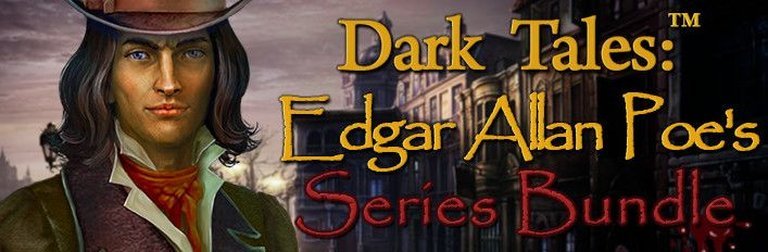
Dark Tales: Edgar Allan Poe’s Series Bundle is a compilation of six Collector’s Edition hidden object adventure games inspired by Edgar Allan Poe’s gothic tales, including The Fall of the House of Usher, The Gold Bug, The Masque of the Red Death, Ligeia, The Premature Burial, and The Tell-Tale Heart. Players assist the famed detective C. Auguste Dupin in Victorian-era settings, solving intricate mysteries through hidden object scenes, puzzles, and clue-gathering in atmospheric, Poe-infused environments.
Dark Tales: Edgar Allan Poe’s Series Bundle Reviews & Reception
rgamereview.com : one of the best ever hidden object game series ever
Dark Tales: Edgar Allan Poe’s Series Bundle: Review
Introduction
Imagine stepping into the fog-shrouded streets of 19th-century Paris, where the masterful detective C. Auguste Dupin beckons you to unravel macabre mysteries inspired by the tormented genius of Edgar Allan Poe. Released in 2018 by Big Fish Games, Dark Tales: Edgar Allan Poe’s Series Bundle compiles seven Collector’s Edition titles from the acclaimed series—The Fall of the House of Usher, The Gold Bug, The Masque of the Red Death, Ligeia, The Premature Burial, The Tell-Tale Heart, and The Devil in the Belfry—offering over 50 hours of gothic hidden-object puzzle adventures (HOPAs). This bundle isn’t just a nostalgic cash-in on a beloved casual gaming staple; it’s a testament to how ERS Game Studios (later AMAX Interactive) transformed Poe’s tales of madness, death, and the supernatural into interactive detective yarns. My thesis: In an era oversaturated with forgettable match-3 clones, this bundle stands as a pinnacle of the HOPA genre, blending literary reverence with addictive gameplay loops that capture Poe’s essence while delivering accessible thrills for casual gamers and literature buffs alike.
Development History & Context
The Dark Tales series emerged from the booming casual gaming scene of the late 2000s, spearheaded by Big Fish Games, the undisputed king of browser and downloadable adventures. Developer ERS Game Studios—rebranded as AMAX Interactive by the mid-2010s—launched the franchise in 2009 with Murders in the Rue Morgue, capitalizing on the hidden-object craze popularized by titles like Mystery Case Files. By 2018, when this bundle dropped exclusively for Windows (later ported to Steam), the series had ballooned to 18 entries, each loosely adapting a Poe work into a self-contained mystery starring Dupin, Poe’s iconic sleuth from “The Murders in the Rue Morgue.”
Technological constraints of the era played a pivotal role: Built on lightweight engines like Spark Casual (as noted in MobyGames groupings), these games prioritized mouse-driven point-and-click interfaces over complex 3D rendering, ensuring smooth performance on modest PCs and Macs. This was the golden age of “casual” distribution via Big Fish’s portal, where trials hooked players before upselling full versions or Collector’s Editions with bonuses like soundtracks and strategy guides. The bundle’s creators envisioned a “complete the set” package amid Steam’s rise, bundling high-value CE titles at a discount (often 10% off a €62+ value) to revive interest in a series orphaned after AMAX’s dissolution around 2020. Amid a gaming landscape shifting toward battle royales and open-world epics, Dark Tales represented the unpretentious charm of Victorian-era escapism, filling a niche for narrative-driven puzzles when AAA titles ignored literary adaptations.
Narrative & Thematic Deep Dive
At its core, the bundle weaves Poe’s gothic tapestries into a unified detective saga, with players as Dupin’s unnamed assistant— a narrative choice echoing Poe’s first-person intimacy. Each title reimagines a classic: The Gold Bug pivots from cipher-cracking to a pirate treasure hunt thwarted by masked villains and veiled women; The Masque of the Red Death moralizes justice via a red-masked killer stalking corrupt officials in plague-ridden Lumineaux, forcing players to weigh mob vengeance against law; The Fall of the House of Usher entwines twin maladies with vanishing townsfolk and a cursed library, probing inheritance and decay.
Deeper entries amplify Poe’s obsessions: The Premature Burial dissects hasty entombment and loveless unions through Victorine’s rushed funeral, blending premature burial phobia with class intrigue; The Tell-Tale Heart evokes guilt-ridden psychosis in a seaside slaying, where a heart-wound hints at intimate betrayal; Ligeia resurrects a vengeful spirit-wife haunting Phoenix Estate, questioning mortality and obsession; The Devil in the Belfry culminates in spectral chimes and illusory deaths, blurring reality in panic-stricken Morden. Dialogue is sparse but flavorful—Dupin’s erudite quips ground supernatural flourishes, while suspects deliver Victorian melodrama. Themes of madness as contagion (Usher’s twins mirroring societal rot), revenge from beyond (Ligeia’s letters), and truth buried alive recur, with twists subverting Poe: Ghosts prove human impostors, treasures hide familial curses. Collector’s bonuses extend arcs, like bonus chapters foiling villains or morphing objects symbolizing elusive clues, rewarding replayability and thematic depth.
| Key Titles | Core Poe Inspiration | Central Twist |
|---|---|---|
| The Gold Bug | Cipher & obsession | Veiled ally betrays for gold |
| Masque of the Red Death | Plague & masquerade | Townsfolk aid the “killer” |
| Fall of the House of Usher | Hereditary curse | Library hides twin pact |
| Premature Burial | Claustrophobic dread | Hasty grave conceals poison |
| Tell-Tale Heart | Guilt & hallucination | Wound reveals lover’s rage |
| Ligeia | Reincarnation | Dead wife puppeteers living |
| Devil in the Belfry | Spectral bells | Chimes mask mechanical murder |
This synthesis elevates pulp HOPA to literary homage, where Dupin’s rationalism clashes with Poe’s irrational horrors.
Gameplay Mechanics & Systems
Dark Tales epitomizes refined HOPA loops: Explore hand-painted scenes via point-and-click, collect inventory items for contextual puzzles, and alternate between hidden-object scenes (HOGs) and mini-games. Core loop—scene > sparkles hint clues > HOG/puzzle > progress—is intuitive, with mouse-only controls suiting solo play. HOGs innovate beyond junk piles: List-based evolve to silhouettes, pairs, or associations (e.g., match body parts in Tell-Tale Heart), with penalties for hints minimized via morphing objects (subtle shape-shifts yielding bonuses).
Puzzles shine in variety: Cipher wheels (Gold Bug), gear contraptions (Premature Burial coffin escapes), illusion mazes (Devil in the Belfry), and logic grids. Character progression is light—journal tracks clues, achievements unlock replays—but CE perks like aquariums for morphs add metaprogression. UI is clean: Tabbed inventory, customizable hints (slow-recharging), skip options for accessibility. Flaws? Repetition across titles (similar HOG art styles), occasional pixel-hunting frustration, and linear structure limit replay beyond bonuses. Yet innovations like dog sidekicks sniffing clues (Gold Bug) or magic mirrors (Marie Roget, implied in series) keep loops fresh, clocking 4-6 hours per game with bonuses extending to 8+.
Strengths: Seamless integration of adventure (combine items logically) and puzzles (no obtuse laterals).
Weaknesses: Predictable boss fights (confrontations via quick-time HOGs).
Overall, mechanics masterfully balance challenge and catharsis, embodying casual perfection.
World-Building, Art & Sound
Victorian gothic permeates: Foggy French towns, crumbling manors (Usher’s decaying facade), seaside cliffs (Tell-Tale Heart), and belfries evoke Poe’s claustrophobia. Settings span Paris alleys to Hungarian haunts (series-wide), with interactive dioramas bursting detail—creaking doors, flickering candles, spectral silhouettes. Art direction employs 2D pre-rendered scenes: Desaturated palettes (grays, crimsons) heighten dread, dynamic lighting (moonbeams piercing storms) builds tension. Character designs caricature Poe: Bug-eyed maniacs, veiled enigmas.
Sound design immerses: Eerie piano motifs swell to orchestral stings, raven caws and tolling bells punctuate jumpscares. Voice acting (English-only) delivers hammy Dupin monologues, ambient whispers heighten unease. These elements synergize—HOGs in shadowy libraries feel ominous, puzzles amid storms urgent—crafting atmosphere rivaling survival horrors but sans violence. CE wallpapers/soundtracks extend the mood, making worlds live beyond play.
Reception & Legacy
Launched sans fanfare in 2018, the bundle lacks MobyGames scores or critic reviews, but Steam logs “Mostly Positive” (76% of 88 reviews), praising value and chills over polish gripes. Series-wide acclaim (e.g., RGamereview hails it “one of the best HOG series”) stems from Big Fish sales dominance; entries like Rue Morgue (2009) set HOPA benchmarks. Commercially, bundles like this sustained post-mobile shifts, with Steam ports (2016-2020) drawing lapsed fans.
Legacy endures: Influenced Grim Tales, Strange Cases via Dupin-Dupin archetypes and literary HOPAs. It preserved Poe for gamers, bridging casuals to classics amid genre decline (post-2015 Big Fish peak). No direct sequels post-AMAX, but echoes in Detectives United. In history, it’s a casual cornerstone—affordable gothic gateway, proving HOPAs could intellectualize puzzles.
Conclusion
Dark Tales: Edgar Allan Poe’s Series Bundle masterfully distills a 18-game odyssey into seven essential horrors, where Dupin’s gaze pierces Poe’s veil of madness. Exhaustive narratives, polished mechanics, and atmospheric craft cement its triumph, flaws notwithstanding. Verdict: Essential (9/10)—a definitive artifact in HOPA history, vital for mystery aficionados. Play it; the tell-tale heart beats eternal.