
- Release Year: 2015
- Platforms: Windows
- Publisher: Kingstill International Software Services Ltd.
- Developer: RSK Entertainment
- Genre: Action, Adventure
- Perspective: 3rd-person
- Game Mode: Single-player
- Setting: Crime, Middle East
- Average Score: 36/100
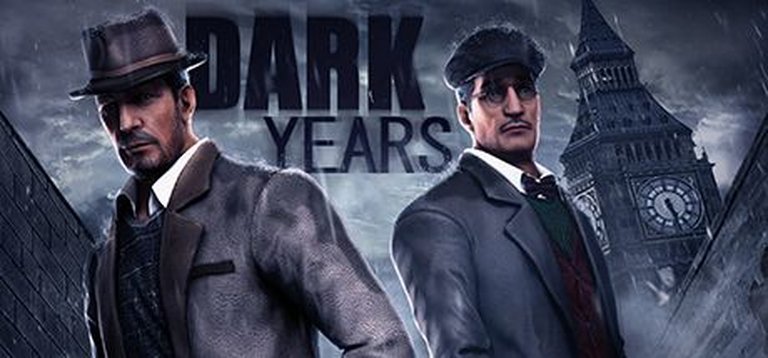
Description
Dark Years is an action-adventure game set in 1953 Tehran, Iran, inspired by true events surrounding ‘Operation Ajax.’ Players take on the role of Major Afshar, tasked with solving a series of grisly murders amid political turmoil, while an Iranian journalist in London uncovers a far-reaching conspiracy. As their investigations intertwine, the game explores themes of espionage, betrayal, and Western intervention, blending open-world gameplay with shooting, driving, and detective elements against the backdrop of a historically charged narrative.
Gameplay Videos
Where to Buy Dark Years
PC
Dark Years Guides & Walkthroughs
Dark Years Reviews & Reception
metacritic.com (36/100): A triumphant return to form for the series.
chalgyr.com : Dark Years is a good attempt but not a good game.
Dark Years: A Historical Ambition Undone by Technical Turmoil
Introduction: The Promise and the Pitfalls
Dark Years (2015) is a game that dares to tackle one of the most politically charged and historically significant events of the 20th century: the 1953 Iranian coup d’état, codenamed Operation Ajax. Developed by RSK Entertainment, an Iranian studio, the game attempts to blend noir storytelling, open-world exploration, and historical intrigue into a third-person action-adventure experience. On paper, it’s a bold, almost revolutionary concept—a game that seeks to educate Western audiences about a pivotal moment in Middle Eastern history while delivering a gripping detective narrative.
Yet, as critics and players alike discovered, Dark Years is a game that stumbles under the weight of its own ambition. While its historical setting and narrative premise are compelling, the execution is marred by technical deficiencies, clunky gameplay, and baffling design choices. This review will dissect Dark Years in exhaustive detail, exploring its development, narrative, mechanics, and legacy to determine whether it’s a flawed gem or a missed opportunity.
Development History & Context: A Studio’s Struggle
The Studio Behind the Game: RSK Entertainment
RSK Entertainment, based in Iran, is a relatively obscure developer with a focus on historically inspired games. Prior to Dark Years, the studio had worked on titles like School Years and 50 Years, though none achieved significant commercial or critical success. Dark Years was their most ambitious project—a third-person action-adventure game built in Unity, set in a meticulously researched 1953 Tehran.
The game’s development spanned over a decade, with early builds dating back to 2004. According to the Lost Media Idea Fandom page, multiple iterations were scrapped or reworked, suggesting a tumultuous production cycle. The final product, released in October 2015, reflects this instability—a game caught between eras, neither fully modern nor retro, but awkwardly straddling the two.
Technological Constraints & the 2015 Gaming Landscape
Dark Years launched in an era dominated by AAA open-world juggernauts like The Witcher 3 and Grand Theft Auto V. Its Unity engine foundation, while versatile, was pushed to its limits, resulting in visuals that resemble a high-resolution PlayStation 1 game—flat textures, repetitive assets, and jarring pop-in effects.
The game’s open-world design was particularly ill-suited to its technical capabilities. Tehran, the primary setting, feels hollow and lifeless, with NPCs exhibiting bizarre AI behavior (e.g., pedestrians running into walls, cars handling like soapbox derbies). The invisible walls, a recurring complaint in reviews, further highlight the studio’s struggle to balance ambition with execution.
A Game of Firsts: Iran’s Gaming Industry on the Global Stage
Dark Years is notable for being one of the first Iranian-developed games to receive international distribution via Steam. This alone makes it a cultural artifact, offering a rare Western perspective on Iranian history. However, its localization issues—awkward English translations, stilted voice acting—undermine its potential as a cross-cultural bridge.
The game’s political sensitivity also cannot be overlooked. By tackling Operation Ajax, a CIA/M16-backed coup that overthrew Iran’s democratically elected Prime Minister Mohammad Mosaddegh, Dark Years ventures into controversial territory. The fact that it was developed by an Iranian studio adds layers of narrative authenticity—but also potential bias, depending on one’s interpretation.
Narrative & Thematic Deep Dive: A Story Worth Telling, Poorly Told
Plot Summary: Noir Meets Geopolitical Conspiracy
Dark Years follows two protagonists:
1. Major Afshar, a Tehran-based detective investigating a series of grisly murders tied to the coup.
2. An unnamed Iranian journalist in London, who uncovers documents exposing the Western conspiracy behind the regime change.
The dual narrative structure is intriguing on paper, evoking comparisons to film noir classics and political thrillers like Syriana. However, the execution is ham-fisted, with predictable twists and underdeveloped characters.
Themes: Power, Betrayal, and Historical Trauma
The game’s central themes revolve around:
– Colonial exploitation (the West’s manipulation of Iran for oil).
– Moral ambiguity (Afshar’s journey from law enforcer to truth-seeker).
– The cost of progress (the coup’s long-term destabilization of Iran).
These are weighty, relevant topics, but the game’s clunky dialogue and poor pacing prevent them from landing with emotional impact. The journalist’s storyline, in particular, feels detached from Afshar’s investigation, weakening the narrative cohesion.
Dialogue & Localization: Lost in Translation
The game’s English localization is a disaster:
– Unnatural phrasing (“Press E for Intract”).
– Stiff, robotic voice acting (actors reportedly had limited English proficiency).
– Bizarre inflections that turn serious moments into unintentional comedy.
This is a tragic missed opportunity—a game with historical gravitas reduced to B-movie camp by poor localization.
Gameplay Mechanics & Systems: A House of Cards
Core Gameplay Loop: Detective Work Meets Open-World Chaos
Dark Years attempts to blend:
– Point-and-click adventure mechanics (inventory puzzles, dialogue trees).
– Open-world exploration (driving, shooting, stealth).
– Mini-games (car chases, 2D fighting sections).
None of these systems work well.
Combat & Stealth: A Masterclass in Frustration
- Shooting mechanics are imprecise, with no feedback on hit detection.
- Stealth sections are broken, with enemies spotting the player through walls.
- Melee combat (in the infamous 2D fighting mini-game) is laughably bad, resembling a 1990s flash game.
Driving & Navigation: A Physics Nightmare
- Cars handle like bricks, with two speeds: “too slow” or “uncontrollable.”
- Invisible walls and collision detection issues make traversal a chore.
- Stairs and curbs become insurmountable obstacles due to janky movement controls.
Puzzles & Progression: Trial-and-Error Hell
- Puzzle design is illogical, with poorly placed clues.
- A infamous four-digit code puzzle forces players to brute-force solutions due to lack of hints.
- Checkpoint system is punishing, often resetting progress arbitrarily.
UI & Controls: A UX Disaster
- Camera controls are unresponsive, especially in tight spaces.
- Inventory management is clunky, with no clear organization.
- “Press Q to Quit” doesn’t work, forcing players to alt-tab or restart.
World-Building, Art & Sound: A Mixed Bag of Potential and Failure
Setting & Atmosphere: Tehran in the 1950s
The game’s greatest strength is its historical setting. The recreation of 1950s Tehran—with its bazaars, government buildings, and back alleys—is visually distinctive, even if technically rough.
However, the lack of environmental detail (repeating textures, empty streets) undermines immersion.
Visuals: A PlayStation 1 Game in HD
- Character models are stiff, with no facial animations during dialogue.
- Lighting is flat, with no dynamic shadows.
- Cutscenes (hand-drawn) are the best part, suggesting the studio’s artistic talent was wasted on in-game assets.
Sound Design & Music: A Rare Bright Spot
- The soundtrack is moody and atmospheric, blending Middle Eastern instruments with noir jazz.
- Ambient sounds (market chatter, distant gunfire) enhance the setting.
- Voice acting, however, ruins the experience (see: Localization section).
Reception & Legacy: A Game That Could Have Been
Critical Reception: Mostly Negative
- Steam Reviews: 27% Positive (18 reviews).
- Defunct Games (Cyril Lachel): 1/100 – “A great concept… drowned in technical problems.”
- Chalgyr’s Game Room: “A good attempt, but not a good game.”
Critics universally praised the premise but condemned the execution.
Commercial Performance: A Niche Curiosity
- Price: $14.99 on Steam (frequently discounted).
- Player Count: Low, with <1,000 owners on Steam.
- Legacy: Remembered as a cult oddity—a historically significant but deeply flawed experiment.
Influence on Later Games
While Dark Years didn’t spawn imitators, it proved that Iranian developers could tackle ambitious narratives. Later games like 1979 Revolution: Black Friday (2016) learned from its mistakes, offering better-polished historical experiences.
Conclusion: A Noble Failure
Dark Years is a game of contradictions:
✅ Bold, historically significant premise.
✅ Unique setting (1950s Tehran).
✅ Ambitious dual-narrative structure.
❌ Technically broken (controls, AI, physics).
❌ Poorly localized (dialogue, voice acting).
❌ Gameplay systems that don’t function.
Final Verdict: 4/10 – A Flawed but Fascinating Relic
Dark Years is not a good game—but it’s an important one. It represents Iranian game development’s first major foray into global storytelling, and its historical subject matter remains relevant today. For history buffs and adventure game enthusiasts, it’s a curiosity worth experiencing—but only at a steep discount and with lowered expectations.
If you’re looking for a polished experience, play 1979 Revolution instead. If you want to see a game that tried—and failed—to do something extraordinary, Dark Years is a tragic masterpiece of missed potential.
Final Thought:
Dark Years is the gaming equivalent of a brilliant but unfinished novel—full of great ideas, but undone by poor craftsmanship. It deserves recognition for its ambition, but not for its execution.