
- Release Year: 2009
- Platforms: Linux, Macintosh, Windows
- Publisher: Darklight Games
- Developer: Darklight Games
- Genre: Action
- Perspective: 1st-person
- Game Mode: LAN, Online PVP
- Gameplay: Armor penetration, Limb damage, Mortars deployment, Shell shock, Suppression effects, Tactical shooter, Wall mantling
- Setting: Europe, World War II
- Average Score: 91/100
Description
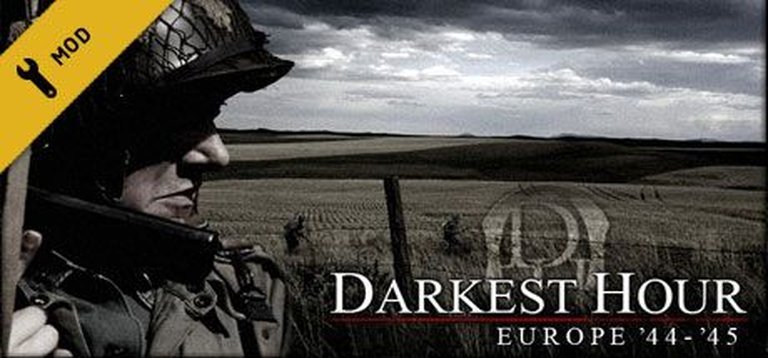
Darkest Hour: Europe ’44-’45 is a multiplayer tactical first-person shooter that expands upon Red Orchestra: Ostfront 41-45, immersing players in World War II’s European Theater. Set across historically authentic battlegrounds like Normandy, Market Garden, and the Ardennes, the game features objective-driven combat between Allied and Axis forces. Players engage as infantry or tank crews from multiple factions—including American, British, Soviet, and German units—utilizing period-accurate weapons such as the M1 Garand and Panzerschreck, alongside drivable vehicles like Shermans and King Tigers. Enhanced realism includes supersonic bullet physics, armor penetration modeling, suppression effects, and localized limb damage, creating intense large-scale battles.
Gameplay Videos
Where to Buy Darkest Hour: Europe ’44-’45
PC
Darkest Hour: Europe ’44-’45 Cracks & Fixes
Darkest Hour: Europe ’44-’45 Patches & Updates
Darkest Hour: Europe ’44-’45 Guides & Walkthroughs
Darkest Hour: Europe ’44-’45 Reviews & Reception
steamcommunity.com : Still a good game in 2023
Darkest Hour: Europe ’44-’45 Cheats & Codes
Darkest Hour: Europe ’44-’45 PC
Open the in‑game console (usually by pressing the `~` key) and type the commands listed below.
| Code | Effect |
|---|---|
| addbots |
Adds Bots to the current game. |
| allammo | Gives infinite ammo and removes the need to reload. |
| CaptureObj |
Captures a currently active objective for the supplied team. Useful for debugging. |
| debugspawnvehicle | Spawns vehicles. See list below table. |
| fly | Makes you fly (slows you down, so increase the game speed). |
| ghost | Same as fly, but allows you to no‑clip through physical objects and map boundaries. |
| gimmesupplies | Spawns a logistics truck for additional supplies. |
| give |
Gives you the specified weapon, e.g., gl or mp40. |
| leavebody | Causes you to leave your body and spawn again, leaving the old body behind. |
| listplayers | Lists all player names and their ROIDs. |
| SetDangerZone |
Toggles the danger zone on and off. 0 = off, 1 = on. |
| set input |
Allows you to bind a key to a specific command. |
| Slomo |
Sets the time dilation of the game logic (1.0 = normal speed, 2.0 = double speed, 0.5 = half speed). |
| VehicleHitPointDebug | Shows all vehicles’ special hit points for engine, ammo stores, and armored vehicle extra hit points. |
| VehicleTranslucent | Makes vehicles translucent, useful when used with VehicleHitPointDebug. |
| debugspawnbots |
Spawns bots. |
Darkest Hour: Europe ’44-’45: Review
Introduction
In the pantheon of World War II shooters, Darkest Hour: Europe ’44-’45 stands as a defiant monument to hardcore tactical realism and community-driven evolution. Born as a mod for Red Orchestra: Ostfront 41-45 and later reimagined as a standalone experience, this relentless multiplayer-focused title carves its niche with uncompromising authenticity and systemic depth. While modern titles like Hell Let Loose and Post Scriptum chase similar ideals, Darkest Hour remains a cult classic—a testament to the power of passionate modding communities and iterative design. This review unpacks its legacy, mechanics, and enduring appeal, arguing that it remains one of the most immersive WWII shooters ever created, despite dated technology.
Development History & Context
Origins as a Modding Labor of Love
Darkest Hour began in 2006 as a passion project by Darklight Games, a collective of modders aiming to expand Red Orchestra: Ostfront 41-45’s Eastern Front focus to the Western Front. Released on June 6, 2008—the 64th anniversary of D-Day—as Darkest Hour: Normandy 1944, the mod quickly garnered attention for its meticulous attention to historical detail and mechanical ambition.
From Mod to Standalone Revival
By 2009, after team reshuffles and rebranding, Darklight Games re-released the mod via Steam under its current title, Darkest Hour: Europe ’44-’45. Leveraging Tripwire Interactive’s support, the team transformed the project into a free-to-play standalone title while maintaining its roots in Unreal Engine 2.5. Despite technological constraints, the developers iterated relentlessly: post-2014 updates introduced the Eastern Front (2016), a logistics system (2018), and the Italian faction (2025), proving the team’s commitment long after contemporaries had faded.
A Landscape Starved of Realism
At release, the late 2000s FPS market was dominated by arcade-y titles like Call of Duty: World at War. Darkest Hour stood apart as a “anti-Call of Duty,” prioritizing realism, teamwork, and historical fidelity. Its success foreshadowed the resurgence of tactical shooters in the 2010s, inspiring later titles like Rising Storm (itself helmed by Darkest Hour alumni).
Narrative & Thematic Deep Dive
Historical Documentation as Storytelling
Darkest Hour lacks a traditional narrative but thrives on environmental storytelling. Maps like Dog Green Sector (Omaha Beach) and Stoumont (Battle of the Bulge) are painstaking recreations of real battlegrounds, evoking the chaos and desperation of WWII through geography alone. The absence of cutscenes or scripted moments reinforces the game’s ethos: players are the story.
Themes of Sacrifice and Futility
Through its unflinching realism—supersonic bullet cracks, limb-specific damage, and shell shock effects—the game conveys the visceral horror of war. Tank crews burn alive inside breached hulls; infantry scramble for cover under artillery barrages. This brutality isn’t gratuitous but evocative, mirroring the existential dread of soldiers flung into history’s deadliest conflict.
Gameplay Mechanics & Systems
Core Combat: A Dance of Death
- Infantry Play: With over 100 firearms, including niche weapons like the PIAT and FG 42, gunplay emphasizes ballistics and weight. Bullet drop, suppression, and lethal headshots demand discipline over spray-and-pray.
- Armored Warfare: Tanks like the King Tiger and M18 Hellcat feature intricate penetration modeling (APDS, HEAT rounds) and crew compartments. A well-placed shot can cripple a turret or ignite a fuel tank, rewarding tactical positioning.
- Logistics & Squad Systems: The 2018 “Rally Up!” update introduced buildable defenses (hedgehogs, bunkers) and a rally point system, enabling dynamic frontlines. Squads communicate via VOIP, coordinating flanks and artillery strikes through radiomen.
Innovations and Flaws
- Strengths: The suppression system—blurred vision, auditory ringing—remains unmatched in conveying combat stress. The faction diversity (US, UK, Poland, Italy, etc.) and era-specific equipment (e.g., late-war German prototypes) showcase obsessive research.
- Weaknesses: Clunky movement and UI reflect its aging engine. The learning curve alienates newcomers, and low player counts outside peak EU hours can cripple match quality.
World-Building, Art & Sound
A Grimy, Authentic Aesthetic
Darkest Hour’s visuals are dated but effective. Mud-caked uniforms, cratered landscapes, and period-accurate architecture (e.g., Norman cottages, Sicilian villages) ground the action in tangible history. The modding community’s handcrafted assets, while lacking modern polish, exude a rugged charm.
Sound Design: The Orchestra of War
From the crack of a sniper round whizzing past to the deafening roar of a tank cannon, audio sells the chaos. Shell shock muffles ambient noise; radiomen crackle with static-laden orders. The absence of a soundtrack amplifies the horror, leaving only the screams of the wounded and the thunder of artillery.
Reception & Legacy
Critical and Community Response
Initially lauded in modding circles (it ranked in ModDB’s Top 100 unreleased mods in 2007), the Steam re-release solidified its reputation. With a 90% Very Positive rating across 1,525 reviews, players praised its depth, though many lamented its niche appeal.
Influence on the Genre
Darkest Hour’s DNA permeates modern tactical shooters. Its suppression mechanics inspired Squad; its focus on combined arms prefigured Hell Let Loose. Former developers founded studios like Antimatter Games (Rising Storm) and Jackboot Games, extending its legacy.
The Struggle for Relevance
Despite a devoted following, the game battles obsolescence. Engine limitations and competition from UE5-powered titles raise questions about its future—a tension explored in Steam forums, where players debate migrating to platforms like Operation Harsh Doorstop.
Conclusion
Darkest Hour: Europe ’44-’45 is a triumph of vision over budget, a game that transcends its origins as a mod to become a benchmark for historical shooters. While its aging tech and steep learning curve deter casual players, its unrivaled attention to detail and community-driven evolution make it a timeless artifact of gaming history. For those willing to brave its clunkiness, it offers an unmatched window into the terror and camaraderie of WWII—a Band of Brothers simulator no AAA studio has yet surpassed.
Final Verdict: A flawed masterpiece, essential for historians and masochists alike.