
- Release Year: 2015
- Platforms: Windows
- Publisher: Black Lime Studio
- Developer: Black Lime Studio
- Genre: Action
- Perspective: Diagonal-down
- Game Mode: Single-player
- Gameplay: Puzzle elements, Shooter
- Setting: Contemporary
- Average Score: 50/100
Description
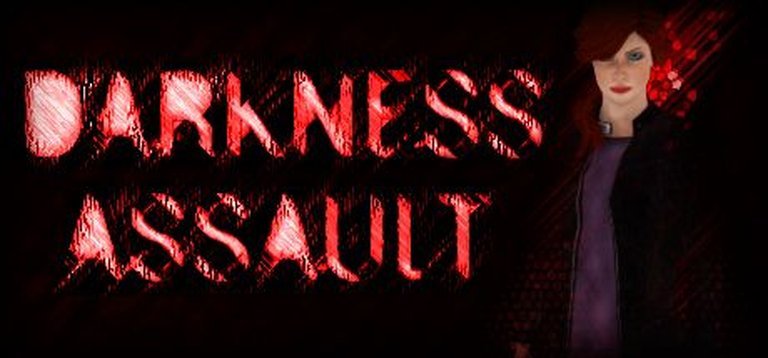
Darkness Assault is a 2D scrolling shooter game released in 2015 for Windows. Players take on the role of Katrine, a protagonist with amnesia, who finds herself in a mysterious underground location. The game combines action and puzzle elements as Katrine navigates through a contemporary setting, uncovering the truth behind strange occurrences and experiments on human beings.
Where to Buy Darkness Assault
PC
Darkness Assault Cracks & Fixes
Darkness Assault Guides & Walkthroughs
Darkness Assault Reviews & Reception
themercifulreviewer.wordpress.com (50/100): This game will literally leave you in the darkness of your own thoughts wondering why you even purchased this game to start with.
Darkness Assault: Review
Introduction
In the crowded pantheon of indie horror games, Darkness Assault (2015) stands as a flawed curiosity—a title brimming with ambition but hamstrung by technical limitations and uneven execution. Developed by Black Lime Studio, this top-down survival horror shooter attempts to channel the atmospheric dread of classics like Silent Hill and Resident Evil, yet stumbles under the weight of its own shortcomings. This review examines Darkness Assault as a cautionary tale of indie development, exploring how its intriguing premise collapses under repetitive design, clunky mechanics, and a haphazard narrative.
Development History & Context
Darkness Assault emerged in 2015 from Black Lime Studio, a Russian developer known for budget-tier experimental titles. Built using the Unity engine, the game reflects the era’s indie boom, where low-cost tools democratized game creation but often led to uneven results. The studio’s vision—a psychological horror experience centered on amnesia and unethical human experiments—was ambitious for its $0.99 price point. Yet, technological constraints are evident: fixed camera angles, rudimentary AI, and textures that recycle assets to save resources.
The 2015 gaming landscape was saturated with crowdfunded gems like Undertale and Her Story, raising expectations for narrative depth and polish. Darkness Assault, by contrast, felt like a relic of the mid-2000s indie scene, where janky design and minimal budgets were more readily forgiven. Its release on Steam, flanked by DLC packs for cosmetics and weapons, positioned it as a commodity rather than a passion project.
Narrative & Thematic Deep Dive
The game follows Katrine, a woman who awakens 40 meters underground with no memory of her past, trapped in a facility rumored to host grotesque human experiments. Through scattered documents and stilted cutscenes, players piece together a fragmented tale of cloning, moral decay, and institutional horror.
Thematically, Darkness Assault gestures toward weighty ideas: identity erosion, scientific hubris, and the fragility of sanity. Yet its storytelling is undermined by atrocious localization—reviews universally panned the awkward English translations and voice acting, which rendered dialogue unintentionally comedic. Katrine’s conversations with a detective, meant to anchor the narrative, feel disjointed and underdeveloped. The game’s abrupt, cliffhanger ending (resolved not by the player but via cutscene) further frustrates, leaving its themes half-baked.
Gameplay Mechanics & Systems
At its core, Darkness Assault is a survival horror shooter with light puzzle elements. Players scavenge for medkits, ammunition, and keys while fending off shambling zombies and mutated creatures. However, its systems are riddled with flaws:
- Combat: Enemies move sluggishly, reducing tension. The fixed camera angles often obscure threats, forcing players to attack blindly.
- Navigation: The maze-like environments lack visual distinction, exacerbated by a near-useless map. Many players reported getting lost in identical-looking corridors.
- Progression: With a playtime of just 1.5–3.6 hours, the game feels truncated. Weapon upgrades (via paid DLC) add little depth, and the survival mechanics—stamina management, limited saves—feel punitive rather than immersive.
The UI is functional but bland, and the control scheme, while serviceable, lacks the precision needed for its shooter elements. Steam reviewers noted frequent bugs, including saves trapping players in unwinnable states.
World-Building, Art & Sound
Darkness Assault’s strongest asset is its atmosphere. Early sections leverage shadowy lighting and eerie ambient sounds to create a sense of claustrophobia. The underground facility’s rusted pipes and flickering lights evoke a System Shock-lite aesthetic, though this goodwill evaporates as environments grow repetitive.
The art direction suffers from texture reuse and low-detail models, with later areas (like a lab) devolving into poorly lit, monotonous spaces. The flashlight mechanic, meant to heighten tension, often fails to illuminate anything at all.
Sound design fares better: growling enemies and distant screams amplify unease, even if the abrupt combat music feels out of place. The score, while unmemorable, avoids undermining the horror tone.
Reception & Legacy
Upon release, Darkness Assault garnered mixed-to-negative reviews. On Steam, 55% of players rated it positively, praising its atmosphere while lambasting its technical flaws. Metacritic user scores averaged 4.7/10, with critiques focusing on the stiff controls and confusing level design. Critics like The Merciful Reviewer savaged it as a “complete mess,” awarding it a 2/10.
The game’s legacy is negligible. While it earned a cult following among masochistic horror fans, its influence on the industry is nonexistent. Black Lime Studio’s subsequent titles, like Office Battle and Redemption: Saints and Sinners, similarly languished in obscurity. Today, Darkness Assault serves primarily as a case study in how ambition without polish can undermine even the most intriguing concepts.
Conclusion
Darkness Assault is not without merit—its oppressive atmosphere and sound design hint at a better game buried beneath the jank. Yet its shoddy mechanics, repetitive design, and incoherent narrative doom it to the annals of mediocre indie experiments. For completists of flawed horror curios, it might warrant a $0.99 gamble. For everyone else, it stands as a reminder that atmosphere alone cannot sustain a game. In the pantheon of survival horror, Darkness Assault is less a stepping stone and more a cautionary footnote.
Final Verdict: A fractured vision with fleeting moments of promise, ultimately undone by its execution.