
- Release Year: 2019
- Platforms: Nintendo Switch, PlayStation 4, Stadia, Windows Apps, Windows, Xbox Cloud Gaming, Xbox One
- Publisher: H2 Interactive Co., Ltd., THQ Nordic GmbH, THQ Nordic Japan KK
- Developer: Airship Syndicate Entertainment, Inc.
- Genre: Action, RPG
- Perspective: Diagonal-down
- Game Mode: Co-op, Online Co-op, Single-player
- Gameplay: Character progression, Hack and Slash, Metroidvania-style backtracking, Platforming, Puzzles, RPG elements
- Setting: Fantasy
- Average Score: 77/100
Description
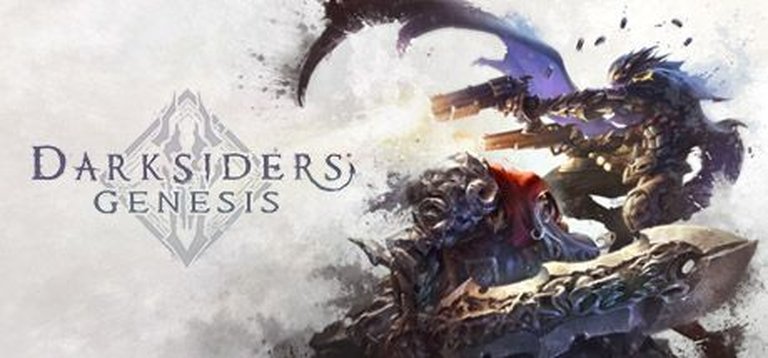
Darksiders: Genesis is an action-packed hack-and-slash game set in a fantasy universe, serving as a prequel to the Darksiders series. Players take on the roles of Strife and War, two of the Four Horsemen of the Apocalypse, as they battle through a top-down, isometric perspective, combining fast-paced combat with RPG elements. The game explores the origins of the Horsemen, featuring a mix of melee and ranged combat, cooperative multiplayer, and a dark, apocalyptic setting filled with mythological and demonic enemies.
Gameplay Videos
Where to Buy Darksiders: Genesis
Darksiders: Genesis Free Download
Darksiders: Genesis Cracks & Fixes
Darksiders: Genesis Patches & Updates
Darksiders: Genesis Mods
Darksiders: Genesis Guides & Walkthroughs
Darksiders: Genesis Reviews & Reception
metacritic.com (77/100): Despite the fundamental changes to the series’ viewpoint, Darksiders Genesis feels like a true Darksiders game, and banishes any memory of the lacklustre third entry.
ign.com : Darksiders Genesis is a great new direction for a series known for its many different directions.
gamesradar.com : Darksiders Genesis find new fun in a new gameplay format. While retaining some of the aesthetic and mechanical qualities that drew fans in to begin with
pcgamer.com : A great one-shot adventure or an enjoyable grindfest, depending on which you want.
sirusgaming.com : Darksiders Genesis takes us back, all the way to the beginning of… well, everything.
Darksiders: Genesis: A Bold Reinvention of a Beloved Franchise
Introduction
The Darksiders series has long been celebrated for its rich lore, visceral combat, and apocalyptic grandeur. With Darksiders: Genesis, developer Airship Syndicate—comprising veterans from the original Vigil Games—dares to redefine the franchise’s identity. This spin-off prequel abandons the series’ signature third-person action-adventure formula in favor of a top-down, Diablo-esque hack-and-slash experience. Yet, far from being a mere genre exercise, Genesis is a masterful reimagining that retains the soul of Darksiders while carving its own path. Through its dual-protagonist structure, deep combat mechanics, and a narrative that lays the foundation for the entire saga, Genesis proves that even the most sacred franchises can evolve without losing their essence.
Development History & Context
The Studio and the Vision
Airship Syndicate, founded by Joe Madureira (creator of Darksiders) and Ryan Stefanelli, emerged from the ashes of Vigil Games after THQ’s collapse. Their debut, Battle Chasers: Nightwar (2017), showcased their ability to blend classic RPG mechanics with modern sensibilities. With Darksiders: Genesis, they sought to expand the franchise’s horizons while honoring its roots. Madureira’s vision was clear: Genesis would not just be another Darksiders game—it would be a bold experiment, a love letter to both the series and the isometric action-RPG genre.
Technological and Design Challenges
Transitioning from third-person to top-down perspective was no small feat. The team leveraged Unreal Engine 4 to craft a visually stunning yet functionally distinct experience. The challenge lay in translating Darksiders’ signature combat—weighty, deliberate, and tactical—into a faster-paced, twin-stick shooter hybrid. The solution? A dual-character system where players could seamlessly switch between War’s brutal melee and Strife’s ranged gunplay, or team up in co-op for a true synergy of chaos.
The Gaming Landscape of 2019
Released in December 2019, Genesis entered a market dominated by live-service giants and open-world epics. Yet, it found its niche by offering a tightly crafted, 15-hour campaign that prioritized depth over sprawl. Critics and players alike praised its refreshing take on the Darksiders formula, proving that innovation could thrive even in an era of sequels and remakes.
Narrative & Thematic Deep Dive
The Plot: A Prequel with Purpose
Genesis unfolds in the aftermath of the Nephilim genocide, where War and Strife—still reeling from their role in the massacre—are tasked by the Charred Council to investigate Lucifer’s machinations. The story is a masterclass in world-building, weaving together the series’ lore while introducing Strife as a fully realized protagonist. His sarcastic, self-interested demeanor contrasts sharply with War’s stoic duty, creating a dynamic duo that feels both fresh and familiar.
Characters: The Horsemen’s Duality
- War: The veteran Horseman, burdened by guilt and bound by honor. His interactions with Strife reveal a softer, more introspective side, hinting at the complexity beneath his armored exterior.
- Strife: The wildcard of the Four Horsemen. His flippant remarks and moral ambiguity make him the most intriguing addition to the series. His past—hinted at but never fully revealed—adds layers of mystery.
- Lucifer: The puppet master, manipulating events from the shadows. His presence looms large, even when he’s not on-screen, setting the stage for the series’ overarching conflict.
Themes: Guilt, Redemption, and the Cost of Power
Genesis grapples with the moral weight of the Horsemen’s actions. The genocide of the Nephilim is not just backstory—it’s a specter that haunts every interaction. Strife’s sarcasm masks his regret, while War’s rigid adherence to duty feels like penance. The game asks: Can redemption be found in service to a corrupt system? The answer, as always in Darksiders, is ambiguous.
Gameplay Mechanics & Systems
Core Gameplay Loop: A Dance of Destruction
Genesis’ combat is a symphony of violence. Players alternate between War’s swordplay and Strife’s gunfu, each with distinct playstyles:
– War: A tank who thrives in the thick of battle. His Chaos Eater sword and Tremor Gauntlet make him a juggernaut, capable of staggering foes and unleashing devastating combos.
– Strife: A gunslinger who excels at range. His dual pistols, Mercy and Redemption, offer precision and mobility, with special ammo types adding tactical depth.
The game’s true genius lies in its synergy. Solo players can switch characters on the fly, while co-op partners must coordinate to survive. Puzzles and platforming segments further emphasize this duality, requiring both characters’ unique abilities to progress.
Progression: The Creature Core System
Unlike traditional RPGs, Genesis eschews experience points in favor of Creature Cores—modular upgrades that enhance stats and abilities. These cores, dropped by enemies, can be slotted into a grid-like system, encouraging experimentation. Major cores (from bosses) unlock powerful bonuses, adding a layer of strategy to character builds.
Puzzles and Exploration: A Metroidvania Lite
The game’s world is a labyrinth of interconnected zones, filled with environmental puzzles that demand both characters’ skills. Backtracking is rewarded with hidden chests and upgrades, making exploration feel meaningful. The Ghost Hook (a grappling tool) and Shadow Flight (a double jump) add verticality, ensuring traversal remains engaging.
Boss Fights: Epic and Strategic
Boss encounters are Genesis’ crowning achievement. Each battle is a multi-phase spectacle, requiring players to adapt on the fly. From the hulking Moloch to the cunning Belial, every foe tests the player’s mastery of both characters’ abilities.
World-Building, Art & Sound
Setting: A Journey Through Hell and Beyond
Genesis’ world is a grotesque tapestry of demonic realms, celestial ruins, and the void between them. The Void, a liminal space of serpent holes, serves as the game’s hub, offering a stark contrast to the fiery depths of Hell and the eerie beauty of Eden.
Visual Design: A Dark Fantasy Masterpiece
The game’s art direction is a triumph. Character models are detailed and expressive, while environments drips with atmosphere. The top-down perspective allows for intricate level design, with verticality and lighting used to guide the player’s eye.
Sound Design: A Symphony of Chaos
Gareth Coker’s soundtrack is a standout, blending orchestral grandeur with industrial beats. The voice acting—particularly Troy Baker’s Strife and Liam O’Brien’s War—adds emotional weight to the narrative. Ambient sounds, from the crackle of gunfire to the roar of demons, immerse players in the apocalyptic setting.
Reception & Legacy
Critical and Commercial Success
Genesis received a 76% aggregate score from critics, with praise for its combat, co-op mechanics, and narrative depth. IGN called it “one of the best Darksiders games,” while GameStar lauded its “flexible level system.” Sales exceeded THQ Nordic’s expectations, proving that spin-offs could thrive in a franchise-driven industry.
Influence on the Series
Genesis’ success paved the way for future experimentation. Its co-op mechanics and top-down perspective could influence Darksiders IV, while Strife’s popularity ensures he’ll remain a key figure in the series’ lore.
Conclusion: A Triumph of Reinvention
Darksiders: Genesis is more than a spin-off—it’s a bold reimagining that honors the past while forging a new path. Its dual-protagonist structure, deep combat, and rich narrative make it a standout entry in the franchise. While it lacks the polish of its predecessors, its innovations and heart elevate it to greatness.
Final Verdict: 8.5/10 – A must-play for fans of action RPGs and Darksiders lore.
Genesis proves that even the most sacred franchises can evolve—and sometimes, the best way forward is to look back.