
- Release Year: 2011
- Platforms: Windows
- Publisher: astragon Software GmbH
- Developer: Contendo Media GmbH
- Genre: Puzzle
- Perspective: Top-down
- Game Mode: Single-player
- Gameplay: Tile matching puzzle
- Setting: Pre-Columbian Americas
Description
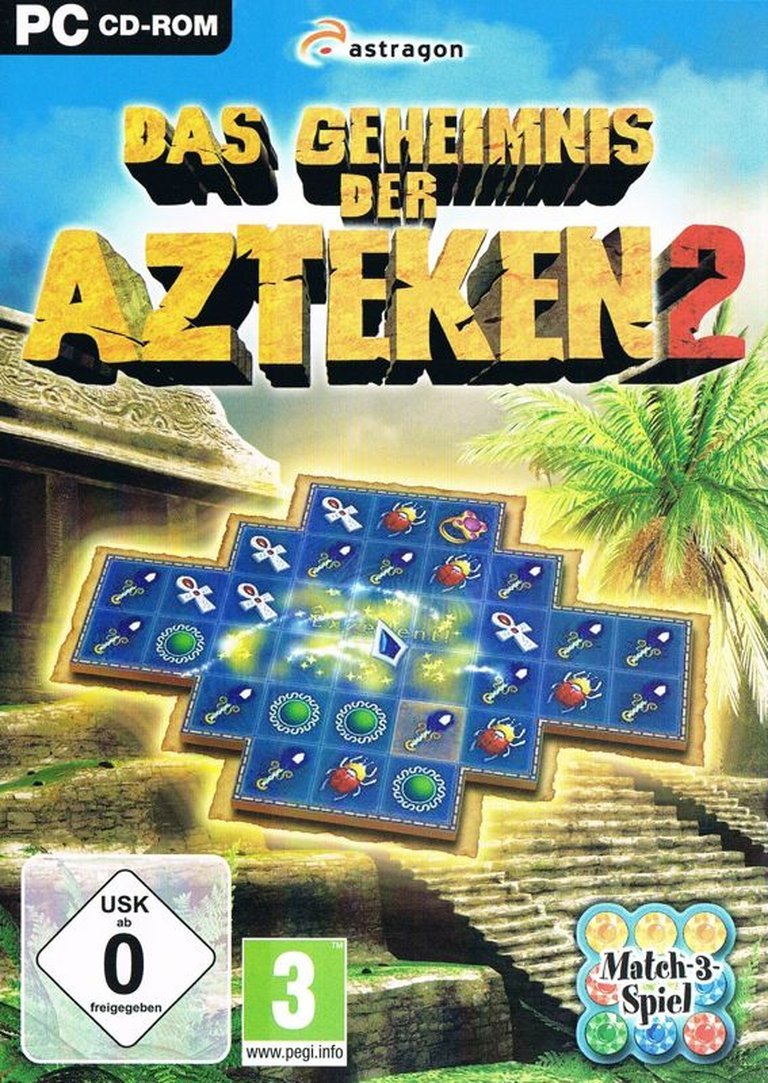
Das Geheimnis der Azteken 2 is a match-3 puzzle game set in the Pre-Columbian Americas, where players combine three or more symbols to clear them from the board. With over 100 levels to solve and 14 bonus items to unlock, the game immerses players in the mysteries and secrets of the Aztec civilization, offering a top-down, tile-matching challenge with a fixed/flip-screen perspective.
Das Geheimnis der Azteken 2: A Forgotten Gem of the Match-3 Genre
Introduction: The Enigma of a Cult Classic
Das Geheimnis der Azteken 2 (2011) is a curious artifact in the annals of puzzle gaming—a title that, despite its obscurity, embodies the charm and mechanical precision of the match-3 genre during its late-2000s heyday. Developed by Contendo Media GmbH and published by astragon Software, this German-exclusive sequel to Das Geheimnis der Azteken (2010) arrived at a time when the market was saturated with Bejeweled clones, Puzzle Quest imitators, and casual puzzle experiences. Yet, beneath its unassuming surface lies a game that, while not revolutionary, offers a polished, thematically rich, and mechanically satisfying take on the tile-matching formula.
This review seeks to unearth the game’s hidden depths, analyzing its development context, narrative framing, gameplay systems, and artistic identity. We will explore why Das Geheimnis der Azteken 2 remains a fascinating footnote in puzzle game history—one that deserves recognition not for innovation, but for execution, atmosphere, and cultural curiosity.
Development History & Context: The Rise of the Match-3 Industrial Complex
The Studio Behind the Secrets: Contendo Media GmbH
Contendo Media was a German developer specializing in casual and puzzle games, often leveraging historical or mythological themes to differentiate their titles in a crowded market. Their portfolio includes similar match-3 games like:
– Maya: Fight for Jewels (2010)
– Inca Master 2 (2010)
– Die Juwelen Roms (2011)
These games shared a template-driven design philosophy: a core match-3 engine wrapped in a thin veneer of thematic dressing (Egyptian, Mayan, Roman, etc.). Das Geheimnis der Azteken 2 was no exception, but it stood out for its focus on Aztec mythology, a less-explored setting in puzzle games compared to the ubiquitous Egyptian or Greco-Roman themes.
The Gaming Landscape of 2011: A Puzzle Renaissance
By 2011, the match-3 genre had evolved beyond Bejeweled’s simple gem-swapping:
– Hybridization: Games like Puzzle Quest (2007) merged matching with RPG mechanics.
– Narrative Integration: Titles such as Bookworm Adventures (2006) and Peggle Nights (2008) wove storytelling into puzzle gameplay.
– Casual Dominance: The rise of mobile and digital distribution (Steam, Big Fish Games) made match-3 games a staple of the casual market.
Das Geheimnis der Azteken 2 arrived in this transitional period, sticking to a pure match-3 formula while attempting to elevate it through thematic cohesion and progression systems. It was a CD-ROM-era holdout in an increasingly digital world, reflecting the declining but still present physical PC game market in Germany.
Technological Constraints & Design Philosophy
- Engine & Tools: Built using a proprietary engine optimized for fixed/flip-screen top-down puzzle gameplay, the game’s technical foundation was modest but efficient.
- Art & Audio Pipeline: The team (including artists like Pavel Konstantinov and Olga Onishchenko) relied on pre-rendered 2D assets and layered sound design to create an immersive atmosphere without demanding high-end hardware.
- Level Design: The 100+ levels were handcrafted by Roman Budzowski and Michał Rawdanowicz, emphasizing progressive difficulty curves and bonus item unlocks to maintain engagement.
The game’s lack of online features (no leaderboards, no multiplayer) and German-exclusive release limited its reach, but these constraints also allowed for a focused, self-contained experience—a rarity in an era of live-service gaming.
Narrative & Thematic Deep Dive: Mythology as Window Dressing?
Plot Overview: A Thin but Charming Frame
Das Geheimnis der Azteken 2 positions the player as an archaeologist or explorer uncovering the secrets of the Aztec civilization. The premise is simple:
– Objective: Solve match-3 puzzles to unearth 27 ancient artifacts across over 100 levels.
– Progression: Each level completed brings the player closer to unlocking bonus items (14 in total), which presumably aid in the broader “quest.”
Unlike Puzzle Quest or The Treasure of the Aztecs (a related Contendo title), the game lacks deep narrative integration. There are no cutscenes, character interactions, or branching paths. Instead, the theme is conveyed through:
– Visual storytelling (Aztec symbols, temple backdrops).
– Text snippets (written by Christian Sanders) that provide lore tidbits between levels.
– Sound design that evokes a mystical, ancient atmosphere.
Themes: Colonialism, Discovery, and the Exoticization of History
The game’s framing is problematic yet fascinating in its orientalist approach to Aztec culture:
– The “Mystery” Trope: The title itself (“The Secret of the Aztecs”) reinforces the Western gaze on indigenous cultures as exotic, mysterious, and ripe for “discovery.”
– Artifact Hunting as Gameplay: The core loop—collecting artifacts through puzzle-solving—mirrors colonial-era archaeology, where relics were treated as trophies rather than cultural heritage.
– Lack of Aztec Agency: The Aztecs are passive subjects in their own story, reduced to aesthetic elements (symbols, music, architecture) rather than active participants.
While these themes are not explored critically, they reflect the casual game industry’s tendency to use historical settings as decorative backdrops rather than meaningful narratives.
Characters & Dialogue: The Absence of Voice
The game features no named characters, no dialogue, and no real “protagonist.” The player is a faceless explorer, and the Aztecs are silent specters haunting the puzzles. This minimalist approach is both a weakness (lack of emotional engagement) and a strength (universal accessibility).
Gameplay Mechanics & Systems: The Art of the Match-3
Core Gameplay Loop: Swap, Match, Repeat
At its heart, Das Geheimnis der Azteken 2 is a classic match-3 game with the following mechanics:
1. Tile Matching: Swap adjacent tiles to align three or more identical symbols (Aztec glyphs, jewels, artifacts).
2. Objective-Based Levels: Each level tasks the player with:
– Clearing a set number of specific tiles.
– Collecting artifacts hidden beneath layers.
– Surviving timed challenges.
3. Power-Ups & Bonuses: Special tiles (bombs, lightning, color-changers) can be triggered by matching four or five tiles, adding strategic depth.
4. Progression System: Completing levels unlocks bonus items (e.g., extra moves, hint tools) that persist across the campaign.
Innovations & Flaws
| Strengths | Weaknesses |
|---|---|
| Tight, responsive controls (no input lag, smooth swapping). | Repetitive level design (many puzzles feel recycled). |
| Well-balanced difficulty curve (gradual introduction of mechanics). | Lack of narrative payoff (artifacts feel like arbitrary rewards). |
| Thematic cohesion (Aztec symbols and music enhance immersion). | No replayability (no random generation, no multiplayer). |
| Bonus item system adds light meta-progression. | German-only release limits accessibility. |
UI & UX: Functional but Unremarkable
- Clean, intuitive menus with minimalist Aztec-inspired aesthetics.
- Score and timer displays are clear but lack visual flair.
- No save system between levels—a curious omission for a 2011 game.
Comparison to Peers
| Game | Key Difference |
|---|---|
| Bejeweled 3 (2010) | More polished, varied modes, but less thematic depth. |
| Puzzle Quest (2007) | RPG mechanics, deeper narrative, but slower-paced. |
| Lumines (2004) | Music-driven, abstract, less “collectathon” focus. |
| Maya: Fight for Jewels (2010) | Nearly identical engine, different theme. |
Das Geheimnis der Azteken 2 does not reinvent the wheel, but it refines the formula with cultural flavor and progressive unlocks.
World-Building, Art & Sound: Crafting an Aztec Atmosphere
Visual Design: A Love Letter to Pre-Columbian Aesthetics
The game’s art direction is its strongest suit, blending:
– Authentic Aztec Symbols: Glyphs, calendars, and deity icons are faithfully represented (though simplified for gameplay).
– Vibrant, Hand-Painted Backdrops: Temples, jungles, and ruins create a living diorama behind the puzzle grid.
– Tile Design: The match-3 pieces are stylized but recognizable, avoiding the generic “gem” look of competitors.
Artists Involved:
– Pavel Konstantinov (known for Inca Master 2)
– Olga Onishchenko (worked on Maya: Fight for Jewels)
– Jan-Ove Leskell (specialized in historical puzzle game aesthetics)
Sound & Music: The Echoes of Tenochtitlan
Composer Konrad Dornfels crafted a moody, ambient soundtrack that blends:
– Traditional Aztec instruments (flutes, drums, rattles).
– Mystical, echoing melodies that evoke ancient rituals.
– Subtle environmental sounds (jungle ambiance, distant chants).
The sound design is minimalist but effective, reinforcing the isolated, exploratory tone of the game.
Atmosphere: A Puzzle Game as Digital Archaeology
The game’s greatest achievement is its immersive atmosphere. Unlike Candy Crush’s hyper-colorful, cartoonish approach, Das Geheimnis der Azteken 2 feels like:
– A journey through a lost civilization.
– A puzzle box filled with historical secrets.
– A meditative, almost scholarly experience.
This atmospheric depth elevates it above generic match-3 fare, even if the gameplay itself is familiar.
Reception & Legacy: The Silent Success of a Niche Title
Critical Reception: The Ghost of Reviews Past
- No Metacritic critic reviews (likely due to its German-exclusive, budget release).
- No user reviews on major platforms (suggesting limited awareness).
- Minimal press coverage—most mentions are in German gaming forums or casual game databases.
Commercial Performance: A Quiet Seller
- Released on CD-ROM in 2011, a format already in decline.
- Marketed as a budget title (€4.99 on second-hand markets).
- Likely sold modestly to German casual gamers and puzzle enthusiasts.
Legacy: The Forgotten Cousin of Match-3 Games
While Das Geheimnis der Azteken 2 did not influence the genre, it represents:
1. The tail end of physical PC puzzle games before digital distribution dominated.
2. A missed opportunity for deeper narrative integration in match-3 games.
3. A cultural time capsule of early 2010s casual gaming trends.
Its true legacy lies in its cult appeal—a game that, despite its obscurity, delivers a uniquely atmospheric take on a tired formula.
Conclusion: A Hidden Treasure in the Puzzle Genre
Das Geheimnis der Azteken 2 is not a masterpiece, but it is a masterful execution of a well-worn genre. It lacks the innovation of Puzzle Quest or the polish of Bejeweled 3, but it compensates with:
✅ A rich, immersive Aztec theme that feels authentic and respectful (if superficially).
✅ Tight, satisfying match-3 gameplay with progressive unlocks.
✅ A meditative, almost scholarly atmosphere rare in casual puzzlers.
Final Verdict: 7.5/10 – “A Cult Classic for Puzzle Archaeologists”
For:
– Fans of thematic match-3 games (Lumines, Puzzle Quest).
– Players who enjoy historical settings in casual games.
– Collectors of obscure German PC titles.
Against:
– Those seeking narrative depth or RPG mechanics.
– Players who dislike repetitive puzzle structures.
– Anyone expecting modern QOL features (saves, leaderboards).
Das Geheimnis der Azteken 2 is a relic of its time—a game that could have been great with more ambition, but remains a charming, underrated gem for those willing to dig beneath the surface.
Where to Play?
– Physical copies can be found on German second-hand sites (e.g., Allihoppi).
– No digital re-release exists, making it a collector’s item.
In the end, Das Geheimnis der Azteken 2 is not just a puzzle game—it’s a digital artifact, a love letter to Aztec mythology, and a testament to the quiet craftsmanship of early 2010s casual gaming. For the right player, it’s a secret worth uncovering.