
- Release Year: 2016
- Platforms: Windows
- Publisher: Fading Club Games
- Developer: Fading Club Games
- Genre: Role-playing (RPG)
- Perspective: Diagonal-down
- Game Mode: Single-player
- Gameplay: Turn-based
Description
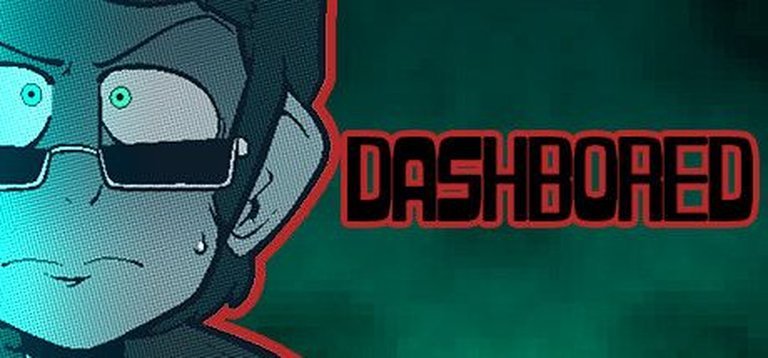
DashBored is an RPG Maker game developed by Fading Club Games, released in 2016. The story follows Nicolas ‘Nic’ Kawamura, who awakens in the Garden, a mysterious pocket dimension populated by fellow outcasts, where hostile entities threaten survival. Teaming up with eclectic misfits, Nic must navigate both foot and car journeys to uncover the fate of the dimension and the broader multiverse.
Where to Buy DashBored
PC
DashBored Free Download
PC
DashBored Guides & Walkthroughs
DashBored Reviews & Reception
metacritic.com : Very good game. I enjoyed playing this game a lot. I strongly recommend this.
DashBored: Review
Introduction
In an era saturated with polished AAA epics and minimalist indie darlings, DashBored stands as a defiantly bizarre cult phenomenon. Released in 2016 by Fading Club Games (later rebranded as Karbonic), this RPG Maker title thrusts players into the shoes of Nicolas “Nic” Kawamura—a perpetually disheveled shut-in whose life of anime binges and social isolation is violently upended when he’s transported to “The Garden,” a pocket dimension populated by outcasts and monstrosities. More than just a quirky RPG, DashBored is a surreal meditation on depression, existential dread, and unlikely camaraderie wrapped in the unassuming trappings of pixel art. Its legacy as a labor of love—sustained by years of free updates, a dedicated community, and a prequel (NashBored)—cements its status as a testament to the unique storytelling potential of indie development. This review delves into the game’s labyrinthine heart to uncover why DashBored remains a singular, unsettling, and surprisingly profound experience.
Development History & Context
DashBored emerged from the solo efforts of Karbonic (the studio’s alias), a developer deeply invested in crafting narratives about societal alienation. Conceived during the mid-2010s indie boom, the game was built using RPG Maker—an engine imposing inherent technological constraints, particularly in graphical fidelity and combat flexibility. Yet these limitations became part of DashBored’s charm, allowing Karbonic to focus on its strengths: writing, world-building, and atmospheric design. The 2016 release landscape was dominated by narrative-driven RPGs like Undertale and Lisa: The Painful, and DashBored carved its niche by leaning into absurdist horror and unapologetic grotesquerie. Notably, Karbonic committed to an “update-first” philosophy, releasing substantial content drops (e.g., the Justice route in 2017, graphical overhauls like New Beauty in 2019) long after launch. This iterative approach blurred the line between “finished product” and living story, reflecting the developer’s vision of DashBored as an evolving, multimedia universe—a radical stance in an industry obsessed with monetization cycles.
Narrative & Thematic Deep Dive
At its core, DashBored is a deconstruction of purposelessness. Nic, introduced as a man who callously ejects friends to resume his anime marathon, embodies the paralyzing inertia of depression. His journey through The Garden—a realm where “everyone’s either a loser, a degenerate, or an actual monster”—forces him to confront his apathy. The narrative unfolds through episodic encounters: he bonds with Midori, a cheerful ghostly save-point NPC; Eloise, a sarcastic scholar; and Jack, a opportunistic dungeon shopkeeper. These characters, though archetypal, gain depth through pitch-black humor (“Rodents that you can flip off!“) and poignant vulnerability. Antagonists like the Ax-Crazy Milly and the enigmatic robot lady escalate the existential stakes, culminating in a multiverse-threatening conflict with Vurrus, the dimension’s tyrannical ruler. Thematically, the game oscillates between nihilism and hope. Its multiple endings—including a Silent Hill-inspired UFO gag in the Abduction update—serve as commentary on escapism. Nic’s journey from “shut-in loser” to accidental hero asks: Is salvation found in purpose, or in finding meaning within the absurd? The dialogue, described as “witty” and “funny,” often masks trauma, with jokes about “birds breaking your fall” contrasting against genuine moments of loss.
Gameplay Mechanics & Systems
DashBored adheres to a classic turn-based RPG framework, but its systems are imbued with idiosyncratic personality. Combat is straightforward yet strategic, emphasizing party synergy over flashy combos. The seven recruitable members (expanded from five via updates) each occupy distinct niches: Midori heals via dialogue, Eloise debuffs foes with sarcasm, and Jack’s shop mechanics extend even into dungeons—a Dungeon Shop trope that reinforces the game’s warped logic. Character progression is linear but effective, with stat gains and skill unlocks tied to narrative milestones. However, the game’s RPG Maker origins show in its UI: menus are functional but dated, and the diagonal-down perspective can feel restrictive. Innovation lies in environmental storytelling—interacting with rodents or birds yields cryptic lore—and the “Save Point” mechanic, where Midori’s ghostly presence facilitates saves while deepening her role as a tether to Nic’s humanity. Flaws include occasional balancing issues and repetitive enemy designs, yet these are overshadowed by the narrative-driven engagement. The Justice and Abduction routes later added branching paths, replayability, and a secret boss that rewarded dedicated fans, proving the game’s systems could evolve with its story.
World-Building, Art & Sound
The Garden is a character in its own right—a surreal hellscape that mirrors its inhabitants’ fractured psyches. Environments shift from decaying urban sprawls to bioluminescent forests, each zone reflecting a facet of despair (e.g., a library of forgotten knowledge, a carnival of grotesqueries). This world-building is deeply atmospheric, blending horror and dark comedy; a giant monstrosity might “break your bones” one moment, only to be undercut by its comedic incompetence the next. The art underwent radical metamorphoses: the pixel art was initially crude but refined into a distinctive style through updates like New Beauty (2019) and Crystal Clear (2021). Spritework became more expressive, with characters like Milly’s maniacal grin and Nic’s slumped posture conveying volumes without dialogue. Sound design complements the visuals perfectly. The “strange hamstrung soundtrack” features disjointed chiptunes that evoke unease—distorted melodies during combat, jaunty tunes in shops—mirroring the tonal whiplash of the narrative. Voice acting is absent, but text-based dialogue is delivered with such rhythmic wit (“Pull your pants up, grab a knife, and start fighting!“) that it feels aurally performative. Together, these elements create a cohesive, unsettling ambiance where beauty and decay coexist.
Reception & Legacy
Upon its 2016 release, DashBored launched with little fanfare. MobyGames notes no critic reviews, and initial player reception was muted, with only a handful of ratings. However, Karbonic’s relentless updates—free content drops that expanded routes, characters, and visuals—ignited a grassroots following. By 2023, Steam reviews surged to “Very Positive” (91% of 91 reviews), with players praising its “weird” charm and “funny characters.” Metacritic’s user score sits at 7.0, reflecting mixed-to-average critical engagement, but indie outlets lauded its audacity. The game’s legacy extends beyond sales; it birthed the Fading Club franchise, with NashBored (2017) exploring prequel lore and future games like DREAMWILD expanding the universe. Culturally, DashBored resonated with audiences seeking narratives about mental health, its themes of isolation finding relevance in pandemic-era gaming. Its influence is subtle but evident: it popularized the “update RPG” model, proving that sustained engagement could rival marketing budgets. For fans, DashBored remains a touchstone—a flawed, heartfelt testament to the power of perseverance and weirdness.
Conclusion
DashBored is a paradox: a game born from RPG Maker constraints that transcends them, a crude pixel RPG with Shakespearean thematic depth, and a niche title that evolved into a sprawling saga. Its combat and UI show their age, but the narrative alchemy of Nic’s redemption arc, the Garden’s grotesque poetry, and Karbonic’s decade-long commitment to players elevate it beyond its parts. DashBored is not a perfect game, but it is a vital one—an indie artifact that redefines “living game” through developer-player symbiosis. In a world of disposable entertainment, its story of love, loss, and the end of the multiverse feels achingly human. For players who crave RPGs unafraid to be ugly, funny, and profound, DashBored isn’t just recommendable; it’s essential. It stands as a monument to the idea that even the most “bored” soul can find purpose in the most unexpected places.