
- Release Year: 2010
- Platforms: Linux, Macintosh, Windows
- Publisher: Hanako Games
- Developer: Spiky Caterpillar
- Genre: Adventure
- Perspective: 1st-person
- Game Mode: Single-player
- Gameplay: Dating, Mini-games, Romance, Visual novel
- Setting: Detective, Mystery
- Average Score: 86/100
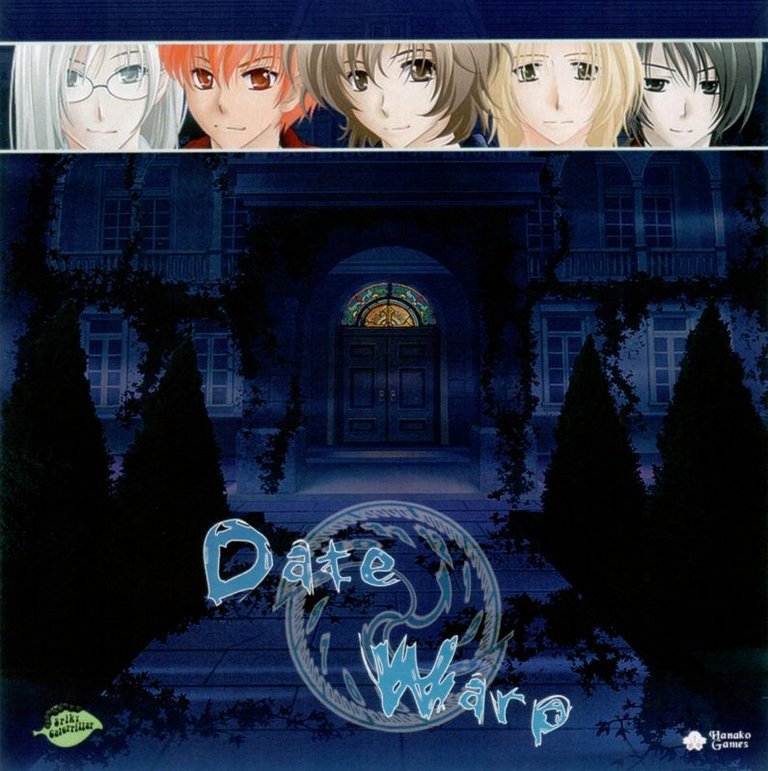
Description
Date Warp is a science fiction visual novel game that follows Janet, a young Indian-American college student, who becomes stranded at a mysterious mansion in the woods after her car breaks down on a first date. The story unfolds as she encounters a group of enigmatic young men living in the house, leading to a series of unexpected twists and turns. Players navigate the narrative by making choices via a unique mini-game, which influences character relationships and leads to one of eleven possible endings.
Where to Buy Date Warp
PC
Date Warp Patches & Updates
Date Warp Guides & Walkthroughs
Date Warp Reviews & Reception
gamesreviews2010.com : Date Warp (2010) is a masterclass in interactive storytelling, offering a thrilling and immersive experience that will stay with you long after you’ve finished playing.
Date Warp: Review
Introduction
In the crowded landscape of indie visual novels, Date Warp (2010) emerges as a fascinating anomaly—a fusion of otome romance, sci-fi mystery, and intricate puzzle mechanics that defies easy categorization. Developed by Spiky Caterpillar and Hanako Games, this tale of a stranded college student trapped in a time-looping mansion has garnered a dedicated cult following over the past decade. Its legacy lies not in blockbuster sales, but in its daring narrative architecture that forces players to dissect a fragmented story through repeated playthroughs. This review deconstructs Date Warp‘s ambitious design, examining how its experimental structure elevates it beyond typical dating-sim tropes while exposing the inherent tensions between player agency and narrative cohesion. Through a lens of both historical context and contemporary relevance, we assess whether Date Warp‘s temporal puzzles and romantic entanglements merit its place in the annals of interactive storytelling.
Development History & Context
Emerging from the fertile indie scene of late 2009, Date Warp was a product of both collaboration and constraint. The title represents a landmark collaboration between two prominent Western visual novel studios: Spiky Caterpillar and Hanako Games, with the latter serving as publisher. This partnership leveraged Hanako Games’ established distribution channels and Spiky Caterpillar’s design sensibilities, resulting in a polished release that defied the amateurish tropes common to the genre at the time.
Technologically, the game was built atop Ren’Py, a free engine that democratized visual novel development but imposed stylistic limitations. Its May 22, 2010 release across Windows, Mac OS X, and Linux was remarkably ambitious for the era, demonstrating rare cross-platform commitment from an indie developer. This multi-platform support reflected the developers’ vision of creating an accessible experience for niche audiences outside mainstream gaming’s AAA orbit.
The creative team operated under significant constraints typical of small studios. With a credited roster of 19 individuals, production relied heavily on asset repurposing—using royalty-free stock art (GothicBohemianStock, Obsidian Dawn) alongside custom character designs by Thorones and event CGs by AQU. This hybrid approach created a visual identity that was both cohesive and inconsistent, a tension visible in the juxtaposition of polished character sprites against generic mansion backgrounds. Notably, the game’s opening theme, “What Lies Beyond” by LeetStreet Boys’ Matthew Myers, represented a rare example of licensed music elevating the atmosphere beyond typical VN sound design.
The 2014 “Silver Edition” Steam release marked a pivotal evolution. Upgrading to Ren’Py 6.99, it introduced a sci-fi-inspired UI overhaul, reworked puzzle logic, and added narrative epilogues—addressing player feedback about abrupt endings. This update cemented Date Warp‘s relevance in an increasingly crowded Steam market, proving its core design had enduring value beyond its initial niche release.
Narrative & Thematic Deep Dive
Date Warp‘s narrative unfolds as a masterclass in controlled fragmentation. The story begins deceptively simply: Janet Bhaskar, an Indian-American college freshman, endures a disastrous first date with Bradley before their car breaks down in a storm. Their refuge in a mysterious mansion triggers the game’s central sci-fi premise: temporal loops force Janet to relive events while retaining fragmented memories. This structure transforms the mansion from a simple setting into a character itself—a labyrinthine prison where spatial and temporal boundaries blur.
The narrative’s genius lies in its multi-layered revelation system. Each playthrough through one of the five romantic routes (Bradley, Nathaniel, Alben, Linds, Rafael) unveils different pieces of the overarching mystery. Emily Short’s analysis highlights this design brilliantly: “No one character has a complete view of the situation. We have to know all of them.” The true ending—unlockable only after completing nearly all other paths—assembles these fragments into a coherent whole, revealing the mansion as a time-displacement experiment gone awry. This approach creates profound thematic resonance about perspective and truth, echoing Pirsig’s Zen and the Art of Motorcycle Maintenance.
Character development operates on parallel tracks. Janet’s arc from socially isolated high school valedictorian to emotionally mature young woman forms the game’s emotional core. Her growth manifests through nuanced dialogue choices that affect relationships—avoiding premature intimacy with Linders or showing empathy to Alben’s hostility. The male archetypes subvert otome tropes: Nathaniel’s “perfect gentleman” facade hides manipulative tendencies, while Alben’s hostility masks protective instincts. Gamasutra’s critique that the game “tries to do some cool things through its interactivity” particularly applies here, as character motivations shift dramatically based on player choices.
Thematic exploration extends surprisingly deep. Religious subtext permeates Nathaniel’s route, questioning self-sacrifice’s morality. State-sponsored healthcare debates emerge through Linds’ scientific explanations. The recurring “equivalent exchange” principle—where temporal displacement requires balanced sacrifice—creates ethical dilemmas that transcend typical VN fare. Yet as Emily Short notes, the structure ultimately undermines these themes through repetition: “The fictive qualities of the story have faded away almost entirely and I’m left with just the mechanism.”
Gameplay Mechanics & Systems
Date Warp‘s core innovation lies in its fusion of visual novel branching with puzzle-based choice mechanics. At critical narrative junctures, players must solve wire-connecting mini-games to “power” their desired dialogue options. These pipe-style puzzles rotate segments to form unbroken circuits from a central light bulb to specific choices—a literal metaphor for rewiring temporal possibilities. The interface brilliantly visualizes cause and effect: misaligned wires result in story dead ends, while correct connections reveal new narrative branches.
The game’s temporal loop system creates a unique replay economy. After reaching an ending, players fast-forward through familiar events to unexplored decision points, gradually assembling the full timeline. Emily Short’s “highly scientific chart” of her playthrough captures this perfectly: initial confusion gave way to the “hideous realization” that unlocking the true ending required multiple playthroughs with each love interest. This structure rewards obsessive completionists while punishing casual players—a tension exacerbated by the arbitrary unlock conditions for the true ending.
Romance mechanics integrate seamlessly into the puzzle framework. Relationship advancement depends on maintaining emotional consistency—showing interest in Nathaniel’s wealth or rejecting Linds’ advances gates different narrative paths. The game implicitly tracks affection through dialogue availability, though it frustratingly obscures the specific conditions for “good” versus “bad” endings for each suitor. This opacity occasionally frustrates, as players must experiment blindly to achieve optimal pairings.
The eleven-ending structure represents both the game’s greatest strength and greatest flaw. While offering remarkable replay value, the repetitive playthroughs necessary to unlock all endings transform Janet’s emotional journey into mechanical labor. As Short notes, “by the time I do get to the final end, you will know the cast of characters quite intimately” but at the cost of narrative immersion. The Silver Edition’s added epilogues partially address this by providing closure without requiring exhaustive replays.
World-Building, Art & Sound
Date Warp‘s atmosphere masterfully juxtaposes mundane domesticity with uncanny science-fiction elements. The mansion serves as a microcosm of temporal displacement—its Victorian architecture clashes with force-field generators and glowing energy conduits. Background art by Minikle and Maitake creates palpable tension through contrasts: cozy fireplaces juxtaposed with humming machinery, rain-streaked windows hiding impenetrable barriers. This visual duality reinforces the game’s central theme of reality’s fragility.
Character art exhibits a distinctive anime/manga sensibility with Western influences. Thorones’ character designs feature exaggerated expressive eyes and stylized features that enhance emotional readability but occasionally verge into uncanny territory. The event CGs by AQU provide rare moments of visual dynamism—particularly the time-displacement sequences where figures dissolve into digital particles. The Silver Edition’s sci-fi UI overhaul added neon circuit overlays and holographic interfaces that better complemented the setting.
Sound design employs subtle environmental storytelling. Pierrotlunaire’s incidental music uses minimalist piano motifs to underscore isolation, while Matthew Myers’ theme “What Lies Beyond” elevates key moments with orchestral swells. Voice acting is absent, but the written dialogue compensates through Janet’s internal monologues that reveal her growing perceptiveness. Sound effects—a ticking clock, electrical hums, and distant screams—create persistent dread without resorting to jump scares.
This cohesive audiovisual package establishes an unsettling mood where temporal anomalies feel tangible. When Janet first encounters the mansion’s force fields, the visual crackling effect paired with dissonant audio cues creates genuine unease. The game’s greatest aesthetic achievement is making abstract physics feel visceral, transforming theoretical concepts into emotional experiences.
Reception & Legacy
Upon release, Date Warp found critical appreciation within its niche. Gamertell’s glowing 92/100 review celebrated its “appealing” art, “nice diversion” puzzles, and “well written” narrative, declaring it accessible to “both men and women.” GameZebo awarded 3/5 stars, acknowledging its appeal to “that niche audience” while criticizing pacing issues in non-true endings. The most incisive analysis came from Gamasutra’s Emily Short, who praised its thematic depth but lamented structural flaws: “Date/Warp is trying to do some cool things through its interactivity, but it could have stood to be a good deal more procedural.”
Commercial performance reflected its cult status. Steam’s 2014 reinvigoration helped it achieve a “Very Positive” 87% user rating (4.5/5 stars), though professional reviews remained scarce. The dedicated community on platforms like Lemma Soft Forums engaged in deep discussions about optimal route orders and character motivations, demonstrating the game’s narrative complexity. Fan-created walkthroughs and theory-crafting extended its life far beyond typical indie visual novels.
Date Warp‘s legacy lies in its influence on Western otome design. Its integration of puzzle mechanics with branching narratives anticipated trends in games like Long Live the Queen and Magical Diary. Hanako Games’ subsequent titles adopted its multi-ending structure but refined the replay mechanics. More broadly, it demonstrated that science-fiction themes could elevate dating-sim tropes, paving the way for genre-blending works like Doki Doki Literature Club!.
However, its structural issues left a cautionary tale. The mandatory replays required for the true ending became a benchmark for avoiding in interactive design, influencing later visual novels to provide clearer progression paths. Yet the game’s core philosophy—that complex mysteries deserve complex solutions—remains influential in narrative-focused indie games.
Conclusion
Date Warp stands as a flawed but fascinating testament to the potential of indie visual novel experimentation. Its wire-puzzle choice mechanics and temporal-loop narrative structure represent one of the most innovative approaches to branching storytelling in the genre’s history. By forcing players to actively reconstruct the plot through repeated playthroughs, it created a uniquely intimate understanding of its characters and world—though at the cost of punishing repetition.
The game’s greatest achievement lies in its thematic ambition. Beyond its otome romance surface, it explores profound questions about perception, sacrifice, and the ethics of time manipulation. The mansion serves as a brilliant metaphor for how isolated experiences create fragmented realities, with only collective effort revealing truth. Yet this depth is ultimately undermined by its own design; the emotional resonance of Janet’s growth is diluted by the mechanical process of unlocking all endings.
Technically, Date Warp exemplifies the strengths and limitations of early Ren’Py development. Its cross-platform commitment and polished art assets (despite their mixed origins) set a high bar for indie VNs, while the Silver Edition’s updates demonstrated impressive post-launch support. The game’s sound design and atmospheric presentation remain exemplary, creating dread through subtle environmental cues rather than overt horror.
In the pantheon of interactive storytelling, Date Warp occupies a unique space—as a historical artifact of Western otome’s formative years and as a case study in narrative design trade-offs. Its legacy is not in perfection, but in ambition. For players willing to endure its structural demands, Date Warp offers one of the most intellectually satisfying and emotionally complex experiences in the visual novel canon. It reminds us that the most innovative games often emerge not from technical mastery, but from the courage to ask players to work for their revelations—one wire connection at a time.