
- Release Year: 2001
- Platforms: Windows
- Publisher: Monte Cristo Multimedia
- Developer: Monte Cristo Multimedia
- Genre: Strategy, Tactics
- Perspective: Isometric
- Game Mode: Single-player
- Gameplay: Business simulation, Managerial, Real-time, Stock trading
- Setting: London, New York, Stock exchange, Tokyo
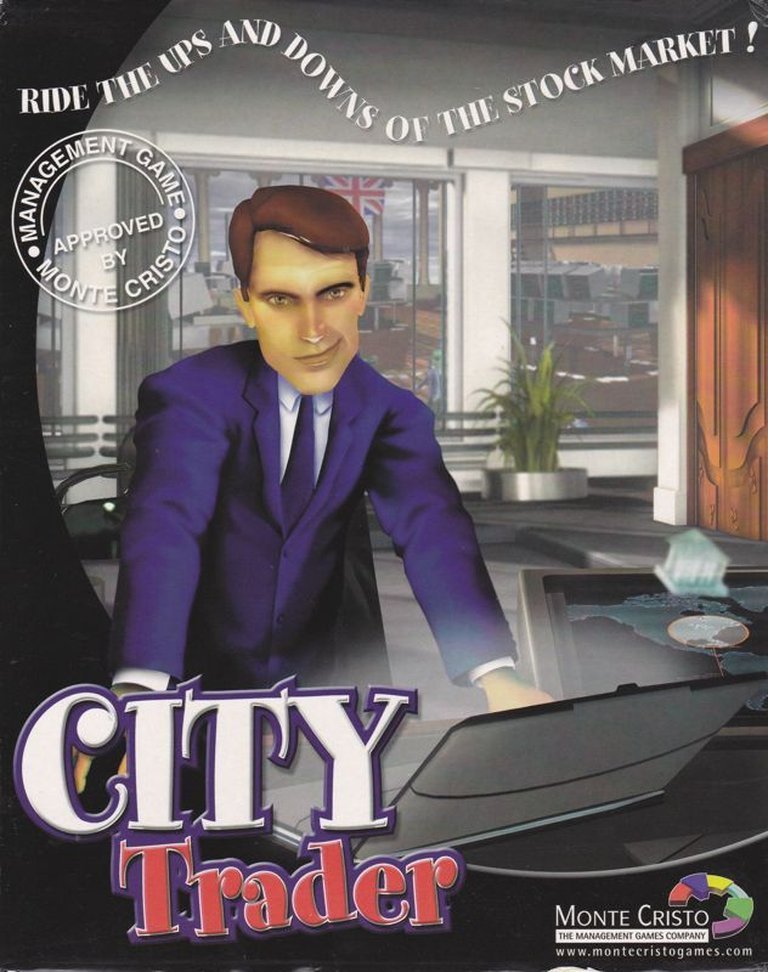
Description
Day Trader is a 2001 real‑time, isometric business‑simulation game that puts you in the shoes of a stock broker on the bustling exchanges of New York, London, or Tokyo. You trade real‑world stocks such as those on the NASDAQ, gather information from press clippings, e‑mails, soundbites and even pub rumors, and tackle a series of increasingly challenging scenarios.
Where to Buy Day Trader
PC
Day Trader: Review
Introduction
“The floor is a battlefield, the ticker tape a war drum.” – a line that could have opened a novel about high‑stakes finance, and it is precisely the atmosphere Day Trader tries to summon. Released in 2001 for Windows, this Monte Cristo title puts the player in the shoes of a stock broker navigating the frenetic markets of New York, London, and Tokyo. The game’s promise is simple yet ambitious: blend real‑world equities (NASDAQ, FTSE, Nikkei) with a real‑time, isometric simulation that rewards information gathering as much as quick decision‑making. My thesis is that Day Trader succeeds in marrying a solid economic model with an evocative, if minimalist, presentation, but its execution is hampered by UI cruft, limited narrative depth, and a market that was already crowded with more polished competitors.
Development History & Context
Studio & Vision
Monte Cristo Multimedia, best known for titles such as Capitalism and Cities XL, assembled a 43‑person team for Day Trader. Lead Development & Interface‑Thibaud Gauthey (Inky) oversaw a project that sought to bring the “stock‑exchange” genre into the early‑2000s PC market, a period when real‑time strategy (RTS) and business simulations were both flourishing and diverging. The team’s stated goal was to “make the market feel alive” by integrating real‑world stock symbols and a dynamic information network (press clippings, e‑mails, pub rumors).
Technological Constraints
The game shipped on CD‑ROM, targeting Windows 95/98/ME platforms. Its isometric engine, a common visual lingua franca for strategy titles of the era, was chosen for its ability to display multiple city hubs without demanding 3‑D hardware acceleration—a practical decision given the diverse hardware of 2001 households. Real‑time market updates relied on a proprietary simulation engine built by Guillaume Drevon (Pod), which generated price movements based on a mixture of deterministic algorithms and pseudo‑random events.
Market Landscape
At the turn of the millennium, the “stock‑trading” niche was already populated by titles like Wall Street Trader 98 (1998) and Wall Street Trader 2000. Meanwhile, mainstream strategy franchises such as Civilization III and Age of Empires II dominated sales charts. Monte Cristo’s entry attempted to differentiate itself by emphasizing information asymmetry: players could gather rumors at a virtual pub or read fabricated press clippings, a mechanic that mirrored real‑world trader behavior but was rarely seen in contemporaneous sims.
Narrative & Thematic Deep Dive
Plot Overview
Unlike narrative‑driven RPGs, Day Trader is scenario‑based. Each scenario thrusts the player into a specific market crisis—e.g., a sudden tech bubble burst in New York or a political upheaval affecting the London pound. The overarching “story” is the player’s ascent from a junior broker to a market titan, measured by portfolio value and reputation.
Characters & Dialogue
The game features a handful of recurring characters, most notably Juliette Fleming (voiced by Mirabelle Kirkland) and her father Lord Fleming (Nicholas Calderbank). Their interactions provide exposition: Juliette offers insider tips, while Lord Fleming serves as a mentor figure warning against reckless speculation. The script, penned by David Hockley (Strider), is peppered with industry jargon, giving the world a veneer of authenticity.
Underlying Themes
- Information Asymmetry – The core mechanic of gathering rumors and press clippings underscores how market advantage often stems from privileged knowledge.
- Risk vs. Reward – Real‑time market fluctuations force players to constantly weigh the potential upside of a trade against the risk of a sudden crash.
- Global Interconnectedness – By allowing play across New York, London, and Tokyo, the game mirrors the real‑world ripple effects of geopolitical events on global equity markets.
These themes are explored through scenario scripts that reference real‑world events (e.g., a “dot‑com bust” scenario reminiscent of the late‑1990s boom‑bust cycle), giving the game a subtle educational bent.
Gameplay Mechanics & Systems
Core Loop
- Information Acquisition – Players skim press clippings, listen to e‑mails, or visit the Pub for rumors.
- Analysis – The UI presents a dashboard of price charts, volatility indicators, and news sentiment.
- Execution – Trades are placed in real time; the market reacts instantly, reflecting both the player’s actions and the AI‑driven macro environment.
- Portfolio Management – Profits are reinvested, and players can diversify across sectors (tech, energy, finance).
Market Simulation
Guillaume Drevon’s AI engine models price movements using a hybrid of mean‑reversion and trend‑following algorithms. Random “news events” (e.g., a corporate scandal) trigger spikes or drops, requiring players to adapt quickly. The simulation is deterministic enough for repeatable scenarios, yet volatile enough to feel alive.
UI & Controls
The isometric view displays a stylized cityscape for each market hub. Overlays include:
- Ticker Tape – Scrolling real‑time price feed.
- News Feed – Clickable headlines that open press clippings.
- Trade Panel – Simple drop‑down menus for buying/selling stocks.
While functional, the UI suffers from overcrowding; the ticker and news feed compete for screen real estate, forcing players to toggle panels frequently. Keyboard shortcuts exist but are not documented, adding to the learning curve.
Character Progression
Instead of traditional RPG leveling, progression is measured by reputation points earned through successful trades and accurate rumor verification. Reputation unlocks higher‑margin accounts and access to exclusive “insider” news sources.
Innovations & Flaws
| Innovation | Description |
|---|---|
| Rumor System | Players can “visit the Pub” to hear unverified tips, introducing a risk‑reward decision: act on a rumor or wait for confirmation. |
| Multi‑City Markets | Simultaneous trading across three major exchanges encourages strategic allocation of capital. |
| Real‑World Stock Symbols | Inclusion of NASDAQ and other real indices adds authenticity. |
| Flaw | Impact |
|---|---|
| Cluttered UI | Hinders rapid decision‑making, especially during volatile market spikes. |
| Limited Depth of Scenarios | Only a handful of preset crises; replayability suffers after mastering them. |
| Sparse Narrative Integration | Characters appear only in tutorial or occasional pop‑ups, limiting emotional investment. |
World‑Building, Art & Sound
Visual Direction
The isometric art style is reminiscent of early‑2000s strategy titles: flat‑shaded buildings, pastel‑tinted skyboxes, and simple sprite‑based characters. The three cities are distinguished by iconic landmarks (Statue of Liberty, Big Ben, Tokyo Tower) rendered in low‑poly form. While not groundbreaking, the visual language effectively conveys a global financial hub without taxing the hardware of the era.
Atmosphere & Audio Design
Daniel Masson’s soundtrack blends ambient office hums with subtle electronic beats, shifting in tempo when market volatility rises. Sound effects—stock‑ticker clicks, telephone rings, and the clink of glasses in the Pub—add texture. Voice‑over lines from Juliette and Lord Fleming are brief but delivered with a polished, professional tone, reinforcing the game’s corporate aesthetic.
Contribution to Experience
The audio‑visual package, though modest, succeeds in immersing the player in a “busy trading floor” atmosphere. The rhythmic ticker and occasional news flash sound cues cue the player to act, aligning with the real‑time nature of the simulation.
Reception & Legacy
Critical & Commercial Reception
Day Trader received minimal critical coverage; the MobyGames entry records only two player ratings averaging 2.3/5, indicating a lukewarm response. Common criticisms noted in user comments (though not formally archived) revolve around the said’s opacity and the game’s lack of a compelling narrative hook. Commercially, the title sold modestly, eclipsed by larger Monte Cristo releases such as Capitalism II.
Evolution of Reputation
Over the past two decades, the game has become a cult curiosity among business‑simulation enthusiasts. Its inclusion of real‑world stock symbols predates later titles like Wall Street Quest (2014) and Stock Market Simulator (2020), which built upon Day Trader’s foundation of integrating live market data. However, the game’s limited AI sophistication and UI shortcomings kept it from achieving lasting mainstream influence.
Influence on Subsequent Games
While not a direct ancestor of any major franchise, Day Trader contributed to a design lineage that values information gathering as a core mechanic in economic sims. The “Pub rumor” system can be seen echoed in later titles that employ “insider tip” mechanics, and its multi‑city market model foreshadowed the global market simulations found in modern games like EVE Online’s market module.
Conclusion
Day Trader stands as an earnest, if imperfect, attempt to capture the pulse of early‑21st‑century financial markets within a real‑time, isometric simulation. Its strengths lie in a solid market engine, the clever incorporation of rumor‑driven information asymmetry, and an atmosphere that feels authentically corporate. Yet, a cramped UI, shallow narrative integration, and limited scenario variety prevent it from reaching the heights of its more celebrated Monte Cristo siblings. In the annals of video‑game history, Day Trader occupies a niche spot: a historical footnote that illustrates both the ambition and the growing of early‑2000s business simulations. For scholars of the genre, it offers a valuable case study; for casual players, it remains a curiosity best approached with tempered expectations.