
- Release Year: 2020
- Platforms: Windows
- Publisher: Moon Metro Digital
- Developer: Moon Metro Digital
- Genre: Action
- Perspective: Side view
- Game Mode: Single-player
- Gameplay: Platform
Description
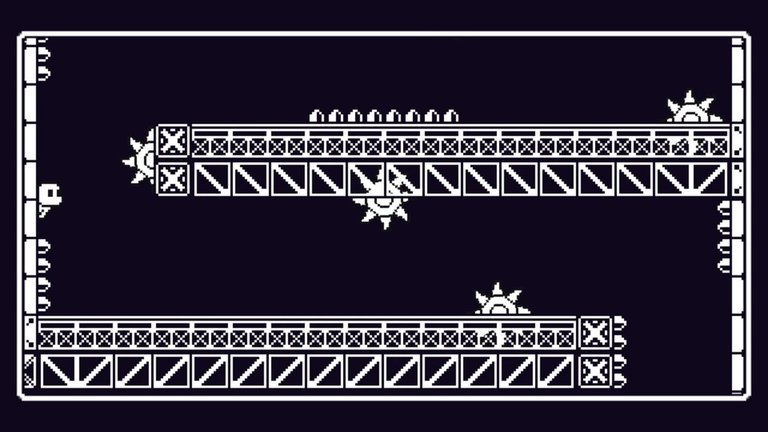
Daydreamour is a short, 1-bit pixel art platformer where players control a game developer navigating a hazardous factory in a daydream. The game features precision platforming mechanics, including running, double jumping, and wall jumps, set against a minimalist black-and-white aesthetic. With a calm yet challenging gameplay style, it offers a mix of familiar obstacles and aerial acrobatics, accompanied by AI-generated low-fi synth music.
Daydreamour Reviews & Reception
waltoriouswritesaboutgames.com : A short (roughly fifteen minutes) precision platformer, in the style of games like the magnificent Celeste.
Daydreamour: A Precision Platformer That Captures the Essence of Creative Escape
Introduction: A Fleeting Yet Memorable Experience
Daydreamour (2020) is a bite-sized, 1-bit platformer that distills the essence of precision movement and creative inspiration into a 15-minute burst of gameplay. Developed by Moon Metro Digital (a solo effort by Jay “Ihzzay” Wilson) in just five days for the Locally Sourced Spring Bundle on itch.io, the game is a love letter to the meditative rhythm of platforming, wrapped in a minimalist aesthetic that belies its depth. While it may lack the polish of a full-scale release, its tight controls, clever level design, and atmospheric charm make it a standout in the indie platformer landscape.
This review will dissect Daydreamour from every angle—its development context, narrative subtleties, mechanical brilliance, and cultural impact—to determine whether it’s a forgotten gem or a curious footnote in gaming history.
Development History & Context: A Game Born from Constraints
The Studio & Creator’s Vision
Moon Metro Digital is the solo venture of Jay “Ihzzay” Wilson, a developer whose work thrives on constraints. Daydreamour was conceived as part of the Locally Sourced Spring Bundle, a charity initiative that challenged creators to produce games quickly for a noble cause. The game’s premise—a developer daydreaming about parkour—mirrors Wilson’s own creative process, blending personal inspiration with technical limitations.
Technological & Temporal Constraints
- Five-Day Development Cycle: The game’s brevity and rough edges are a direct result of its rapid production. Features like fixed resolution (960×540), unrebindable controls, and lack of audio options were sacrifices made to meet the bundle’s deadline.
- 1-Bit Aesthetic: The black-and-white visuals weren’t just a stylistic choice—they were a practical one. By limiting the color palette, Wilson could focus on tight gameplay mechanics without overcomplicating the art pipeline.
- Unity Engine: Built in Unity, Daydreamour leverages the engine’s 2D tools to create a smooth, if simplistic, platforming experience.
The Gaming Landscape in 2020
Daydreamour arrived during a golden age for indie platformers, with titles like Celeste (2018) and Hollow Knight (2017) setting high standards for precision and atmosphere. While it doesn’t reach their depth, it carves out a niche as a “coffee break” platformer—a game designed to be played in short, satisfying bursts.
Narrative & Thematic Deep Dive: The Dream of Movement
Plot & Character
The game’s story is minimal but effective:
– A game developer, stuck in a creative rut, stumbles upon parkour videos online.
– Inspired, they slip into a daydream, envisioning themselves as an agile runner navigating a hazardous factory.
– The factory itself is a metaphor—a maze of obstacles representing creative block, with each successful jump symbolizing a breakthrough.
Themes: Creativity, Flow, and Escapism
- The Creative Struggle: The protagonist’s journey mirrors the developer’s own battle with inspiration. The factory’s hazards (spikes, saws) are the doubts and frustrations that plague artists.
- Flow State: The game’s pacing encourages a meditative rhythm, where players must find their own flow—much like the developer finding their creative groove.
- Escapism Through Play: The act of platforming becomes a stand-in for the joy of creation, a temporary escape from the pressures of real-world work.
Dialogue & Presentation
There is no traditional dialogue—Daydreamour tells its story through environmental storytelling and gameplay mechanics. The lack of text reinforces the dreamlike quality, letting players project their own interpretations onto the experience.
Gameplay Mechanics & Systems: Precision Platforming Perfected
Core Gameplay Loop
- Movement: The protagonist has a weighty, deliberate feel, with a slight acceleration when running. This contrasts with the fluidity of real parkour but creates a satisfying sense of control.
- Double Jump & Wall Jumping: The double jump is generous, resetting upon wall contact, allowing for aerial chain jumps that feel empowering.
- Checkpoints & Difficulty Curve: Checkpoints are spaced just far enough to punish mistakes without frustration, though later sections (especially moving platform sequences) can feel unfair due to respawn timing.
Innovations & Flaws
✅ What Works:
– Tight Controls: The protagonist’s momentum and jump physics feel instinctive, making even repeated failures enjoyable.
– Level Design: Each room introduces a new obstacle (spikes, disappearing platforms, moving saws) without overstaying its welcome.
– AI-Generated Music: The lo-fi synth tracks (created via Ecrett Music) are surprisingly atmospheric, enhancing the dreamlike mood.
❌ What Doesn’t:
– Checkpoint Placement: Some later sections force players to wait for moving platforms to reset, breaking the flow.
– Lack of Polish: No fullscreen option, unrebindable controls, and a fixed window size betray its game jam origins.
Speedrunning & Replayability
Despite its short length, Daydreamour has fostered a small but dedicated speedrunning community, with records hovering around 3:30. The game’s simplicity makes it ideal for score attacks, though the lack of post-launch updates limits its longevity.
World-Building, Art & Sound: Minimalism as a Strength
Visual Design: The Beauty of 1-Bit
- The black-and-white aesthetic is striking, evoking classic Game Boy titles while feeling modern.
- Dust particles, subtle animations, and clean sprite work give the game a handcrafted charm.
- The factory setting is abstract yet immersive, with machinery serving as both obstacles and environmental storytelling.
Sound Design & Music
- The AI-generated soundtrack is a standout, blending chillwave and synthwave to create a hypnotic backdrop.
- Sound effects (jumps, landings, deaths) are minimal but effective, reinforcing the game’s rhythmic flow.
Atmosphere & Immersion
Daydreamour excels at immersive minimalism—its lack of dialogue and sparse visuals force players to engage with the mechanics purely, making every jump feel like a personal triumph.
Reception & Legacy: A Cult Classic in the Making?
Critical & Commercial Reception
- No Major Reviews: Due to its niche release, Daydreamour lacks formal criticism but has garnered praise from indie enthusiasts.
- Player Feedback: On itch.io, it holds a 4.2/5 rating, with players praising its tight controls and short, satisfying length.
- Speedrunning Scene: The game’s speedrun.com page proves its lasting appeal, with runners pushing its limits.
Influence & Industry Impact
While Daydreamour hasn’t reshaped the platformer genre, it stands as a testament to the power of constraints. Its success demonstrates that:
– Short, focused experiences can be just as impactful as sprawling epics.
– AI tools (like Ecrett Music) can aid indie developers in rapid prototyping.
– Game jams remain a vital incubators for innovation.
Conclusion: A Small Game with a Big Heart
Daydreamour is not a masterpiece, but it doesn’t need to be. It’s a perfectly executed micro-platformer—a game that understands its limitations and turns them into strengths. Its tight controls, atmospheric minimalism, and thematic depth make it a hidden gem worth experiencing, especially for fans of Celeste or Super Meat Boy.
Final Verdict: 8/10 – A Precision Platformer Worth Daydreaming About
- For: Fans of short, challenging platformers; speedrunners; lovers of minimalist art.
- Against: Those seeking deep narrative or AAA polish.
- Legacy: A cult favorite that proves great gameplay transcends budget or scope.
If you’ve ever stared at a blank screen, waiting for inspiration to strike, Daydreamour is the game for you—a reminder that sometimes, the best way forward is to just start jumping.
Where to Play: itch.io (Pay What You Want)