
- Release Year: 2019
- Platforms: PlayStation 4, Windows
- Publisher: PlayStation Mobile Inc., Sony Interactive Entertainment America LLC
- Developer: SCE Bend Studio
- Genre: Action, Open World, Sandbox, Stealth, Survival horror
- Perspective: Behind view
- Game Mode: Single-player
- Gameplay: Base building, Combat, Crafting, Motorcycle, Open World, Resource Management, Scavenging, Stealth, Survival
- Setting: North America, Post-apocalyptic
- Average Score: 71/100
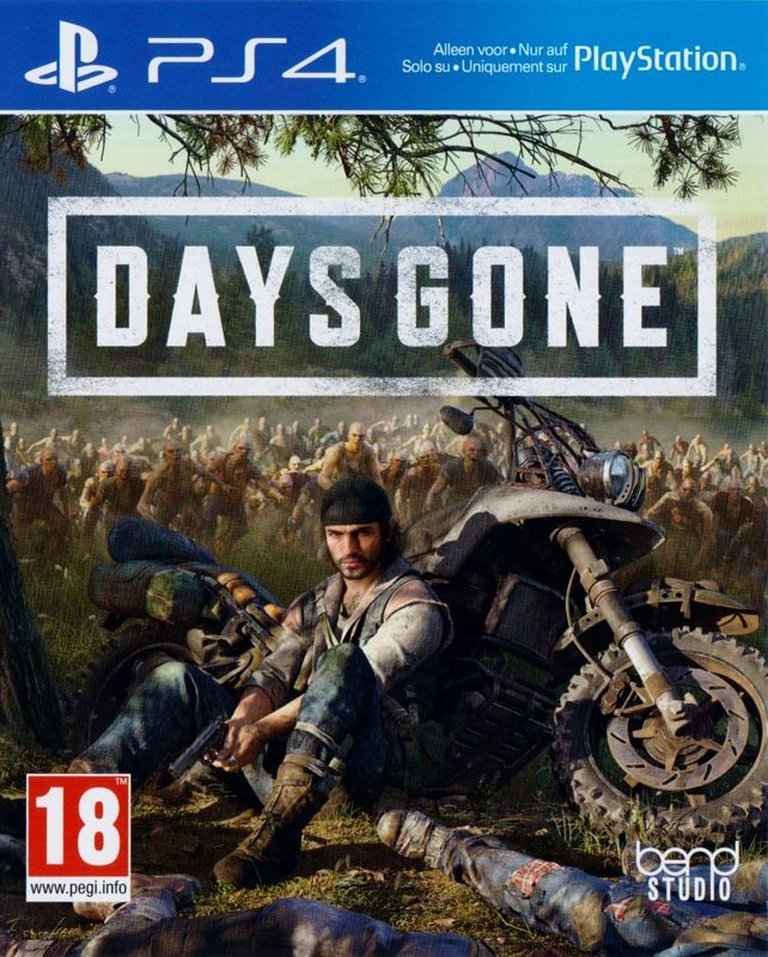
Description
Days Gone is an open-world action game set in a post-apocalyptic North America, where a global pandemic has turned most of humanity into fast, ferocious creatures known as Freakers. Players take on the role of Deacon St. John, a drifter and former biker who navigates a harsh world filled with both infected hordes and dangerous human factions. The game blends survival horror, stealth, and sandbox exploration, with Deacon scavenging for supplies, upgrading his motorcycle, and completing missions that shape the narrative. As the story progresses, more of the map unlocks, revealing refugee camps, bandit strongholds, and NERO checkpoints, while a skill system allows for customization in combat, stealth, and survival abilities.
Gameplay Videos
Where to Buy Days Gone
Days Gone Free Download
Days Gone Patches & Updates
Days Gone Mods
Days Gone Guides & Walkthroughs
Days Gone Reviews & Reception
metacritic.com (71/100): Superb zombie-slaying combat and enjoyable motorcycle gameplay are integrated perfectly with a well-paced story.
ign.com : Days Gone loses its focus with repetitive missions, a meandering storyline, and an excess of bugs and busywork.
gamerant.com : Days Gone Remastered is the complete Days Gone experience, featuring brand-new content and the huge base game.
techradar.com : Days Gone Remastered looks and feels better than the original, offering welcome accessibility features, more challenge, and enhanced visuals.
Days Gone: A Flawed but Fascinating Post-Apocalyptic Odyssey
Introduction: The Road Less Traveled
Days Gone is a game that defies easy categorization. Released in 2019 by Bend Studio, it arrived in a gaming landscape already saturated with post-apocalyptic narratives and open-world survival mechanics. Yet, despite its familiar trappings, Days Gone carves out its own identity through a relentless focus on survival, a uniquely tense horde mechanic, and a protagonist whose journey is as much about internal redemption as it is about external survival. This review will dissect Days Gone in exhaustive detail, exploring its development, narrative depth, gameplay systems, world-building, and legacy to determine whether it stands as a misunderstood gem or a flawed experiment in open-world design.
Development History & Context: Bend Studio’s Gamble
From Handhelds to the Open World
Bend Studio, a first-party Sony developer, had spent decades crafting handheld spin-offs like Syphon Filter and Uncharted: Golden Abyss before embarking on Days Gone. This was their first original IP since Syphon Filter (1999) and their first foray into open-world design—a monumental shift for a studio accustomed to linear, tightly scripted experiences. The game’s development spanned six years, with the team expanding from 50 to over 130 members to tackle the ambitious project.
Inspirations and Constraints
The developers drew heavily from World War Z, The Walking Dead, and Sons of Anarchy, blending the relentless horror of zombie hordes with the brotherhood and outlaw ethos of biker culture. The Pacific Northwest setting was chosen for its diverse landscapes—dense forests, volcanic craters, and arid deserts—which provided a stark contrast to the urban decay of other post-apocalyptic games.
Technological Challenges
Built on Unreal Engine 4, Days Gone pushed the PlayStation 4’s hardware to its limits. The game’s most ambitious feature—the dynamic horde system—required innovative AI programming to manage hundreds of enemies at once. The team divided hordes into smaller clusters to optimize performance, ensuring that the swarms felt overwhelming without crashing the game.
A Troubled Launch
Days Gone was delayed multiple times, finally releasing in April 2019 to mixed reviews. Critics praised its technical achievements but criticized its repetitive missions and uneven pacing. Despite this, the game sold over 7 million copies, proving its commercial viability even as Sony reportedly rejected a sequel pitch.
Narrative & Thematic Deep Dive: The Weight of Survival
Plot Overview
Days Gone follows Deacon St. John, a former outlaw biker turned drifter, as he navigates a world ravaged by a pandemic that turned millions into “Freakers”—fast, feral creatures that hunt in packs. The story begins with Deacon believing his wife, Sarah, is dead, only to discover she may still be alive. His journey to find her becomes a quest for redemption, forcing him to confront his past, his losses, and the moral ambiguities of survival.
Character Analysis
– Deacon St. John: A complex protagonist, Deacon is a man defined by his losses. His dialogue is often gruff and cynical, but his actions reveal a deep-seated compassion. His relationship with Boozer, his best friend and fellow biker, is the emotional core of the game, providing moments of levity and camaraderie amid the bleakness.
– Sarah Whitaker: Deacon’s wife, a scientist whose research may hold the key to understanding the Freakers. Her character arc is one of resilience, as she transitions from a presumed victim to a determined survivor.
– Boozer: The comic relief and heart of the game, Boozer’s loyalty to Deacon is unwavering. His injury and subsequent amputation serve as a catalyst for Deacon’s character growth.
– Colonel Garret: The primary antagonist, a religious fanatic who leads the Deschutes County Militia. His descent into madness and genocidal tendencies highlight the dangers of unchecked power in a lawless world.
Themes
1. Redemption and Loss: Deacon’s journey is a quest to atone for his past mistakes and find meaning in a world that has taken everything from him.
2. The Cost of Survival: The game explores the moral compromises required to survive, from betrayal to violence, and the psychological toll it takes on its characters.
3. Brotherhood and Loyalty: The bonds between Deacon, Boozer, and the survivors they encounter are central to the narrative, emphasizing the importance of human connection in a broken world.
4. The Illusion of Control: The Freakers, with their unpredictable hordes and evolving behavior, symbolize the chaos that cannot be tamed, no matter how hard humanity tries.
Dialogue and Writing
The writing in Days Gone is uneven. While some dialogue shines—particularly the banter between Deacon and Boozer—other exchanges feel stiff or overly expositional. The game’s pacing suffers from a slow start, with the first act dragging as it introduces mechanics and side characters. However, the narrative gains momentum in the second half, culminating in a climactic confrontation with the Militia and a haunting revelation about NERO’s true intentions.
Gameplay Mechanics & Systems: Survival on Two Wheels
Core Gameplay Loop
Days Gone is structured around a loop of scavenging, crafting, and combat. Players explore the open world, gather resources, and complete missions to progress the story and unlock new abilities. The game’s systems are interconnected, with each element feeding into the others.
Combat and Stealth
– Firearms and Melee: Deacon can carry up to four weapons at a time, including pistols, rifles, shotguns, and melee tools like baseball bats and machetes. Each weapon has unique attributes, and higher-tier firearms can be purchased or found in the world.
– Stealth Mechanics: Stealth is viable but often clunky. Deacon can perform silent takedowns, but the AI’s detection system is inconsistent, leading to frustrating moments where enemies spot him from unreasonable distances.
– Horde Encounters: The game’s standout feature, hordes are massive groups of Freakers that roam the world dynamically. Engaging them requires preparation—traps, explosives, and environmental hazards are essential for survival. The tension of these encounters is unmatched, but their repetition can make them feel like a chore.
Progression and Upgrades
– Skill Trees: Deacon earns XP by completing missions and killing enemies, unlocking abilities in three trees: Melee, Ranged, and Survival. These skills enhance combat efficiency, stealth, and resource management.
– Bike Customization: Deacon’s motorcycle is his lifeline, serving as both transportation and mobile inventory. Upgrades improve its speed, durability, and fuel efficiency, but the need to constantly refuel and repair it can feel tedious.
Scavenging and Crafting
– Resource Management: The game’s survival mechanics require players to scavenge for materials to craft weapons, healing items, and traps. This system is deep but often overly punishing, especially in the early game where resources are scarce.
– Dynamic World: The world reacts to Deacon’s actions. Clearing a horde or an enemy camp makes the area safer, but resources respawn over time, encouraging revisits.
UI and Navigation
The game’s UI is functional but cluttered. The mini-map is essential for navigation, but the lack of a compass or more intuitive waypoint system can make exploration frustrating. Fast travel is limited by fuel and the need to clear Freaker nests, which adds realism but can feel like artificial padding.
World-Building, Art & Sound: A Hauntingly Beautiful Wasteland
Setting and Atmosphere
Days Gone’s Pacific Northwest is a character in its own right. The world is divided into distinct regions, each with its own environmental hazards and aesthetic. The dense forests of the north contrast with the volcanic landscapes of the south, creating a sense of place that few open-world games achieve.
Visual Design
The game’s art direction is striking, with a muted color palette that emphasizes the bleakness of the world. The Freakers are particularly well-designed, with their emaciated bodies and erratic movements making them unsettling foes. The dynamic weather system—rain, snow, and fog—adds to the immersion, though it can sometimes obscure visibility during combat.
Sound Design
The audio design is exceptional. The Freakers’ guttural screams and the distant howls of hordes create a constant sense of dread. The game’s soundtrack, composed by Nathan Whitehead, blends folk Americana with rock elements, perfectly complementing the setting. The voice acting, particularly Sam Witwer’s portrayal of Deacon, is a highlight, though some side characters suffer from wooden delivery.
Reception & Legacy: A Divisive Masterpiece
Critical Reception
Days Gone received mixed reviews at launch, with critics praising its technical achievements and horde mechanics but criticizing its repetitive missions and uneven narrative. The game’s Metascore of 71 on PlayStation 4 reflects this divide, though the PC version fared slightly better with a score of 76.
Commercial Success
Despite the lukewarm reception, Days Gone was a commercial hit, selling over 7 million copies. Its success on PC, where it benefited from modding and improved performance, helped cement its legacy as a cult favorite.
Influence and Future
The game’s horde mechanics have influenced subsequent titles, and its remastered version on PlayStation 5 (2025) introduced new modes like Horde Assault and permadeath, catering to fans of survival challenges. While a sequel remains unlikely, Days Gone’s world and mechanics have left a lasting impact on the genre.
Conclusion: A Flawed but Unforgettable Journey
Days Gone is a game of contradictions. It is simultaneously ambitious and flawed, breathtaking and frustrating, deeply emotional and mechanically repetitive. Yet, for all its shortcomings, it offers an experience that few games can match—a relentless, immersive survival odyssey that tests the player’s resolve as much as Deacon’s.
Final Verdict: 8/10 – A must-play for fans of survival horror and open-world games, Days Gone is a flawed gem that deserves recognition for its bold vision and unforgettable moments. While it may not reach the heights of The Last of Us or Red Dead Redemption 2, it carves out its own niche in the post-apocalyptic genre, proving that even in a world overrun by zombies, there’s still room for redemption.