
- Release Year: 2016
- Platforms: Windows
- Publisher: Culture Select LLC
- Developer: 773
- Genre: Adventure, Simulation
- Perspective: 1st-person
- Game Mode: Single-player
- Gameplay: Visual novel
- Setting: North America, Western
Description
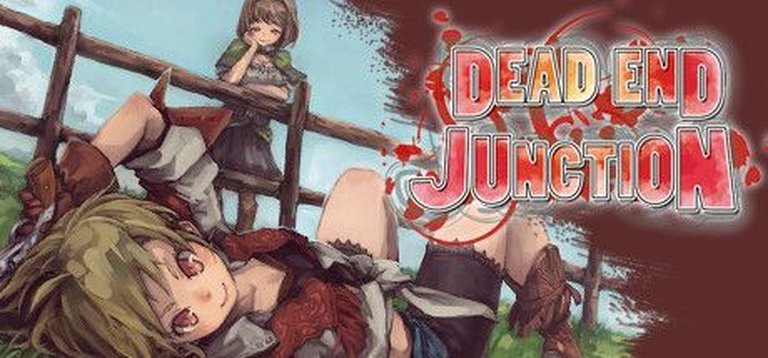
Dead End Junction is a kinetic visual novel set in a stylized Wild West North America, featuring first-person fixed-screen gameplay with anime-inspired art and a point-and-click interface. Developed by 773 and published by Culture Select LLC, the game presents a linear, well-written narrative designed for a younger audience, avoiding typical frontier harshness, and is distinguished by its deliberate grainy and dusty visual aesthetic.
Where to Buy Dead End Junction
PC
Dead End Junction Reviews & Reception
operationrainfall.com : The story is told rather well, in an unconventional visual novel/comic book hybrid style.
Dead End Junction: A Kinetic Novel of the Wild West
Introduction: The Allure of the Digital Dime Novel
In the vast landscape of visual novels, where romance, horror, and fantasy often dominate, Dead End Junction stands as a rugged outlier—a Japanese kinetic novel that transports players to an alternate American Wild West. Released in 2016 by indie developer 773 and localized by startup publisher Culture Select, this title eschews the genre’s common tropes for dusty trails, moral ambiguities, and a protagonist whose greatest desire is to escape the monotony of her one-horse town. Drawing inspiration from classic Western films and literature, Dead End Junction weaves a narrative that is simultaneously familiar and subversive, tackling themes of discrimination, war trauma, and the elusive nature of adventure. Yet, beneath its compelling premise and distinctive art style lies a product of its doujin origins—flawed, incomplete, and hauntingly unresolved. This review argues that Dead End Junction is a significant, if imperfect, artifact in visual novel history: a testament to indie ambition that merges Western aesthetics with Japanese storytelling, but one ultimately constrained by its kinetic format, technical shortcomings, and a narrative that gestures toward sequelization that never came.
Development History & Context: From Doujin Circles to Steam Global
The Creators and Their Vision
Dead End Junction is the brainchild of Hidume, the sole member of the Japanese doujin circle 773. Prior to this project, Hidume had established a reputation with the Cherry Tree High series, known for its humor and slice-of-life scenarios. However, Dead End Junction represents a deliberate pivot toward serious, thematically dense storytelling, fueled by Hidume’s passion for classic Westerns like The Magnificent Seven and The Good, The Bad and The Ugly. The project’s genesis can be traced to the early 2010s, with the original Japanese release split into four episodic chapters from 2011 to 2013. This episodic approach was common in doujin visual novels, allowing creators to release content incrementally and build a community.
Technologically, the game was built using the KiriKiri / KAG engine, a popular choice for Japanese visual novels due to its flexibility and ease of use for independent developers. However, this came with constraints typical of doujin production: limited resources for voice acting, complex animations, or extensive branching narratives. The decision to make Dead End Junction a kinetic novel—a linear, non-interactive story—was likely a pragmatic one, allowing Hidume to focus on narrative and art without the overhead of choice-based systems.
The Localization and Western Release
The game’s Western debut in September 2016 was handled by Culture Select LLC, a fledgling publisher making its localisation debut. This context is crucial: Culture Select was taking a risk on a niche title, translating a doujin work that had minimal exposure outside Japan. The localization process appears meticulous, with reviewers noting clean dialogue and no obvious grammatical errors—a testament to Culture Select’s commitment to quality despite their nascent status. The release as a complete package on Steam (and initially via MangaGamer) bundled all four episodes, a significant improvement over the staggered Japanese releases, and priced at $8.99, positioning it as an affordable entry in the visual novel market.
Gaming Landscape of the Mid-2010s
The mid-2010s saw a surge in visual novels on Steam, driven by titles like Danganronpa and Ace Attorney adaptations, as well as indie Western-made VNs. However, Western-themed visual novels were rare, especially those with Japanese aesthetics. Dead End Junction thus occupied a unique niche, appealing to players interested in historical settings but weary of mainstream genres. Its release also coincided with growing interest in “serious” visual novels that addressed social issues, such as The House in Fata Morgana or Umineko When They Cry. In this context, Dead End Junction was an ambitious attempt to merge historical allegory with the visual novel format, albeit one overshadowed by lack of marketing and the sheer volume of competing titles.
Narrative & Thematic Deep Dive: Boredom, Adventure, and the Cost of Progress
Plot Synopsis and Structure
The story unfolds through the eyes of Josette Jowsten, a tomboyish teenager in the desolate frontier town of Cow Stone Bell. Dissatisfied with her mundane life under the care of her slovenly uncle, Josette lives vicariously through dime novels that romanticize the Wild West. Her world upturns when a letter from the President arrives, addressed to her absent bounty hunter father. Frustrated, she discards it, only to be swept into a storm that injures her friend Flannel and introduces a sinister black-coated figure. Compelled by curiosity and a thirst for adventure, Josette sets out to find the President, joined by a motley crew: the laid-back Jobs Carodine, the enigmatic Fuuro named Rashenka Enrikimari Inaho (nicknamed Inaho), and the quirky Bizkit.
The narrative is divided into four chapters, each functioning as a mini-arc that escalates the stakes. Initially lighthearted and comedic, the tone darkens as Josette confronts the grim realities of her world—racial persecution of the Fuuro, the lingering scars of the “Border War” (a fictional analog to the American Civil War), and the moral complexities of violence. Key plot points include encounters with the vengeful war veteran Laramie Beth, the mysterious Wolfking, and the revelation of Josette’s father’s fate. The story culminates in an open-ended finale that hints at larger conflicts, leaving numerous threads unresolved.
Character Dynamics and Development
Josette is a proactive, rebellious protagonist whose journey is one of disillusionment. Her initial naivety—romanticizing adventure—clashes with the harsh truths she witnesses, particularly the systemic oppression of the Fuuro. Her relationships evolve notably with Inaho, a Fuuro who serves as her guide and moral compass. Their bond is nuanced; Inaho’s calm demeanor contrasts with Josette’s impulsiveness, and their interactions are layered with mutual respect and unspoken tension. Reviews from Otaku Aniverse highlight that their dynamics are “well-fleshed out,” though the development is gradual, becoming apparent only after initial chapters.
Supporting characters like Jobs and Bizkit provide comic relief but also depth. Jobs’ laziness masks a tragic past, while Bizkit’s effeminate nature invites speculation about his gender identity and potential yuri subtext with Josette—a topic discussed in Steam community threads. The developer, Culture Select, acknowledged that relationships are “personal” and depend on the “thickness of your yuri goggles,” indicating intentional ambiguity. This approach aligns with Japanese media’s tendency to imply queerness without explicit confirmation, catering to diverse reader interpretations.
Villains such as Beth and the Black Knight are less developed, serving more as archetypes of trauma and mystery. However, their roles underscore the game’s themes: Beth embodies the destructive cycle of war-induced madness, while the Black Knight represents the faceless bureaucracy that exploits the Fuuro.
Themes: Allegory and Social Commentary
Dead End Junction uses its alternate history to mirror real-world issues. The Fuuro, a humanoid species with animal ears (kemonomimi), are segregated and stigmatized, directly analogous to the treatment of Native Americans. The “Border War” parallels the Civil War, with veterans like Beth struggling with PTSD and societal neglect. These allegories are not subtle—the game explicitly draws connections, as noted in Siliconera’s analysis—but they are integrated into character arcs rather than preached. For instance, Inaho’s experiences as a Fuuro offer firsthand insight into racism, while Josette’s coming-of-age involves recognizing her own privilege.
The theme of adventure versus reality is central. Josette’s dime novels promise heroism and excitement, but her journey reveals violence, loss, and bureaucratic indifference. This deconstruction of Western tropes is sophisticated, rejecting myths of manifest destiny and lone heroes. Yet, the game balances gravity with humor—Josette’s snarky observations and situational comedy prevent the narrative from becoming oppressive, a balance praised in reviews.
Pacing and Episodic Structure
The four-chapter structure aids pacing, providing natural breakpoints and escalating tension. However, it also fragments character development, as noted by Drastik Measure’s review: introducing many characters per chapter can blur main versus side roles, diluting emotional impact in later chapters. The episodic release history (2011-2013 in Japan) may have influenced this, with each chapter designed to stand somewhat alone. The Western bundled release mitigates this by allowing binge-playing, but the cumulative effect still leaves some characters underutilized (e.g., Flannel, per Operation Rainfall).
The Unresolved Ending and Sequel Tease
The finale is bittersweet, resolving immediate conflicts but teasing larger conspiracies involving the Fuuro and the government. Reviews universally critique this as a “sequel bait” that never materialized. As Operation Rainfall notes, the chapters were completed by 2009, yet no sequel has been announced, with 773’s next project being an SRPG in the same setting but still in early development. This leaves players with a sense of incompleteness, undermining the narrative’s satisfaction. Had the final scene been omitted, the ending might have felt more conclusive, as suggested by Operation Rainfall.
Gameplay Mechanics & Systems: The Kinetic Novel Paradigm
Core Gameplay Loop
As a kinetic novel, Dead End Junction offers zero interactivity beyond advancing text. Players click or press keys to progress through scenes, with no choices to alter the story. This design reinforces the narrative’s linearity, emphasizing themes of fate and inevitability—Josette’s journey is preordained, much like the tragic histories she uncovers. The loop is simple: read dialogue and narration, absorb visuals and sound, advance. This minimalism is a double-edged sword: it ensures focus on the story but may deter players seeking agency.
Interface and Presentation
The interface uses a point-and-select system typical of visual novels, but with a unique comic book panel layout. Dialogue appears in speech bubbles positioned dynamically around character portraits, mimicking manga panels. This innovation, praised by Drastik Measure as helping “accessibility,” creates a dynamic reading experience that breaks monotony. However, it has drawbacks: the floating textboxes (as noted on VNDB) can occasionally obscure backgrounds, and the use of Comic Sans MS for dialogue—cited by Operation Rainfall and others—feels jarringly casual for a serious Western setting. This font choice undermines immersion, suggesting a lack of polish in localization or design.
Player progression is facilitated by a save/load system at any point, standard for the genre. There are no gameplay systems like stats or inventory; the “gameplay” is purely narrative consumption. This aligns with the kinetic novel ethos, where the focus is on storytelling rather than challenge.
Innovations and Flaws
The comic book style is the game’s most notable innovation. By varying panel composition and text placement, it keeps the visual presentation engaging, differentiating Dead End Junction from static visual novels. However, this style can become repetitive over 8-10 hours, as noted in reviews. The sound design, while effective with gunshots and ambient effects, suffers from repetition—the same tracks loop frequently, detracting from long sessions.
The absence of voice acting is a compromise given the $8.99 price point. As Operation Rainfall observes, full voicing would have been costly for a linear novel with extensive dialogue, but partial voice acting (as seen in Harmonia) could have enhanced emotional beats. This omission is a missed opportunity but understandable for a doujin project.
World-Building, Art & Sound: Crafting an Alternate Frontier
Setting and Atmosphere
Dead End Junction‘s world is an alternate North America where the “Fuuro” (a fictional species) coexist uneasily with humans after a war. The setting blends historical Western elements—dusty towns, saloons, horseback riding—with fantastical touches like kemonomimi characters and subtle magic. This fusion creates a unique atmosphere: familiar yet alien, allowing the game to explore real-world issues through metaphor. The “one-horse town” of Cow Stone Bell feels isolated and decaying, while later locations like bustling cities and war-torn zones highlight societal divides.
Visual Direction
The art style is a standout feature. Character designs by suzuno and Makoto Satoma (credited as Nike) are detailed yet grounded, avoiding exaggerated anime tropes. Josette’s practical cowgirl attire, Inaho’s serene look, and Jobs’ lazy posture all reflect their personalities. Backgrounds by Ichiro Matsura, Aki, and Kureta capture the West’s desolation—cracked earth, weathered wood, vast skies—with a grainy, dusty filter that evokes old photographs or comic prints. This aesthetic reinforces the “digital dime novel” concept, making players feel like they’re reading a rare, aged booklet.
The panel-based composition, as analyzed by Drastik Measure, mimics penny dreadfuls or manga, with scenes framed like comic strips. This choice enhances readability and visual interest, but can clutter during action sequences. Still, it distinguishes Dead End Junction from more conventional visual novels, aligning with its thematic nod to frontier storytelling.
Sound Design and Music
The soundtrack, composed by The Faces, heavily leverages Western motifs: acoustic guitars, harmonicas, and arrangements of classics like “When Johnny Comes Marching Home” and “Home on the Range.” These tunes are recognizable yet adapted to fit the game’s mood, blending nostalgia with originality. Sound effects—gunshots, horse hooves, storm rumbles—are crisp and context-appropriate, adding tension to key scenes. However, as several reviews note, the music loops become repetitive, diminishing impact over time. The lack of voice acting, while a budget decision, also means emotional weight relies solely on text and visuals, which sometimes limits character depth.
Reception & Legacy: A Cult Classic with Caveats
Critical and Commercial Reception
At launch, Dead End Junction received moderately positive reviews from critics, averaging 77% on MobyGames from three sources. Drastik Measure lauded it with 92%, praising its “solid writing, a good plot and action,” while Operation Rainfall and 336GameReviews each gave 70%, noting its “interesting, well-written story” but criticizing repetitive music and the unresolved ending. On Steam, user reviews are “Mostly Positive” (93% of 29 reviews as of early data, later 93% of 47 reviews per Steambase), with players highlighting its unique setting and character-driven narrative.
Commercially, the game likely recouped its modest costs given its low price point and niche appeal. However, it never achieved mainstream success, remaining a hidden gem among visual novel enthusiasts. Its presence on platforms like Steam and MobyGames, with only 8-7 collectors listed, underscores its cult status.
Evolution of Reputation
Over time, Dead End Junction‘s reputation has solidified as a beloved but flawed title. It’s frequently recommended in forums for fans of Westerns or unconventional VNs, but its technical issues (Comic Sans, repetitive soundtrack) are consistently cited. The yuri subtext discussions—such as those on Steam—have kept it relevant in LGBTQ+ gaming circles, though the ambiguous handling frustrates some seeking explicit representation.
Influence and Industry Impact
In terms of influence, Dead End Junction has not spawned direct successors, but it exemplifies the potential of indie visual novels to explore non-traditional settings. Its blend of historical allegory with anime aesthetics paved the way for later titles like Furifuri (also by 773) or other Western-themed doujin works. However, its impact is limited by its obscurity and the niche nature of doujin localization. The announced SRPG by 773 set in the same universe suggests the world has legs, but as of now, no sequel to Dead End Junction exists, leaving its narrative legacy hanging.
Culturally, the game contributes to the “wild west” genre in gaming by offering a Japanese perspective—less about rugged individualism and more about community, discrimination, and the cost of progress. This aligns with global trends in historical reinterpretation, though it remains a footnote rather than a milestone.
Conclusion: A Flawed Gem of the Frontier
Dead End Junction is a paradox: a game that aspires to grand thematic statements but is hamstrung by its own form. Its strengths are undeniable—a compelling protagonist, a smart allegorical framework, and a visual style that breathes fresh air into the visual novel medium. Hidume’s writing balances humor and pathos effectively, and the art team’s work creates an immersive, if grainy, frontier atmosphere. For $8.99, it offers a substantial 10-hour read that challenges players to think about history and prejudice.
Yet, its flaws are significant. The kinetic format, while thematically fitting, feels restrictive in an era where player agency is expected. Technical issues like Comic Sans font and repetitive music mar the experience, and the sequel-teasing ending without payoff leaves a bitter aftertaste. Most critically, the episodic structure dilutes character development, making the cast feel somewhat disposable.
In video game history, Dead End Junction occupies a curious space. It is not a landmark title like Steins;Gate or Clannad, but it is a noteworthy experiment in cross-cultural storytelling. It demonstrates how indie developers can repurpose genre conventions for social commentary, even with limited resources. For historians, it represents a moment when Western-themed visual novels briefly flickered in the spotlight, offering a template that few followed. As a review verdict: Dead End Junction is highly recommended for visual novel aficionados seeking something different, but approached with tempered expectations. It is a journey worth taking, but one that reminds us why not all roads lead to satisfying conclusions—a fitting metaphor for the Wild West itself.