
- Release Year: 2019
- Platforms: PlayStation 4, Windows, Xbox One
- Publisher: Koei Tecmo America Corp., Koei Tecmo Games Co., Ltd.
- Genre: Compilation
- Perspective: Third-person
- Adult Content: Yes
Description
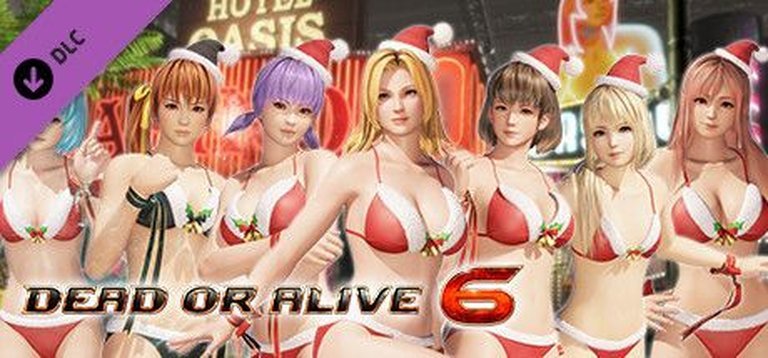
The Dead or Alive 6: Santa Bikini Set is a downloadable content compilation that adds festive Santa-themed bikini costumes for 19 female characters, including Ayane, Christie, Helena, Hitomi, Honoka, Kasumi, Kokoro, La Mariposa, Leifang, Marie Rose, Mila, Momiji, NiCO, Nyotengu, Phase 4, and Tina. Released on December 16, 2019 for Windows, PlayStation 4, and Xbox One, this holiday-themed customization pack transforms fighters into festive attire while enhancing the core Dead or Alive 6 experience through vibrant seasonal visuals.
Dead or Alive 6: Santa Bikini Set Mods
Dead or Alive 6: Santa Bikini Set Reviews & Reception
gamearchives.net : This review will dissect the Santa’s Helper Costume Set from every angle—its development, narrative implications (or lack thereof), gameplay impact, artistic design, reception, and legacy—ultimately answering whether it’s a worthwhile addition to the DOA6 experience.
Dead or Alive 6: Santa Bikini Set: Review
Introduction
The Dead or Alive series has long been synonymous with high-octane martial arts combat and a bold, unapologetic approach to character aesthetics. Since its inception in 1996, Team Ninja’s flagship franchise has balanced intricate fighting mechanics with a catalog of visually striking, often provocative, customization options. Dead or Alive 6 (2019) continued this legacy, refining its signature “Triangle System” (rock-paper-scissors dynamics of strikes, throws, and holds) while facing criticism for a sparse base experience. Enter the Santa Bikini Set, a downloadable content (DLC) compilation released on December 16, 2019. This pack transforms 16 female fighters into holiday-themed spectacle, swapping traditional attire for festive, form-fitting bikinis complete with Santa hats, fur trim, and candy cane accents. While seemingly a niche novelty, the set encapsulates DOA6’s identity as a fusion of competitive depth and fan-service excess. This review dissects its development, thematic implications, gameplay integration, artistic execution, and legacy, arguing that the Santa Bikini Set is both a microcosm of modern DLC monetization and a testament to the franchise’s unwavering commitment to visual spectacle.
Development History & Context
The Santa Bikini Set emerged from Koei Tecmo and Team Ninja’s aggressive post-launch strategy for DOA6. Released just nine months after the base game’s March 2019 launch, it served as a seasonal cash grab timed for the holiday season—a calculated move to capitalize on year-end consumer spending. By late 2019, DOA6 was already saturated with costume packs (e.g., Sexy Bunny, Hot Summer, Witch Party), positioning Team Ninja as pioneers in fighting game DLC saturation. The studio’s dual reputation—technical mastery in combat design paired with relentless monetization—was evident here. The Santa Bikini Set leveraged DOA6’s robust character customization engine, which supported dynamic cloth physics and texture mapping, ensuring bikini fabric would react fluidly to combat animations. However, development faced constraints: licensing complexities excluded crossover characters like Mai Shiranui and Kula Diamond, while the need for players to own base characters reinforced the game’s fragmented monetization.
The 2019 gaming landscape normalized cosmetic DLC, with titles like Street Fighter V and Tekken 7 adopting similar strategies. Unlike Mortal Kombat 11’s lore-driven skins, DOA6’s approach was purely transactional. The Santa Bikini Set epitomized this, priced at $24.99 for the full bundle or $1.99 per individual costume. It was bundled in Season Pass 3 ($79.99), alongside sets like Witch Party and Energy Up! Training Wear. This “à la carte” model, while profitable, sparked debate about value, as the set offered no new gameplay systems or narrative hooks—a recurring criticism of DOA6’s post-launch content.
Narrative & Thematic Deep Dive
Dead or Alive 6’s narrative—centered on cloning, corporate espionage, and supernatural ninjutsu—provides no context for the Santa Bikini Set. There are no holiday-themed intros, story cutscenes, or lore justifications for why assassins like Ayane or ninjas like Kasumi would don revealing beachwear in midwinter. The set exists purely as fan-service, devoid of narrative cohesion. Thematically, it underscores DOA’s long-standing tension between combat realism and stylized excess. The “sexy Santa” trope dominates female characters: Kasumi’s frilly red bikini, Helena’s lace-trimmed white ensemble, and Marie Rose’s candy-colored designs prioritize titillation over festive logic. In contrast, male characters were excluded entirely, reinforcing gendered expectations.
Yet, the set’s absurdity offers a meta-commentary on the franchise’s identity. Seeing stoic fighters like Nyotengu or Phase 4 in Santa bikini hats creates a jarring, humorous dissonance. This “festive absurdity” humanizes characters, transforming lethal ninjas into parodies of holiday kitsch. It reflects DOA’s core appeal: not just martial arts drama, but a playful celebration of character identity. However, the lack of male costumes highlights a thematic imbalance, reducing women to objects of seasonal spectacle while male fighters remain “serious”—a missed opportunity to subvert expectations.
Gameplay Mechanics & Systems
The Santa Bikini Set is exclusively cosmetic, leaving DOA6’s combat untouched. The Triangle System—where strikes beat throws, throws counter holds, and holds defeat strikes—remains the focus, and bikinis offer no stat modifiers or move-set alterations. Yet, their integration impacts gameplay psychology. The “Santa Effect” describes how costumes alter player perception: a Kasumi player in a bikini might adopt a more aggressive stance, while facing a Nyotengu in festive attire could disrupt an opponent’s concentration. This psychological layer, though intangible, adds depth to the DOA6 experience, where aesthetics influence mindset.
Customization is seamless via DOA6’s menu, but the set’s lack of a dedicated “holiday” filter forces manual scrolling—a minor inconvenience. Premium Tickets allow individual purchases from owned sets, preventing redundant buys but emphasizing the game’s nickel-and-dime strategy. Critically, the set requires players to own base characters, creating a paywall for non-DLC fighters like Rachel (whose Santa bikini is sold separately). This fragmented approach undermines accessibility, prioritizing profit over player convenience.
World-Building, Art & Sound
Visual Design: The Santa Bikini Set is a masterclass in thematic consistency. Each costume adheres to a holiday palette—reds, whites, greens, and blacks—while retaining character signatures. Kasumi’s fingerless gloves, Nyotengu’s horns, and Phase 4’s cybernetic elements are preserved, ensuring recognizability. Textures are crisp, with fur trim, metallic buckles, and translucent fabrics rendered with impressive detail. Cloth physics animate realistically, with skirts fluttering and straps stretching during combat. Animations, like Helena’s spinning kicks or Christie’s backflips, cause minimal clipping, thanks to DOA6’s engine.
However, the set’s art direction leans into hyper-sexualization. Female characters emphasize cleavage, thigh-highs, and midriffs, reducing festive cheer to titillation. Phase 4’s green bikini and Tina’s athletic-cut design offer rare diversity, but most designs blend into a monochromatic red-and-white blur.
Sound Design: The set’s most glaring omission is audio. No new voice lines, taunts, or holiday-themed music accompany the bikinis. Characters remain silent during intros, and victory fanfares lack seasonal flair. This silence underscores the DLC’s superficiality—costumes exist as visual wallpaper, not immersive enhancements.
Atmosphere: Without a dedicated holiday stage (e.g., a snowy village or decorated arena), the bikinis feel disconnected. Fights occur on existing stages like the DOATEC Tokyo helipad, creating a jarring clash between festive attire and mundane environments. This absence of thematic cohesion reduces the set to a cosmetic reskin rather than a holistic seasonal event.
Reception & Legacy
Critical Reception: The Santa Bikini Set garnered minimal mainstream coverage, dismissed as another DOA6 skin pack. User reviews on Steam and MobyGames were mixed, with one praising the “adorable” designs and criticizing the “high price for reskins.” Sales data is scarce, but frequent discounts (e.g., $9.59 on deal sites) suggest lukewarm commercial performance.
Legacy: In DOA6’s DLC ecosystem, the set is a footnote—neither controversial (like the Sexy Bunny set) nor innovative (like the Morphing Ninja set). Its true significance lies as a barometer for monetization trends. By 2019, seasonal DLC was normalized, but DOA6’s aggressive bundling (e.g., requiring 4 Season Passes for “completion”) epitomized industry criticism of extractive practices. Historically, the set represents Dead or Alive’s evolution: a franchise that once balanced combat and aesthetics now prioritizes the latter, using costumes to sustain post-launch revenue. It also highlights the gender disparity in fighting game DLC, where female characters are disproportionately sexualized through seasonal content.
Conclusion
The Dead or Alive 6: Santa Bikini Set is a microcosm of the franchise’s strengths and flaws. As purely cosmetic DLC, it delivers on visual spectacle—detailed, physics-driven designs that blend holiday kitsch with character identity. Yet, its lack of narrative depth, audio innovation, or gameplay substance relegates it to the realm of novelty. For completionists or DOA enthusiasts, it’s a charming, if overpriced, addition. For critics, it exemplifies the industry’s problematic reliance on monetized fan-service.
Final Verdict: 6.5/10 – Festive Fluff, Not a Game-Changer
The Santa Bikini Set is the video game equivalent of a novelty Christmas sweater: visually striking, thematically inconsistent, and ultimately disposable. It offers moments of absurd delight—watching ninjas wrestle in Santa hats—but fails to justify its cost without substantial new content. In Dead or Alive’s history, it will be remembered not as a landmark achievement, but as a seasonal footnote in a franchise defined by the tension between combat and cosplay. For players seeking levity in a genre obsessed with seriousness, it’s a stocking stuffer. For everyone else, it’s a reminder that in the world of modern fighting games, even holiday cheer comes with a price tag.