
- Release Year: 2021
- Platforms: Windows
- Publisher: Zeekerss
- Developer: Zeekerss
- Genre: Action, Survival horror
- Perspective: 3rd-person
- Game Mode: Single-player
- Gameplay: Survival horror
- Setting: Horror
- Average Score: 92/100
Description
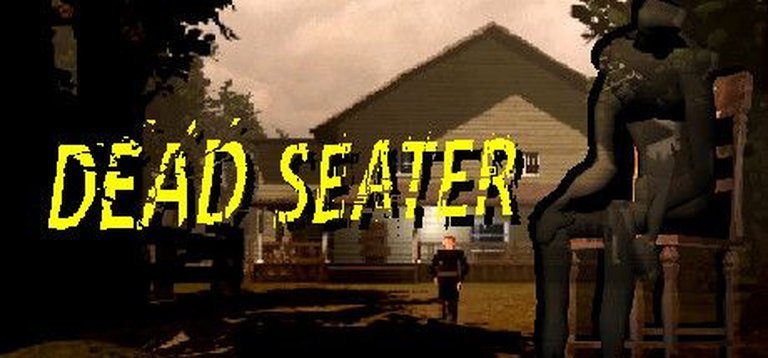
Dead Seater is a survival horror game set in a dark, cinematic world where the protagonist, driven by loneliness, captures the souls of his loved ones and traps them in mechanical bodies to eternally sit in an eerie audience. The game features a third-person perspective with direct control, as players navigate a haunted basement filled with demonic entities and hostile spirits while uncovering the protagonist’s twisted motives. With its unsettling atmosphere and psychological horror elements, Dead Seater explores themes of isolation, obsession, and the macabre lengths one might go to avoid being alone.
Gameplay Videos
Where to Buy Dead Seater
PC
Dead Seater Mods
Dead Seater Guides & Walkthroughs
Dead Seater Reviews & Reception
store.steampowered.com (92/100): A triumphant return to form for the series.
steambase.io (92/100): Dead Seater has earned a Player Score of 92 / 100.
isthereanydeal.com (92/100): Explore the halls and travel deeper into the Vincent estate, but beware what lurks there.
Dead Seater: A Haunting Masterpiece of Psychological Horror and Retro Survival
Introduction: The Loneliness of Jesse Vincent
Dead Seater (2021) is a chilling, retro-inspired survival horror game that burrows deep into the psyche of its protagonist—and, by extension, the player. Developed by solo creator Zeekerss and released for free on Steam and itch.io, the game is a love letter to the fixed-camera horror classics of the 1990s, particularly Alone in the Dark and early Resident Evil. Yet, beneath its pixelated veneer and claustrophobic corridors lies a narrative so disturbing, so tragically human, that it lingers long after the credits roll.
At its core, Dead Seater is the story of Jesse Vincent, a man consumed by isolation and desperation. His mission? To “reunite” his family—not through reconciliation, but through a grotesque, mechanical resurrection. The game’s premise is deceptively simple: explore a sprawling, labyrinthine mansion, solve puzzles, and evade monstrous pursuers. But as players peel back the layers of Jesse’s fractured mind, they uncover a tale of obsession, guilt, and the horrific lengths one will go to avoid loneliness.
This review will dissect Dead Seater in exhaustive detail, examining its development, narrative depth, gameplay mechanics, atmospheric design, and lasting impact on the horror genre. By the end, it will be clear why this indie gem, despite its short runtime and minimalist presentation, stands as one of the most psychologically unsettling experiences in modern horror gaming.
Development History & Context: A Solo Developer’s Homage to Horror’s Golden Age
The Birth of a Nightmare: Zeekerss and the Retro Revival
Dead Seater was conceived and developed by Zeekerss, a solo indie developer whose work is deeply rooted in nostalgia for the survival horror games of the 1990s. The game was built using Unity, with additional tools like Blender for 3D modeling and Audacity for sound design. Released on April 2, 2021, it was met with immediate acclaim from players, garnering a 92% “Very Positive” rating on Steam from over 770 reviews—a remarkable feat for a free, independent title.
Zeekerss’ vision was clear: to recreate the tension, disorientation, and atmospheric dread of classic survival horror while infusing it with a modern psychological twist. The game’s fixed camera angles, tank controls, and pre-rendered backgrounds are deliberate callbacks to Alone in the Dark (1992) and Resident Evil (1996), but its narrative ambition sets it apart. Unlike its predecessors, which often relied on external threats (zombies, monsters, or supernatural forces), Dead Seater’s horror is intimate, personal, and self-inflicted.
Technological Constraints and Design Philosophy
Given its indie origins, Dead Seater embraces stylistic limitations as a strength. The game’s low-polygon models, pixelated textures, and mono audio are not merely budgetary restrictions but intentional design choices meant to evoke the technical constraints of early 3D horror. This “retroaux” aesthetic serves a dual purpose:
1. Atmospheric Immersion: The grainy visuals and distorted soundscapes amplify the game’s uncanny, dreamlike quality, making the Vincent estate feel like a half-remembered nightmare.
2. Gameplay Tension: The fixed camera angles and imprecise controls heighten the player’s vulnerability. Unlike modern horror games with fluid movement and dynamic cameras, Dead Seater forces players to struggle with navigation, mirroring Jesse’s own disoriented mental state.
The Gaming Landscape in 2021: A Renaissance of Psychological Horror
Dead Seater arrived at a time when the horror genre was experiencing a renaissance of psychological and narrative-driven experiences. Games like The Last of Us Part II (2020), Visage (2020), and Amnesia: Rebirth (2020) had pushed the boundaries of character-driven horror, while indie titles like Faith: The Unholy Trinity and World of Horror embraced retro aesthetics. Dead Seater carved its niche by blending old-school survival mechanics with a deeply unsettling story, proving that horror doesn’t need cutting-edge graphics or jump scares to be effective—just a compelling, tragic narrative and masterful pacing.
Narrative & Thematic Deep Dive: The Tragedy of Jesse Vincent
Plot Summary: A House of Horrors
Dead Seater begins with Jesse Vincent, a reclusive man living in a massive, decaying mansion in the woods, preparing for his father’s arrival. The house is a labyrinth of locked doors, hidden passages, and eerie artifacts, all leading to a grotesque secret: Jesse has been kidnapping, murdering, and “Dead Seating” his family, friends, and neighbors.
The term “Dead Seater” refers to Jesse’s macabre ritual:
– Victims are dragged to the basement, where a demonic pit extracts their souls.
– Their souls are then trapped inside metallic, chair-bound robots (MBs), forcing them to eternally “sit” in an audience, as if watching a never-ending performance.
– Jesse’s motivation? To cure his loneliness by keeping his loved ones “close” in this twisted, undead form.
As players progress, they uncover audio logs, environmental clues, and Jesse’s own fragmented monologues, revealing that:
– His mother’s reanimated corpse (the DSP) is the primary antagonist, chasing Jesse through the house in an attempt to stop his madness.
– His father is imprisoned in a van outside, awaiting his turn to be “seated.”
– Jesse’s split personality is responsible for the killings, with the “real” Jesse having boarded up the house and tried to escape before being drowned in a creek.
Themes: Loneliness, Obsession, and the Illusion of Control
Dead Seater is a character study in isolation and desperation. Its themes include:
1. The Horror of Loneliness
Jesse’s actions stem from an overwhelming fear of abandonment. His dialogue reveals a man who cannot bear the idea of being alone, even if it means destroying the very people he loves. The “Dead Seaters” are not just victims—they are symbols of his failed relationships, frozen in a grotesque parody of companionship.
2. The Fragility of the Human Mind
The game strongly implies that Jesse suffers from dissociative identity disorder (DID). His split personality—the one committing the murders—operates while Jesse is “asleep,” constructing the basement’s horrors in secret. This duality is reflected in:
– The basement’s absurd scale (an “Absurdly Spacious Sewer” trope), which Jesse claims to have “forgotten” about.
– The ending monologue, where Jesse’s alternate self admits to forcing him into the creek, suggesting a struggle for dominance between his personas.
3. The Illusion of Reunion
Jesse’s quest to “reunite” his family is a delusional attempt to undo the past. The Dead Seaters are not his loved ones—they are hollow shells, their souls trapped in mechanical prisons. The game’s final moments, where a giant red hand (possibly a demonic entity or manifestation of guilt) drags Jesse to hell, suggest that his obsession has damned him irrevocably.
Character Analysis: Jesse, the Villain Protagonist
Jesse Vincent is one of horror gaming’s most tragic and repulsive protagonists. He is:
– A Serial Killer: He has murdered his family and neighbors, justifying it as an act of love.
– A Victim of His Own Mind: His split personality has hijacked his body, turning him into a puppet of his own madness.
– A Figure of Pity: Despite his monstrous actions, Jesse’s desperation for connection makes him painfully human. His final lines—“I just wanted to keep them close”—are heartbreaking in their simplicity.
The DSP (Dead Seated Person), revealed to be Jesse’s mother, serves as the game’s moral counterbalance. Unlike the other victims, her soul never left her body, allowing her to resist Jesse’s control and hunt him through the house. Her pursuit is not just a gameplay mechanic—it’s a mother’s final attempt to stop her son’s descent into damnation.
Dialogue and Environmental Storytelling
Dead Seater’s narrative is minimalist yet devastatingly effective. Key moments include:
– Jesse’s monologues, where he rationalizes his actions with chilling calmness:
“I have another metal body for your soul to squirm in. It’s waiting upstairs.”
– Environmental clues, such as:
– The empty chair in the front row of the basement theater, implying his mother’s absence.
– The charred, robotic figures in the seats, their occasional movements hinting at trapped, suffering souls.
– The ending’s ambiguity, where the red hand’s nature is left open to interpretation (demon, guilt, or the collective wrath of his victims).
Gameplay Mechanics & Systems: Survival Horror Reinvented
Core Gameplay Loop: Exploration, Puzzles, and Flight
Dead Seater’s gameplay is a masterclass in tension management. Players must:
1. Explore the Vincent estate, uncovering keys, notes, and items to progress.
2. Solve environmental puzzles, such as finding the correct key for a locked door or activating machinery to lower bridges.
3. Evasion-based survival, as Jesse has no weapons—only his wits and the environment to escape pursuers.
Combat (or Lack Thereof): The Horror of Helplessness
Unlike traditional survival horror games, Dead Seater denies players the ability to fight back. This design choice is brilliant in its cruelty:
– The DSP (Mother): A relentless, unstoppable force that snaps Jesse’s neck if caught. Players must hide, run, or exploit the environment (e.g., slamming doors) to survive.
– The MBs (Metal Bodies): Robotic entities that awaken when exposed to light. Players must navigate dark corridors carefully, as turning on lights or using a flashlight triggers their aggression.
This lack of combat forces players into a state of constant vulnerability, reinforcing the game’s themes of powerlessness and inevitability.
Puzzle Design: Frustration as a Narrative Tool
The game’s puzzles are deliberately obtuse, requiring players to:
– Backtrack extensively through the mansion’s labyrinthine layout.
– Manage an inventory system that forces frequent pauses (no quick-select wheel).
– Decipher which key fits which door, with no visual cues—a deliberate throwback to early Resident Evil’s infamous “key hunting.”
While some players criticize this as tedious, it serves a narrative purpose:
– The disorientation mirrors Jesse’s fractured mind.
– The repetitive, exhausting exploration reflects the cyclical nature of his obsession.
UI and Controls: Stylistic Suck as a Feature
Dead Seater’s clunky controls and fixed cameras are not flaws—they are intentional design choices that enhance immersion:
– Tank controls make movement deliberate and awkward, heightening tension during chases.
– Fixed camera angles obscure threats, forcing players to rely on sound cues (e.g., the DSP’s footsteps).
– Mono audio prevents directional hearing, making enemy locations unpredictable.
This “stylistic suck” (a trope where awkward mechanics serve the game’s tone) ensures that players feel as trapped and helpless as Jesse.
Innovations and Flaws
Innovations:
✅ Psychological horror through gameplay: The lack of combat and reliance on evasion forces players to embody Jesse’s fear.
✅ Environmental storytelling: The mansion itself is a character, with each room revealing more of Jesse’s descent.
✅ Ambiguous ending: The open-ended conclusion invites interpretation, making it a topic of fan theories and discussions.
Flaws:
❌ Over-reliance on backtracking: Some players find the key-hunting tedious, especially in later sections.
❌ Occasional unfair enemy spawns: The DSP’s unpredictable appearances can feel cheap in tight corridors.
❌ Limited replayability: Once the story is uncovered, the game’s short length (2 hours) reduces incentive for repeat plays.
World-Building, Art & Sound: A Nightmare Made Manifest
The Vincent Estate: A Character in Its Own Right
The mansion is a living, breathing entity, reflecting Jesse’s broken psyche:
– The Upper Floors: Relatively normal, with furnished rooms and family photos, representing Jesse’s surface-level sanity.
– The Basement: A grotesque underworld of mechanical horrors, bloodstained floors, and the Dead Seater theater, symbolizing his subconscious guilt.
– The Sewers and Factory: An industrial hellscape, hinting at the mechanical nature of his obsession.
The absurd scale of the basement (an “Absurdly Spacious Sewer” trope) suggests that Jesse’s mind has warped reality, making the house larger and more labyrinthine than it should be.
Visual Design: Retro Horror with a Modern Edge
Dead Seater’s low-polygon, pixelated aesthetic is a deliberate homage to PS1-era horror, but it also serves a psychological purpose:
– Uncanny Valley Effect: The blocky character models and distorted textures create a dreamlike, unsettling atmosphere.
– Limited Lighting: Shadows obscure threats, making every corner a potential ambush.
– Symbolic Imagery: The red-lit MBs, the bloodstained chairs, and the giant hand all reinforce the game’s themes of guilt and damnation.
Sound Design: Silence and Dread
The game’s audio is minimalist but devastatingly effective:
– Ambient Drones: A low, droning hum permeates the mansion, creating constant unease.
– Footsteps and Breathing: The DSP’s heavy footsteps and Jesse’s ragged breathing are the primary sound cues, forcing players to listen intently.
– Sudden Stings: Jarring musical stings accompany enemy encounters, heightening shock value.
The mono audio (no stereo separation) is a bold choice, as it denies players spatial awareness, making threats feel omnipresent and inescapable.
Reception & Legacy: A Cult Classic in the Making
Critical and Commercial Reception
Despite being a free indie title, Dead Seater received overwhelmingly positive reception:
– Steam: 92% “Very Positive” from 771 reviews.
– Itch.io: Rated 4.7/5 from 18 ratings.
– Player Feedback: Praised for its atmosphere, story, and retro aesthetic, though some criticized its puzzle design and backtracking.
Notable Player Reactions:
– “This game sent chills down my spine. The ending is one of the most disturbing things I’ve ever experienced.” — Johnny 5 (Steam Review)
– “It’s like playing a lost PS1 horror game, but with a story that sticks with you.” — WoodyRun (Itch.io Comment)
– “The fact that this is free is criminal. It’s better than most AAA horror games.” — Mark Novchenkov (Itch.io Comment)
Influence and Legacy
While Dead Seater has not yet achieved mainstream recognition, its impact on the indie horror scene is undeniable:
– Inspiration for Future Games: Its blend of retro mechanics and psychological horror has influenced other indie developers, particularly in the “analog horror” and “PS1-style horror” subgenres.
– Proof of Concept for Solo Developers: Zeekerss’ success demonstrates that a single creator can craft a deeply affecting horror experience without a large budget.
– A Cult Following: The game’s ambiguous ending and rich lore have spawned fan theories, analysis videos, and even comparisons to Lethal Company (another Zeekerss project).
Comparisons to Other Horror Games
Dead Seater stands alongside other psychological horror masterpieces, such as:
– Silent Hill 2 (2001) – A study in guilt and repression, with a protagonist whose mind warps reality.
– The Cat Lady (2012) – A tale of depression and suicide, blending surreal horror with deep character drama.
– Visage (2020) – A slow-burn, atmospheric horror experience with no combat, relying on evasion and psychological tension.
However, Dead Seater’s retro aesthetic, short runtime, and free availability make it unique in the modern horror landscape.
Conclusion: A Masterpiece of Psychological Horror
Dead Seater is far more than a retro throwback—it is a haunting, tragic, and brilliantly crafted exploration of loneliness, obsession, and the fragility of the human mind. Through its claustrophobic gameplay, unsettling visuals, and devastating narrative, it forces players to confront the horror of isolation in a way few games dare to attempt.
Final Verdict: 9.5/10 – A Modern Horror Classic
Pros:
✔ One of the most psychologically disturbing narratives in horror gaming.
✔ Masterful use of retro aesthetics to enhance atmosphere.
✔ No combat forces players to embody Jesse’s helplessness.
✔ Ambiguous ending invites deep analysis and replayability.
✔ Free, short, and accessible—perfect for horror fans.
Cons:
✖ Backtracking and key-hunting can feel tedious.
✖ Some enemy encounters feel unfair due to fixed cameras.
✖ Short length may leave some wanting more.
Legacy and Recommendation
Dead Seater is essential playing for:
– Fans of classic survival horror (Resident Evil, Alone in the Dark).
– Lovers of psychological horror (Silent Hill 2, The Cat Lady).
– Indie game enthusiasts looking for hidden gems.
– Anyone who appreciates a story that lingers long after the credits roll.
In a genre often dominated by jump scares and gore, Dead Seater proves that true horror lies in the human condition. It is a testament to the power of indie game development, a love letter to retro horror, and—above all—a tragic, unforgettable experience.
Final Thought:
“In the end, Jesse’s greatest horror wasn’t the monsters he created—it was the emptiness he couldn’t escape. And neither can we.”
Play it. Suffer through it. And never forget it. 🔥