
- Release Year: 2008
- Platforms: PlayStation 3, Windows, Xbox 360
- Publisher: ak tronic Software & Services GmbH, Electronic Arts, Inc.
- Developer: Electronic Arts Redwood Shores Studio
- Genre: Action
- Perspective: Behind view
- Game Mode: Single-player
- Gameplay: Puzzle elements, Quick Time Events (QTEs), Shooter, Strategic dismemberment, Survival horror
- Setting: Cyberpunk, dark sci-fi
- Average Score: 100/100
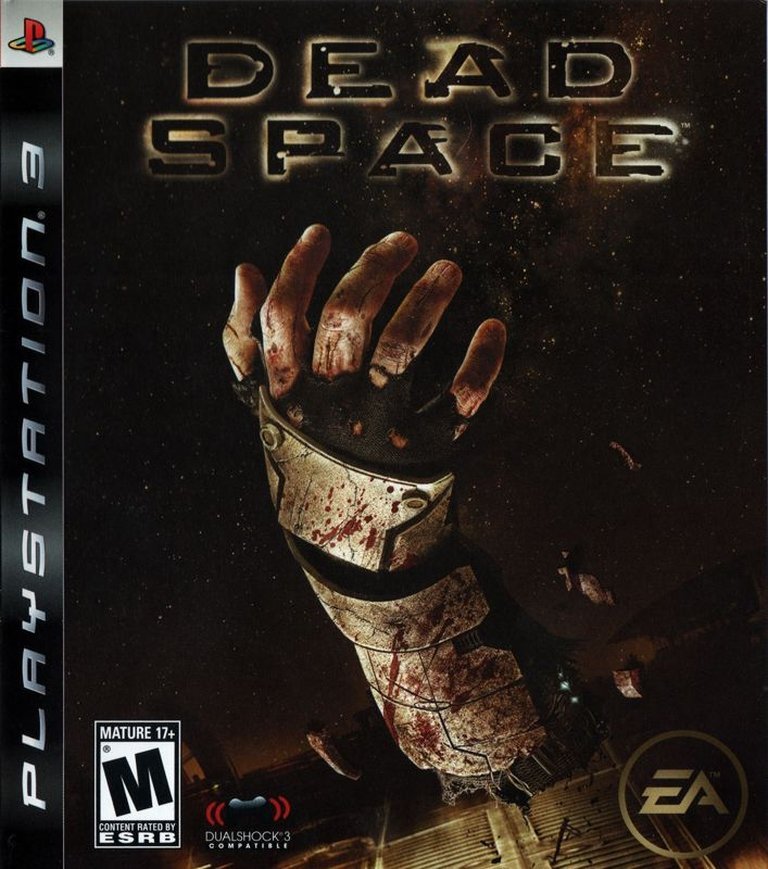
Description
Dead Space is a third-person survival horror game set in a dark sci-fi universe where engineer Isaac Clarke must navigate the derelict starship USG Ishimura after it sends a distress signal. Tasked with investigating the ship, Isaac battles reanimated corpses known as Necromorphs using improvised mining tools for strategic dismemberment, all while uncovering horrific secrets in a claustrophobic, zero-gravity environment.
Gameplay Videos
Where to Buy Dead Space
Dead Space Mods
Dead Space Guides & Walkthroughs
Dead Space Reviews & Reception
metacritic.com (100/100): As a horror enthusiast, I can confirm this game is an excellent example of a perfect horror game.
ign.com : Sci-fi survival horror is here, and space will never be the same again.
vgtimes.com (100/100): Let me start by saying that this is the first horror game I’ve completed.
Dead Space Cheats & Codes
PC (Xbox 360 Controller)
Pause the game and enter the button sequence using an Xbox 360 controller.
| Code | Effect |
|---|---|
| X, X, Y, Y, Y | Refill Oxygen |
| X, Y, Y, X, Y | Refill Stasis and Kinesis energy |
| Y, X, X, X, Y | +2 Nodes |
| Y, X, Y, X, X, Y, X, X, Y, X, X, Y | +5 Nodes |
| X, X, X, Y, X | +1,000 credits |
| X, X, X, Y, Y | +2,000 credits |
| X, X, X, Y, X, Y | +5,000 credits |
| X, Y, Y, Y, X, X, Y | +10,000 credits |
PlayStation 3
Pause the game and enter the button sequence using the PlayStation 3 controller.
| Code | Effect |
|---|---|
| Square, Square, Triangle, Triangle, Triangle | More Oxygen |
| Square, Triangle, Triangle, Square, Triangle | Refill Stasis and Kinesis energy |
| triangle, square, triangle, triangle, square, triangle | Refill Stasis meter |
| Triangle, Square, Square, Square, Triangle | +2 Nodes |
| Triangle, Square, Triangle, Square, Square, Triangle, Square, Square, Triangle, Square, Square, Triangle | +5 Nodes |
| Square, Square, Square, Triangle, Square | +1,000 Credits |
| Square, Square, Square, Triangle, Triangle | +2,000 Credits |
| Square, Square, Square, Triangle, Square, Triangle | +5,000 Credits |
| square, triangle, triangle, triangle, square, square, triangle | +10,000 Credits |
Dead Space: A Definitive Analysis of Gaming’s Premier Sci-Fi Horror Masterpiece
Introduction: The Return of Atmosphere
In the late 2000s, the survival horror genre found itself at a crossroads. Capcom’s Resident Evil 4 had successfully redefined the genre as an action-oriented experience, leaving a void for titles that prioritized dread, tension, and systemic horror over pure combat velocity. Into this gap stepped an unlikely contender: Electronic Arts, a publisher not traditionally associated with boutique horror experiences. From its internal EA Redwood Shores studio (later Visceral Games) came Dead Space, a game that did not merely enter the conversation but forcefully redirected it. This review argues that Dead Space stands as a landmark achievement not for inventing new mechanics, but for executing a terrifyingly cohesive vision. It synthesized the atmospheric oppression of System Shock 2, the claustrophobic tension of Alien, and the visceral creature design of The Thing into a package that felt both reverently familiar and strikingly original. Its legacy is cemented by its unwavering commitment to a single, brutal idea: to make the player feel profoundly vulnerable in the silent, unforgiving void of space.
Development History & Context: EA’s Dark Horse
Studio Vision and Pivot: Dead Space was developed by EA Redwood Shores, a studio previously known for The Sims expansions and sports titles. Under the leadership of Executive Producer Glen Schofield and Creative Director Bret Robbins, the team was given a rare mandate: create a new, adult-oriented original IP. This represented a significant cultural shift for EA, which was often criticized for its reliance on annualized sports and licensed sequels. The developers’ passion project ethos is frequently cited in reviews as key to the game’s authentic, “labour of love” feel.
Cinematic Inspirations: The team openly cited a trinity of cult sci-fi horror films as primary inspiration: Ridley Scott’s Alien (isolation, corporate dread, xenomorph-influenced creature design), John Carpenter’s The Thing (body horror, paranoia, grotesque practical effects-inspired monsters), and Andrei Tarkovsky’s Solaris (psychological hauntings, the deceased loved one motif, existential space themes). These influences are not superficial; they formed the bedrock of the game’s thematic and aesthetic identity. The narrative premise of a “planet-cracker” vessel and a mysterious alien “Marker” also drew direct parallels to Event Horizon‘s hellish dimension and System Shock 2‘s hybrid bio-organic horror.
Technical Constraints and Innovation: Developed for the nascent PlayStation 3 and Xbox 360 era, the game was initially prototyped for the original Xbox. The transition to next-gen hardware allowed for unprecedented detail in dismemberment physics (using the Havok engine), dynamic lighting that played with shadows as a core gameplay element, and complex 3D audio mixes designed for surround sound. A key technical innovation was the diegetic user interface: Isaac’s health and ammo are displayed on his suit, menus are physical interfaces he interacts with, and objective markers are a glowing blue line projected from his wrist. This design choice was lauded by critics for maintaining immersion, a stark contrast to the floating HUDs of contemporaries.
Market Context: Released in October 2008, Dead Space entered a crowded holiday season. It competed directly with other major action titles but carved its niche by offering a genuinely scary, slow-burn experience. Its success proved a market existed for premium, single-player focused horror experiences on consoles, challenging the assumption that only multiplayer shooters could achieve blockbuster status.
Narrative & Thematic Deep Dive: The Mythos of the Ishimura
Plot Structure and Delivery: The story is told with a deliberate, filmic pace, primarily through environmental storytelling, audio logs (the “Kinesis” recordings), and text documents found throughout the derelict USG Ishimura. This “show, don’t tell” approach builds a history of the ship’s descent into madness, revealing the catastrophic events triggered by the discovery of the alien “Marker” on the planet Aegis VII. The central narrative follows Isaac Clarke, an everyman systems engineer, who arrives with a small crew to investigate a distress call, only to find the ship overrun by Necromorphs. His personal quest to find his missing wife, Nicole, provides an emotional through-line.
Character and Dialogue: Here lies the game’s most consistent critical point of contention. Isaac Clarke is a silent protagonist, uttering no audible words throughout the main campaign (a design choice inherited from System Shock). While this maximizes player immersion and projection, reviews consistently noted it severely undercut the emotional weight of his wife’s subplot. As one player review stated, “You never even see his face save for a few seconds at the beginning… his lost wife and the twists it takes lacks true emotion or power.” The supporting cast—Kendra, Hammond, and the increasingly unhinged Dr. Mercer—are voiced competently, with their arcs delivering the game’s more expositional moments and dramatic twists, though some critics found their dialogue occasionally “hammy.”
Themes and Symbolism: Dead Space is a dense thematic work. At its core, it explores religious fanaticism and corporate exploitation. The fictional religion of Unitology, a clear satire/inspired-by of Scientology with its focus on “unification” through the Marker, is revealed to be a corrupted cult that worshiped the very force creating the Necromorphs. This ties into a critique of capitalism: the Concordance Extraction Corporation (CEC) knowingly ignored the Marker’s danger for the sake of its “planet-cracking” resource extraction, directly causing the catastrophe. The theme of intersubjective horror is potent: the Necromorphs are not aliens; they are reanimated, mutilated humans. The terror stems from the violation of the human form, a direct inheritance from The Thing. The Marker itself serves as a fascinating pseudo-scientific/psychic entity, inducing hallucinations and reanimating dead tissue, blending cosmic horror with biological warfare.
Gameplay Mechanics & Systems: The Calculus of Dismemberment
Core Loop and Pacing: The gameplay is a masterclass in tension and release. The core loop involves navigating linear but intricately designed corridors, solving environmental puzzles (often involving power rerouting, airlock management, or zero-G navigation), scavenging for resources, and engaging in combat. The 12-chapter structure is criticized by some (notably the mixed player review) for “dragging” and containing excessive backtracking, particularly in the latter half. However, most critics felt the pacing was taut, with each chapter introducing a new environmental hazard (asteroid fields, processing plants, zero-G ship exteriors) or narrative beat to maintain momentum.
Combat: Strategic Dismemberment: This is the game’s seminal innovation. Standard firearms are ineffective; Necromorphs possess no central “health pool.” Instead, players must sever specific limbs to neutralize threats:
* Legs: Cripple mobility.
* Arms: Prevent melee/ranged attacks.
* Tentacles/Sac-like masses: Often the source of projectile or spawn attacks.
* The Head: A critical, counter-intuitive rule. Decapitation revitalizes most Necromorphs, causing them to enter a frenzied, faster state. This forced players to unlearn ingrained shooter instincts, a mechanic praised as genius and deeply integrated with the game’s internal logic. The weapons, primarily repurposed mining tools (Plasma Cutter, Rotary Saw, Hydrazine Torch), feel weighty and brutal. Their secondary fire modes (e.g., rotating the Plasma Cutter to a vertical orientation) encourage tactical thinking about limb orientation.
Resource Management and Progression: Ammo is scarce, forcing precision. “Power Nodes” found throughout the ship are used at workbenches to upgrade Isaac’s suit (armor, air capacity), weapons (damage, ammo capacity), and abilities. This creates a meaningful progression curve. The inventory system, while clever (a grid-based system accessed via a diegetic wheel), was noted by some as clunky, especially during high-stress combat situations.
Abilities and Environments: Isaac gains access to two key psychic abilities via his RIG suit: Stasis (slows time on targets or objects, crucial for puzzle-solving and crowd control) and Kinesis (telekinetic grab/throw). These add strategic layers beyond pure shooting. Zero-gravity sections, where Isaac must navigate using thrusters along magnetic rails, were a divisive element. Critics and players alike found them “clumsy” and disorienting, yet they were also hailed as moments of unparalleled tension and uniqueness, perfectly selling the setting.
Flaws and Repetition: Common criticisms emerged. Enemy variety, while initially impressive, can feel recycled in the late game, with many foes being reskinned variants of earlier types. The “monster closet” jump-scare trope, while initially effective, can become predictable. Some players, like the critical Moby user “Asinine,” found the enemies too weak once their dismemberment patterns were learned, undermining the horror: “All enemies succumb to this tactic: just aim for whatever limbs you see.” Puzzle design is often cited as simplistic, revolving heavily around Stasis and Kinesis applications already encountered.
World-Building, Art & Sound: Engineering Dread
The USG Ishimura: A Character Itself: The game’s greatest triumph is its environment. The Ishimura is not just a backdrop; it is a silent protagonist. Its design is a masterclass in diegetic storytelling. Every corridor, crew quarters, engine room, and hydroponics bay tells a story of sudden, violent abandonment. You find personal logs describing familial disputes, a forgotten nursery, a bar still holding half-drunk glasses, and evidence of mass graves. The art direction commits to a grimy, industrial, “used-future” aesthetic. The palette is dominated by rusted metal, grimy gray bulkheads, pools of viscous fluid, and stark emergency lighting. This “Browninitis,” as one reviewer diagnosed, is a double-edged sword: it creates a cohesive, oppressive atmosphere but can lead to visual monotony, a frequent point of critique.
Sound Design: The Architecture of Fear: The audio, composed by Jason Graves and handled by Audio Director Don Veca, is arguably the game’s most universally acclaimed element. It won the 2009 BAFTA Games Award for Original Score. The soundscape is a complex tapestry of:
* Ambient Dread: The low hum of the ship’s engines, the creak of stressed metal, theincessant drip of water, the muffled, distant screams and movements of Necromorphs through ventilation shafts.
* Dynamic Music: A minimalist, percussion-heavy score that swells only during combat or major set-pieces, leaving long stretches with only diegetic sound—a choice that heightens tension exponentially.
* Enemy Audio: The guttural, wet shrieks and clicks of the Necromorphs are deliberately hybrid, blending animalistic roars with distorted, almost-human vocalizations. The infamous “Lurker” (a creature that fires spines from a distance) has a sound design that is pure psychological assault.
* Isaac’s Perspective: In zero-G or vacuum environments, all sound cuts out, replaced by a profound, heartbeat-driven silence and the muffled crackle of Isaac’s suit radio. This audial deprivation is a terrifying gameplay mechanic in itself.
Innovative Diegetic UI: As mentioned, the HUD-less design is revolutionary. Health is a gauge on the back of Isaac’s suit, visible to the player. Ammo counts are displayed on the weapon itself when raised. The “RIG” menu is a physical screen on his wrist. This isn’t just a stylistic choice; it fundamentally changes the player’s relationship with the interface, making information feel part of the world, not an overlay.
Reception & Legacy: From Sleeper Hit to Franchise Cornerstone
Critical Reception: Dead Space was met with widespread critical acclaim, holding an 88% aggregate score on MobyGames from 136 critic reviews. Scores ranged from the mid-80s to perfect 100s. Common praise pillars included:
1. Atmosphere: Universally hailed as unparalleled in its ability to generate sustained, deep-seated dread.
2. Combat System: The strategic dismemberment was called innovative, brutally satisfying, and perfectly thematic.
3. Presentation: Graphics and sound were consistently rated as best-in-class, with the sound design specifically called out as a genre-defining achievement.
4. Cohesion: Many reviews highlighted how all elements—story, gameplay, audio, visuals—worked in concert to create a unified, immersive experience, comparing it favorably to BioShock and Half-Life 2.
Common criticisms echoed the player reviews: a story with a “clichéd” start but strong twists, a silent protagonist weakening emotional beats, repetitive section and enemy design in the late game, and the “Brown” visual monotony.
Commercial Success and Franchise Genesis: The game was a significant commercial success for EA, selling over 2 million copies across platforms. Its success immediately greenlit a franchise: the animated prequel Dead Space: Downfall (2008), the Wii spin-off Dead Space: Extraction (2009), the sequel Dead Space 2 (2011), and a prequel Dead Space 3 (2013). Expanded universe material included comics and novels that fleshed out the lore of Unitology and the Markers.
Industry Influence: Dead Space’s legacy is twofold. First, it revitalized the “hardcore” survival horror space on consoles at a time when the genre was trending toward action. It proved that a slow, atmospheric, single-player experience could be a major hit. Second, its diegetic UI design and systemic combat philosophy (where mechanics are tied to enemy biology) had a tangible influence on later titles. The emphasis on environmental storytelling through logs and notes became even more pronounced in later horror games. Its direct spiritual successor, The Callisto Protocol (2022), is a conscious evolution of its combat and setting.
The 2023 remake by Motive Studio, which received universal acclaim, serves as the ultimate testament to the original’s enduring design. It polished the control scheme, updated the visuals, and expanded the narrative, but the core loop and atmosphere remained fundamentally unchanged, proving the robustness of the 2008 original’s blueprint.
Conclusion: A Flawed Gem Forged in the Void
Dead Space is not a perfect game. Its narrative is structurally hindered by a mute protagonist, its later acts suffer from repetitive environmental and enemy design, and its grim, industrial palette can be visually fatiguing. Yet, to focus on these flaws is to miss the forest for the terrifying, gory, impeccably engineered trees. It is a game of profound and intelligent craft. Every design decision—from the necessity of dismemberment to the diegetic interface to the sound design that dares to use silence as a weapon—serves the goal of immersion and dread.
Its place in history is secure. It is the title that forced the industry to remember that horror could be a premium, cinematic, and mechanically sophisticated experience. It took the DNA of classic films and genre-defining games, refined it with a AAA budget and a singular vision, and produced an experience that has haunted players for over a decade. Dead Space is a monument to the power of cohesive world-building and systemic horror, a game where the environment, the enemies, the weapons, and the very interface conspire to make the player feel the crushing, silent terror of being truly, utterly alone in the dark. It is, and remains, one of the most influential and effective survival horror games ever created.