
- Release Year: 2015
- Platforms: Linux, Macintosh, Windows
- Publisher: SmiteWorks USA, LLC
- Developer: SmiteWorks USA, LLC
- Genre: Adventure
- Perspective: First-person
- Game Mode: Single-player
- Gameplay: Visual novel
- Setting: Interwar, North America
- Average Score: 70/100
Description
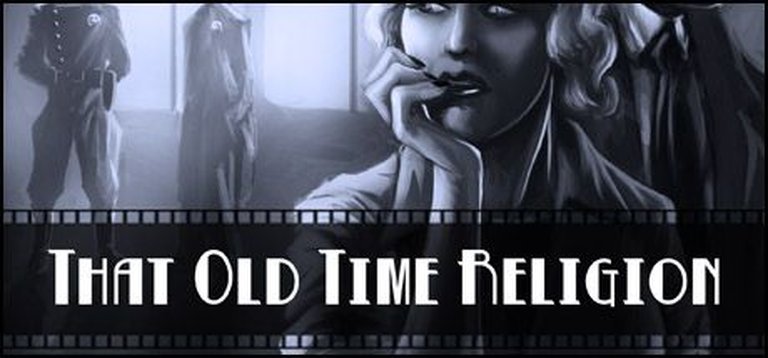
Deadlands Noir: That Old Time Religion is a visual novel set in the grimy, supernatural-infused streets of 1935 New Orleans. Players navigate a world where honest work is scarce, and trouble is abundant, from shady thugs to supernatural horrors lurking in the shadows. The game combines elements of detective mystery and horror, immersing players in a rich narrative where they must unravel conspiracies and confront both human and otherworldly threats.
Gameplay Videos
Where to Buy Deadlands Noir: That Old Time Religion
PC
Deadlands Noir: That Old Time Religion Patches & Updates
Deadlands Noir: That Old Time Religion Guides & Walkthroughs
Deadlands Noir: That Old Time Religion Reviews & Reception
steambase.io (71/100): A Visual Novel set in the Deadlands Noir RPG Setting from Savage Worlds.
raijin.gg : A Visual Novel set in the Deadlands Noir RPG Setting from Savage Worlds.
store.steampowered.com (69/100): A Visual Novel set in the Deadlands Noir RPG Setting from Savage Worlds.
mobygames.com : A Visual Novel set in the Deadlands Noir RPG Setting from Savage Worlds.
Deadlands Noir: That Old Time Religion: A Gritty Ode to Supernatural Noir
Introduction
In the shadowy alleys of 1935 New Orleans, where jazz mingles with whispers of the occult, Deadlands Noir: That Old Time Religion invites players into a world where hardboiled detective fiction collides with Lovecraftian horrors. Developed by SmiteWorks USA, this visual novel adaptation of the Deadlands Noir tabletop RPG (itself a spin-off of the Savage Worlds franchise) taps into the rich legacy of pulp storytelling. While it stumbles in execution, its commitment to atmosphere and narrative ambition cements it as a cult oddity—a flawed but fascinating experiment in interactive noir.
Development History & Context
Deadlands Noir: That Old Time Religion emerged in July 2015 as part of SmiteWorks’ broader strategy to expand its Fantasy Grounds digital RPG toolkit into narrative-driven experiences. Built using Ren’Py, an open-source visual novel engine, the game aimed to translate the Deadlands Noir RPG’s mechanics—designed by Shane Hensley, John Goff, and Sean Preston—into a digital format.
At the time of release, the indie visual novel scene was burgeoning, with titles like Danganronpa and Steins;Gate raising expectations for branching narratives. However, SmiteWorks’ focus on budgetary constraints (evident in its minimal system requirements) and adherence to tabletop RPG mechanics resulted in a hybrid that felt decidedly niche. Lead writer Sean Patrick Fannon, known for Shaintar: Legends Arise, sought to infuse the game with the same gritty, improvisational spirit that defined the tabletop original.
Narrative & Thematic Deep Dive
The game follows Harvey Jenkins, a down-on-his-luck private investigator navigating a Depression-era New Orleans teeming with corrupt cops, mobsters, and supernatural forces. The central mystery—a missing persons case tied to a sinister cult—serves as a vehicle to explore themes of faith, moral decay, and existential dread.
Characters & Dialogue
Harvey’s voiceover drips with Chandler-esque cynicism (“Whoever called this ‘The Big Easy’ sure got that one wrong”), but the supporting cast—including voodoo practitioners and fast-talking informants—often feel underdeveloped. Episode 2 introduces skill-based dialogue checks (e.g., Harvey’s “Shooting” stat affecting combat outcomes), but these choices rarely diverge into meaningful narrative branches. The writing shines in its environmental storytelling, such as cryptic graffiti hinting at eldritch deities, but falters in pacing, with key plot twists rushed to meet the game’s brief runtime (3–4 hours total).
Themes
The game interrogates the tension between rationality and superstition, mirroring the era’s post-Dust Bowl desperation. A standout sequence involves Harvey confronting a preacher whose zealotry masks a pact with otherworldly forces—a metaphor for the era’s apocalyptic anxieties. However, the religious symbolism leans heavily on cliché (demonic rituals, cursed artifacts), lacking the nuance of later Lovecraftian games like The Sinking City.
Gameplay Mechanics & Systems
As a visual novel, Deadlands Noir prioritizes reading over interaction. Players click through static scenes, occasionally making dialogue or action choices that marginally alter outcomes.
Key Systems:
- Skill Checks: Borrowed from the Savage Worlds RPG, these determine success in conflicts (e.g., a failed “Streetwise” check might lead to a fatal ambush).
- Branching Paths: While marketed as a “branching story-line,” the narrative remains largely linear, with “choices” often funneling back to a single conclusion.
- Achievements & Trading Cards: Unlockable Steam rewards incentivize replayability, though the lack of significant divergence limits their appeal.
Flaws:
The UI is functional but dated, with cumbersome save/load menus. The Ren’Py engine’s limitations are glaring: animations are nonexistent, and transitions between scenes feel abrupt.
World-Building, Art & Sound
The game’s aesthetic is its strongest asset.
Visual Design:
Artist Cheyenne Wright (known for Girl Genius) delivers moody, monochromatic stills evocative of 1930s detective magazines. Shadow-drenched alleys and Art Deco interiors immerse players in a world where every corner hides menace. However, the lack of animation or camera movement saps energy from action scenes.
Soundtrack:
Harry Mack’s jazz-score blends smoky trumpet solos with ambient drones, echoing L.A. Noire’s noir sensibilities. The use of diegetic sounds—sudden gunshots, eerie chants—heightens tension, though occasional glitches disrupt immersion.
Reception & Legacy
At launch, reviews were mixed (69% positive on Steam), praised for atmosphere but criticized for brevity and lack of player agency. Its commercial performance was modest, grossing ~$3,467 with ~1,935 units sold—a niche success.
Influence:
While overshadowed by giants like Disco Elysium, Deadlands Noir paved the way for RPG-adjacent visual novels, proving that tabletop mechanics could complement narrative-driven gaming. Its bold fusion of genres inspired later titles like Pentiment and Kentucky Route Zero, which similarly marry historical settings with existential horror.
Conclusion
Deadlands Noir: That Old Time Religion is a chiaroscuro sketch—a game of striking shadows and unmet potential. Its writing and aesthetic craft a compelling noir vignette, but technical limitations and narrative rigidity hold it back from greatness. For genre enthusiasts, it remains a curio worth exploring at a discount; for others, it’s a testament to the challenges of adapting tabletop RPGs into digital storytelling.
Final Verdict: A flawed yet atmospheric dive into supernatural noir, best appreciated as an interactive pulp novella rather than a full-fledged RPG.