
- Release Year: 2016
- Platforms: Windows
- Publisher: Digital Tribe Entertainment, Inc.
- Developer: DFE Studios
- Genre: Action
- Perspective: 1st-person
- Game Mode: Single-player
- Gameplay: Motion control, Shooter
- Setting: Futuristic, Sci-fi
- VR Support: Yes
Description
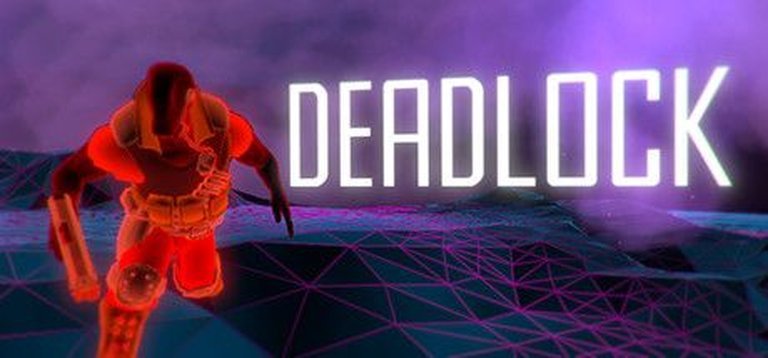
Deadlock is a virtual reality first-person shooter set in the Cursed Apple, a supernatural version of New York City where the Maelstrom event 50 years ago opened Astral Gates, unleashing occult forces. In this world, two powerful Patrons—the Hidden King and the Archmother—manipulate humans into engaging in team-based battles to complete rituals that could summon them into the plane, with players using motion controls to navigate urban streets filled with factions like the OSIC and the Baxter Society, fighting to prevent the other team’s patron from entering and fulfilling their own wishes.
Gameplay Videos
Where to Buy Deadlock
PC
Deadlock Free Download
Deadlock Reviews & Reception
metacritic.com : Deadlock is an exciting addition to a genre that hasn’t seen, in my opinion, an up-and-comer with a real fighting chance in a while.
polygon.com : Deadlock, Valve’s unreleased hero shooter, is the best game you should be playing now.
gamepow.co : Overall, Deadlock is a refreshing take on the MOBA genre.
steamcommunity.com : The core gameplay is a triumph, but the reporting system is deeply flawed.
Deadlock: Review
Introduction: The Occult Ambition of Valve’s Latest Gambit
For over a decade, Valve’s multiplayer legacy has rested on the monumental pillars of Counter-Strike and Dota 2, while Team Fortress 2 entered a state of perpetual, curated maintenance. The announcement of a new competitive, team-based title from the studio was therefore an event of seismic potential. Deadlock, initially leaked as Neon Prime, isn’t merely another hero shooter or MOBA entry; it is an audacious, genre-fusing experiment set in a meticulously crafted, supernatural alt-New York. This review argues that Deadlock represents Valve’s most compelling—and risky—attempt to redefine the team-based shooter landscape since Team Fortress 2. By weaving a dense, character-driven occult narrative into the ruthless, resource-stratified lanes of a MOBA, it creates an experience that is both deeply familiar and strikingly novel. Yet, its success hinges on navigating the tightrope between accessible chaos and intricate strategy, all while emerging from an unconventional, invite-only launch that has shaped its community and perception from the very first match.
Development History & Context: From Citadel to Cursed Apple
Studio & Vision
Deadlock is the product of Valve’s renowned, idiosyncratic development culture. While no single “director” is publicly credited, key influences are evident. The game’s kinetic movement and risk-reward design philosophy bear the unmistakable hallmark of Duncan Drummond, co-creator of Risk of Rain 2, who is confirmed as a gameplay designer. Furthermore, data mining and speculation consistently point to IceFrog, the legendary pseudonymous lead designer of Dota 2, playing a pivotal role, likely guiding the core MOBA mechanics and hero design. This fusion of talent—one versed in fast-paced, item-driven roguelikes, the other in the deepest strategic complexity of the MOBA genre—signals Deadlock’s foundational ambition: to create a game where moment-to-moment shooting prowess is inextricably linked to long-term strategic resource accumulation.
The project’s origins are shrouded in the typical Valve secrecy. Internal code references to “Citadel” (a Half-Life 2 location) appeared in 2019, fueling speculation about a new entry in that series. The “Neon Prime” trademark filed in 2022 suggested a sci-fi shooter. However, the first public leaks in May 2024 revealed a dramatic pivot: the game had evolved from a “sci-fi/cyberpunk, Japan-inspired” aesthetic to its current “alternative-world fantasy goth New York,” a steampunk-occult hybrid dubbed the “Cursed Apple.” This shift, from cold futurism to warm,歷史-infused supernaturalism, is more than cosmetic; it indicates a design philosophy prioritizing character, story, and a unique tonal identity over generic sci-fi tropes.
Technological Constraints & The Source 2 Engine
Deadlock is built in Valve’s Source 2 engine, a platform famed for its physics simulation and visual fidelity (seen in Half-Life: Alyx and Dota 2’s recent remaster). This choice enables the game’s signature environmental storytelling: crumbling gothic architecture overlaid with shimmering Astral Gate energy, ziplines crisscrossing art deco skyscrapers, and particle effects that make supernatural abilities feel tangible. Yet, Source 2 also imposes constraints. The game’s current invite-only, Windows-only (with Linux via Steam Play) beta suggests a focus on optimizing a complex, particle-heavy 6v6 experience for a controlled player base before a wider release. The infrastructure for anti-cheat, as noted in September 2024 reports, was still being implemented, highlighting the challenges of scaling a competitively intricate game.
The Gaming Landscape & A Secretive Launch Strategy
Deadlock enters a saturated market of hero shooters (Overwatch 2, Valorant) and MOBAs (League of Legends, Dota 2). Its hybrid model is its defining gamble. The decision to launch via a secretive, NDA-bound playtest—where thousands played without public acknowledgement—was a remarkable, Valve-esque publicity stunt. As Wired’s Megan Farokhmanesh speculated, the lack of official confirmation may have been deliberate, allowing player leaks to build organic hype. This strategy culminated in the Steam page’s publication on August 24, 2024, which immediately saw the concurrent player count soar from ~20,000 to over 170,000 by September. This “soft launch” allowed Valve to gather immense telemetry on hero balance, item systems, and map flow while fostering an exclusive, community-driven buzz. However, it also invited journalistic controversy when The Verge’s Sean Hollister published an early review post-NDA lift, leading to his temporary ban—a moment that sparked debate about journalistic ethics versus corporate secrecy.
Narrative & Thematic Deep Dive: The Symphony of the Supernatural
The lore of Deadlock is not delivered through a linear campaign but is pieced together from hero backstories, environmental details, in-game newspapers like The New York Oracle, and planned visual novels. This fragmented, emergent storytelling creates a world that feels alive and investigable.
The Cataclysm: The Maelstrom(s)
The foundational event is the First Maelstrom, a celestial phenomenon 50 years before the game’s present that shattered the barrier between the mundane and the mystical. Crucially, as the character Warden states, “Most people think the supernatural came into the world 50 years ago. They’re wrong.” This implies the occult existed in myth and secrecy for centuries, but the Maelstrom made it undeniable, tore open Astral Gates across the globe, and ushered in an era of geopolitical upheaval: “From CIA-employed seers identifying threats decades before they rise to power to occult pacts made in smoky backrooms; countless wars and atrocities have been prevented that would otherwise have shaped history.” The game’s central conflict occurs during the Second Maelstrom—a “Celestial Alignment”—which has manifested two warring Patrons: the Amber Hand and the Sapphire Flame. These elder gods are not mere bosses; they are ideological poles, promising to fulfill the wish of any mortal who helps complete the ritual in the Cursed Apple (the game’s version of New York City).
Factions: Ideologies in Conflict
The supernatural integration has birthed several key organizations, each representing a response to the new world order:
* Occult Security and Investigation Commission (OSIC): A secretive, black-ops government agency (“makes the CIA look transparent”) tasked with containing supernatural threats. Its Sandman Division, featuring agent Haze who infiltrates dreams, represents state power attempting to control the occult.
* The Baxter Society: A centuries-old, monastic order of monster hunters founded by Grey Talon. Motivated by a personal tragedy (his family, tied to the fiery plane of Ixia, died in a suspicious fire), they seek to maintain a balance, destroying threats without eradicating all supernatural life. Their tension with the more ruthless Shiv highlights internal philosophical debates.
* Fairfax Industries: The corporate capitalist arm of the occult. Led by the ruthless Maximilian Fairfax (old university friends with Professor Dynamo), this conglomer specializes in “spirit weapons” and soul-harvesting technology. Its subsidiaries, like the mercenary Eldritch Tactical Solutions (employing Wrecker) and the soul-harvesting machine created by prodigy McGinnis, embody the commodification and military-industrial exploitation of the supernatural. The estranged heir Pocket (surviving an assassination attempt on his 18th birthday) represents a rebellion against this legacy.
* The Friends of Humanity: The xenophobic, anti-supernatural lobby. They push for laws restricting the rights of spirits and fiercely oppose the statehood of Ixia (the 52nd U.S. state, annexed after an Astral Gate opened there), viewing any integration as a threat to human purity.
* Other Groups: The underground Tunnel Rats (smugglers), the family-run Seventh Moon (Japanese crime syndicate), the time-thieving Paradox Organisation, and the caretaker Municipal Coven populate the city’s underbelly, each with their own stakes in the ritual.
Character Arcs & Thematic Resonance
Individual hero backstories are tragedies and bargains rendered in a few paragraphs, creating a roster defined by loss, ambition, and moral ambiguity:
* Lady Geist (Jeanne) made a Faustian pact with the spirit Oathkeeper in 1815 for eternal youth. Her visual novel, The Binding of Oathkeeper, deals with the ward weakening, threatening her existence—a literal metaphor for a debt coming due.
* Vindicta is a ghost from the 1692 Salem Witch Trials, executed by John Hathorne, resurrected by the Maelstrom with one purpose: revenge on his descendants. She is a walking manifestation of historical trauma given spectral form.
* Professor Dynamo was atomized by the Central Park Astral Gate, his consciousness surviving in a mechanical body. His quest is scientific: to regain his human form. He represents the collision of rationalism with irreducible mystical power.
* Ivy dismantled the crime syndicate Mendoza, finding a new purpose in the ensuing power vacuum. Her story is one of revolutionary aftermath.
* Holliday pursues the Troubadour, a shapeshifting murderer, in a personal revenge tale.
* Even minor figures like the bartender Infernus (from Ixia) or the gambler Wraith (whose power source is unknown) hint at vast, untold histories.
The Ritual & The Patrons
The gameplay’s objective—destroying the enemy Patron—is the physical manifestation of this cosmic conflict. The Patrons are not puppeteers but entities at war, using mortal champions as proxies. The ambiguity of their goals (“narrowing the path to the Outer Planes”) and the potentially catastrophic wishes of the heroes (from personal redemption to world-altering power) create a narrative tension where victory might be as dangerous as defeat. The Spirit Urn mid-game objective, which must be carried across the map, feels like a literal transfer of esoteric energy, tying gameplay directly to the lore’s emphasis on soul-based power.
Gameplay Mechanics & Systems: The Lanes of Strategy
Deadlock’s genius lies in its synthesis of three distinct genres: the third-person shooter’s moment-to-moment aiming and movement, the MOBA’s macro-strategic resource management and lane pressure, and the hero shooter’s distinctive ability kits. The result is a game where winning a teamfight is less about pure aim and more about arriving at the right location with the correct items and ability cooldowns.
Core Loop & The Soul Economy
The universal currency is souls ( ), which serve as both experience points (for leveling) and gold (for items). Souls are generated by:
1. Last-hitting enemy troopers (NPC minions). Denying an ally’s last-hit (killing the trooper soul yourself) is a key competitive layer.
2. Killing enemy heroes.
3. Destroying enemy structures (Guardians, Walkers, Shrines).
This creates a constant tension between laning (secure last-hits, deny the opponent) and roaming (join fights, secure objectives). The map is divided into four symmetrical lanes (York, Greenwich, Broadway, Park—color-coded yellow, green, blue, purple), each with a progression of Guardians → Walkers → Base Guardians → Shrines → Patron. Structures are sequentially locked; a Walker cannot be damaged until the preceding Guardian falls. This enforces a push-pull dynamic on each lane.
Hero Design & Progression
There are currently 38 playable heroes (as of the January 2026 “Old Gods, New Blood” update), all selectable in a match (no duplicates). Heroes are not locked into rigid “roles” like Tank/Healer/DPS, though their kits lean certain ways. Each hero has:
* Four abilities (three basic, one ultimate), unlockable at soul thresholds (0, 400, 1,500, 3,000).
* Ability points to level up these skills (costs: 1, 2, 5 per tier).
* A stat distribution leaning toward Weapon (gun damage), Vitality (health/sustain), or Spirit (ability power/cooldown reduction).
The item shop system is a defining strategic layer. Each hero can initially hold 12 items (4 per stat category). Four additional “flex slots” unlock per team by destroying specific enemy structures (every Guardian, one Walker, every Walker, one Shrine). Items are tiered by cost: 500, 1,250+, 3,000+, and 6,300+ souls. Crucially, every item in a category grants a universal, scaling bonus to that base stat (e.g., all Weapon items increase gun damage). This creates agonizing choices: do you buy a cheap, slot-efficient early-game item, or save for a game-changing 6k-tier artifact? Selling old items for new ones in the lategame is a constant calculus.
Movement & Map Mastery
All heroes share a robust movement suite: sprint, slide, dodge roll, double jump, wall jump, ledge climb. Many heroes have unique mobility (Ziplines, fans, dashes). This emphasis on fluid traversal makes the map—the Cursed Apple—a character itself. Knowledge of shortcuts, zipline routes, and jungle camp timings (spawning at 2, 7 minutes) is as vital as aim. The mid-boss (spawns at 10 minutes) and the Spirit Urn (spawns every 5 minutes, must be carried the length of the map, disarming the carrier) are critical team-objectives that can swing momentum.
The Three Phases of a Match
1. Laning (0-9 mins): Focus on last-hitting troopers, harassing the enemy lane duo/solo, and securing the first Guardian. Winning your lane (more souls, first Guardian) creates a crucial power spike for your hero.
2. Midgame: With power items online, teams rotate. Objectives shift to taking Walkers, controlling the mid-boss/Spirit Urn, and picking off isolated enemies. This is the most chaotic, fight-heavy phase.
3. Lategame: Teams converge on the enemy base for final pushes. All structures are likely destroyed, leading to massive, decisive teamfights inside the lanes or around the Patron. Hero net worth disparities become pronounced, and item slot management (selling expensive lategame items for the best possible four) is critical.
Recent Evolution & Design Philosophy
Valve’s development has been aggressively iterative. In February 2025, the number of lanes was reduced from four to three after community feedback that four lanes spread players too thin, making teamfights rare and laning feel isolated. In May 2025, a complete item shop rework aimed to improve clarity and build diversity. This willingness—even eagerness—to dismantle and rebuild core systems (as noted by PC Gamer’s Justin Wagner) sets Deadlock apart from many live-service games that ossify early. It’s an experimental, “living lab” approach, but one that can frustrate players invested in mastering a now-changed meta.
World-Building, Art & Sound: The Gothic Soul of New York
The Cursed Apple & Environmental Storytelling
The map is an alternate 1900s-1940s New York, filtered through a lens of occult anxiety. Architectural references range up to 1932 (Radio City Rockettes), with anachronistic touches like 1970s punk aesthetics (Shiv) and 1973 Xerox Alto computers. This creates a timeless, “retro-futuristic” feel. Every district tells a story:
* The Astral Gate in Central Park is a pulsating rift, a constant reminder of the world’s fracture.
* Jezebel’s Billiard Hall (a renovated church run by Infernus) shows the mundaneization of the supernatural.
* The Paradox Museum displays artifacts stolen by the Paradox Organisation.
* The Bear Pit is an underground arena where gangsters gamble on fights.
* Blackmore Academy is a wealthy school attended by Apollo and Graves.
Landmarks aren’t just set dressing; they imply factions, histories, and potential gameplay secrets. Posters referencing South Pacific (1949) or historical figures like Rasputin and Catherine the Great anchor the timeline and suggest a world where historical figures are reanimated or mythologized.
Art Direction: From Sci-Fi to Gothic Panache
The evolution from the leaked “sci-fi/cyberpunk” Neon Prime to the current aesthetic was a masterstroke. The current look has been described as “alternative-world fantasy goth New York” (Matt Cox, Eurogamer) and compared to BioShock Infinite’s Columbia and Half-Life 2’s City 17. It “oozes personality” through:
* A muted, sepia-and-neon color palette.
* Gargoyles, occult symbols etched into brickwork, and floating, otherworldly energy.
* Hero designs that blend period clothing with supernatural modifications (e.g., Viscous’s deep-sea suit, Kelvin’s frozen visage).
This style makes the game instantly recognizable and provides a cohesive, atmospheric stage for the chaos.
Sound Design & Musical Identity
While less documented in the sources, the audio landscape is noted for its distinctiveness. PC Gamer’s Lincoln Carpenter described the main menu music as “straight out of a Tim Burton joint,” perfectly setting the tone of gothic whimsy. In-game, The Newscaster’s absurdly cheerful reports on soul-scalping for theater tickets or necromancer arrests provide dark, satirical commentary that reinforces the world’s normalized supernaturalism. Ability sounds, gunfire, and the chime of souls being collected are all crisp and narratively aligned (e.g., magical abilities have ethereal sounds, tech-based ones like McGinnis’s weapons have a gritty, industrial crunch).
Reception & Legacy: The Hype, The Controversy, The Potential
Launch & Critical Reception
Deadlock did not have a traditional launch. Its invite-only, NDA-encumbered beta was a logistical and ethical tightrope walk. The unprecedented concurrent player count (170,000+) for an unannounced, free-to-play title proved an insatiable appetite for a new Valve competitive game. Critics who played post-NDA lift universally praised the setting and aesthetic (“excellent vibes,” “oozes personality”), seeing it as a return to the innovative, character-rich spirit of Team Fortress 2.
However, the secrecy drew fire. The Verge’s review was met with negative reader response, and Aftermath’s Riley MacLeod defended the reporter’s right to publish, arguing no ethical breach occurred post-NDA. Wired framed the secrecy as a brilliant, old-school Valve publicity stunt. The community, thriving in Discord and on wikis, became a co-creator in deciphering lore, a testament to the world’s depth.
Gameplay Critiques & Iterative Promise
Early reception highlights tensions at the game’s core:
* The Shooter/MOBA Dichotomy: Some players find the emphasis on last-hitting and lane control at odds with the fast-paced, fight-focused ethos of a hero shooter. The reduced lane count is a direct response to this.
* Item System Complexity: The 117 items and tiered shop can be daunting for newcomers, though veteran players relish the strategic depth.
* Balance & Hero Identity: With 38 heroes in rapid development, balance is perpetually in flux. Some heroes feel more coherent (e.g., the sniper Vindicta fits her ghostly lore) than others.
* Accessibility & The Invite Wall: The biggest criticism is the barrier to entry. While intended to manage scale, the invite system creates a perception of elitism and hinders organic growth and esports scene formation.
Influence & Place in Industry History
Deadlock’s legacy is yet to be written, but its potential influence is clear:
1. The “Valve Live-Service” Model: It demonstrates Valve operating a modern, iterative live-service game with frequent, data-driven patches—a sharp departure from their previous hands-off approach to TF2 and CS:GO.
2. Genre Hybridization: It is the most serious attempt yet to merge the objective-based, character-ability focus of a hero shooter with the economic and map-pressure systems of a MOBA. If it achieves mass appeal, it could spawn a new sub-genre.
3. Lore-First Design: The depth of environmental and textual storytelling, rivaling Blizzard’s Overwatch in ambition but delivered through in-game systems rather than cinematics, sets a new bar for narrative integration in competitive multiplayer.
4. Community Co-creation: The secretive beta fostered a wiki-driven, detective-style engagement with the lore that feels participatory, similar to the early days of EVE Online or Dark Souls.
Conclusion: A Promising Ritual in Progress
Deadlock is not a finished product but a living document of design philosophy. It is a breathtakingly ambitious fusion of genres, wielded by a studio with the audacity to blend the cerebral lane control of Dota with the visceral, grappling-hook mobility of an Overwatch-style shooter. Its greatest strength is its world—the Cursed Apple is a masterpiece of environmental storytelling, a place where a newsboy hawks papers about spirit elections next to a bar run by a literal demon. This richness makes every match feel like a skirmish in a larger, ongoing occult war.
Yet, its success is far from guaranteed. The core gameplay loop, while deep, can feel unforgiving and mechanically dense, potentially alienating casual hero shooter fans. The invite-only gating, while understandable from a development standpoint, has created a bottleneck that could stifle the very community growth essential for a long-term competitive title. Balance is a moving target, and the meta will require constant, clever curation.
As a historical artifact, Deadlock is Valve’s most significant multiplayer release since Dota 2. It proves the studio can still innovate within established genres, though perhaps only by operating in the shadows first. Its legacy will be defined by two things: whether it can transition from a beloved, exclusive beta to a streamlined, accessible, and balanced live game for the masses, and whether its unique synthesis of MOBA strategy and shooter action can carve out a permanent, influential niche. The ritual is underway, the Patrons are summoned, but the final outcome—whether Deadlock becomes a timeless classic or a cult curiosity—remains to be seen. The ingredients are all there: genius design, a peerless setting, and a community hungry for a new kind of fight. Now, Valve must deliver on the promise.
Final Verdict: 8.5/10 – A visionary, deeply promising, but unfinished experiment. A landmark for world-building in competitive games, but its ultimate fate hinges on overcoming its own complexity and inaccessibility.