
- Release Year: 2009
- Platforms: Windows
- Publisher: Deadly Sin Studios Inc, Degica Co., Ltd.
- Developer: Deadly Sin Studios Inc
- Genre: Role-playing (RPG)
- Perspective: Diagonal-down
- Game Mode: Single-player
- Gameplay: Japanese-style RPG (JRPG)
- Setting: Fantasy
- Average Score: 68/100
Description
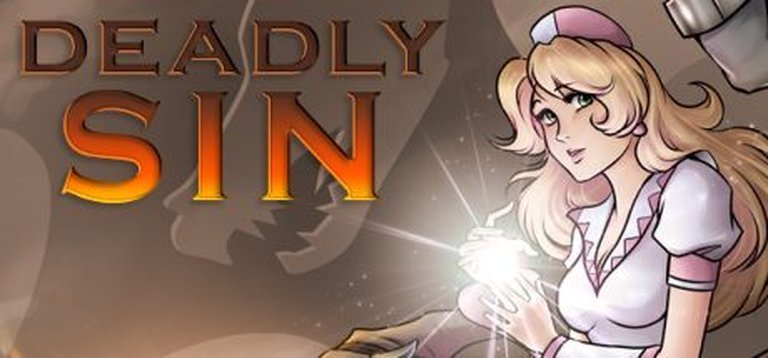
Deadly Sin is a Japanese-style RPG set in the fantasy world of Dondoran, where players take on the role of Lorelai, a young woman who discovers she is the heir to a powerful empire. As she embarks on a quest to uncover the secrets of her exile, Lorelai recruits a charming cast of characters to help her destroy the seven deadly sins and fulfill her destiny as the true princess. The game features a unique steampunk setting, classic RPG gameplay with a modern feel, and a stunning original soundtrack.
Where to Buy Deadly Sin
PC
Deadly Sin Guides & Walkthroughs
Deadly Sin Reviews & Reception
mobygames.com (79/100): A triumphant return to form for the series.
store.steampowered.com (54/100): Mixed reviews with 54% positive feedback.
steambase.io (56/100): A mixed reception with a Player Score of 56/100.
jayisgames.com (84/100): A delightful blend of retro and modern RPG elements.
Deadly Sin: A Retrospective on a Forgotten JRPG Gem
Introduction
In the vast ocean of indie RPGs, Deadly Sin (2009) stands as a curious artifact—a game that dared to blend the nostalgia of classic JRPGs with modern sensibilities, all while navigating the constraints of RPG Maker. Developed by Phil Hamilton (under the moniker Harmonic) and his small team at Deadly Sin Studios, this title emerged during a renaissance of amateur game development, where tools like RPG Maker VX democratized creation but also imposed limitations. Deadly Sin is a game of contradictions: it is both ambitious and flawed, beautiful yet clunky, and ultimately, a fascinating case study in indie game design.
This review will dissect Deadly Sin across its development, narrative, gameplay, aesthetics, and legacy, arguing that while it may not have achieved greatness, it remains a noteworthy footnote in the history of indie RPGs—a testament to what a passionate developer could achieve with limited resources.
Development History & Context
The Rise of RPG Maker and Indie RPGs
Deadly Sin was born in the late 2000s, a period when RPG Maker was evolving from a niche hobbyist tool into a platform for semi-professional indie development. Games like Eternal Eden and Aveyond had already proven that RPG Maker could produce commercially viable titles, albeit with varying degrees of polish. The engine’s limitations—pre-fabricated assets, scripting constraints, and a stigma of “amateurism”—meant that developers had to work twice as hard to stand out.
Phil Hamilton, the game’s designer and composer, was part of a wave of creators who sought to push RPG Maker beyond its perceived boundaries. His background in music (evident in the game’s soundtrack) and his experience with World of Warcraft (which influenced mechanics like the “threat system”) shaped Deadly Sin into something more than a mere pastiche of Final Fantasy.
Technological Constraints and Innovations
Deadly Sin was built using RPG Maker VX, an engine notorious for its rigidity. Yet, Hamilton and his team (including contributors like Modern Algebra and Thomas Vestergaard) managed to customize it extensively:
– Custom Battle System: The turn-based combat was overhauled to include a threat mechanic, where characters who dealt more damage drew enemy aggression—a rarity in JRPGs at the time.
– Skill Tree System: Unlike traditional level-up progression, Deadly Sin featured deep, branching skill trees for each character, allowing for meaningful customization.
– Monster Nodes: A clever solution to the tedium of random encounters, these crystals could be activated to disable battles in dungeons, letting players focus on exploration or puzzles.
The game’s development was iterative, with multiple patches (up to Version 1.3) addressing balance issues and UI complaints—a testament to Hamilton’s responsiveness to community feedback.
The Gaming Landscape of 2009
Deadly Sin launched in July 2009, a year that saw the release of Dragon Age: Origins, Demon’s Souls, and Borderlands. In this environment, a low-budget RPG Maker title was easily overshadowed. Yet, it found an audience among fans of retro JRPGs, particularly those who frequented sites like JayIsGames and RPGFan. The game’s Steampunk-fantasy hybrid setting and anime-inspired art (courtesy of artists like Clest Elnith and Brittany Fuerst) gave it a distinct visual identity, even if its narrative struggled to match its aesthetic ambition.
Narrative & Thematic Deep Dive
Plot Overview: A Princess’s Journey
Deadly Sin follows Lorelai, a young woman raised in obscurity by her mentor, Winchester, who discovers she is the lost heir to the empire of Dondoran. Her quest to reclaim her throne intertwines with a battle against the Seven Deadly Sins, manifested as demonic entities corrupting the land.
The story’s structure is classic JRPG fare:
1. The Humble Beginnings: Lorelai’s journey starts with a simple delivery quest, quickly escalating into a grand adventure.
2. The Revelation: Her royal lineage is revealed early, a narrative choice that some critics (like RPGFan’s Neal Chandran) found rushed.
3. The Fellowship: She is joined by archetypal allies:
– Glade, the roguish thief (with lockpicking and stealth skills).
– Dori, the imperial officer (a magic-user with buffs/debuffs).
– Winchester, her mentor (a wise, spellcasting figure).
– Karsuman, a warrior with a “threat-generating” playstyle.
Themes: Destiny, Sin, and Redemption
The game’s title and premise invite comparisons to Christian allegory, though Hamilton has clarified that the game is not overtly biblical. Instead, the Seven Deadly Sins serve as metaphors for human corruption, with each boss encounter representing a moral failing (e.g., Vanity absorbs allies, Wrath is a berserking foe).
However, the execution of these themes is uneven:
– Lorelai’s Character Arc: Her transition from a naive girl to a determined princess lacks emotional depth. As Neal Chandran noted, she accepts her destiny with little internal conflict, making her feel more like a vessel for the player than a fully realized character.
– Supporting Cast: While characters like Glade and Dori have quirks (e.g., Glade’s sarcasm, Dori’s intelligence-based chants), they rarely transcend their archetypes. The dialogue, though occasionally witty, often falls into exposition-heavy tropes.
Pacing and Structure
The narrative’s biggest flaw is its pacing:
– The first hour rushes through Lorelai’s backstory, leaving little room for immersion.
– Major plot twists (e.g., the betrayal of a trusted ally) are resolved too quickly, with minimal buildup.
– The ending, while visually impressive (thanks to parallax scrolling effects), feels earned more through gameplay than storytelling.
Despite these issues, the game’s world-building is commendable. The land of Dondoran is a mix of medieval fantasy and Steampunk, with airships, crystalline dungeons, and ancient ruins. The lore, though underdeveloped, hints at a deeper history—one that Deadly Sin 2 (2010) would attempt to expand upon.
Gameplay Mechanics & Systems
Combat: A Mix of Innovation and Frustration
Deadly Sin’s combat is turn-based, with a party of up to five characters facing off against enemies in a separate battle screen. The system’s standout feature is the threat mechanic, which:
– Tracks how much aggression each character generates.
– Forces players to balance damage output (high threat = more enemy focus).
– Adds a layer of strategy, particularly in boss fights where tanking is essential.
However, the combat suffers from technical limitations:
– Stiff Animations: As noted by JayIsGames’ JohnB, the transition from exploration to combat is jarring, with clunky sprite animations during attacks.
– Targeting Issues: Instead of a clear cursor, the game flashes enemy sprites, making it hard to track selections.
– Lack of Feedback: Early versions lacked enemy health bars, leading to frustration in prolonged boss fights (e.g., the infamous Cenalio battle).
Skill Trees: Depth with a Learning Curve
Each character has a unique skill tree, allowing for customization in playstyle:
– Lorelai (Archer): Can specialize in elemental arrows (fire, ice, lightning) or support skills.
– Glade (Thief): Focuses on stealth, lockpicking, and poisons (a nod to World of Warcraft’s rogue class).
– Dori (Mage): Excels in buffs/debuffs and intelligence-based magic.
The system is deep but poorly explained:
– Skill Unlocks: Require investing in a set number of prior skills (e.g., 10 skills to unlock Tier 3 abilities). This was a common point of confusion among players, as highlighted in the JayIsGames comments.
– Synergy Effects: Some skills interact (e.g., “Fire Vulnerability” + “Magma Enchant”), but the game fails to clarify how these combos work.
Exploration and Dungeon Design
The game’s dungeons are labyrinthine, with:
– Branching Paths: Encouraging exploration for hidden treasures.
– Puzzle Elements: Such as the Elysian Trenches’ color-coded teleporters or the Ardelia Palace’s flame puzzles.
– Monster Nodes: A brilliant QOL feature, allowing players to toggle random encounters—a godsend for those who dislike grinding.
However, the save system is a major flaw:
– Save Points vs. Manual Saves: The game misleads players into thinking save points are required, when in fact, the Escape menu allows saving anywhere. This led to frustration (e.g., players losing progress in Fort Midgard).
– Tent Mechanics: Save points also function as healing stations, but the UI fails to communicate this clearly.
Progression and Balance
Deadly Sin’s difficulty curve is inconsistent:
– Early Game: Too easy, with minimal challenge.
– Mid-Game: Spikes sharply, especially in dungeons like the Desert Outpost, where lack of save points punishes experimentation.
– Boss Fights: Some (e.g., Vanity, Wolfgang) are brutally difficult without specific strategies (e.g., stacking fire resistance for Vanity).
The economy is also poorly balanced:
– Gold Scarcity: Players often struggle to afford gear upgrades, a complaint echoed in the Steam forums.
– Loot Rarity: High-tier equipment is gated behind obscure puzzles, leading to grinding for gold.
World-Building, Art & Sound
Visual Design: A Feast for the Eyes
Deadly Sin’s art direction is its strongest asset:
– Character Sprites: The battle sprites (designed by Clest Elnith) are detailed and expressive, with fluid animations for attacks and spells.
– Environmental Art: The game blends RPG Maker’s default tilesets with custom assets, creating a cohesive Steampunk-fantasy aesthetic. Highlights include:
– The floating palace of Ardelia, with its parallax backgrounds.
– The crystalline caves of the Elysian Trenches.
– The industrial airships, reinforcing the Steampunk theme.
– UI Design: The menus are clean and functional, though some (like the skill tree) suffer from information overload.
Sound Design: A Symphonic Triumph
Phil Hamilton’s original soundtrack is a standout feature, blending:
– Orchestral JRPG staples (e.g., the epic final dungeon theme).
– Rock influences (e.g., electric guitar riffs in battle tracks).
– Ambient pieces for exploration (e.g., the haunting melody of the Desert Outpost).
The music elevates the game’s atmosphere, making even mundane dungeon crawls feel cinematic. However, the sound effects are less impressive, with repetitive battle cues that grow tiresome.
Atmosphere and Immersion
The game’s world feels alive, thanks to:
– Dynamic Lighting: Used sparingly but effectively (e.g., the flickering torches in dungeons).
– Environmental Storytelling: Areas like the ruined Fort Dragonbane hint at past conflicts.
– NPC Dialogue: While often exposition-heavy, some side characters add flavor (e.g., the sarcastic merchants in Taresian Forest).
However, the writing occasionally undermines immersion:
– Tonal Whiplash: The game oscillates between serious lore dumps and goofy humor (e.g., Glade’s one-liners).
– Translation Issues: Some dialogue (e.g., “Diety” instead of “Deity”) suggests rushed localization.
Reception & Legacy
Critical Reception: A Mixed Bag
Deadly Sin received moderate acclaim from critics:
– RPGFan (79/100): Praised the art, music, and gameplay innovations but criticized the story and character depth.
– JayIsGames (4.2/5): Lauded the skill trees and monster nodes but noted combat clunkiness.
– Steam User Reviews (Mixed, 56/100): Players were divided—some loved the old-school charm, while others found it too derivative.
Common praises:
✅ Stunning visuals and soundtrack.
✅ Innovative mechanics (threat system, skill trees).
✅ Monster nodes as a QOL improvement.
Common criticisms:
❌ Underdeveloped story and characters.
❌ Clunky combat UI.
❌ Poorly explained mechanics.
Commercial Performance and Community
The game sold modestly, finding an audience among:
– RPG Maker enthusiasts.
– Fans of retro JRPGs.
– Steam users looking for budget-friendly RPGs.
The community response was passionate, with:
– Active forums (e.g., Deadly Sin Studios’ official boards).
– Player-created guides (e.g., OverCloud9’s walkthrough).
– Modding efforts (e.g., balance patches by fans).
Influence and Legacy
Deadly Sin’s impact is subtle but notable:
– Proved RPG Maker could produce polished games: It paved the way for later titles like Echoes of Aetheria and Skyborn.
– Inspired indie devs: Its threat system and skill trees were emulated in other RPG Maker projects.
– Spawned a sequel: Deadly Sin 2 (2010) expanded on the lore but suffered from similar narrative issues.
However, the game faded into obscurity, overshadowed by:
– The rise of more ambitious indie RPGs (e.g., Undertale, To the Moon).
– The decline of RPG Maker’s reputation as a “serious” development tool.
Conclusion: A Flawed but Fascinating Relic
Deadly Sin is a game of contradictions:
– It is visually stunning but narratively shallow.
– It innovates in mechanics but stumbles in execution.
– It feels like a labor of love but suffers from amateurish rough edges.
Final Verdict: 7.5/10 – A Cult Classic Worth Experiencing
While Deadly Sin may not be a masterpiece, it is a remarkable achievement for an indie RPG Maker title. Its art, music, and gameplay systems elevate it above many of its peers, even if its story and UI design hold it back. For fans of old-school JRPGs or indie passion projects, it remains a hidden gem—one that deserves to be remembered as a bold experiment in the evolution of amateur game development.
Where to Play:
– Steam ($4.99) – The most accessible version, with patches.
– Dancing Dragon Games’ website – For historical context.
Recommendation:
If you can overlook its flaws, Deadly Sin offers 20-30 hours of engaging gameplay, a memorable soundtrack, and a glimpse into the potential of indie RPGs. It may not have changed the industry, but it proved that even the humblest tools could craft something beautiful.
Final Thought:
Deadly Sin is the kind of game that sticks with you not for its perfection, but for its ambition. In an era where indie games are often judged by their polish, it’s a reminder that heart and creativity can sometimes outweigh technical limitations. For that alone, it earns its place in RPG history.