
- Release Year: 2010
- Platforms: Windows
- Publisher: I-play
- Developer: I-play Seattle, Nikitova LLC
- Genre: Adventure
- Perspective: 1st-person
- Game Mode: Single-player
- Gameplay: Hidden object, Puzzle elements
- Setting: 19th century New Orleans, Gothic parks, Graveyards
- Average Score: 83/100
Description
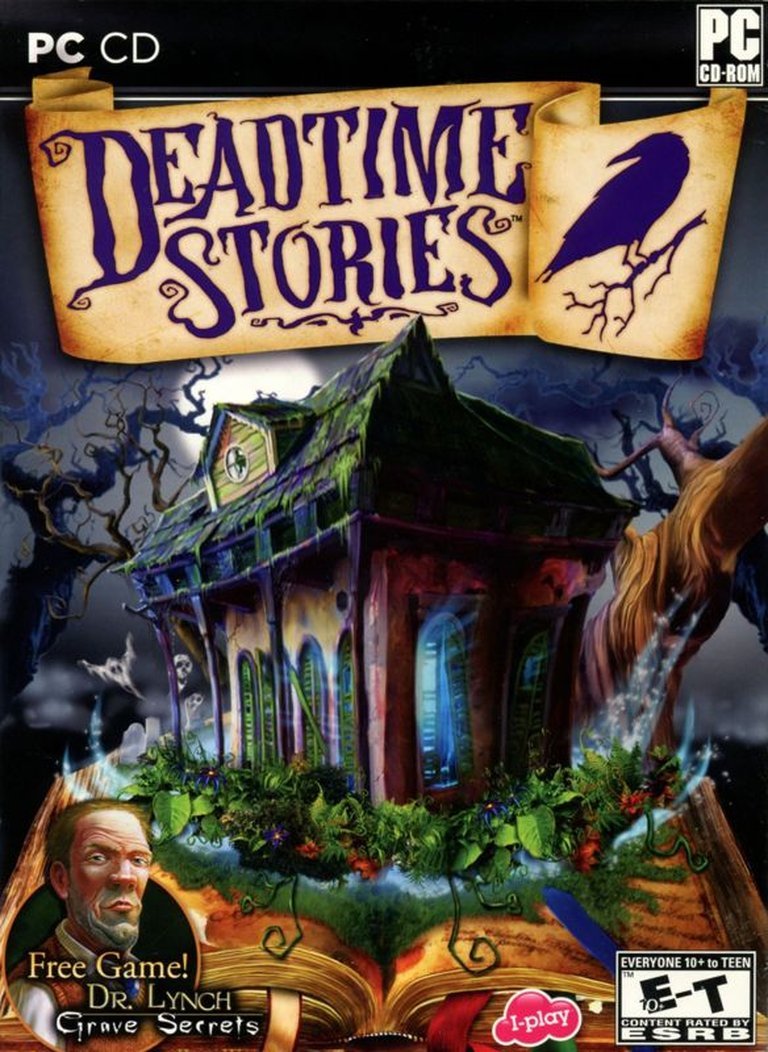
Deadtime Stories is a hidden object adventure game set in a dark and eerie 19th-century New Orleans, where players must free trapped spirits across Gothic parks and graveyards. Guided by the enigmatic Edward Blackgate, players uncover the sinister tale of a local voodoo queen while solving puzzles, mixing potions, and navigating a chilling supernatural world.
Gameplay Videos
Deadtime Stories Free Download
Deadtime Stories Guides & Walkthroughs
Deadtime Stories Reviews & Reception
mobygames.com (87/100): The plot of Deadtime Stories centers around a dark and creepy area in 19th century New Orleans.
judsgamereviews.wordpress.com (80/100): Sinister thrills await in this gorgeously dark and unsettling telling of a real-life ghost story from New Orleans’ shadowy history.
Deadtime Stories: A Haunting Hidden Object Masterpiece
Introduction
In the crowded landscape of hidden object games, Deadtime Stories (2010) stands as a hauntingly atmospheric and narratively rich experience that transcends the genre’s typical constraints. Developed by Nikitova LLC and published by I-play and Big Fish Games, this title weaves a dark tale of voodoo, betrayal, and supernatural retribution set against the eerie backdrop of 19th-century New Orleans. With its meticulously crafted storytelling, innovative gameplay mechanics, and an unsettling aesthetic, Deadtime Stories offers a unique blend of adventure, puzzle-solving, and hidden object gameplay that lingers in the player’s memory long after the credits roll.
Development History & Context
Deadtime Stories emerged during a period when the hidden object genre was experiencing a renaissance, thanks in part to the rise of digital distribution platforms like Big Fish Games. The game was developed by Nikitova LLC, a studio with a strong portfolio in casual and adventure games, and published by I-play, a company known for its high-quality hidden object and puzzle titles. The creative direction was spearheaded by Jane Jensen, a veteran game designer renowned for her work on the Gabriel Knight series, which lent the project a level of narrative depth and sophistication uncommon in the genre.
The game’s development was influenced by the growing popularity of dark, story-driven hidden object games that appealed to a more mature audience. Technologically, Deadtime Stories was designed to run on mid-range PCs of the era, leveraging the capabilities of the Windows platform to deliver rich visuals and immersive sound design. The game’s release in 2010 coincided with a broader trend in casual gaming toward more complex narratives and atmospheric settings, positioning it as a standout title in a sea of formulaic hidden object games.
Narrative & Thematic Deep Dive
At its core, Deadtime Stories is a tale of moral ambiguity and supernatural justice. The game’s protagonist, Jessie Bodeen, is a Voodoo queen in 19th-century New Orleans who serves as a healer for the local African American community. Her story begins when she is commissioned by the infamous socialite Delphine LaLaurie to sabotage a rival, Mrs. Anton, using her knowledge of poisons and curses. Despite warnings from her fellow practitioner, Mambo Marie, Jessie agrees to the task, setting in motion a chain of events that leads to her downfall.
The narrative is framed by the mysterious Edward Blackgate, the caretaker of the “Everlasting Life” cemetery, who guides the player through Jessie’s story as they uncover the truth behind her tragic fate. The game’s themes revolve around the consequences of greed, the corrupting influence of power, and the inevitability of retribution. Jessie’s descent into darkness is mirrored by the game’s progression, as the player moves from the relatively safe confines of her home to the sinister depths of LaLaurie’s estate and the eerie Cajun swamps.
The dialogue and character interactions are richly detailed, with Jessie’s internal conflict and moral dilemmas presented with nuance. The game’s use of Voodoo lore and historical figures like Delphine LaLaurie adds a layer of authenticity and depth, grounding the supernatural elements in real-world history. The story’s resolution, in which Jessie’s actions lead to her own demise at the hands of the Loa, serves as a cautionary tale about the dangers of vengeance and the corrupting influence of power.
Gameplay Mechanics & Systems
Deadtime Stories distinguishes itself from other hidden object games through its innovative gameplay mechanics and systems. The core gameplay loop involves searching for hidden objects, solving puzzles, and crafting potions to progress through the story. However, the game’s true brilliance lies in its integration of these elements into a cohesive and engaging experience.
Hidden Object Scenes
The hidden object scenes in Deadtime Stories are meticulously designed, with each location offering a unique set of challenges. Players must search for specific items listed in their inventory, often requiring them to interact with the environment in creative ways. For example, using a magnifying glass to inspect objects or combining items to create new tools. The game’s use of a “claw” cursor to indicate interactive objects is a clever touch, adding a layer of tactile feedback to the gameplay.
Puzzle-Solving
The puzzles in Deadtime Stories are varied and challenging, ranging from simple logic problems to complex mini-games. One standout example is the “Spirit Lock” puzzle, which requires players to arrange triangular pieces to form a specific pattern. These puzzles are seamlessly integrated into the narrative, often serving as gateways to new areas or unlocking crucial story elements.
Potion Crafting
A unique feature of Deadtime Stories is its potion-crafting system. Players must gather ingredients from the environment and combine them in a cauldron to create potions that advance the story. This system adds a layer of strategy and experimentation to the gameplay, as players must carefully follow recipes and mix ingredients in the correct order. The potion-crafting mechanics are tied to the game’s narrative, with each potion serving a specific purpose, such as banishing spirits or revealing hidden objects.
Inventory Management
The inventory system in Deadtime Stories is intuitive and user-friendly, allowing players to easily access and combine items. The game’s use of a “spell book” to track potion recipes and a “plant identification book” to identify ingredients adds a layer of depth to the inventory management, encouraging players to explore and experiment with different combinations.
World-Building, Art & Sound
The world of Deadtime Stories is a masterclass in atmospheric design. The game’s setting, 19th-century New Orleans, is brought to life through a combination of detailed visuals and immersive sound design. The Gothic parks, graveyards, and Cajun swamps are rendered with a level of detail that immerses the player in the game’s eerie atmosphere.
Visual Direction
The art style of Deadtime Stories is dark and moody, with a color palette dominated by deep blues, greens, and blacks. The character designs are equally striking, with Jessie Bodeen and Edward Blackgate standing out as particularly memorable figures. The game’s use of lighting and shadow is particularly effective, creating a sense of tension and unease that permeates every scene.
Sound Design
The sound design in Deadtime Stories is equally impressive, with a haunting soundtrack that complements the game’s visuals. The ambient sounds, such as the rustling of leaves and the distant cries of spirits, add to the game’s immersive atmosphere. The voice acting is top-notch, with each character delivering their lines with conviction and emotion.
Reception & Legacy
Upon its release, Deadtime Stories received critical acclaim, with reviewers praising its narrative depth, innovative gameplay mechanics, and atmospheric design. The game’s average critic score of 87% on MobyGames reflects its strong reception, with publications like GameZebo and LKI.ru awarding it high marks. Players also responded positively, with the game earning an average score of 4.7 out of 5 on MobyGames.
Despite its critical success, Deadtime Stories remains a somewhat overlooked gem in the hidden object genre. Its influence can be seen in subsequent games that have attempted to blend narrative depth with innovative gameplay mechanics. The game’s legacy is further cemented by its inclusion in various “best of” lists and its continued popularity among fans of the genre.
Conclusion
Deadtime Stories is a hauntingly beautiful and narratively rich hidden object game that stands as a testament to the potential of the genre. Its innovative gameplay mechanics, atmospheric design, and compelling story make it a must-play for fans of adventure and puzzle games. While it may not have achieved the same level of mainstream recognition as some of its contemporaries, Deadtime Stories remains a beloved title among those who have experienced its dark and captivating world. For those seeking a hidden object game that offers more than just a simple search for items, Deadtime Stories is an essential experience.